
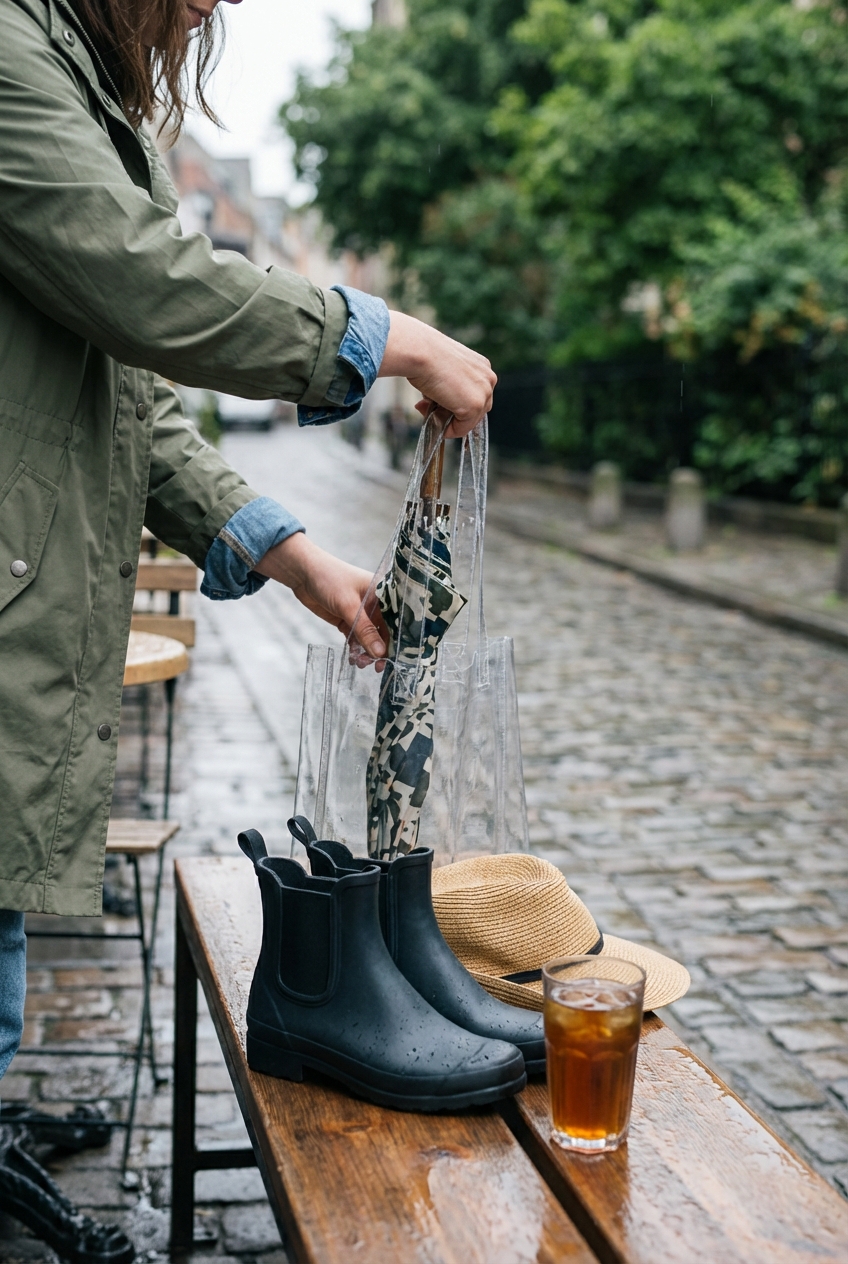
Dressing For Rainy Summers Staying Dry Without Overheating
There is perhaps no greater sartorial challenge than the summer thunderstorm. You check the forecast and see 90% humidity paired with 85-degree heat, yet the sky is opening up with torrential rain. The instinct is to cover up to stay dry, but the moment you put on a standard raincoat, you create a personal sauna. Within minutes of your commute, you are just as wet from perspiration as you would have been from the rain. It is a miserable, clammy reality that ruins blowouts and silk blouses alike.
I learned this lesson the hard way during my first year working in the city. I invested in a heavy, rubberized trench coat that looked stunning on the hanger. It was completely waterproof, but it had zero ventilation. By the time I arrived at my morning meeting, my dress underneath was ruined, not by the storm, but by the lack of airflow. That experience shifted my entire approach to summer storm dressing. It is not just about repelling water; it is about managing temperature and moisture from the inside out.
Over the years, styling high-end clients for outdoor summer events and city living has taught me that the secret lies in technical fabrics disguised as luxury wear. We have to look at breathability ratings, hemline physics, and footwear that can handle a puddle without looking like gear. For a visual guide on these outfits, make sure to check out the Picture Gallery at the end of the blog post.
The Physics of Fabric: What to Wear Underneath
When the air is thick with moisture, your base layer is your most critical defense. The biggest mistake I see is people wearing “summer fabrics” like silk or standard linen when it rains. Silk spots instantly and retains water marks, ruining the finish. Linen, while breathable, absorbs moisture greedily and tends to sag and wrinkle aggressively when damp, leaving you looking disheveled.
You want to look for high-twist cotton voiles or technical blends. A high-twist cotton yarn is spun tighter than standard cotton. This gives the fabric a crisper hand and makes it slightly more resistant to absorbing moisture immediately. It holds its shape better in humidity. If you do get slightly damp, it dries much faster than a standard heavy tee.
Another excellent option is tropical wool. It sounds counterintuitive to wear wool in summer, but tropical weight wool (often labeled as “summer weight” or “Cool Wool”) is incredibly breathable. It has natural moisture-wicking properties that cotton lacks. A pair of tropical wool trousers will hang beautifully even in 90% humidity, whereas cotton chinos will start to bunch and cling to your knees.
Designer’s Note:
The “Polyester Trap”: Be very careful with polyester blouses in the summer rain. While they don’t absorb water (good for rain), they trap heat (bad for you). If you choose a synthetic, ensure it is a high-tech performance blend or a very open weave. Avoid satin-finish polyesters; they act like plastic wrap on the skin.
The Outer Layer: Breathability over Waterproofing
In the winter, we want “waterproof.” In a humid summer, we actually want “water-resistant.” There is a distinct difference. Waterproof implies a sealed surface that lets nothing in and nothing out. Water-resistant fabrics allow for airflow while deflecting the majority of the rain. Unless you are standing in a hurricane for an hour, water-resistant is sufficient for city movement.
Look for unlined trench coats made from treated cotton gabardine or nylon shells. The lack of lining is non-negotiable. A lining adds a layer of air that heats up against your body. You want a single layer of fabric separating you from the elements. Ideally, the coat should have a “loose back yoke.” This is that flap of fabric often found on the upper back of trench coats. It isn’t just decorative; it allows water to run off the shoulders while providing a physical vent for heat to escape from your back.
Pay attention to the armholes. In high-end design, we look for a lower armscye (the armhole opening) in summer outerwear. A tight armhole traps heat in the underarm area. A generous, kimono-style or raglan sleeve allows air to circulate around your torso, keeping your core temperature down.
Common Mistakes + Fixes:
- Mistake: Wearing a classic vinyl or rubber slicker.
- The Issue: It creates a greenhouse effect. You will sweat through your clothes.
- The Fix: Swap for a treated cotton-nylon blend anorak with underarm grommets (ventilation holes).
Hemlines and Silhouettes: The Splash Factor
One of the most overlooked aspects of dressing for rainy weather is the physics of the “splash back.” When you walk, your heels kick up water from the pavement. If you are wearing floor-length wide-leg trousers, the hems will act like wicks. They will absorb that dirty street water and pull it upward. Within ten minutes, you will have wet fabric flapping against your ankles, which is incredibly uncomfortable and ruins the garment.
The ideal summer rain silhouette is cropped. I recommend trousers that hit at the ankle bone or slightly above (the 7/8th length). This keeps the fabric clear of the splash zone. Culottes are fantastic for this, provided they aren’t so wide that they blow around in the wind. They offer the airflow of a skirt with the protection of pants.
If you prefer skirts or dresses, aim for a midi length. Maxis drag in the mud; minis can be treacherous if the rain is accompanied by wind gusts. A midi skirt with a bit of weight to it (so it doesn’t fly up) is perfect. Avoid A-line skirts made of flimsy materials; they become unmanageable in a breeze. A pencil skirt or a straight-cut slip dress offers a more aerodynamic profile that stays close to the body without clinging.
What I’d Wear:
My go-to formula: A cropped, tapered pant in a dark olive or navy (dark colors hide splashes), a crisp cotton poplin shirt, and an unlined, oversized trench coat rolled at the sleeves.
Footwear: Saving Your Soles
Shoes are usually the first casualty of a summer storm. Leather soles are porous. If you wear your expensive Italian leather loafers on a rainy day, the water will soak through the bottom, ruining the structural integrity of the shoe and staining your feet. Suede is obviously off the table.
However, you do not need to wear knee-high rubber wellies, which are far too hot for July. The fashion industry has embraced PVC and jelly materials in a very chic way recently. Look for “jelly” ballet flats or loafers from high-end designers. They look like patent leather but are completely waterproof. You can rinse them off in the sink when you get home.
If you must wear a leather shoe, choose patent leather. The coating that gives patent leather its shine also acts as a barrier against water. Just ensure the sole is rubber, not leather. A lug-sole loafer is excellent because it elevates your foot about an inch off the ground, keeping you above shallow puddles.
Measurements to Watch:
- Platform Height: A 1 to 1.5-inch platform is the sweet spot. It provides elevation from wet pavement without the instability of a high heel on slippery surfaces.
- Boot Height: If you choose boots, go for an ankle cut (Chelsea boot style). Knee-high boots trap too much heat against the calf in summer.
Color Theory for Wet Weather
We often gravitate toward light whites and pastels in summer to reflect heat. However, on a rainy day, light fabrics become transparent when wet. A white cotton dress might look innocent when dry, but a sudden downpour can render it completely sheer. Furthermore, light-colored pants show every drop of mud kicked up by your commute.
The strategic choice is darker neutrals or busy prints. A navy, charcoal, or forest green dress will not change color drastically if it gets damp. If you love color, opt for a vibrant pattern or floral print. Patterns are excellent at camouflage; they hide rain spots and water marks effectively until you have a chance to dry off.
If you absolutely must wear white, ensure it is a synthetic blend or a very thick weave, and always wear skin-tone undergarments, never white. But generally, save the white linen trousers for a sunny day.
Hair and Accessories: The Finishing Touches
Humidity wreaks havoc on hair texture. This is not the day for a blowout. The moisture in the air will revert your hair to its natural state, often accompanied by frizz. I advise clients to work with the humidity, not against it. A sleek, low bun or a high ponytail is chic and storm-proof. If you have textured hair, lean into products that seal moisture in, rather than trying to straighten it out.
For accessories, swap your leather tote for a coated canvas or nylon bag. Water can leave permanent bubbles on untreated leather bags. A stylish nylon crossbody is practical and protects your belongings. Finally, invest in a clear, dome-shaped umbrella. It might seem basic, but it allows you to pull the umbrella down over your head and shoulders for maximum coverage while still being able to see where you are walking on crowded streets.
Finish & Styling Checklist
Before you head out the door, run through this quick mental checklist to ensure your outfit is rain-ready but heat-appropriate.
- Check the Fabric Content: Is your base layer cotton, tropical wool, or breathable viscose? Avoid heavy polyesters or pure silk.
- The Water Test: If you sprinkle a drop of water on your outer layer, does it bead up? If it soaks in immediately, change your coat.
- Hemline Clearance: Are your pants dragging? If they touch the floor when you are barefoot, they are too long for a rainy day. Roll them or choose a cropped pair.
- Sole Inspection: Flip your shoes over. If you see brown leather, put them back. You need rubber or synthetic soles today.
- Transparency Check: Hold your top up to the light. If it’s sheer now, it will be transparent when wet. Add a camisole or choose a darker color.
- The AC Factor: Remember, once you are wet, air conditioning will feel freezing. Toss a lightweight cardigan in your waterproof bag for the office.
FAQs
How do I clean my trench coat if it gets muddy splashes?
Most cotton-blend trenches are machine washable, but always check the care label. For small splashes, let the mud dry completely first. Once dry, use a stiff bristle brush to flake it off. If you try to wipe wet mud, you will grind it into the fiber.
Can I wear sandals in the rain?
Technically yes, but be cautious. City rain water is dirty. If you wear open-toed sandals, your feet will get grimy. Additionally, wet feet slide around in sandals, which can lead to blisters or twisted ankles. A closed-toe jelly shoe or loafer is safer and more hygienic.
Is it better to wear a poncho?
Ponchos offer great airflow, which solves the overheating problem. However, they can be cumbersome in windy city environments. If you choose a poncho, look for one with arm snaps to create sleeves, so it doesn’t flap around wildly.
What is the best material for a summer rain hat?
A wide-brimmed bucket hat made of treated nylon or waxed cotton is ideal. It protects your hair and face. Avoid felt or straw; felt smells like wet dog when damp, and straw can lose its shape and mold.
Conclusion
Dressing for a rainy summer day does not mean sacrificing your style or your comfort. It requires a shift in strategy—prioritizing technical performance and silhouettes that keep you clear of the elements. By choosing the right breathable fabrics, the correct hem lengths, and smart footwear, you can navigate a downpour and arrive at your destination looking polished and dry.
Remember that the goal is to create a barrier against the rain while maintaining a channel for airflow. Once you master this balance, the summer storm becomes less of a wardrobe crisis and more of an opportunity to showcase your mastery of functional fashion. Stay dry, stay cool, and walk with confidence.
Picture Gallery


