
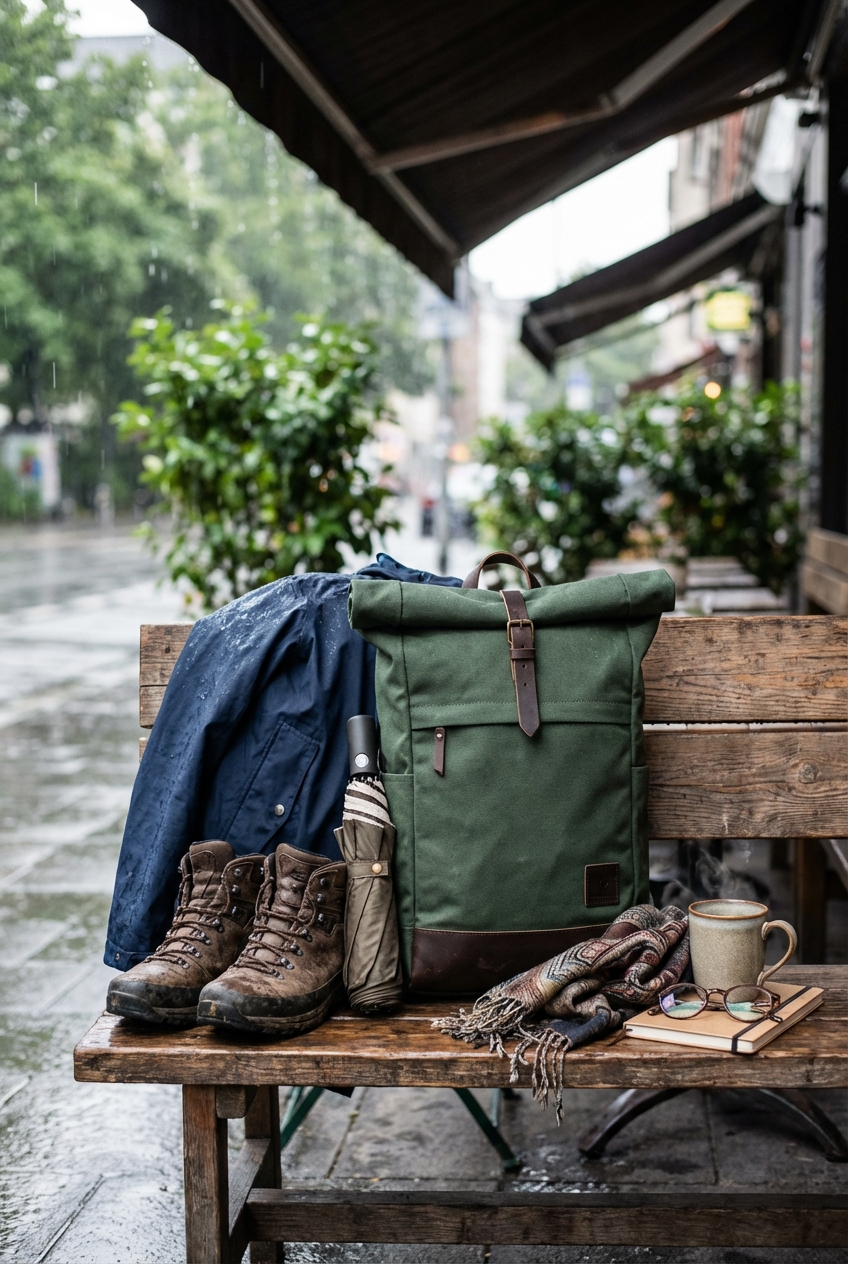
Durable Waterproof Backpacks For Rainy Day Essentials
There is nothing quite as humbling as stepping out of a perfectly curated apartment, dressed in a flawless monochromatic ensemble, only to be caught in an unexpected downpour. I learned this lesson the hard way early in my career during a site visit in downtown Seattle. I was carrying a beautiful, porous suede tote that not only absorbed every drop of rain but also stained my cream wool coat as the dye leached out.
That experience shifted my entire perspective on utility accessories. We often prioritize aesthetics over function, assuming we have to choose between looking polished or being prepared. However, in the world of high-end design, true luxury is the seamless marriage of the two. A backpack shouldn’t just be a vessel; it should be a shield for your technology and a complement to your silhouette.
Finding a bag that can withstand heavy precipitation while looking sleek enough for a client presentation requires a discerning eye for textiles and construction. I have curated a comprehensive guide below, and you can find specific visual examples in the Picture Gallery at the end of the blog post.
Decoding Technical Fabrics: What Truly Repels Water
In the design world, we are obsessed with material specifications, and you should be too when shopping for a rain-proof bag. There is a massive distinction between “water-resistant” and “waterproof.” Water-resistant usually means the fabric is treated with a DWR (Durable Water Repellent) coating that sheds light rain but will eventually soak through.
For true peace of mind, I look for non-porous materials. PU (Polyurethane) and TPU (Thermoplastic Polyurethane) coatings are the gold standard for city commuting. These materials have a rubberized feel that physically blocks water molecules from passing through. They are incredibly durable and easy to wipe clean, maintaining that matte, architectural look I love.
Another excellent option is high-denier ballistic nylon with an interior laminate. This offers a more textile-like hand feel compared to rubberized bags but provides immense strength. When I am sourcing for clients who prefer a heritage look, I lean toward waxed canvas. Just remember that waxed canvas requires maintenance and re-waxing annually to stay effective.
Designer’s Note: The Seam Logic
Here is a detail that almost everyone overlooks: the stitching. A fabric can be 100% waterproof, but if the seams are stitched with standard cotton thread, water will wick through the needle holes. In high-end construction, look for “RF welded seams” or heat-taped seams. This process fuses the fabric panels together without needle holes, creating a truly watertight vessel.
Scale and Silhouette: Finding the Right Visual Weight
Just as we balance furniture within a room, you must balance the scale of a backpack against your body frame. A bag that is too large looks like you are going on a hiking expedition, while a bag that is too small looks disproportionate and cheapens the outfit.
For the average female frame (5’4″ to 5’7″), I recommend a volume between 12 to 18 liters for daily use. This size range usually measures around 16 to 17 inches in height. This is the “sweet spot” that accommodates a 13-inch or 15-inch laptop without overwhelming your shoulders.
If you are petite (under 5’3″), cap your capacity at 12 or 13 liters. Look for a slimmer profile that doesn’t extend past the width of your torso. If the bag is wider than your shoulders, it ruins the vertical line of your outfit, making you look shorter and wider.
Common Mistakes + Fixes
- Mistake: Wearing a backpack too low on the back. This looks sloppy and causes lower back strain.
- Fix: Adjust the straps so the top of the bag sits just below the base of your neck (the C7 vertebra). The bottom of the bag should hit the curve of your lower back, not your glutes.
The Hardware Factor: Zippers and Closures
Water has a way of finding the weakest entry point, and that is almost always the zipper. Standard coil zippers are not waterproof. When you are investing in a rain-proof bag, you must demand AquaGuard zippers or roll-top closures.
AquaGuard zippers (usually made by YKK) have a distinct matte, rubbery coating on the outside of the teeth. When zipped shut, they form a tight seal that repels driving rain. They are stiffer to operate than standard zippers, but that resistance is a sign of quality.
The alternative is the roll-top closure. This is a mechanic borrowed from dry bags used in kayaking. By rolling the fabric down three times and clipping it, you create a physical labyrinth that water cannot navigate. While less convenient for quick access than a zipper, a roll-top is the safest bet for protecting expensive electronics in a monsoon.
Internal Architecture and Organization
The exterior protects, but the interior organizes. As a designer, I need a place for everything. A chaotic bag leads to scratched laptops and ruined documents. In a waterproof bag, the interior liner should ideally be a lighter color—light grey or beige—rather than black. This helps you see your items clearly in low-light conditions.
Your laptop sleeve must be suspended. This means the compartment for your computer stops about one inch above the bottom of the bag. If you drop your bag on the pavement, your laptop won’t hit the ground directly.
I also look for a “wet pocket” or an external slip pocket with drainage. This is essential for storing a wet compact umbrella. Putting a soaked umbrella inside the main compartment with your dry notebook defeats the purpose of a waterproof bag.
What I’d Do in a Real Project (Outfit Styling)
If I am styling a client for a commute involving a train and a 10-minute walk:
- Base: Trench coat in a neutral tone (camel or sage).
- Bag Choice: A matte black, rubberized PU backpack with a slim profile.
- Why: The rubberized texture contrasts beautifully with the cotton gabardine of the trench. The matte finish looks intentional and expensive, not like gym gear.
Comfort Mechanics for the Commute
Luxury is comfortable. If a bag digs into your shoulders, it is not a luxury item, regardless of the price tag. Since waterproof fabrics are often stiffer and less breathable than canvas, the back panel design is critical.
Look for a back panel with molded foam channels. These channels allow airflow between your back and the bag, preventing that dreaded sweat patch on your silk blouse. The foam should be high-density; if you can pinch it flat easily, it won’t offer enough support.
Pay close attention to the straps. They should be contoured (S-shaped), not straight. S-shaped straps curve around the chest area, which is significantly more comfortable for women. Straight straps tend to slip off shoulders or chafe against the underarm area.
Designer’s Note: The Coat Friction Issue
Many technical backpacks use an abrasive air-mesh on the underside of the straps. While breathable, this mesh acts like sandpaper against delicate fabrics like cashmere or fine wool coats. Over a season, it will pill and destroy the shoulders of your coat. I always check for smooth neoprene or self-fabric strap undersides to protect my outerwear investments.
Color Theory and Finish Selection
When selecting a waterproof backpack, color choice dictates versatility. While bright yellow or orange screams “nautical gear,” neutrals translate better to a corporate environment.
Matte Navy and Charcoal Grey are excellent alternatives to black. They feel softer and pair well with denim, white shirting, and grey suiting. If you want to make a statement, look for deep, saturated tones like Forest Green or Burgundy. These colors read as “fashion” rather than “safety gear.”
Avoid high-gloss finishes. A shiny plastic look tends to appear cheap and shows scratches easily. A matte or satin finish absorbs light and looks more refined. It also hides water spots and city grime much better than a glossy surface.
Maintenance: Keeping Technical Fabrics Pristine
Even the most durable bags need care. The beauty of TPU and PU coatings is their low maintenance, but they are not invincible. Road salt and city pollution can degrade the coating over time if left to sit.
I recommend wiping down your bag with a damp microfiber cloth and a drop of mild dish soap once a week if you commute daily. Never use abrasive scrubbers, as they can strip the waterproof coating.
For canvas bags that rely on wax, you will need to re-apply wax once a year, usually in the autumn before the rains start. Use a hair dryer to melt the wax into the fibers for an even, professional finish. This ritual not only waterproofs the bag but also restores its deep, rich color.
Finish & Styling Checklist
Before you make your final purchase, run through this quick checklist to ensure the bag meets high-end standards:
- Material Test: Does the fabric feel rubberized or waxy (good), or just like standard nylon (risky)?
- Zipper Check: Are the zippers matte and coated (AquaGuard)? If they look like standard shiny metal teeth, they will leak.
- Strap Check: Is the underside of the strap smooth to the touch? Avoid rough mesh if you wear wool coats.
- Suspension: Can you feel a gap between the bottom of the laptop sleeve and the bottom of the bag?
- Structure: Does the bag stand up on its own when empty? A structured bag looks more polished than a slouchy one.
- Hardware: Are the buckles metal or high-grade matte plastic? Avoid cheap, shiny plastic clips.
FAQs
Can I put my waterproof backpack in the washing machine?
Absolutely not. The agitation of a washing machine can delaminate the waterproof coating and ruin the seam sealing. Always hand wash with a damp cloth and mild soap. If the interior is dirty, vacuum it out and wipe it down gently.
Is leather a good waterproof option?
Generally, no. While treated leathers exist, genuine leather is porous. Water can cause it to spot, stiffen, and rot over time. If you love the leather look, opt for a high-quality vegan leather (PU) which is naturally waterproof and easier to maintain.
What is the difference between 15L and 20L?
Think of 15L as your “office essential” size—laptop, notebook, wallet, cosmetic pouch, and a small water bottle. 20L allows for extras: a pair of gym shoes, a lunch container, and a bulky sweater. If you don’t carry gym gear, stick to 15L for a sleeker silhouette.
Do I need a rain cover if my bag is waterproof?
If you buy a high-quality bag with welded seams and waterproof fabric, you do not need a rain cover. Rain covers are generally for non-waterproof hiking bags. They are fussy to put on and ruin the aesthetic of your outfit.
Conclusion
Investing in a durable, waterproof backpack is an investment in your peace of mind. It allows you to navigate your day with confidence, knowing that your technology and essentials are secure, regardless of the forecast.
By focusing on architectural materials like TPU, ensuring proper scale for your frame, and prioritizing seamless construction, you elevate a purely functional item into a key part of your wardrobe. You no longer have to sacrifice your personal style just because the sky turns grey. Stay dry, stay stylish, and let your accessories work as hard as you do.
Picture Gallery


