
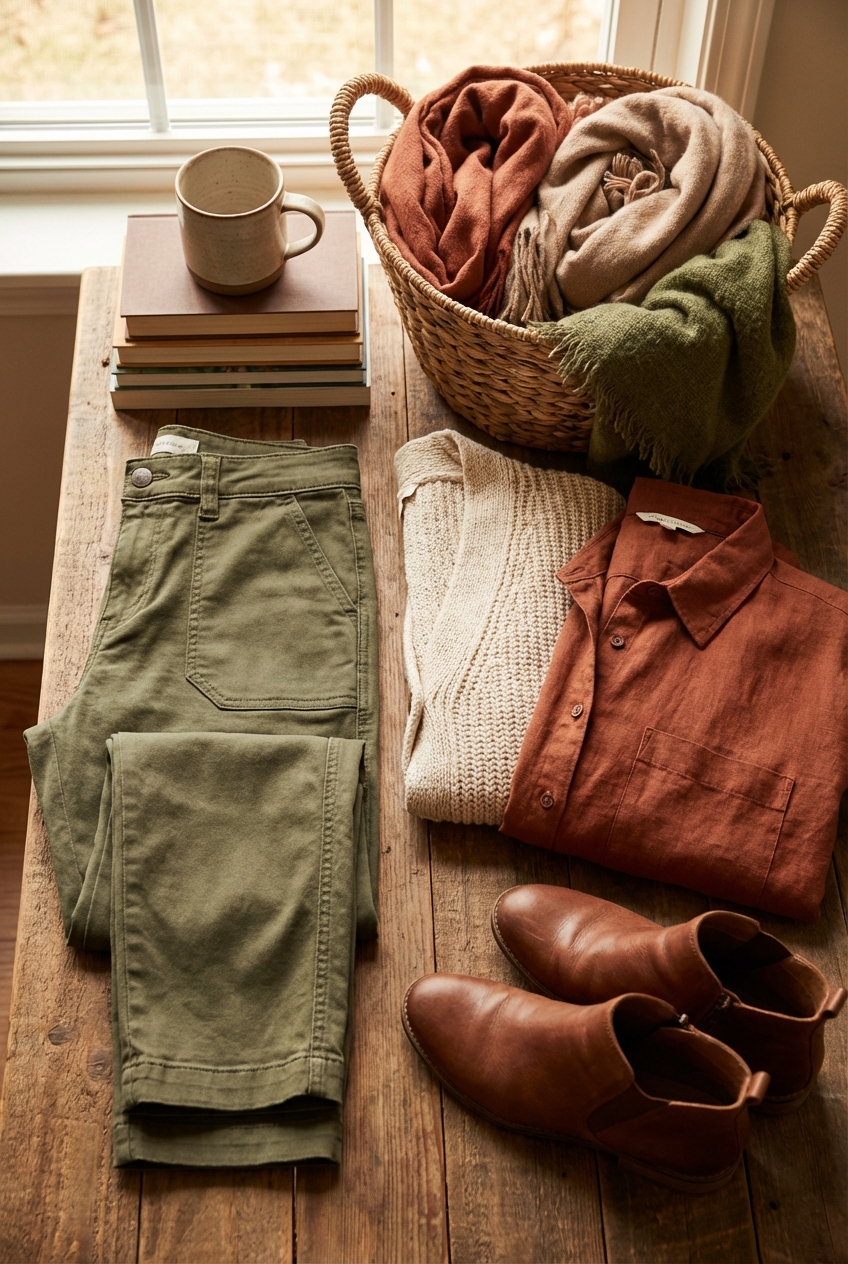
Earthy Tones For Casual Pants And Chic Layering
Introduction
There is a quiet confidence in wearing earthy tones. For years, I avoided browns and greens, thinking they felt dated or too utilitarian for a high-fashion wardrobe. That changed during a trip to Milan, where I watched women effortlessly pair olive trousers with cream cashmere and structured cognac leather. It wasn’t just about the colors; it was about the richness of the textures and the intentionality of the layers.
Integrating earthy tones into your daily rotation requires a shift in perspective. You have to stop seeing beige as “safe” and start seeing it as a canvas for luxurious layering. Whether you are running errands or heading to a casual creative office, these hues offer a grounding effect that feels sophisticated yet approachable. It is about balancing the relaxed nature of casual pants with the polish of thoughtful outerwear.
In this guide, I will walk you through the mechanics of styling casual pants in earthy hues. We will cover color theory, fabric weights, and the exact layering formulas I use with my private clients to create depth without bulk. Make sure to browse the Picture Gallery at the end of the blog post for visual inspiration on these specific color combinations.
Understanding Undertones and The Earthy Palette
Defining the Palette
When we talk about earthy tones, we often default to generic terms like “brown” or “green.” However, a high-end wardrobe relies on nuance. We are looking for terracotta, burnt sienna, sage, olive, sand, and taupe. These colors mimic nature and naturally harmonize with one another.
The key to mixing these shades is understanding their temperature. Warm earth tones have red, orange, or yellow undertones—think rust, camel, and chocolate. Cool earth tones lean towards gray or blue—think stone, taupe, and cool pine greens.
Mixing Warm and Cool
A common misconception is that you cannot mix warm and cool earth tones. In reality, creating tension between temperatures makes an outfit look expensive. A cool taupe sweater can look incredibly chic against warm, rust-colored corduroys.
The secret lies in the saturation. Ensure both colors share a similar level of intensity or “muddiness.” If your pants are a dusty olive, pair them with a muted oatmeal top rather than a stark, bright white.
Stylist’s Note: The “One Shade” Rule
When styling clients who are hesitant about color, I use the “One Shade” rule. We pick one dominant color family, such as brown, and wear it in varying shades from head to toe.
For example, pair espresso trousers with a latte-colored knit and a camel coat. This monochromatic approach elongates the silhouette and always photographs beautifully.
Selecting the Right Casual Pant Silhouette
The Wide-Leg Trousers
Wide-leg pants in earthy tones are a staple because they offer comfort without sacrificing elegance. The volume of the pant leg creates a sense of movement that feels very current.
When choosing a wide-leg style, pay close attention to the break of the hem. For casual wear, I prefer a “shivering break,” where the fabric just barely touches the top of the shoe. This prevents the hem from dragging on the ground, which is crucial for lighter colors like beige or stone that show dirt easily.
The Tailored Cargo
Cargo pants have graduated from streetwear to high fashion. Look for styles made from refined fabrics like silk-cotton blends or high-twist wool rather than heavy, stiff canvas.
The pockets should sit flat against the thigh to avoid adding unwanted bulk. I recommend pairing tailored cargos in olive or slate grey with more delicate tops to balance the utilitarian vibe.
Common Mistakes + Fixes
Mistake: Buying pants that are too long, causing the hem to bunch up around the ankle.
Fix: Visit a tailor. Ask for the pants to be hemmed while wearing the shoes you intend to wear most often. For flats, the hem should sit 1/4 to 1/2 inch off the floor.
Mistake: Ignoring the rise measurement.
Fix: For casual pants, a mid-to-high rise (10 to 12 inches) is usually the most flattering. It cinches the waist and allows you to tuck in layers securely.
Mastering Fabric Textures for Depth
Why Texture Matters
When you are wearing a palette of muted colors, texture becomes your primary tool for visual interest. An outfit made entirely of flat cotton looks dull. An outfit that mixes wool, leather, and silk looks dynamic.
I always advise clients to aim for at least three different textures in one look. If your pants are a matte cotton chino, your top should offer contrast, perhaps a fuzzy mohair cardigan or a sleek silk blouse.
Specific Fabric Pairings
Corduroy and Cashmere: This is the ultimate fall/winter texture combination. The ridges of the corduroy catch the light, while the cashmere softens the overall look. Try chocolate brown corduroys with a cream cashmere crewneck.
Linen and Chunky Knits: In transitional weather, heavy linen trousers in flax or oatmeal look stunning with a chunky, open-weave sweater. The weight difference creates a relaxed, “off-duty model” aesthetic.
Leather and Wool: Leather pants in deep olive or cognac are surprisingly versatile. Pair them with a dense merino wool sweater to tone down the shine of the leather and make it daytime appropriate.
Durability Considerations
Earthy tones, particularly lighter ones like sand or sage, can be unforgiving with stains. When investing in casual pants, check the fabric composition.
I look for blends that include a small percentage (2-5%) of elastane or polyester. This improves wrinkle resistance and shape retention, preventing your knees from bagging out after sitting for a few hours.
The Mechanics of Chic Layering
The Base Layer
Layering starts with a solid foundation. Your base layer should be fitted but not restrictive. A ribbed turtleneck or a high-quality cotton t-shirt works best.
Ensure the base layer tucks smoothly into your pants. If the fabric is too thick, it will create lumps around the waistline, ruining the clean lines of the trousers. Bodysuits are often a great solution here.
The Mid-Layer
This is where you add warmth and style. An oversized button-down shirt left unbuttoned, a cropped cardigan, or a denim vest can serve as a mid-layer.
When working with earthy tones, I love using a denim shirt as a neutral mid-layer. The indigo blue acts as a grounding element between a beige trench and olive pants.
The Outer Layer
The coat or jacket is the finishing touch that pulls the story together. A trench coat is iconic for a reason—it is the perfect weight for layering and usually comes in classic earth tones like khaki or stone.
For a more modern look, try a “shacket” (shirt-jacket) in a heavy wool plaid. Ensure the jacket is long enough to cover your mid-layers completely. Seeing the hem of a sweater poking out from under a jacket can look messy.
What I’d Do in a Real Project
If I were styling a client for a weekend getaway in the mountains, here is the layering formula I would use:
- Base: Cream thermal long-sleeve tee (fitted).
- Pants: High-waisted wool trousers in charcoal brown.
- Mid: Rust-colored alpaca cardigan (buttoned halfway).
- Outer: Shearling-lined aviator jacket in distressed leather.
Proportions and Scale
The Rule of Thirds
In fashion, the “Rule of Thirds” is a golden ratio for silhouettes. Visually, you want your outfit to break your body into 1/3 and 2/3 sections, rather than cutting you in half (1/2 and 1/2).
High-waisted pants create a 2/3 leg line, which is universally flattering. Tuck your top in to define the waist and maintain this proportion. If you wear an untucked, long sweater over casual pants, you risk shortening your legs and looking frumpy.
Balancing Volume
If you are wearing wide-leg pants (volume on the bottom), keep your layers on top more fitted or structured. A bulky puffer jacket over wide-leg pants can make you look like a marshmallow.
Conversely, if you are wearing slim-fit chinos or straight-leg trousers, you can afford more volume on top. An oversized blazer or a boxy cape coat balances out the slim silhouette of the legs.
Stylist’s Note on Belts
A belt is often the missing link in a layered outfit. It defines the waist and breaks up the colors.
For earthy tones, avoid black belts if possible. They can be too harsh. Instead, opt for belts in chocolate, burgundy, or woven leather textures. A vintage brass buckle adds a nice warm metallic accent that complements the palette.
Footwear to Ground the Look
Boots
Ankle boots are the natural partner for casual pants in cooler months. Look for a shaft height that is slim and fits under your pant leg.
A chelsea boot in suede adds great texture. If your pants are cropped, ensure the boot shaft is high enough so that no skin shows between the hem and the boot. This creates a continuous line that elongates the leg.
Loafers and Mules
For a more academic or preppy vibe, chunky loafers are excellent. Oxblood or deep brown leather loafers look incredible with mustard or olive socks.
Mules offer an easy, slip-on elegance for transitional weather. A pointed-toe mule in snakeskin or embossed leather can add a touch of pattern to an otherwise solid-colored outfit.
Sneakers
Yes, you can wear sneakers, but keep them intentional. A retro runner in neutral suede (creams, tans, browns) fits the earthy aesthetic perfectly. Avoid neon athletic shoes or overly technical running shoes, as they will clash with the organic vibe of the outfit.
Accessories and Finishing Touches
Scarves
A scarf is a functional accessory that adds a vertical line to your outfit. An oversized wool scarf in a plaid pattern that incorporates all the colors of your outfit ties everything together.
Drape it loosely around your neck rather than tying it tightly. This keeps the look relaxed and casual.
Jewelry
Gold jewelry naturally complements warm earth tones. A chunky gold chain necklace or hoop earrings bring a bit of shine to matte fabrics like wool and cotton.
If you are wearing cooler earth tones like taupe or grey, silver or mixed metals can look very fresh and modern.
Bags
Your bag does not need to match your shoes perfectly, but it should be in the same tonal family. A slouchy hobo bag in soft suede reinforces the casual, bohemian luxury of earthy tones. Structured top-handle bags add polish if you need to look more professional.
Finish & Styling Checklist
Before you head out the door, run through this mental checklist to ensure your look is cohesive and polished.
1. The Squat Test
Can you move freely? Casual pants should be comfortable. If the waistband cuts in when you sit, or the fabric pulls tight across the thighs, the fit is off.
2. Texture Check
Count your textures. Do you have at least three? (e.g., Cotton pants + Wool sweater + Leather belt). If everything is flat cotton, add a textured layer or accessory.
3. The Hem Break
Check your pant length with your chosen shoes. Ensure there is no excessive puddling of fabric, and you are not tripping over your hem.
4. Lint Roll
Darker earth tones like chocolate and olive show lint and pet hair easily. Give your trousers a quick pass with a lint roller, especially if you are wearing wool.
5. Sleeve Length
If you are layering a jacket over a sweater, ensure the sweater sleeves aren’t bunched up inside the jacket arms. It ruins the silhouette and feels uncomfortable.
FAQs
Can I wear black with earthy tones?
Absolutely. Black serves as a deep neutral that can sharpen soft earth tones. A black turtleneck worn with camel pants is a classic, chic combination. Just ensure the black is deliberate and balanced, perhaps by repeating it in your shoes or bag.
How do I keep beige from washing me out?
If you have fair skin, wearing beige near your face can be tricky. The solution is to keep the beige on the bottom (pants) and wear a color that flatters your complexion on top, like a deep rust or a rich forest green. Alternatively, choose a beige with more depth, like a toasted almond shade, rather than a pale nude.
What is the best fabric for travel pants?
I recommend a technical wool blend or a Tencel blend. Tencel (lyocell) drapes beautifully, mimics the soft feel of silk, but is breathable and resists wrinkles better than pure cotton. Merino wool is also naturally odor-resistant and temperature-regulating.
Are wide-leg pants suitable for petite frames?
Yes, but proportion is key. Petite women should look for a high-waisted cut to elongate the legs. Pair the pants with a heeled boot or a platform sneaker to add height. Avoid overwhelming amounts of fabric; a moderate wide leg is better than an extreme palazzo cut.
How do I transition linen pants to fall?
Layer tights underneath for warmth. Swap your sandals for ankle boots. Pair the linen pants with heavier textures on top, like a cashmere sweater or a leather jacket. The contrast between the breezy linen and the heavy knits is very stylish.
Conclusion
Embracing earthy tones for casual pants and layering is about more than just following a trend; it is about building a wardrobe that feels grounded and versatile. These colors connect us to the natural world and offer a sense of calm in our busy lives. By focusing on fit, playing with textures, and mastering the art of layering, you can elevate simple trousers into a statement of personal style.
Remember that fashion is an experiment. Do not be afraid to mix a rust sweater with olive pants, or to pair rugged boots with delicate silk. The most stylish women are the ones who understand the rules of proportion and color, and then use them to express their unique point of view. Start with the pieces you have, invest in quality layers, and enjoy the richness that this palette brings to your daily look.
Picture Gallery


