
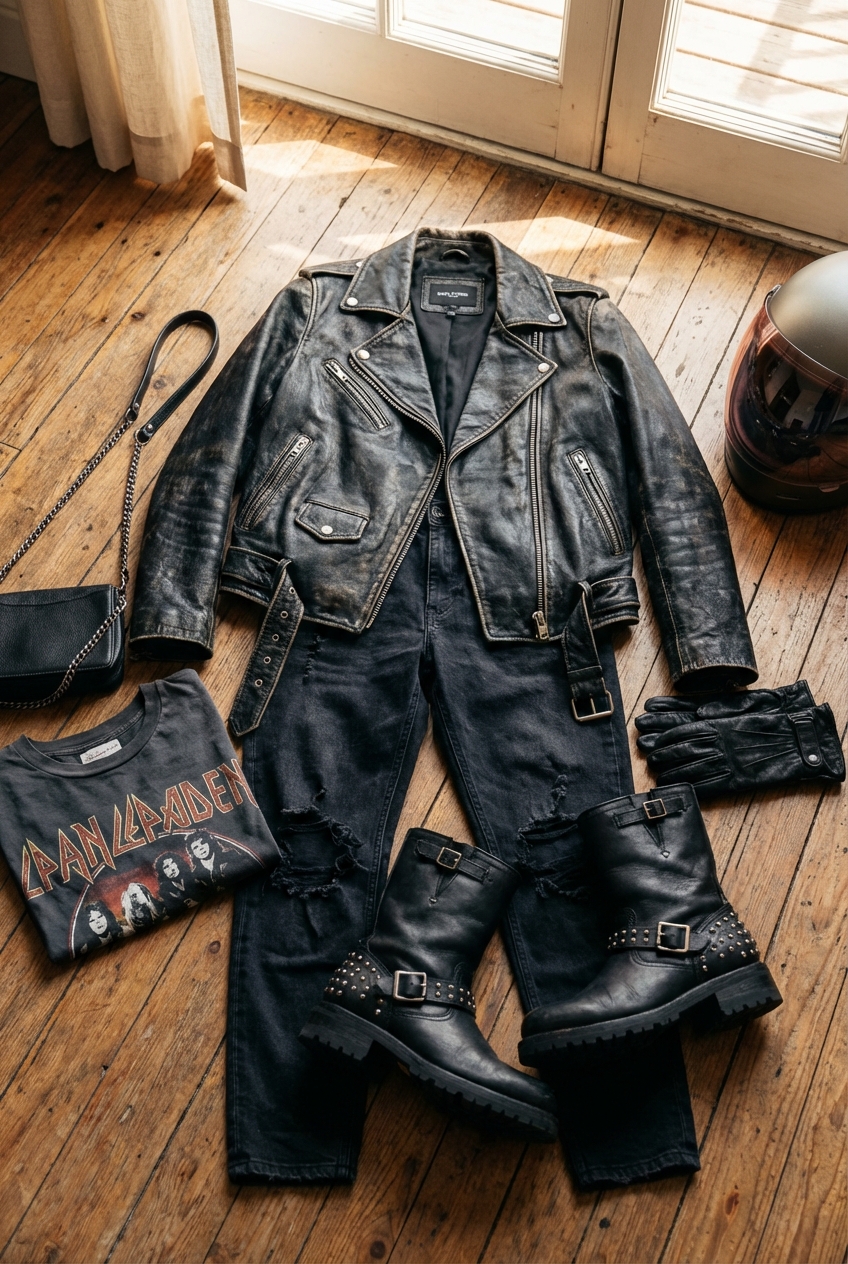
Edgy Motorcycle Ride Attire With Biker Jackets
There is an undeniable allure to the motorcycle aesthetic that transcends mere trends. As a fashion stylist who has dressed clients for everything from editorial shoots on vintage Triumphs to real-world road trips, I know that the “biker look” is about balancing raw attitude with genuine functionality. It is one of the few fashion categories where the garment’s engineering is just as important as its silhouette.
When you slip into a heavy, well-structured moto jacket, you aren’t just putting on a layer; you are putting on armor. The goal is to look effortlessly cool, channeling that rebellious spirit while ensuring you are actually comfortable—whether you are riding the bike or just grabbing coffee nearby. The key lies in understanding the interplay of leather textures, hardware weight, and proportional styling.
If you are looking for visual inspiration to assemble your full look, be sure to scroll down to the Picture Gallery at the end of this blog post.
The Foundation: Selecting the Perfect Moto Jacket
The centerpiece of this look is, naturally, the leather jacket. However, in high-end fashion, not all leather jackets are created equal. You need to distinguish between a “fashion jacket” meant for a dinner date and a jacket that offers the structure needed for a motorcycle ride aesthetic.
A true biker jacket should have a specific weight to it. I always tell my clients to look for full-grain or top-grain leather rather than genuine leather or bonded alternatives. Full-grain leather retains the hide’s natural imperfections and strength, meaning it will mold to your body over time rather than cracking.
Key Fit Metrics
When fitting a client, I follow strict rules regarding the shoulders and sleeves. The shoulder seam should sit exactly at the edge of your shoulder bone. If it droops, you lose the sharp, aggressive silhouette that defines this style.
Sleeve Length Rules
For motorcycle styling, your sleeve length needs to be longer than a standard blazer. When you reach forward to grab handlebars (or even a steering wheel), sleeves ride up. I recommend sleeves that hit about one to two inches past the wrist bone when your arms are hanging relaxed at your sides.
Designer’s Note: The Break-In Period
One lesson I learned early in my career involves the stiffness of high-quality leather. A great jacket will feel slightly restrictive at first. Do not size up immediately if it feels snug. Good leather stretches about a half-size once it warms up to your body heat. If you buy it loose, it will look sloppy within six months.
The Bottom Half: Pants That Perform
The pairing of your jacket with the right trousers creates the vertical line of your outfit. While skinny jeans have been the standard for years, we are seeing a shift toward straight-leg cuts that offer more comfort and a modern profile. The fabric choice here is non-negotiable: you need density.
If you are opting for denim, look for a weight of at least 12 ounces. This provides the stiffness required to hold its shape against the visual weight of a leather jacket. Flimsy, high-stretch jeggings will look unbalanced when paired with a heavy biker jacket.
The Rise Matters
Always opt for a high-rise waist. When you sit, particularly on a bike or a low chair, low-rise pants create a gap at the lower back which ruins the seamless line of the outfit. A high rise ensures your shirt stays tucked and your proportions remain elongated.
Common Mistakes + Fixes
Mistake: Wearing cropped ankles that expose too much skin.
Fix: Ensure your inseam is long enough to graze the top of your boot foot, not just the ankle shaft. When you bend your knees to sit, pants rise up 2-3 inches. Factor this into your hemming.
Footwear: Boots With Edge and Grip
Your choice of footwear grounds the entire edgy aesthetic. In styling this look, I avoid delicate stilettos or soft suede booties. You want a boot that communicates durability. The most authentic look involves a “Goodyear welt” construction, where the sole is stitched to the upper rather than glued.
Heel Height and Stability
For a ride-ready look, keep heel height under two inches. A block heel is acceptable, but a flat, lug-soled boot often looks more authentic and edgy. If you choose a heel, ensure it is a stacked leather heel, which provides visual weight, rather than a wrapped plastic heel.
Styling the Shaft
The shaft of the boot should fit close to the ankle. If you are wearing straight-leg jeans, the jeans should fall over the boot shaft. If you are wearing skinny jeans or leather leggings, they should tuck smoothly inside without bunching.
What I’d Do in a Real Project
If I am styling a client for a “city moto” vibe, I often reach for a harness boot or a combat boot with a side zipper. Laces can look great, but make sure they are short and tucked in so they don’t flop around, which detracts from the sleek, aerodynamic visual we are aiming for.
Layering: Managing Bulk and Temperature
The biggest challenge with a fitted leather jacket is what to wear underneath. You want warmth and texture, but you do not want to look stuffed. This is where fabric knowledge becomes essential.
The “Thin but Warm” Rule
Avoid chunky cable knits under a biker jacket. They restrict arm movement and make you look boxy. Instead, rely on thermal regulators like Merino wool or cashmere. A thin, high-gauge cashmere sweater provides four times the warmth of a thick cotton sweatshirt and maintains a sleek profile.
Graphic Tees vs. Silk
For a classic edgy look, a vintage-wash cotton tee is unbeatable. Look for “slub cotton” textures which add visual interest. Conversely, for a “hard-soft” contrast, a silk camisole creates a beautiful juxtaposition against the heavy leather, perfect for transitioning to an evening venue.
Designer’s Note: The Length Factor
Pay attention to the hem of your base layer. Ideally, your shirt should not hang more than one or two inches below the jacket hem. Too much overhang disrupts the waistline and makes your legs look shorter.
Accessorizing With Hardware and Protection
Accessories in the biker aesthetic should feel industrial and substantial. Delicate gold chains often get lost visually against heavy zippers and snaps. I prefer silver or gunmetal hardware, as it generally coordinates better with the zippers found on most moto jackets.
Eyewear
Sunglasses are crucial. Aviators are the classic choice, but ensure they are sized correctly for your face shape. Oversized frames work well to balance the bulk of a jacket collar. Look for gradient lenses, which are practical for varying light conditions and look incredibly chic.
Gloves
Even if you aren’t riding, leather gloves tucked into a pocket or worn add a layer of authenticity. Look for unlined leather for a slimmer profile. If you buy lined gloves, ensure the lining is silk, not synthetic fleece, to avoid “sausage fingers.”
Common Mistakes + Fixes
Mistake: Over-accessorizing with too much jewelry.
Fix: Let the jacket’s hardware be the jewelry. If your jacket has heavy zippers, belts, and snaps, skip the necklace and opt for simple stud earrings or a single statement ring.
Textural Contrast and Color Palettes
While black on black is the default “edgy” mode, high-end styling requires a bit more nuance. Wearing head-to-toe black leather can sometimes look like a costume rather than an outfit. I encourage mixing textures to create depth.
Breaking Up the Black
If your jacket and boots are black leather, try charcoal grey denim or a waxed canvas pant. The slight difference in tone and light reflection makes the outfit look curated rather than uniform.
Pop of Color
A deep oxblood, forest green, or midnight blue in the boots or the bag can elevate the look instantly. These dark jewel tones read as neutrals but add a layer of sophistication that plain black lacks.
Scale and Proportion
Follow the “Rule of Thirds.” Your jacket takes up the top third of your body. Your legs take up the bottom two-thirds. Avoid tunics that cut your body in half (50/50). Keep the waist defined to maintain a feminine, powerful silhouette amidst the masculine clothing items.
Finish & Styling Checklist
Before you head out, run through this quick stylist checklist. I use a version of this on set to ensure the look reads “expensive” and “cool” rather than messy.
- Check the Shoulder Fit: Seam sits on the bone; no bulging or drooping.
- Sleeve Length Test: Reach your arms forward. Do your wrists stay covered?
- Hardware Match: Are your belt buckle, boot buckles, and jacket zippers in the same metal family (all silver or all gold)?
- The Tuck: Is your base layer tucked or hemmed properly so it doesn’t ruin the jacket’s waistline?
- Pant Break: Do your pants sit correctly over your boots without awkward bunching?
- Mobility Check: Can you cross your arms and sit down comfortably? If not, the fit is too tight.
FAQs
Can I wear faux leather for this look?
From a styling perspective, yes, high-quality vegan leather has come a long way. Look for matte finishes; shiny plastic-looking leather is a dead giveaway of lower quality. However, strictly for fashion, faux leather does not offer the same breathability or molding capability as real hide.
How do I clean my biker jacket if it gets dirty?
Never put it in a washing machine. For small spots, use a damp cloth. For conditioning, use a specific leather conditioner once a season to keep it from drying out. If it is a major stain, take it to a professional leather specialist, not a regular dry cleaner.
Should I size up to wear sweaters underneath?
Generally, no. A moto jacket is meant to fit like a second skin. If you size up for thick sweaters, the jacket will look ill-fitting when you wear it with just a t-shirt. It is better to wear thinner, high-warmth layers (like cashmere) than to compromise the silhouette.
What if I am petite?
Look for “cropped” moto styles. A standard biker jacket might hit a petite frame at the hip, which drags the eye down. A cropped version that hits at the natural waist will elongate your legs. Avoid oversized hardware that can overwhelm a smaller frame.
Conclusion
Mastering the edgy motorcycle aesthetic is about more than just throwing on a leather jacket. It is a deliberate exercise in proportion, texture, and attitude. By focusing on the quality of the leather, the weight of your denim, and the specific fit of your boots, you elevate the look from “costume” to “high-fashion off-duty.”
Remember that this style gets better with age. The crease in the sleeve, the scuff on the boot, and the fade in the denim all tell a story. Wear your pieces hard, care for them well, and walk with the confidence that comes from an outfit that is as functional as it is fierce.
Picture Gallery


