
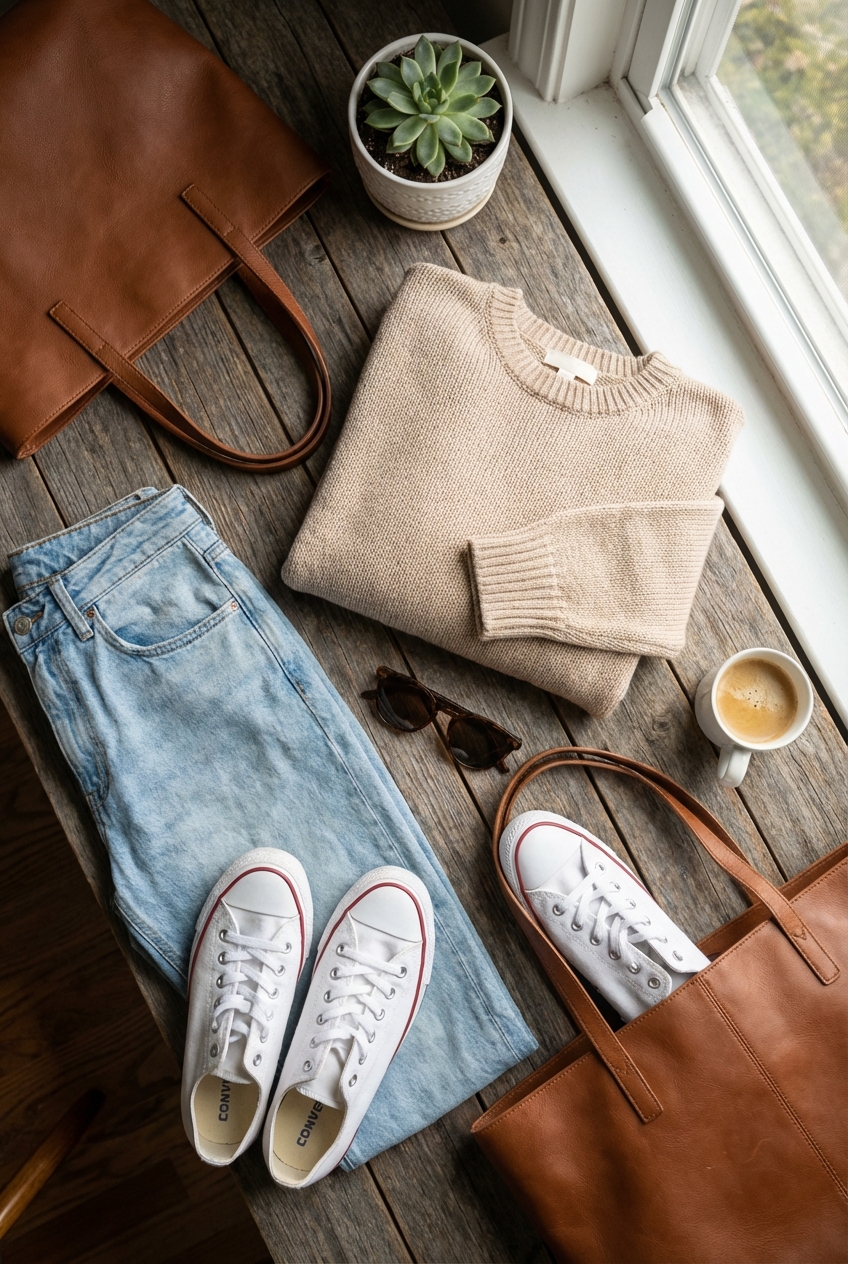
Effortless Casual Building The Perfect Weekend Wardrobe
Introduction
We have all experienced the specific anxiety of a Saturday morning. You have errands to run, a brunch reservation, and perhaps an impromptu walk in the park planned. You stare into a full closet, yet everything feels either too corporate for coffee or too sloppy for public viewing. The goal is that elusive “off-duty model” vibe—polished but relaxed, curated but comfortable.
As a stylist, I tell my clients that a weekend wardrobe requires just as much architectural planning as a formal evening rotation. It is not about throwing on old gym clothes; it is about selecting high-quality basics that interact beautifully with one another. When you get the foundation right, you stop dressing for the trend and start dressing for the life you actually live.
In this guide, we are going to deconstruct the mechanics of casual style. We will cover fabric weights, silhouette proportions, and the specific measurements that make the difference between “messy” and “effortless.” If you are looking for visual inspiration to guide your shopping, you can find a curated Picture Gallery at the end of the blog post.
The Architecture of Fabric: Weight and Texture
The primary difference between a garment that looks expensive and one that looks cheap is rarely the brand name. It is almost always the textile. In interior design, we talk about “hand” and “drape,” and the same rules apply to your body. You need fabrics that hold their shape against the rigors of a weekend.
For your core layers, move away from thin, synthetic blends that cling to static. Look for mid-weight cotton jersey for t-shirts. A good metric is opacity; if you put your hand inside the shirt and can see your skin tone through it, the fabric is too light for a polished look. It will warp after two washes.
For knitwear, focus on natural fibers like merino wool or cashmere, even in blends. These regulate body temperature better than acrylics, meaning you won’t overheat while rushing through the grocery store. Natural fibers also pill less if cared for correctly.
Designer’s Note: The “Scrunch” Test
I teach every client this simple test while shopping. Grab a handful of the fabric and scrunch it tightly in your fist for ten seconds. Release it. If the wrinkles stay deep and sharp, put it back. A weekend wardrobe needs to survive car rides and sitting on park benches. You want fabrics with “memory” that spring back to smooth.
Mastering Silhouette and Proportion
Achieving an effortless look is fundamentally a math problem involving volume. A common mistake is wearing loose clothing from head to toe, which swallows your figure, or tight clothing everywhere, which can look dated and uncomfortable. The golden rule is simple: balance the volume.
If you are wearing a relaxed, oversized cable-knit sweater, your bottom half needs to be streamlined. This does not necessarily mean skin-tight leggings; a straight-leg jean or a slim trouser works perfectly. Conversely, if you are wearing wide-leg trousers, keep your top fitted or tucked in to define the waist.
We also apply the “Rule of Thirds” to the body. Visually, a 1:1 ratio (where your top and bottom halves look equal in length) is unappealing. You want to create a 1/3 to 2/3 ratio. High-waisted trousers create a long 2/3 line for your legs, while a tucked top creates the top 1/3. This elongates the frame instantly.
Common Mistakes + Fixes
Mistake: Leaving a long t-shirt untucked over jeans, cutting your body in half visually.
Fix: Use the “French Tuck.” Tuck just the front center of the shirt into your waistband, letting the sides and back drape naturally. This defines the waistline while maintaining a relaxed vibe.
The Denim Equation: Fit and Measurements
Denim is the anchor of the weekend wardrobe, yet most women are wearing the wrong inseam for their height. The days of dragging hems are over, but the “flood” look is equally tricky. For a modern straight-leg jean, the hem should hit exactly at the ankle bone or up to one inch above it.
This specific measurement allows you to wear sneakers, loafers, or ankle boots without the fabric bunching awkwardly. If you are petite, you must take your jeans to a tailor. A $20 hemming fee can make a $50 pair of jeans look like a $200 pair.
Pay attention to the “rise” measurement as well. A mid-to-high rise (usually 9 to 11 inches) is generally the most functional for weekend wear. It keeps you covered when you bend down to pick up a child or a grocery bag, and it sits securely without needing constant adjustment.
What I’d Do For a Client
If I were building a capsule for a client today, I would buy three pairs of jeans:
1. One “clean” wash (dark blue, no distressing) for dinners.
2. One vintage wash (lighter blue, softer denim) for daytime.
3. One off-white or ecru pair. Ecru is softer than stark white and can be worn year-round.
The Third Piece Rule
This is the oldest stylist trick in the book, and it works every time. A top and a bottom are just “clothes.” Adding a third piece makes it an “outfit.” The third piece brings texture, dimension, and intentionality to the look.
In the warmer months, your third piece might be a lightweight linen button-down worn open over a tank top. In the autumn, it could be a trench coat, a leather moto jacket, or a structured blazer. The key is that this piece adds structure to the softer elements underneath.
The third piece also serves a functional purpose. It acts as a shield against fluctuating temperatures and provides necessary pockets. When selecting jackets, ensure the shoulder seam sits precisely at the edge of your shoulder bone. If it droops, you look tired. If it pulls, you look restricted.
Designer’s Note: Sleeve Length Matters
A jacket sleeve should end at the wrist bone. Many off-the-rack coats have sleeves that are too long, covering the hands and making you look like a child playing dress-up. Having sleeves shortened is a standard, affordable alteration that drastically improves the “expensive” feel of your wardrobe.
Footwear: Grounding the Look
Casual footwear has evolved significantly. We are no longer limited to running shoes or uncomfortable flats. The modern weekend shoe needs to bridge the gap between athletic and aesthetic.
White leather sneakers are non-negotiable. They are the neutralizers of the fashion world. They can dress down a trouser or dress up a sweatpant. Look for low-profile silhouettes rather than chunky “dad shoes” if you want a look that remains timeless.
For a slightly dressier option, a loafer or a mule is essential. Leather or suede adds a different texture to the outfit. If you are wearing ankle boots, ensure the shaft of the boot is slim enough to slip under your jeans, or short enough that it doesn’t fight with the hem.
Real-World Constraints
If you are a mom chasing toddlers or you live in a rainy city, suede loafers are not your friend. Be realistic. Opt for treated leather that wipes clean. I often recommend waterproof Chelsea boots that look like fashion boots but function like rain gear. Style should never inhibit your movement.
Accessories and “The Finish”
Accessories in a casual wardrobe should be minimal but substantial. Avoid “dainty” jewelry that gets lost in chunky knits. Instead, opt for a medium-sized gold hoop or a simple chain necklace that adds a flash of light near your face.
Bags are where functionality reigns supreme. A crossbody bag is the standard for weekend ease because it leaves your hands free for coffee or shopping bags. However, watch the strap length. The bag should hit at your high hip. If it bangs against your thigh, the strap is too long and will throw off your proportions.
Finally, consider the belt. A leather belt is the “period” at the end of the sentence. Even if you don’t “need” it to hold your pants up, wearing one signals that you finished getting dressed. Match the leather tone generally to your shoes, but don’t stress about an exact color match.
Common Mistakes + Fixes
Mistake: Wearing athletic socks with tailored loafers or ankle boots.
Fix: Invest in “no-show” socks that actually stay on your heel (look for the silicone grip), or embrace a solid color trouser sock that intentionally bridges the gap between pant and shoe.
Finish & Styling Checklist
Use this checklist to audit your current rotation or before you head out the door.
The Fabric Check
- Is the fabric opaque (not see-through)?
- Does the knitwear look pill-free?
- Do natural fibers dominate the mix (cotton, wool, linen)?
The Fit Check
The Style Check
FAQs
Can I wear leggings and still look chic?
Absolutely. However, the rule of proportion is critical here. Because leggings are skin-tight, your top must cover your bum. Pair them with an oversized white button-down, a long trench coat, and clean sneakers. This looks intentional. A short t-shirt and leggings looks like gym wear.
How do I mix metals in my jewelry?
The old rule of not mixing silver and gold is dead. However, to make it look cohesive, choose one dominant metal and use the other as an accent. Or, buy a piece that already contains both metals (like a two-tone watch) to bridge the gap between your gold earrings and silver rings.
What is the best color palette for a capsule wardrobe?
Stick to neutrals for your investment pieces (coats, boots, bags). Black, camel, navy, white, and gray mix interchangeably. Use cheaper items like scarves, beanies, or t-shirts to introduce seasonal trend colors.
How do I keep white sneakers clean?
Use a magic eraser sponge for the rubber soles. For the leather uppers, a simple wipe with a damp cloth and mild soap works wonders. Replace the laces when they get dingy; crisp white laces make the whole shoe look brand new.
Conclusion
Building the perfect weekend wardrobe is not about owning more clothes; it is about owning the right clothes and understanding how they relate to your body. It is a shift from passive dressing to active styling.
When you invest in the correct fabrics, tailor your inseams, and understand the power of the third piece, you reclaim your weekends. You stop worrying about whether you are underdressed and start focusing on enjoying your time off. Start with the basics, trust the measurements, and let your confidence handle the rest.
Picture Gallery


