
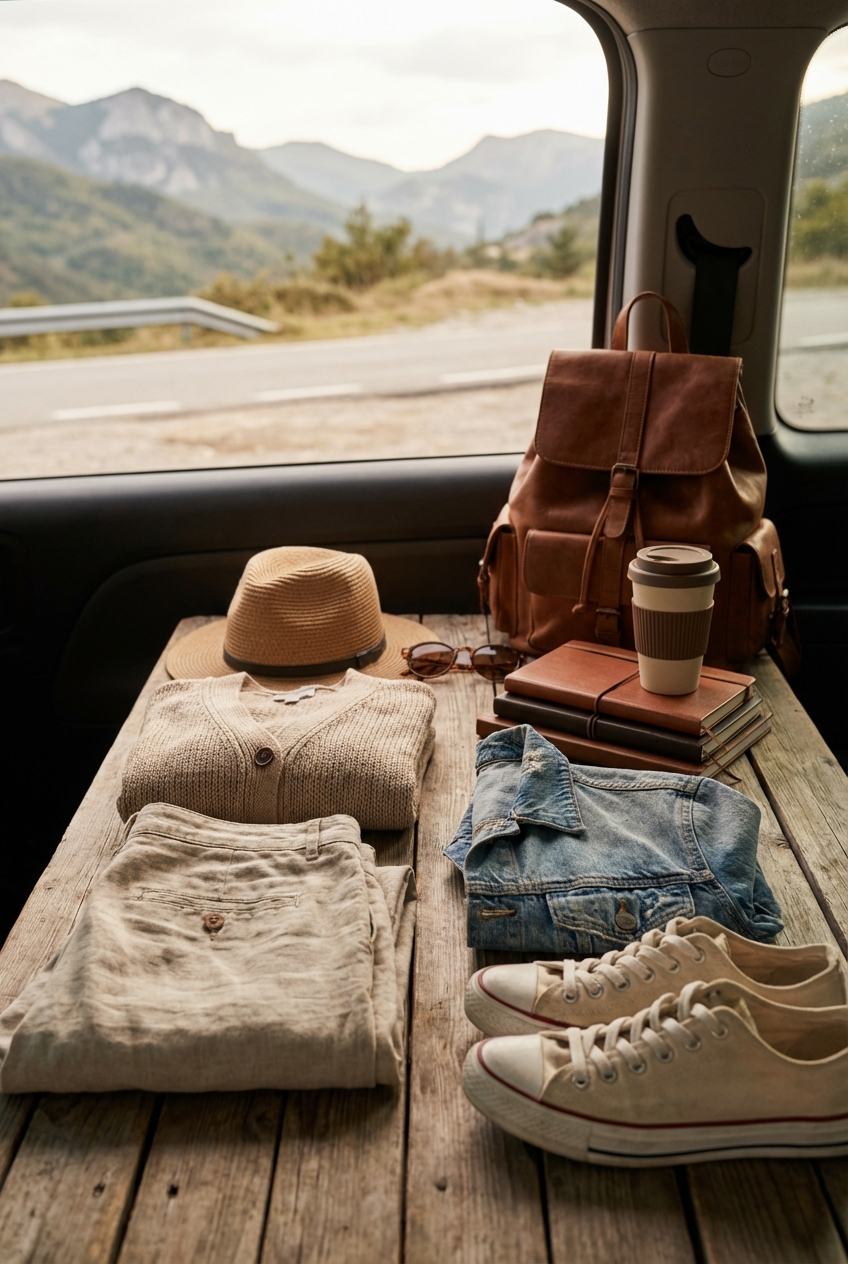
Effortless Road Trip Outfits With Relaxed Fits
There is a specific kind of romance attached to the American road trip. We envision wind-swept hair, scenic overlooks, and perfectly curated playlists. However, the reality often involves hours of sitting in a confined space, fluctuating temperatures, and the desperate need to stretch your legs at a roadside stop. Early in my styling career, I made the amateur mistake of driving four hours to a client consultation wearing rigid, vintage denim. By hour two, the waistband felt like a vice, and I arrived looking crumpled and feeling irritable.
That experience taught me that travel style is an equation of physics and aesthetics. You need garments that forgive the seated posture while retaining enough structure to look polished when you step out of the car. The goal is to avoid looking like you just rolled out of bed, even if your outfit feels as comfortable as pajamas. We are aiming for “intentional relaxation” rather than “accidental messiness.”
Through years of traveling for fashion weeks and sourcing trips, I have refined a capsule approach to the road trip wardrobe. It relies heavily on relaxed fits, premium natural fibers, and monochromatic layering. If you are looking for visual inspiration on how to pull these looks together, I have curated a complete Picture Gallery at the end of the blog post.
The Physics of Fabric: Breathability and Bounce-Back
Before we discuss silhouettes, we must address the most critical element of travel style: the textile. When you are seated for long durations, your body heat is trapped against the seat leather or upholstery. Synthetic fabrics like cheap polyester or heavy nylon will trap moisture, leading to discomfort and that inevitable “sticky” feeling.
I always advise clients to check the garment tag before packing for a trip. You are looking for natural fibers with a small percentage of stretch. Cotton, modal, and bamboo are excellent for breathability. However, 100% linen, while breathable, wrinkles aggressively. If you love the look of linen, choose a linen-rayon blend. The rayon adds drape and weight, helping the fabric release wrinkles more easily than pure flax.
Cashmere and high-quality merino wool are also surprisingly effective for road trips. They are temperature-regulating, meaning they keep you cool when the sun hits the glass and warm when the A/C is blasting. They also possess natural elasticity, meaning knees and elbows won’t bag out as quickly as they do in poor-quality cotton knits.
Designer’s Note: The “Hand Test”
When shopping for travel clothes, scrunch the fabric tightly in your hand for ten seconds and let go. If the wrinkles stay sharp and defined, leave it on the rack. If the fabric bounces back or the wrinkles look soft and organic, it will survive a six-hour drive.
The Elevated Matching Set
The matching set is the modern woman’s answer to the travel suit. It provides the ease of sweats but communicates a much higher level of polish because of the monochromatic continuity. When your top and bottom match perfectly in tone and texture, it creates a vertical line that elongates the body, which is flattering on everyone.
For a relaxed road trip vibe, look for sets in ribbed knits or French terry. Avoid the traditional hoodie-and-jogger combo, which can read too juvenile or athletic. Instead, opt for a wide-leg pant paired with a matching crewneck sweater or a collarless cardigan. The lack of hardware (zippers, buttons) on the waistband is crucial for comfort while driving.
This approach also solves the “decision fatigue” of packing. You have one outfit that works perfectly together, but both pieces can be separated once you reach your destination. The pants can be paired with a crisp white shirt for dinner, and the top can be thrown over a slip dress for a cool evening.
Common Mistakes + Fixes
- Mistake: Wearing oversized tops with oversized bottoms.
- Fix: Apply the rule of proportions. If your pants are wide-leg and flowy, choose a top that is slightly more fitted or cropped to the waist. If your top is an oversized sweatshirt, pair it with a slimmer biker short or legging. You need to show the body’s silhouette somewhere to avoid looking swamped.
The Button-Down Shirt as Outerwear
The “shacket” or oversized button-down is perhaps the most versatile tool in a travel wardrobe. On a road trip, temperatures fluctuate constantly. You might be freezing in the car but sweating when you stop for gas in the midday sun. A heavy coat is too cumbersome to drive in, and a pullover sweater is difficult to remove while wearing a seatbelt.
Enter the oversized button-down. Worn unbuttoned over a tank top or tee, it acts as a lightweight jacket. It protects your arms from the sun without overheating you. Because it has a collar, it instantly adds structure to an outfit that might otherwise feel too soft. It frames the face and makes you look “dressed” even if you are wearing leggings.
I recommend sourcing a shirt in a poplin or oxford cloth. These fabrics have enough stiffness to stand away from the body, allowing air to circulate. Size up one or two sizes from your normal fit to ensure the shoulders drop and the sleeves can be rolled up comfortably.
Styling Checklist: The “French Tuck”
If your oversized shirt feels too boxy, use the “French tuck” or “half-tuck.” Tuck just the front hem of the shirt into your waistband, leaving the back loose. This defines your waist while maintaining the relaxed, effortless vibe in the back.
Bottoms: The Case for Wide-Leg Trousers
For years, leggings were the default travel uniform. While I love a good performance legging, they can sometimes feel restrictive after hours of sitting, and they don’t always transition well to lunch stops or hotel check-ins. The relaxed fit revolution has brought us wide-leg trousers that are just as comfortable but infinitely more chic.
Look for trousers with an elasticated waist in the back and a flat front. This hybrid construction gives you the comfort of sweatpants with the visual appeal of tailored trousers. Materials like Tencel, heavy-weight jersey, or Ponte knit are ideal. They drape beautifully and move with you.
The scale of the pant leg matters here. A wide leg allows for blood flow and air circulation, preventing that heavy-legged feeling upon arrival. Just ensure the hem is the correct length. You want the hem to break slightly over your shoe, but not drag on the ground where it will pick up dirt at rest stops.
What I’d Do in a Real Project
If I were styling a client for a cross-country trip, I would pack:
- One pair of Ponte knit wide-leg trousers (Black or Navy). They resist wrinkles and look formal enough for a nice dinner.
- One pair of soft-washed joggers. For the longest driving days where comfort is king.
- One bias-cut midi skirt. Surprisingly comfortable for sitting and looks incredibly elegant when you step out of the car.
Footwear: Practicality Meets Style
Shoes are often the afterthought in road trip planning, but they are critical for safety and style. Driving in heavy boots is dangerous as you lose tactile feedback from the pedals. Driving in flip-flops is equally risky as they can slip off and wedge under the brake. You need a shoe that stays securely on the foot but can be slipped off easily if you want to get comfortable in the passenger seat.
The loafer or the driving moccasin is the heritage choice here. They are slip-on, offer good grip, and elevate a casual outfit instantly. A soft leather loafer allows for foot flexibility while driving but looks sharp when paired with relaxed trousers.
If you prefer a sneaker, opt for a retro-style lifestyle sneaker rather than a technical running shoe. Think gum soles, suede accents, and low profiles. These pair better with wide-leg pants and dresses. Technical running shoes often look too “gym-ready” and can clash with the relaxed, elevated aesthetic we are aiming for.
Designer’s Note: The Sock Variable
Do not underestimate the power of a good sock. If you are wearing slides or loafers, pack a pair of thick, cashmere blend socks in your tote bag. When you are the passenger, you can slip off your shoes and put on the socks for maximum coziness. It’s a small luxury that changes the entire mood of the trip.
Accessories: The Third Piece Rule
In fashion styling, the “Third Piece Rule” states that every outfit needs three key elements to feel complete: a top, a bottom, and a third piece. In summer, that third piece is often an accessory. On a road trip, accessories must be functional, but they also serve as the anchor that ties the relaxed look together.
Start with a structured tote bag. Because your clothes are soft and unstructured (relaxed fits), your bag needs to have defined edges to provide visual contrast. A canvas or leather tote that stands up on its own is practical for holding snacks, water, and chargers, but it also signals that you are traveling with purpose.
Sunglasses are non-negotiable. They protect your eyes from highway glare and hide the fact that you might be tired. An oversized frame adds a touch of old-Hollywood glamour to even the simplest t-shirt and jeans combo. Finally, consider a baseball cap or a soft bucket hat. They are trendy, practical for sunny stops, and excellent for covering up “car hair.”
Jewelry for Travel
Keep jewelry minimal. Large hoop earrings or long necklaces can snag on seatbelts or become uncomfortable against the headrest. Stick to small gold huggies and perhaps a simple chain bracelet. You want just enough shine to look polished, not enough to be a nuisance.
Finish & Styling Checklist
Before you zip your weekender bag, run through this final checklist to ensure your road trip outfits are cohesive and functional. This is the exact mental process I use when packing for clients.
- Check the Fabric Content: Is everything at least 50% natural fiber (Cotton, Wool, Linen, Silk, Modal)? Synthetics should be kept to a minimum.
- The Sit Test: Put on your designated driving pants and sit in a low chair for 5 minutes. Does the waistband dig in? Does the fabric pull across the thighs? If yes, change them.
- Layering Ratios: Do you have a lightweight base layer, a mid-weight warmth layer, and a structured top layer?
- Color Palette: Stick to neutrals (camel, cream, navy, black, gray) or a monochromatic scheme. This allows you to mix and match everything in your bag.
- Shoe Strategy: One pair on your feet (closed-toe, easy on/off), one pair in the bag (sandals or dressier shoes for destination).
FAQs
How do I keep my clothes from wrinkling while sitting for hours?
Wrinkles are caused by heat, moisture, and pressure. While you can’t avoid pressure, you can manage the others. Keep the car cool to avoid moisture build-up. More importantly, choose knits (jersey, rib-knit, cashmere) over wovens. Knits have a loop structure that springs back, whereas wovens (like standard dress shirts) crease permanently. If you must wear a woven fabric, ensure it is a blend with Tencel or Lyocell.
Are jeans ever okay for a road trip?
If you are committed to denim, avoid 100% cotton rigid denim. Look for jeans with at least 2% elastane or spandex. Also, pay attention to the rise. A super high-rise jean can constrict your diaphragm when seated, making you feel nauseous. A mid-rise with stretch is the only denim I would recommend for drives longer than two hours.
How can I look expensive while wearing sweatpants?
The secret is in the “grooming and rigid accessories” contrast. If your clothes are soft and slouchy, your hair should be neat (a slicked-back bun is perfect), and your accessories should be structured (a leather bag, clean white sneakers, dark sunglasses). Also, ensure your sweats are free of logos, stains, or pilling. A pristine, blank sweat suit looks like luxury leisurewear; a worn-out logo hoodie looks like gym clothes.
Conclusion
Mastering the art of the road trip outfit is about respecting the journey as much as the destination. It requires a shift in mindset from “dressing to impress” to “dressing for the environment.” By prioritizing natural fibers that breathe, relaxed fits that allow for circulation, and a monochromatic palette that brings calm to the visual chaos of travel, you can arrive feeling fresh and ready to explore.
Remember that the most stylish woman in the room—or the car—is usually the one who looks the most comfortable in her own skin. When you aren’t fidgeting with a tight waistband or sweating in polyester, you project an air of effortless confidence. That is the true essence of the relaxed fit aesthetic. Safe travels.
Picture Gallery


