
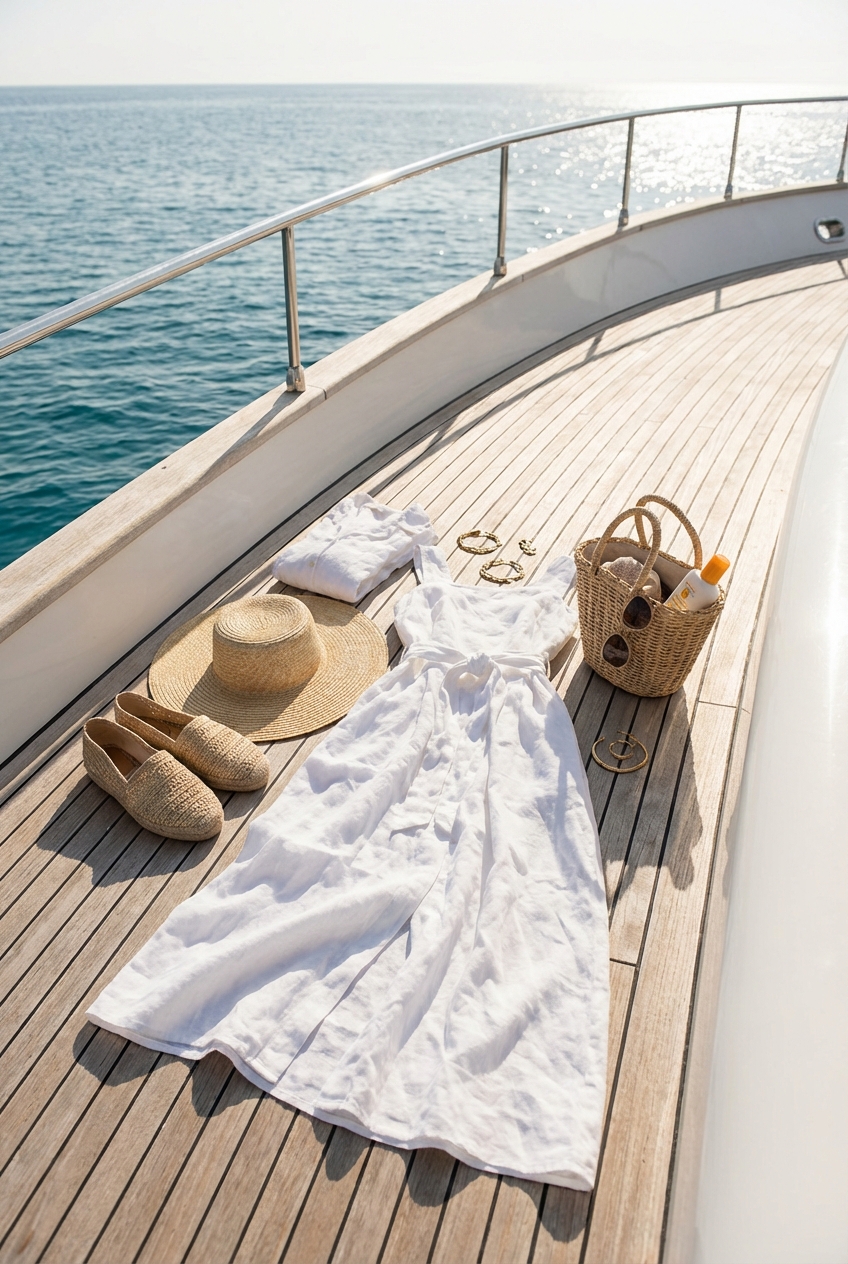
Effortless White Linen Dresses For Yacht Parties
There is a very specific type of panic that sets in when you receive an invitation to a yacht party. While the setting implies leisure and luxury, the environment is actually quite demanding on a wardrobe. You are battling humidity, unpredictable sea breezes, steep staircases, and the distinct glare of unfiltered sunlight reflecting off the water.
I learned this lesson the hard way during a client event off the coast of Capri several years ago. I wore a flimsy, synthetic wrap dress that clung uncomfortably in the heat and nearly blew away every time the captain picked up speed. Since that day, I have pivoted exclusively to high-quality white linen for these maritime occasions.
White linen is the ultimate equalizer in high-end resort wear because it manages to look structured yet relaxed simultaneously. It breathes better than cotton, reflects the harsh sun, and softens beautifully the longer you wear it. If you are looking for visual inspiration on how to style these looks, keep in mind that a curated Picture Gallery is at the end of the blog post.
Selecting the Right Linen Grade and Weight
Not all linen is created equal, especially when you are surrounded by the bright, revealing light of the open ocean. The biggest mistake I see women make is purchasing “tissue linen” or sheer blends that look cheap and transparent in direct sunlight. For a yacht setting, you need a medium-weight linen that ranges between 150 to 190 GSM (grams per square meter).
This weight provides enough structure to hide undergarments but remains breathable enough for high humidity. When shopping, place your hand behind the fabric and hold it up to a window or light source. If you can see the details of your fingerprints through the cloth, it is too thin for a daytime yacht party unless you plan to wear a full slip underneath.
I always recommend looking for European Flax certification, specifically Belgian or French origin. The climate in these regions produces longer fibers, which results in a smoother fabric that pills less over time. A dress made from high-quality long-staple linen has a natural luster that mimics silk, giving you that effortless “old money” aesthetic without trying too hard.
Fashion Expert’s Note: The “Scrunch” Test
When you are in the fitting room, crush a handful of the fabric in your fist for ten seconds and let go. If the wrinkles are sharp, jagged, and hold their shape aggressively, the linen is likely treated with stiffeners or is low quality. You want the fabric to bounce back slightly and show soft, rolling creases rather than hard lines.
Navigating Wind and Movement: Silhouette Rules
A moving vessel creates its own micro-climate, and wind is the primary factor you must dress for. Short, A-line skirts or flared mini dresses are a liability on a boat deck. You will spend the entire evening holding your hem down with one hand and clutching your champagne with the other, which ruins the relaxed vibe you are aiming for.
The safest and most chic silhouettes are midi or maxi lengths with a straight or column cut. These styles have enough weight to stay vertical even when the wind picks up. If you prefer a shorter length, opt for a romper disguised as a dress or a structured shift dress that sits closer to the body.
Be very wary of wrap dresses that do not have an internal security tie. The wind on the bow can easily whip open a wrap skirt, exposing you completely. If you love the wrap look, ensure it has a button closure or use a hidden safety pin to secure the overlapping fabric at the thigh.
Common Mistakes + Fixes:
- Mistake: Wearing floor-skimming maxi dresses that drag on the deck.
- Fix: Hem your dresses to ankle length, showing at least two inches of skin. Yacht decks are often wet, and dragging white linen through saltwater and foot traffic will ruin the hem instantly.
Day-to-Night Transitions and Layering
Yacht parties often start in the late afternoon heat and extend well past sunset. The temperature drop on the water is drastic and happens quickly once the sun goes down. Your white linen dress needs to function as a base layer that looks good with outerwear, not just as a standalone piece.
I always construct an outfit with the “third piece” in mind from the start. A lightweight cashmere sweater in oatmeal or navy draped over the shoulders is a classic nautical look. It adds texture and warmth without looking like you brought a coat.
Alternatively, an oversized white linen button-down shirt worn open over a slip dress creates a chic, monochromatic layered look. This protects your shoulders from the afternoon sun and cuts the evening chill. Avoid denim jackets, which can feel too heavy and casual for a luxury marine setting.
The “Shoes Off” Policy and Footwear Strategy
If you are boarding a private yacht, there is a 90% chance you will be asked to remove your shoes before stepping onto the teak deck. High heels, especially stilettos, are strictly forbidden as they dent and damage the soft wood surface. This rule changes how you should approach your hemline and your shoe choice.
Since you might be barefoot for part of the event, ensure your dress length works without the added height of heels. A dress tailored for 4-inch wedges will drag on the floor when you are barefoot. This is why I prefer midi lengths that hit mid-calf; they look proportional whether you are in heels or barefoot.
For the times you are wearing shoes (dockside or on hard-top decks), choose wedges, espadrilles, or block-heeled sandals. Leather slides are also acceptable for more casual daytime gatherings. Avoid rubber flip-flops, which look too pedestrian for a yacht party.
What I’d Do in a Real Project:
- The Shoe Swap: I always carry a clean pair of fabric slippers or grip-socks in my tote. If the host requires shoes off, but the air conditioning inside is freezing, you have a chic backup plan that protects your pedicure and keeps you warm.
Accessorizing for Salt Air and Sunlight
Accessories are what take a simple white linen dress from “beach cover-up” to “cocktail attire.” However, the environment dictates specific material choices. Salt air accelerates oxidation, so costume jewelry can tarnish rapidly on a boat.
Stick to solid gold, gold-filled, or high-quality vermeil pieces. Pearls are naturally the best companion for white linen and maritime settings. They reflect the light beautifully and are impervious to the salt air. A baroque pearl choker or drop earrings add organic texture that complements the weave of the linen.
When it comes to hats, functionality is key. A wide-brimmed straw hat is essential for sun protection, but it must have a secure fit or a ribbon tie. Watching a $400 hat float away into the Mediterranean is a common tragedy. Look for hats with an internal adjustable band to tighten the fit against the wind.
The Art of the “Rich Wrinkle” vs. Sloppy Creases
You cannot prevent linen from wrinkling. In fact, attempting to keep it pristine is a losing battle that will make you look stiff and anxious. The goal is to achieve the “rich wrinkle”—soft, lived-in creases that imply leisure—rather than sharp, messy fold lines from packing.
To achieve this, never fold your linen dress tightly in a suitcase. Roll it loosely or pack it in a dry-cleaning bag to reduce friction. As soon as you arrive at your destination or cabin, hang the dress up.
Travel steamers are a non-negotiable tool for the fashion expert. Steam the dress before you put it on to reset the fibers. Once you are wearing it, accept the creases that form at the hips and elbows. They are part of the fabric’s character and charm.
Designer’s Note: The Starch Myth
Do not starch your linen dresses. Starch makes the fibers brittle and causes them to crease sharply and aggressively. You want the fabric to flow and drape, which requires the fibers to remain soft and flexible.
Foundation Garments for Bright Sunlight
The most beautiful white dress is ruined instantly by visible undergarments. In bright, natural sunlight, white fabric becomes significantly more transparent than it appears in your bedroom mirror. The instinct is to wear white underwear, but this is a critical error.
White underwear highlights the difference between the fabric and your skin tone, creating a stark visual outline. You must wear seamless undergarments that match your skin tone exactly. Red or terracotta tones can also work surprisingly well under white for darker skin tones, as they cancel out cool undertones.
Additionally, consider the wind factor again. A slip dress might require adhesive nipple covers or a bodysuit to ensure you feel secure. If your dress is backless or has cutouts, invest in high-quality adhesive bras that are sweat-resistant. Humidity can cause standard adhesives to fail within an hour.
Finish & Styling Checklist
Before you head to the marina, run through this final styling checklist to ensure your look is polished and practical.
- Opacity Check: Have you checked your dress in direct, natural sunlight to ensure your undergarments are invisible?
- Hem Safety: Is your hem at least two inches off the ground to prevent wet, dirty edges?
- Wind Test: Can you move freely without holding your skirt down? If not, have you added a slip or safety pin?
- Jewelry Security: are your earrings and clasps secure against the wind?
- Footwear Prep: Is your pedicure fresh, since you will likely be barefoot?
- The Third Piece: Do you have a shawl, sweater, or blazer for the temperature drop?
- Sun Protection: Have you applied sunscreen before dressing to avoid yellow stains on the white linen?
FAQs
How do I remove a red wine stain from white linen on a boat?
Speed is your only friend here. Immediately blot (do not rub) the stain with a clean napkin to absorb excess liquid. Cover the stain liberally with club soda or sparkling water, which is always available at the bar. The carbonation helps lift the pigment. If possible, sprinkle salt on the wet stain to absorb the wine, then brush it off.
Can I wear a white linen dress to a formal evening yacht party?
Yes, but the accessories must elevate the look. Swap the straw hat and tote for a metallic clutch and statement jewelry. Choose a linen dress with more structure or architectural details, like puffed sleeves or a belted waist, rather than a loose shift.
What do I do if I sweat through the linen?
Linen dries very quickly, which is one of its benefits. However, to prevent visible wet spots, look for dresses with a lining or wear a lightweight cotton slip underneath. Patterned weaves or textured linen also hide moisture better than flat, smooth weaves.
Is it okay to wear black accessories with a white linen dress?
Black can look a bit harsh against the breezy vibe of white linen. For a nautical setting, navy blue, tan, gold, or cognac leather are softer, more cohesive choices. If you must wear black, keep it minimal, like a thin sandal strap or sunglasses.
Conclusion
Mastering the art of dressing for a yacht party is about balancing the fantasy of the occasion with the reality of the elements. White linen is the champion of this balance, offering a sophisticated canvas that reflects the sun and moves beautifully in the sea breeze. It signals that you understand the environment and value comfort as much as style.
By choosing the right weight, securing your silhouette against the wind, and paying attention to the technical details of undergarments and length, you can enjoy the champagne and the view without constantly adjusting your outfit. The goal is to look as if you stepped off the boat effortlessly, even if you spent twenty minutes steaming your dress beforehand.
Remember that the most stylish accessory is confidence. When you know your dress is secure, opaque, and appropriate for the setting, you can relax and embody the luxury of the experience. That is the true essence of effortless style.
Picture Gallery


