
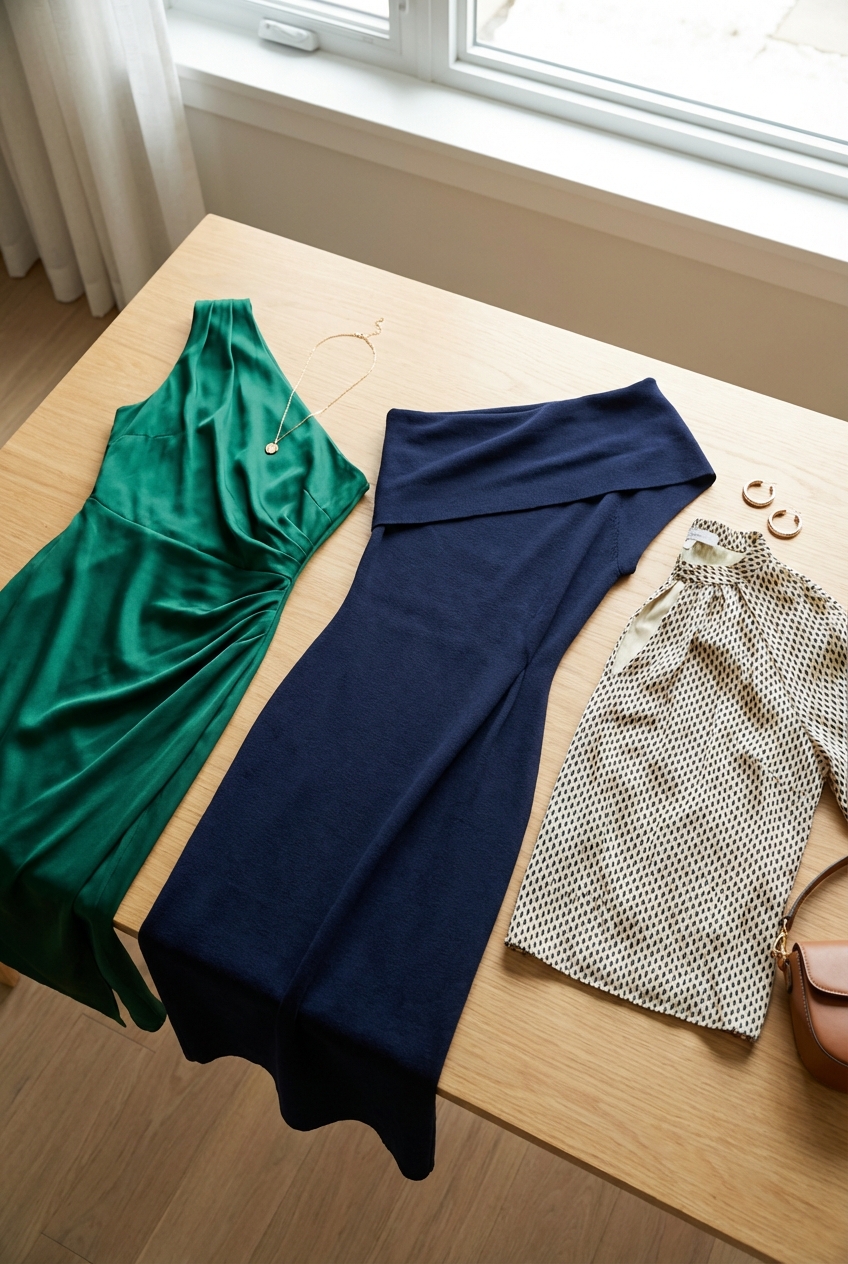
Elegant Asymmetrical Necklines In Dresses
Asymmetry in fashion is the ultimate tool for directing the eye. While symmetrical garments offer stability and classicism, an asymmetrical neckline introduces energy, movement, and a sculptural quality that few other silhouettes can match. I have styled countless clients for red carpets and high-stakes galas, and when a woman wants to feel like a piece of modern art, we almost always reach for a diagonal cut.
The beauty of this style lies in its versatility. It can range from the soft, romantic drape of a Grecian goddess gown to the sharp, architectural edge of a modern cocktail dress. However, wearing these pieces requires a bit more strategy than your standard slip dress. You have to consider the balance of skin, the engineering of undergarments, and the careful selection of jewelry to avoid cluttering the visual line.
In this guide, I will walk you through the nuances of choosing and styling asymmetrical dresses with the confidence of a stylist. If you need immediate visual inspiration, don’t forget that our curated Picture Gallery is waiting for you at the end of this post.
The Power of the Diagonal Line
The primary reason we love asymmetrical necklines is the diagonal line they create across the décolletage. In design theory, horizontal lines widen and vertical lines lengthen, but diagonal lines create dynamic movement. This is incredibly flattering on almost every body type because it breaks up the “block” of the torso.
For women with broader shoulders, a one-shoulder strap cuts the width visually, making the shoulders appear more delicate. Conversely, for women with narrow shoulders, the architectural slant draws the eye upward and outward, creating an illusion of width and stature. It is a balancing act that works in your favor, provided the fit is impeccable.
Designer’s Note: The “Gap” Warning
One lesson I learned early in my career involves the dreaded “armhole gap.” Because asymmetrical dresses rely on one suspension point, the fabric on the sleeveless side often wants to collapse or gape away from the body. When shopping, move your arms around. If you see the fabric buckling significantly near the armpit or bust on the open side, the bodice is too long for your torso. This is a fit issue, not a style feature, and it needs to be addressed immediately.
Navigating the One-Shoulder Silhouette
The most recognized form of asymmetry is the single-shoulder strap. This style demands excellent posture because it highlights the neck and the trapezius muscles. When I select these for clients, I categorize them into two vibes: the “Soft Drape” and the “Structural Cut.”
The Soft Drape usually involves chiffon, silk, or jersey. It gathers at the shoulder, often with a bow or a twist. This is forgiving and romantic, perfect for summer weddings or resort wear. The fabric moves with you, masking minor fit issues.
The Structural Cut uses stiffer fabrics like heavy crepe, scuba, or taffeta. These dresses stand away from the body slightly or hug it tightly with boning. This look is more high-fashion and severe. It requires precise tailoring because the fabric will not mold to you; you must mold the dress to your body.
Common Mistakes + Fixes
- Mistake: Wearing a convertible bra with one clear plastic strap.
- Fix: Clear straps are never invisible; they catch the light and cheapen the look. Invest in a high-quality, longline strapless bra that anchors at the waist, or use professional-grade adhesive cups if the back is open.
- Mistake: Ignoring the back view.
- Fix: Asymmetry should continue to the back. A dress that is one-shoulder in the front but has a standard straight back often looks disjointed. Check the rear view to ensure the diagonal flow continues gracefully.
Jewelry Rules for Uneven Necklines
Accessory selection is where many well-intentioned outfits fall apart. The neckline of an asymmetrical dress is the statement. If you add a necklace, you are effectively drawing a line across the art you are trying to display. The necklace will fight with the fabric, usually getting tangled in the strap or laying awkwardly on the skin.
The No-Necklace Policy
In 95% of cases, I advise my clients to skip the necklace entirely. The neckline itself is the jewelry. By leaving the chest bare, you elongate the neck and let the diagonal cut shine. If you feel too “naked,” apply a shimmer body oil to the collarbones to highlight the skin rather than covering it with metal.
Earring Strategy
Since the necklace is gone, the earrings become the focal point.
- The Balance Beam: If the dress has a detail on the left shoulder, the right side of your neck is exposed. Long, drop earrings or chandeliers work beautifully here because they fill that negative space.
- Asymmetrical Earrings: For a truly editorial look, I love pairing an asymmetrical dress with mismatched earrings. Wear a stud on the side with the strap and a long, dramatic drop on the bare shoulder side. It echoes the dress’s design logic.
- Cuffs and Bracelets: Balance the visual weight of the dress by wearing a bold cuff bracelet on the arm that is bare. This creates a diagonal counter-balance from the shoulder strap on one side to the wrist on the other.
Hairstyles that Complement the Cut
Your hair is an extension of the outfit’s silhouette. When wearing an asymmetrical neckline, leaving your hair down often hides the detail you paid for. If your hair covers the strap, you lose the drama. If it covers the bare shoulder, you lose the allure.
Up, Back, or Side-Swept
I always recommend sweeping the hair up or away. A sleek high ponytail or a chignon works wonders because it exposes the full line of the neck.
If you prefer wearing your hair down, sweep it entirely to the side that has the strap. This leaves the bare shoulder completely exposed, maximizing the contrast between the fabric and your skin. Never let your hair hang straight down over both shoulders; it creates a “curtain” effect that clashes with the diagonal energy of the dress.
What I’d Do in a Real Project
If I am styling a client in a one-shoulder velvet gown for a winter gala:
- Hair: A low, tight bun with a center part to keep the look sharp and modern.
- Earrings: Oversized gold architectural studs—no drops, just mass.
- Shoes: A simple strappy sandal. No heavy pumps, as the velvet is already heavy.
- Outerwear: This is tricky. You cannot wear a blazer over one shoulder easily. I would drape a cape or a faux-fur stole that can be held rather than worn.
The Logistics of Undergarments
We touched on this briefly, but it requires a deep dive. The wrong undergarments will ruin the line of a luxury dress instantly. Asymmetry presents a specific gravity problem: the side without the strap has no lift.
Structure is Key
For larger busts, a standard strapless bra is rarely enough for an asymmetrical gown because the dress itself puts uneven pressure on the chest. I recommend a longline bustier. The boning extends down to the waist, using your hips and ribcage for support rather than relying on a band that might slip.
Tape is Your Best Friend
Even with the best tailoring, fabric moves. To prevent a wardrobe malfunction on the sleeveless side, use double-sided fashion tape. Place a strip along the top edge of the bodice and press it firmly to your skin.
Pro Tip: Do not apply lotion to the area where you plan to tape. The oils will break down the adhesive within an hour. Clean the skin with a bit of rubbing alcohol first to ensure a grip that lasts all night.
Fabric Choices and Draping
Not all asymmetrical dresses are created equal, and the fabric determines where you can wear it. The tension required to hold up a one-shoulder dress means the fabric needs stability or expert construction.
Jersey and Knits
These are high-risk, high-reward. Jersey drapes beautifully and feels comfortable, but it clings to every curve and undergarment line. If you choose a jersey asymmetrical dress, ensure it is lined or wear seamless shapewear. These are best for casual dinners or beach events.
Structured Wovens (Satin, Taffeta, Brocade)
These fabrics have enough “guts” to hold the shape of the neckline without collapsing. They are ideal for formal events. A stiff satin one-shoulder dress will often have a “shelf” effect, standing slightly away from the skin, which is very high-fashion and slimming.
Designer’s Note: The Bias Cut
Many asymmetrical dresses are cut on the bias (diagonally across the grain of the fabric). This allows the fabric to stretch and snake around the body. It is incredibly flattering but tricky to hem. If you buy a bias-cut dress, hang it up for a few days before taking it to the tailor. The gravity will stretch the fabric out naturally. If you hem it immediately, it might be uneven a week later.
Styling for Different Occasions
One might think asymmetrical necklines are strictly for black-tie, but that is a limiting belief. The concept works across various dress codes if you adjust the material and the cut.
The Office Context
Can you wear asymmetry to work? Yes, but with caution. A sharp, slanted neckline on a sheath dress in navy or charcoal wool is incredibly chic and professional. However, avoid the “cold shoulder” look or spaghetti straps. The strap should be wide—at least three inches—to cover bra straps and feel substantial. Pair it with a blazer draped over the shoulders for meetings.
Vacation and Resort
This is where asymmetry thrives. Tropical prints on a one-shoulder maxi dress are a resort staple. Look for cotton poplin or linen blends. The asymmetry adds a “dressed up” feel to breathable fabrics, allowing you to look polished at dinner even in high humidity.
Finish & Styling Checklist
Before you walk out the door, run through this final check to ensure your look is polished and secure.
- The Jump Test: Jump up and down once. Did the bodice slip? If yes, you need tighter alterations or more tape.
- The Bra Check: Check the back in a mirror. Is your strapless bra cutting into your back fat, creating a bulge? Smooth it out or switch to a shapewear bodysuit.
- The Jewelry Scan: Remove the necklace. Seriously, take it off. Put on bolder earrings instead.
- Deodorant Patrol: With one armpit exposed, ensure you haven’t left white deodorant streaks on the fabric or your skin. Switch to a clear gel formula.
- Hemline Balance: If the neckline is asymmetrical, a high-low hem or a side slit often balances the look. If the dress is floor-length and solid, ensure it doesn’t look like a toga costume.
FAQs
Q: Can I wear a jacket over an asymmetrical dress?
A: This is the hardest part of the trend. A fitted blazer often feels uncomfortable because the collar fights with the neckline. I recommend a cape, a shawl, or wearing a coat simply draped over the shoulders (the “editor drape”) so you don’t have to wrestle your arms into sleeves that conflict with the dress straps.
Q: How do I store a one-shoulder dress?
A: Never hang a heavy beaded or jersey one-shoulder dress by the single strap. The weight of the skirt will stretch the strap out, making it too long next time you wear it. Fold the dress over the hanger bar or use the ribbon “hanger loops” sewn inside the dress to distribute the weight.
Q: Is this style appropriate for a large bust?
A: Absolutely, but you need structure. Avoid flimsy silk slips. Look for dresses with built-in corsetry or boning in the bodice. A one-shoulder strap that is wide provides surprisingly good lift if the bodice is fitted correctly through the ribcage.
Q: Can I wear a watch with this look?
A: I usually advise against everyday watches with formal asymmetry. It throws off the elegance. However, a delicate jewelry watch or a bangle-style timepiece on the bare arm can work as a piece of jewelry. Avoid bulky smartwatches; they distract from the clean lines.
Conclusion
Embracing an asymmetrical neckline is a declaration of confidence. It suggests that you understand the power of lines and are willing to step outside the safety of symmetry. Whether you choose a sharp, modern cut for a gallery opening or a soft, draped silk for a summer wedding, the key lies in the details: the invisible underwear, the strategic jewelry, and the posture to carry it off.
When you get the fit right, these dresses do the heavy lifting for you. They frame your face, elongate your frame, and provide a level of sophistication that few other styles can achieve. Trust the diagonal, keep your accessories curated, and enjoy the sculptural beauty of the look.
Picture Gallery


