
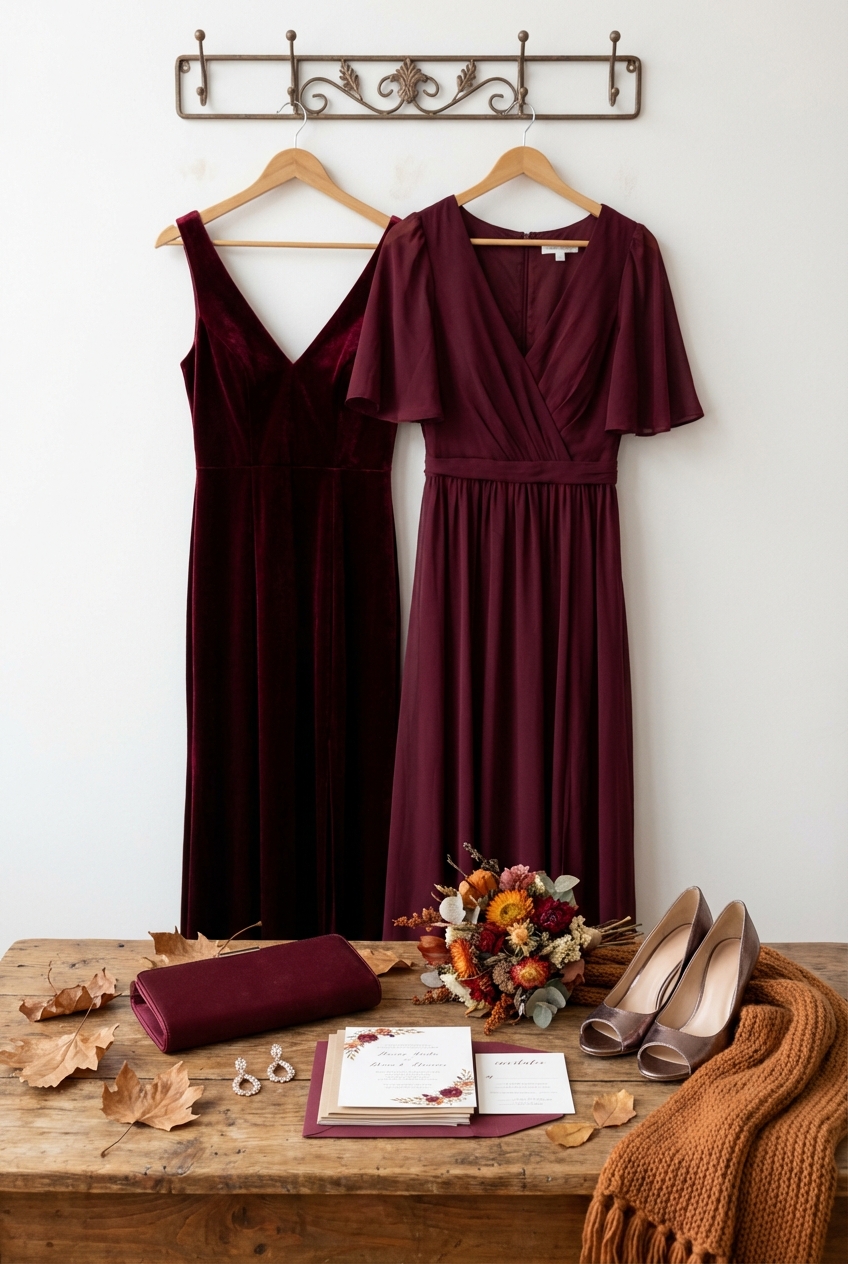
Elegant Burgundy Gowns For Autumn Weddings Timeless Sophistication For The Season
There is a distinct magic to an autumn wedding that summer nuptials simply cannot replicate. The crisp air, the golden hour light that seems to last all afternoon, and the shifting foliage create a naturally romantic backdrop. As a fashion stylist, I often find that guests struggle with the transition from breezy summer pastels to the heavier requirements of fall attire.
Burgundy is the ultimate solution for this seasonal shift. It bridges the gap between the vibrant energy of red and the grounded, neutral nature of brown. It conveys warmth and luxury without demanding attention in the way a bright scarlet might, making it respectful yet stunning for a wedding guest.
Finding the right gown, however, goes beyond just picking a color. It requires paying attention to fabric weight, undertones, and how the garment moves in an autumn breeze. For visual inspiration on how to style these looks, be sure to check out the Picture Gallery at the end of this blog post.
Understanding The Burgundy Spectrum and Skin Undertones
Not all burgundies are created equal. The color family ranges from deep, purple-leaning wines to warmer, brown-based oxbloods. Selecting the wrong shade for your skin tone can wash you out, while the right one will make you look radiant.
If you have cool undertones (veins appear blue), look for a burgundy that leans toward cranberry or maroon. These shades have a subtle blue base that harmonizes with cool skin. A “true wine” color often sits in this category and looks exceptional with silver jewelry.
For warm undertones (veins appear green), lean toward oxblood, garnet, or rusty merlot. These hues possess brown or orange notes that complement golden complexions. Gold jewelry is the natural pairing here, enhancing the warmth of both the skin and the fabric.
Designer’s Note: The Lighting Factor
One thing that often goes wrong is failing to account for venue lighting. In a dimly lit reception hall, dark burgundy can read as black if the fabric is too matte. I always recommend choosing a fabric with a slight sheen or texture if the event is strictly evening. This ensures the color reads true, even in candlelight.
Fabric Weights and Textures for Fall Comfort
Autumn weather is notoriously unpredictable. You might face a sunny 65-degree afternoon ceremony and a chilly 45-degree reception exit. Your fabric choice determines not just your style, but your comfort and stamina throughout the event.
Velvet is the quintessential autumn fabric. It provides natural insulation and has a luxurious depth that photographs beautifully. However, it is heavy. If you choose a floor-length velvet gown, ensure it has a split or lower neckline to prevent the look from feeling suffocating.
Silk satin and crepe are excellent alternatives if you tend to overheat on the dance floor. A heavy silk satin offers wind resistance while maintaining breathability. Crepe has a lovely matte finish and excellent drape, making it forgiving on the figure without adding bulk.
Common Mistakes + Fixes
Mistake: Choosing unlined chiffon for a late October wedding.
Fix: If you love the look of chiffon, ensure the dress has a heavy satin lining. Alternatively, look for “double georgette” fabrics, which offer the movement of chiffon but with twice the opacity and warmth.
Silhouettes That Suit the Season
The silhouette you choose should balance modesty with modern style. In autumn, we have the liberty to embrace sleeves without looking out of place. A long-sleeved gown in a deep red hue is undeniably elegant and eliminates the need to carry a shawl or jacket.
If you prefer a sleeveless or strapless look, consider the midi length with a heavier structural element, like a corset bodice. This anchors the look and feels more appropriate for the season than a flimsy slip dress.
For black-tie weddings, a trumpet or mermaid silhouette in burgundy creates a striking, statuesque profile. Because the color is dark, it slims the figure naturally, allowing you to be more adventurous with form-fitting cuts.
What I’d Do in a Real Project
If I were styling a client for a brisk outdoor ceremony followed by an indoor dinner, I would choose a dress with “illusion” sleeves. This is a sheer mesh layer with lace or embroidery. It provides a barrier against the chill without the visual weight of a solid fabric sleeve.
Accessorizing Deep Reds: Gold vs. Silver vs. Pearl
Accessories make or break a monochromatic look. With burgundy, your metal choice dictates the “temperature” of the outfit. Gold warms it up and feels regal, while silver cools it down and feels more contemporary and sharp.
Avoid matching your shoes and bag perfectly to the dress. A burgundy dress with burgundy shoes and a burgundy bag is visually flat. Instead, opt for metallic footwear or a nude tone that matches your skin. Black accessories can work, but they can sometimes look too heavy; use them sparingly.
Pearls are having a massive resurgence and look stunning against deep red velvet. The creamy luster of pearls provides a soft contrast that diamonds or crystals sometimes lack. A chunky pearl choker or drop earrings can soften the severity of a dark gown.
Proper Fit and Hemline Measurements
A gown that drags on the floor is a disaster waiting to happen, especially with autumn leaves and potential dampness on the ground. Professional tailoring is non-negotiable for a high-end look.
Rule of Thumb for Hemlines:
For a floor-length gown, the hem should skim the top of your toes while you are wearing your shoes. Ideally, it should sit 0.5 to 1 inch off the ground. This creates a “floating” effect and keeps your hem clean.
Sleeve Length Logic:
If you opt for long sleeves, they should hit just past the wrist bone. If they are too long, they look sloppy; too short, and they look like you’ve outgrown the dress. A tailor can easily adjust this, often without moving the cuff detail.
Realistic Constraints: Static Electricity
Fall air is dry, and synthetic fabrics (like polyester satin) generate massive amounts of static. This causes the dress to cling to your legs unflatteringly. Always carry a small travel-size anti-static spray, and consider sewing small dress weights into the hem if the skirt is lightweight.
Navigating Dress Codes: Cocktail vs. Black Tie
Burgundy is versatile enough to work across various levels of formality, but the fabric and cut define the code. It is essential to read the invitation clearly to avoid being underdressed or overdressed.
For Cocktail Attire:
Aim for a midi length (hitting mid-calf). A burgundy lace dress or a structured crepe sheath works perfectly here. You can be more playful with necklines and cutouts. Keep the jewelry slightly more understated.
For Black Tie:
The gown must touch the floor. Darker shades of burgundy, bordering on plum or chocolate, often read more formal. Fabrics should be high-sheen or rich velvet. Avoid cotton blends or jersey fabrics entirely, as they lack the formality required for black tie.
Makeup and Hair Considerations
When wearing a bold color near your face, your beauty look must harmonize with it. A common error is matching the lipstick exactly to the dress. This can look costume-like.
Instead, try a lip color that is a few shades lighter (like a berry stain) or a neutral nude lip with a dramatic eye. If you want a dark lip, ensure it has the same undertone as the dress but isn’t an exact match.
For hair, consider the neckline. High-neck burgundy gowns look best with a sleek updo or a low bun to elongate the neck. If you are wearing a V-neck or off-the-shoulder style, loose waves (Hollywood style) add to the romantic, vintage appeal of the color.
Finish & Styling Checklist
Before you head out the door, run through this final styling checklist to ensure the look is polished and practical.
Undergarment Check: Burgundy is dark, but flash photography can make some fabrics sheer. Wear nude seamless undergarments, not black or white.
The Sit Test: Sit down in your dress for 5 minutes. Does it wrinkle excessively across the lap? If so, bring a travel steamer or choose a different fabric.
Shoe Traction: If the venue has wet leaves or polished wood floors, scuff the bottoms of your new heels with sandpaper to prevent slipping.
jewelry Proportion: If the dress has a complex neckline or embellishments, skip the necklace and focus on statement earrings.
* Warmth Plan: Have a plan B for warmth. A faux fur stole in black, brown, or cream looks incredibly chic over a burgundy gown.
FAQs
Can I wear black shoes with a burgundy gown?
Yes, but proceed with caution. A heavy black pump can look blocky. Opt for a strappy black sandal or a shoe with a slim profile. Nude or metallic gold shoes are generally a safer, more elongating choice.
Is velvet too hot for an indoor October wedding?
Usually, no. Most venues are air-conditioned. However, if you know the dance floor will be crowded, look for a velvet dress that has short sleeves or an off-the-shoulder cut to allow heat to escape.
Can I mix silver and gold jewelry with burgundy?
Absolutely. Mixed metals are very trendy. A burgundy backdrop is dark enough to let both metals shine. Just ensure the style of the jewelry pieces (e.g., modern vs. vintage) is consistent.
How do I get wrinkles out of a satin burgundy dress?
Steam, never iron. Direct heat can leave shiny marks or melt synthetic fibers. If you are in a hotel room without a steamer, hang the dress in the bathroom while you take a hot shower.
Conclusion
Choosing a burgundy gown for an autumn wedding is a decision rooted in timeless elegance. It is a color that celebrates the season without falling into clichés. By paying attention to the undertones of the fabric, the weight of the material, and the precision of the fit, you can create a look that is both sophisticated and comfortable.
Remember that confidence comes from comfort. When your hem is the right length, your fabric suits the temperature, and your accessories balance the look, you can focus entirely on celebrating the happy couple. Embrace the richness of the season, and let your attire reflect the warmth and romance of autumn.
Picture Gallery


