
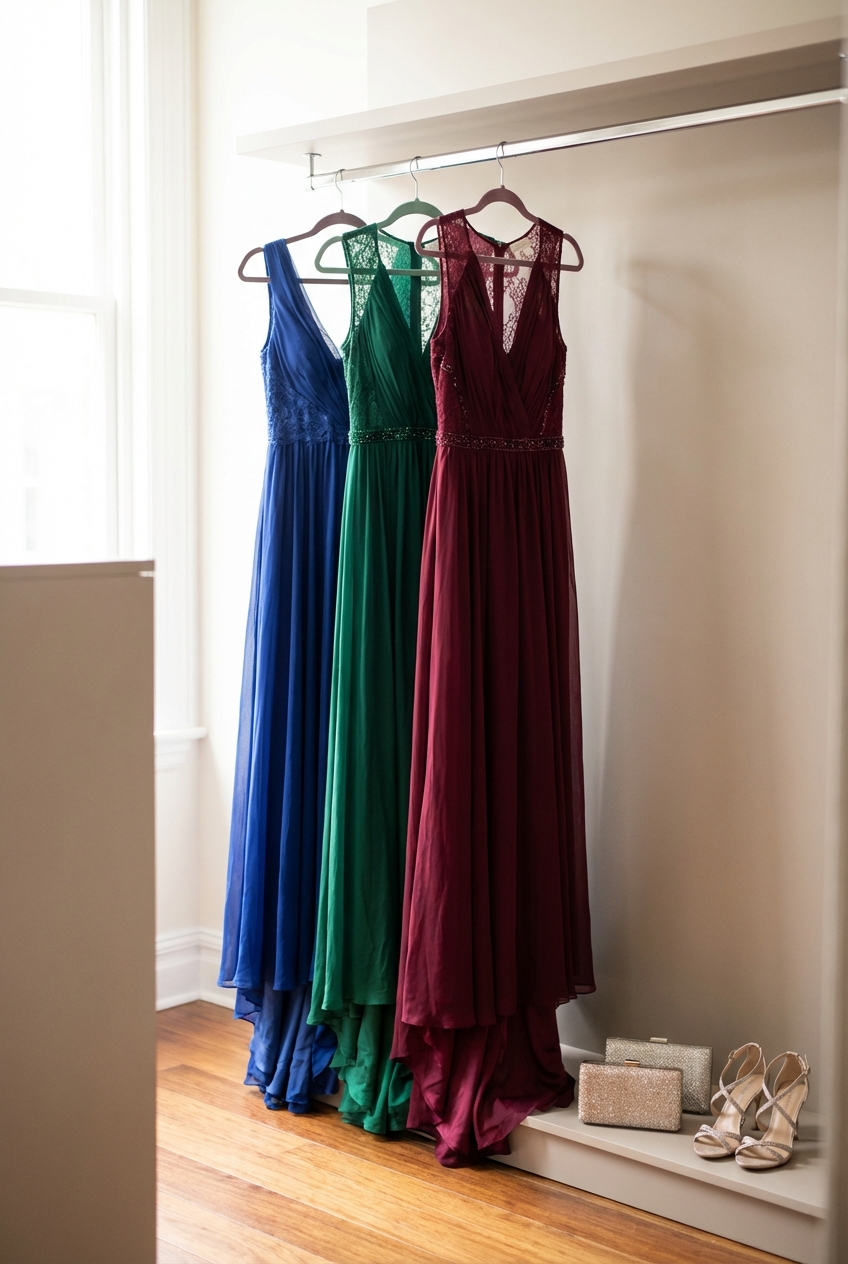
Elegant Charity Event Dresses With Long Hemlines
There is a distinct electricity in the air at a charity gala that you simply do not find at weddings or holiday parties. The stakes feel higher, the lighting is often more dramatic, and the crowd is there to support a serious cause while looking effortlessly sophisticated. I often tell my clients that dressing for these events requires a balance of respect for the occasion and personal style expression.
I recall a specific fitting with a client attending the Met Gala for the first time. She fell in love with a gown that looked architectural and stunning while she was standing on the podium in my studio. However, as soon as she sat down—which she would be doing for three hours during dinner—the boning in the bodice dug into her ribs, and the fabric pooled unflatteringly around her hips. We had to pivot immediately to a silhouette that offered grace in motion and comfort in stillness.
Long hemlines are the gold standard for these events because they elongate the figure and command presence without demanding attention. They create a seamless line from waist to floor that feels inherently regal. If you want to jump straight to visual inspiration, you can find our curated Picture Gallery at the end of this post.
Decoding the Invitation: When to Go Floor-Length
The first step in selecting a gown is interpreting the specific language on the invitation. While “Black Tie” is the standard, charity events often veer into “White Tie” or generic “Formal,” and the nuances matter significantly. A long hemline is your safest and most elegant option for any of these codes, but the volume and fabric will shift based on the specific request.
For White Tie events, a floor-length gown is mandatory. This is the most formal dress code in Western fashion. Here, I always steer clients toward ballgown silhouettes or substantial A-lines. The goal is grandeur. You want fabrics that hold their shape, such as silk faille or Mikado. The skirt should have enough volume to hold its own against the tailcoats the men will be wearing.
Black Tie allows for slightly more fluidity. You can opt for a column dress, a mermaid silhouette, or a softer chiffon sheath. While you can technically wear a very dressy cocktail dress to some Black Tie events, I advise against it for high-profile charity galas. You never want to be the only person showing knees in a room full of gowns. When in doubt, go long. It signals that you respect the gravity of the fundraising efforts.
Stylist’s Note: The “Step-and-Repeat” Factor
Most charity events have a photo wall at the entrance. A floor-length gown creates a solid block of color that photographs beautifully. Short dresses often cut the leg line visually, which can make you look shorter in flash photography. A long hemline creates a continuous vertical column that is universally flattering in photos.
Fabric Physics: Durability and Drape
The fabric you choose is just as important as the cut of the dress. Interior designers talk about “performance fabrics” for sofas, and I use the same logic for evening wear. You will likely be sitting for a long dinner, standing for cocktails, and possibly dancing. You need a material that can withstand compression without looking like a wrinkled mess by the time the auction starts.
Avoid unlined silk satins or thin taffetas unless you are prepared to stand all night. These fabrics whisker and crease the moment you bend at the hip. Instead, look for heavy crepe. Crepe has a beautiful, matte finish and a dense weave that resists wrinkling. It drapes heavily over the body, smoothing out undergarment lines and maintaining a pristine look from arrival to departure.
Velvet is another exceptional choice, particularly for autumn and winter galas. It absorbs light rather than reflecting it, which creates a rich, slimming effect. It is also inherently wrinkle-resistant. However, be mindful of the weight. A heavy velvet gown with a long train can become exhausting to wear after four hours. Look for “silk velvet” blends which offer the luster without the intense heaviness of cotton velvet.
Common Mistakes + Fixes:
- Mistake: Choosing 100% linen or thin cotton blends for a summer gala.
- Fix: Even in summer, stick to formal fibers. If you need breathability, choose silk chiffon or georgette. These fabrics float away from the body and allow airflow, but the multiple layers required for opacity will hide any minor creasing.
The Mathematics of the Hemline: Tailoring Essentials
A long dress is only elegant if it is hemmed correctly. Nothing ruins a look faster than a woman kicking her fabric as she walks or holding her skirt up with her hands to prevent tripping. The “break” of the dress—where the fabric hits the floor—is a precise science.
For a standard floor-length gown, the hem should graze the floor or hover exactly 1/4 inch to 1/2 inch above it. This allows the shoe to peek out slightly when you walk, preventing you from stepping on the front of the dress. This measurement must be taken while you are wearing the exact undergarments and shoes you plan to wear to the event.
If the dress has a train, the front must still be hemmed to walking height. A common error I see is leaving the front too long to create a “puddling” effect. While this looks romantic in editorial photoshoots, it is a safety hazard at a crowded event. You will trip, or someone else will step on you.
What I’d do in a real project:
- Shoe Selection First: I never let a client hem a dress until the shoes are finalized. Changing from a 4-inch heel to a 3-inch heel changes the entire architecture of the dress.
- The Stair Test: If the venue has a grand staircase, I ensure the client can walk up stairs without needing to lift the dress more than an inch. If she has to hoist it to her knees, it is too long.
- The Bustle: If there is a train longer than 6 inches, I have a tailor add a finger loop or a small bustle button. This keeps the dress manageable on the dance floor.
Silhouette Selection for Long Evenings
The silhouette of your gown determines your comfort level. A charity gala is a marathon, not a sprint. You need to be able to breathe, eat, and move effortlessly. The most forgiving silhouette for these events is the A-line. It is fitted through the bodice and waist, then gently flares out over the hips. It accommodates a three-course meal without showing a “food baby.”
The column dress is incredibly chic and modern. It creates a statuesque look that works very well for women who want to appear taller. However, a true column dress can restrict your stride. Ensure there is a slit in the back or side. The slit should not go higher than mid-thigh for a charity event. Remember, these are conservative environments compared to red carpet premieres.
Mermaid or trumpet gowns are high-drama, but they are the most restrictive. The flare usually starts at the knee or mid-thigh. If the fit is too tight around the knees, you will have to take tiny, shuffling steps. If you choose this silhouette, sit down in the dressing room. If the skirt rides up significantly or cuts off circulation to your calves, size up and take the waist in.
Designer’s Note:
Pay attention to the “rise” of the armhole. If an armhole is cut too low or the straps are not perfectly fitted, the entire bodice will shift when you lift your arms to hug someone or toast a glass. High-end gowns usually have higher, tighter armholes to anchor the garment to your skeletal structure.
Color Theory and Appropriateness
Color choice at a charity event is a subtle language. You want to be visible but not distracting. You are there to support a cause, not to star in a show. Jewel tones are universally successful for these occasions. Emerald green, sapphire blue, deep amethyst, and ruby red convey wealth, warmth, and sophistication.
Black is always acceptable and arguably the most chic. It is respectful and formal. To keep a black long dress from looking boring, focus on texture. A black dress with lace overlays, velvet panels, or subtle beading catches the light and adds dimension.
Be cautious with neon colors, aggressive animal prints, or excessive nudity. These can read as “club wear” rather than “gala attire.” Similarly, while white is trending, it can look bridal if the silhouette is too full. If you wear white, choose a sleek, minimal cut to differentiate it from a wedding gown.
Stylist’s Tip for Color:
Consider the venue’s interior. If the event is in a historic ballroom with gold leaf and red carpets, a red dress might blend in too much. A navy or metallic gold dress would pop against that background. If the event is in a modern art museum with white walls, bold colors like fuchsia or teal look architectural and striking.
Underpinnings: The Foundation of the Look
The best dress in the world will look cheap if the undergarments are wrong. Long gowns often require specialized shapewear because they create a continuous line. Any lumps or bumps from a bra strap or panty line break the visual flow.
For backless or low-back gowns, do not rely on adhesive bras if you have a larger bust. Instead, have a tailor sew cups directly into the bodice of the dress. This provides structure without the risk of a wardrobe malfunction. For column dresses, seamless high-waisted shorts are essential to smooth out the transition from waist to hip.
Slip dresses and bias-cut gowns are notoriously unforgiving. They require a “commando” approach or a specifically designed seamless thong. Do not wear a full slip under a lined gown; it adds unnecessary bulk and heat. The goal is to feel secure so you aren’t fidgeting with straps all night.
Finish & Styling Checklist
Before you head out the door, run through this final checklist. These are the small details that separate a polished look from a chaotic one.
- The Hem Check: Put your shoes on and stand on a hard surface. Ensure the hem is not folding under your heel.
- Static Guard: Spray the inside of your skirt with anti-static spray. Long dresses love to cling to legs, especially in dry, air-conditioned ballrooms.
- The Sit Test: Sit down on a dining chair for 5 minutes. When you stand up, does the fabric bounce back? If not, do you have a steamer or wrinkle release spray handy?
- Jewelry Scale: If the dress has a high neck or long sleeves, skip the necklace and go for statement earrings. If the dress is strapless, a necklace balances the skin exposure.
- The Clutch: Ensure your evening bag actually closes with your phone, lipstick, and breath mints inside. Overstuffed clutches look messy.
FAQs
Can I wear a long dress with flat shoes?
Yes, but the dress must be hemmed specifically for flats. You cannot simply wear a dress hemmed for heels and let it drag; that looks unkempt. A fancy pointed-toe flat with a jeweled buckle can be just as elegant as a stiletto if the proportions are right.
Is it appropriate to wear a long dress with a slit?
Yes, provided the slit is tasteful. A slit that ends at the knee or just above the knee is standard. A slit that reaches the hip bone is generally considered too risqué for a charity function. The focus should remain on elegance.
What do I do if I get a stain on my gown during dinner?
Do not rub it with water; this often spreads the stain on silk or satin. Blot it gently with a dry napkin. If it is an oil stain, sprinkle a little artificial sweetener (like Sweet’N Low) on it to absorb the oil, then brush it off. Leave deep cleaning to the dry cleaner the next day.
Conclusion
Choosing an elegant long dress for a charity event is about more than just following a dress code; it is about curating a presence. When you select a gown with the right architectural fit, a fabric that moves with you, and a hemline that is technically perfect, you project confidence.
You are free to focus on the conversations, the speeches, and the cause itself, rather than adjusting your straps or tripping over your skirt. True style is looking effortless, and that effortlessness comes from preparation and technical precision.
Picture Gallery


