
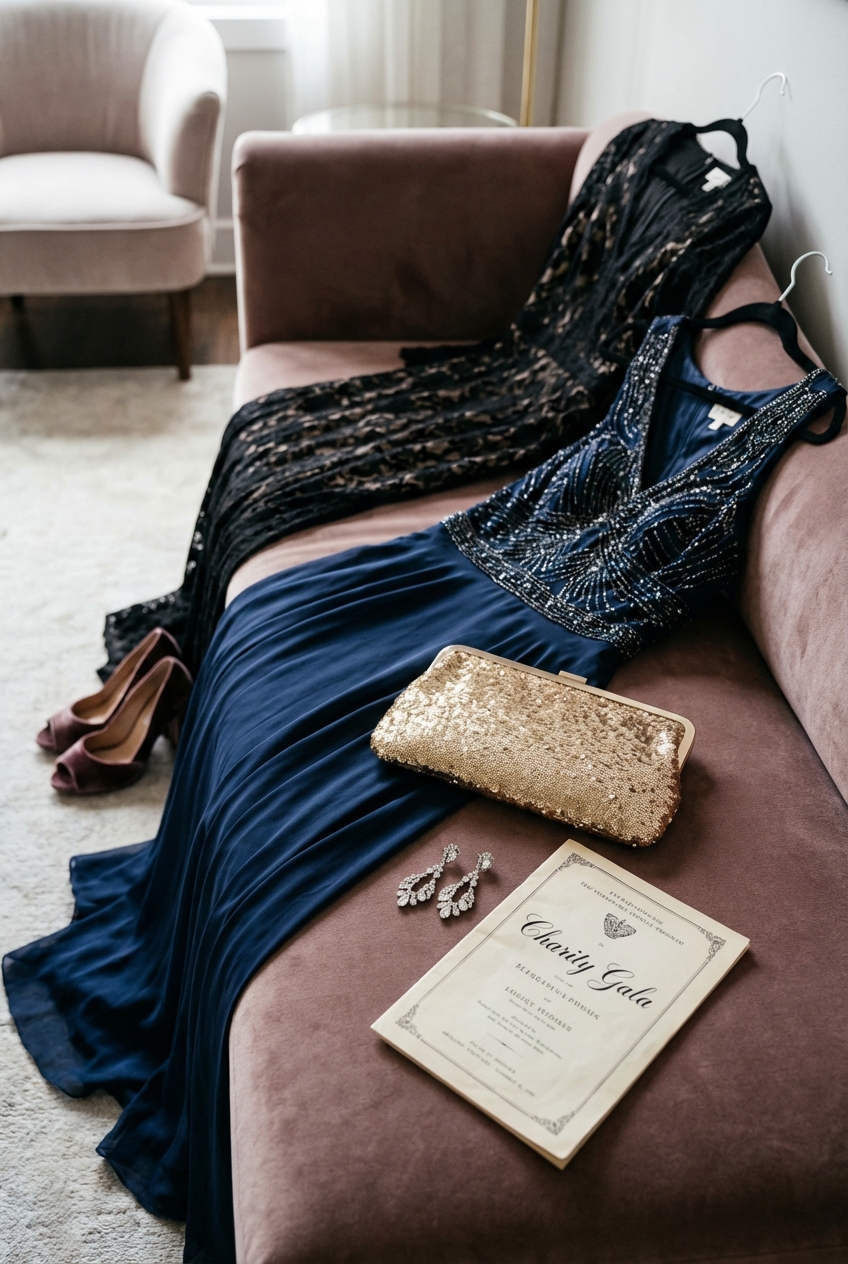
Elegant Evening Dresses For Charity Auctions
Introduction
Charity auctions occupy a unique space in the social calendar. They are strictly philanthropic events, yet they function as high-stakes runways where your personal brand is on display alongside your generosity. I remember styling a client for a major metropolitan museum gala; she was terrified of looking too “Hollywood” for a room full of donors and board members. We navigated the fine line between glamour and gravitas, landing on a structural column gown that commanded respect without screaming for attention.
That balance is exactly what makes dressing for these events so challenging. You aren’t just dressing for dinner; you are dressing for cocktail hour mingling, a seated three-course meal, potential live bidding, and often dancing late into the evening. The dress must perform physically while maintaining an air of effortless sophistication.
In this guide, I will walk you through the precise formula for selecting the perfect evening wear for a charity auction. We will cover fabric choices that resist wrinkling during long speeches, silhouette rules for seated dinners, and how to decode the invitation’s dress code. For those who want to skip straight to the visual examples, you can find a curated Picture Gallery at the end of this blog post.
Decoding The Invitation: Nuance in Dress Codes
The first step in selecting a gown is analyzing the specific language on the invitation. Charity auctions rarely use standard “Black Tie” without some unspoken caveats based on the venue and the cause. Understanding the venue is just as important as reading the text.
If the invitation says “Black Tie” and the venue is a historic hotel ballroom, you need a floor-length gown. There is no room for negotiation here. A tea-length dress, no matter how expensive, will feel underdressed in a room of tuxedoes and ballgowns. I recommend a hemline that hovers exactly one inch off the floor—long enough to create a seamless vertical line, but short enough to prevent tripping.
However, if the invitation reads “Creative Black Tie” or the event is hosted at a modern art gallery or an outdoor botanical garden, the rules shift. Here, you can experiment with textures and prints. I often pull architectural pieces or gowns with high-low hemlines for these environments. The goal is to match the energy of the room. A velvet gown in July feels heavy, just as a chiffon sundress feels trivial at a winter gala.
Designer’s Note: The “Step and Repeat” Factor
Most charity auctions have a media wall or “step and repeat” at the entrance. When selecting a color, avoid standard “step and repeat” backdrops which are often white, black, or navy blue. I always advise clients to wear jewel tones—emerald, amethyst, or ruby—to ensure they don’t disappear into the background photos.
Fabric First: Durability Meets Luxury
As a stylist, I prioritize fabric composition over almost every other element. You will likely be sitting for at least ninety minutes during speeches and the live auction. If your dress is made of a low-quality satin or a stiff cotton blend, you will stand up with deep, horizontal creases across the lap. This destroys the elegance of the look instantly.
The Best Fabrics for Sitting:
- Silk Crepe: This fabric has a fluid drape and bounces back relatively well. It skims the body without clinging, offering comfort during a long dinner.
- Mikado: For those who prefer structure, Mikado is a heavier silk blend. It is stiff enough to hide undergarment lines and does not crease easily. It is excellent for A-line silhouettes.
- Sequin or Beaded Mesh: Heavily embellished fabrics are virtually wrinkle-proof. The weight of the beads pulls the fabric taut. However, check the underarms; beading can chafe significantly over a four-hour event.
Fabrics to Avoid:
- Unlined Taffeta: This fabric crushes the moment you sit down. Unless it is crinkled by design, avoid it for seated dinners.
- Thin Jersey: While comfortable, thin jersey often looks too casual for a formal auction and shows every strap and seam of your undergarments.
The Silhouette: The “Sit Test” Rule
When you try on a dress in a boutique, you spend 90% of the time standing in front of a mirror. At a charity auction, you spend 60% of your time sitting down. This discrepancy leads to many wardrobe malfunctions. A dress that looks sleek and statuesque while standing can become restrictive or revealing when seated.
I mandate a “sit test” for every fitting. When you sit, the hips spread slightly, and the hemline rises. If you are wearing a fitted mermaid gown, can you actually sit with your knees together comfortably? If the dress is too tight through the thighs, it will ride up, requiring you to constantly tug it down—a fidgety habit that looks unsure and unpolished.
For auctions, I prefer a modified A-line or a column dress with a back slit. These shapes allow for a graceful seated posture. If you choose a gown with a high leg slit, test it thoroughly. When seated, the slit should not fall open to reveal your inner thigh. You want to focus on the bidding paddle, not on holding your dress together.
Colors and Prints: Standing Out with Dignity
Charity auctions are generally conservative events. While you want to look fashionable, you do not want to look like you are heading to a nightclub or the Met Gala (unless the theme specifically calls for it). The goal is “wealthy benevolence,” not “shock value.”
Color Psychology:
- Navy and Midnight Blue: These are softer alternatives to black. They read as authoritative and elegant under ballroom lighting.
- Metallics: Gold, bronze, and pewter are excellent neutrals for the evening. They reflect the low lighting of dinner tables beautifully, acting as a natural highlighter for your skin.
- Red: Wear with caution. A bright, fire-engine red can be aggressive. Opt for a deeper oxblood or burgundy, which feels more grounded and sophisticated.
Common Mistakes + Fixes
Mistake: Wearing neon or highly saturated, “daytime” prints.
Fix: If you love prints, look for jacquard weaves or brocades where the pattern is woven into the fabric rather than printed on top. This adds depth and luxury suitable for evening wear.
Underpinnings and Tailoring Mechanics
The difference between a dress that looks okay and a dress that looks expensive is almost always tailoring and undergarments. You cannot wear a generic strapless bra with a couture gown and expect perfect results.
Tailoring the Hem:
The hem is critical. For a floor-length gown, the fabric should just barely “kiss” the floor when you are wearing your shoes. It should not pool (trip hazard), nor should it swing two inches above the ground (looks ill-fitted). Bring the exact shoes you plan to wear to the tailor. Changing from a 4-inch heel to a 3-inch heel changes the entire architecture of the dress.
The Foundation:
Shapewear is not just about slimming; it is about providing a smooth foundation so the fabric glides rather than sticks. For clingy fabrics, I recommend seamless, laser-cut shorts that go down to the mid-thigh. This eliminates Visible Panty Lines (VPL), which are unforgivable in formal wear.
Shoes and Accessories: Practical Glamour
Accessories for a charity auction should be curatorial. You are likely holding a glass of champagne, a clutch, and eventually a bidding paddle. You do not want bracelets that jangle loudly every time you raise your hand or applaud.
The Shoe Strategy:
Do not wear brand-new shoes to a gala. Break them in for at least three hours at home. For length, I always suggest a closed-toe pump or a very refined sandal. Avoid heavy platforms or chunky wedges; they look too heavy against delicate evening fabrics. If the gown has a slit, your shoes are a focal point. If the gown is full, prioritize comfort over aesthetics, as the shoes will rarely be seen.
The Bag:
Your clutch must be small but functional. It needs to hold a phone, lipstick, mints, and perhaps a credit card. Do not bring a large shoulder bag or tote; it looks messy on the back of a formal chair.
What I’d Do in a Real Project: A Stylist’s Checklist
If I were styling you for a major charity auction tomorrow, here is exactly how we would proceed:
1. Select a focal point: We choose either a dramatic neckline OR a dramatic hemline, never both.
2. Check the weather: If there is a chance of rain or a drafty venue, we select a coordinating wrap or cape. A trench coat over a ballgown ruins the entrance.
3. The Jewelry Edit: If the dress has heavy embroidery, we skip the necklace and do a statement earring. If the dress is minimal crepe, we layer a significant necklace.
4. The Sound Check: We ensure your jewelry does not make noise when you move, and your shoes do not squeak on marble floors.
Finish & Styling Checklist
Before you head out the door, run through this final styling checklist to ensure everything is secure.
- Steaming: Have you steamed the dress? Pay special attention to the back of the skirt, which gets crushed in the car.
- The Fasteners: Check the hook-and-eye closure at the top of the zipper. It should be secure to prevent the zipper from sliding down.
- Deodorant: Ensure you have no white marks on the fabric. Use a clean imaginative sponge to buff them out if necessary.
- The Clutch: Do you have safety pins, fashion tape, and a blister plaster in your bag?
- Static Guard: Spray the inside of your skirt and your legs to prevent the fabric from tangling between your legs as you walk.
- Lipstick Check: Ensure there is no lipstick on your teeth before you start socializing.
FAQs
Can I wear a cocktail dress to a black-tie charity auction?
Technically, no. However, you can wear a “formal” cocktail dress if it is extremely elevated—think heavy beading, rich lace, or a very structured silhouette in a dark color. If you choose a shorter length, your accessories and hair must be impeccable and formal to compensate.
What do I do with my purse during dinner?
A formal clutch should be placed on your lap under your napkin, or behind the small of your back against the chair. Never place it on the table (it disrupts the place setting) or on the floor (it is a tripping hazard).
Is it appropriate to wear pants?
Yes, a tuxedo-style jumpsuit or a palazzo pant suit can be incredibly chic and appropriate for black tie, provided the fabric is luxe (silk, satin, velvet) and the tailoring is sharp. Pair it with a feminine heel and statement jewelry to soften the look.
How high should my heels be?
Wear the height you can manage for four hours. There is nothing less elegant than a woman hobbling or taking her shoes off under the table. A 3-inch heel is usually the sweet spot for posture and comfort.
Conclusion
Dressing for a charity auction is about respect—respect for the hosts, the cause, and the occasion. When you take the time to select a gown that fits perfectly, honors the dress code, and allows you to move with confidence, you contribute to the atmosphere of the evening.
The perfect dress allows you to forget about what you are wearing. Once you are zipped in and taped up, your focus should shift entirely to the people you are meeting and the charity you are supporting. Confidence is the ultimate accessory, but a perfectly tailored gown certainly helps.
Picture Gallery


