
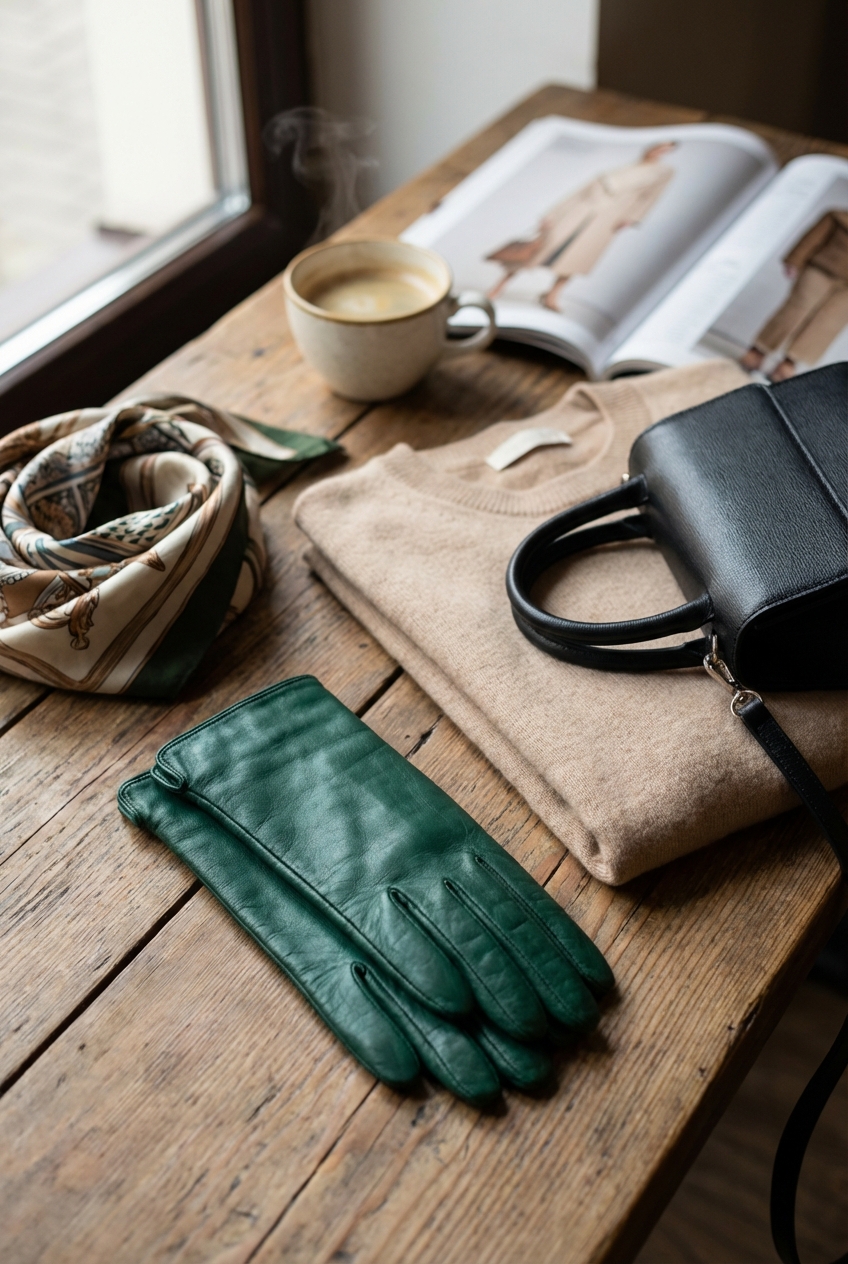
Elegant Gloves How To Incorporate Them Into Modern Outfits
There was a time when leaving the house without gloves was considered a sartorial error, a sign of being underdressed. While those strict societal rules have vanished, the aesthetic power of a well-chosen glove has returned with absolute force. We are seeing a shift away from pure utility and back toward gloves as a defining accessory that elongates the arm and finishes a silhouette.
I recently styled a client for a winter gallery opening who felt her velvet column dress was missing a certain “edge.” We tried statement necklaces and bold earrings, but nothing clicked until we pulled out a pair of sheer, elbow-length tulle gloves. The transformation was instant; she went from simply dressed to looking curated and intentional.
Gloves offer a unique opportunity to play with texture and proportion in a way no other accessory can. Whether you are navigating a black-tie event or simply elevating a wool coat for a coffee run, the right pair changes the entire narrative of your outfit. If you are seeking visual inspiration on how to style these looks, be sure to check out the Picture Gallery at the end of the blog post.
Understanding Proportions: The Sleeve-to-Glove Ratio
The most critical rule in styling gloves is managing the relationship between the top of the glove and the hem of your sleeve. This is the fashion equivalent of spacing furniture in a room; if the gap is wrong, the flow is ruined. You want to create a deliberate line rather than an awkward visual break.
For opera-length gloves (those that sit above the elbow), your sleeves should be non-existent or very short. Cap sleeves or strapless necklines allow the glove to act as a second skin that elongates the limb. If you wear opera gloves with a long-sleeve coat, the fabric bunches up, creating bulk that adds visual weight to your biceps.
When working with wrist-length or “shorty” gloves, you need to ensure they tuck seamlessly under your cuff or leave a deliberate sliver of skin. A one-inch gap of skin between a sweater cuff and a leather glove can look chic and intentional. However, a large four-inch gap usually looks like your sleeves have shrunk.
Designer’s Note: The 7/8th Sleeve Rule
In my styling work, I often tailor coats to a “bracelet length” or 7/8th sleeve specifically to showcase gloves. If you have a coat with slightly shorter sleeves, pair it with a mid-forearm glove. This covers the wrist bone entirely and prevents cold air—and visual clutter—from breaking the line of the outfit.
Material Coordination: Mixing Textures Like a Pro
Successful accessorizing relies heavily on the interplay of light and texture. If your outfit is matte (like wool, cashmere, or crepe), your gloves should offer a contrasting finish. Leather or patent leather works beautifully here because the sheen separates the hand from the sleeve.
Conversely, if you are wearing a high-shine fabric like satin or silk, avoid satin gloves. Matching shiny fabrics often looks like a costume or overly bridal. Instead, ground a silk slip dress with velvet gloves for depth, or matte suede gloves for a softer, more romantic touch.
Sheer and tulle gloves are currently having a major moment in high-end fashion. These are strictly aesthetic rather than functional, as they offer no warmth. They are best used to add a layer of complexity to evening wear without adding heaviness. They work particularly well with heavy velvets or brocades, lightening the overall visual load.
Common Mistakes + Fixes
- Mistake: Wearing synthetic, shiny polyester gloves with evening wear.
- Fix: Invest in real silk or high-quality mercerized cotton blends. Cheap shine reflects light poorly and cheapens the entire gown.
- Mistake: heavy wool mittens with a tailored wool coat.
- Fix: Swap for lined leather gloves. The structure of leather complements the tailoring of the coat, whereas bulky wool softens it too much.
Sizing and Fit: The Inch Rule
Nothing ruins the elegance of a glove faster than a poor fit. Gloves that are too tight make the hand look sausage-like and restrict movement, while gloves that are too loose ripple and slide down, requiring constant adjustment. This is not “one size fits all” territory.
To find your size, measure your dominant hand around the widest part of the palm (excluding the thumb) in inches. If your hand measures 7.5 inches, you are a size 7.5. European brands often size in half-steps, which is crucial for a leather fit that molds to your hand over time.
For opera gloves, you must also consider the arm circumference. High-end gloves often have a bit of elastane woven into the fabric or discrete buttons at the wrist to help navigate the transition from a narrow wrist to a wider forearm. If the glove cuts into your arm fat, it is too small.
What I’d Do in a Real Fitting
- Check the fingertips: I always pinch the tip of the glove fingers. There should be about 1/8th of an inch of space—no more, no less.
- Test the grip: I ask the client to make a fist. If the leather turns white or looks strained across the knuckles, we size up.
- The Shake Test: For long gloves, shake the arm down. If the glove slides below the elbow immediately, we need a tighter arm opening or fashion tape.
Jewelry Layering: Rings and Bracelets
One of the most modern ways to style gloves is by layering jewelry over them. This was once considered a faux pas but is now a hallmark of high-fashion styling. The key is scale and material durability.
When wearing rings over gloves, you generally need to size up by at least one full ring size, sometimes two, depending on the thickness of the glove material. Smooth gold or silver bands slide over leather easily. Be very careful with prong-set stones over delicate fabrics like satin or tulle, as they will snag and ruin the weave instantly.
Bracelets are easier to manage. A chunky cuff worn over a long, tight black sleeve and glove combination looks incredibly architectural. It breaks up the long line of black and defines the wrist. Avoid delicate chain bracelets, which get lost visually against the fabric and can get caught in seams.
The “Protection” Checklist
- Leather Care: Metal rings can scratch soft lambskin. Use smooth, bezel-set rings rather than sharp designs.
- Fabric Safety: Never wear a tennis bracelet with prongs over lace gloves. The prongs will tear the lace.
- Watch Etiquette: A dress watch can be worn over a slim glove, but a bulky smartwatch should generally be removed or hidden if you are aiming for elegance.
Daytime Styling: The “Cool Girl” Aesthetic
Incorporating gloves into daytime outfits requires a delicate balance so you don’t look like you are heading to a costume party. The goal is to mix casual elements with the structured elegance of the glove.
Pair leather driving gloves or wrist-length styles with denim and an oversized blazer. The contrast between the rough denim texture and the smooth leather is visually interesting. Keep the colors neutral—black, cognac, or burgundy—to ground the look.
For a monochromatic look, match your gloves to your turtleneck. A beige cashmere sweater with beige suede gloves creates a seamless, expensive-looking line that extends from the neck to the fingertips. This is excellent for petite frames as it doesn’t break up the body visually.
Realistic Constraints: The Tech Factor
In today’s world, you need to use your phone. Taking gloves off every time you need to answer a text is frustrating.
- The Fix: Invest in high-end gloves with capacitive touch leather capabilities. Many luxury brands now treat the fingertips of leather gloves so they work on screens.
- The Hack: If you love a vintage pair without tech capabilities, use your nose to tap the screen (a secret trick of many stylists on cold outdoor shoots) or use voice commands.
Evening Etiquette and Practicality
Wearing gloves to a gala or formal dinner comes with its own set of functional rules. The most common question I get is: “Do I eat with them on?” The answer is a hard no.
For opera gloves, you have two options. The traditional method is to unbutton the wrist (the “mousquetaire” opening), pull your hand out, and tuck the hand portion of the glove up inside the sleeve portion on your arm. This keeps the arm covered while freeing the hand.
If your gloves do not have wrist buttons, you must remove them entirely before sitting down to dinner. Place them on your lap underneath your napkin, never on the table. You can put them back on for after-dinner drinks or dancing.
Styling for longevity:
- Colors: White and cream gloves stain instantly. If you are attending an event with red wine or heavy hors d’oeuvres, opt for black, navy, or emerald green.
- Clutches: Avoid carrying a sequined bag with satin gloves. The friction from the sequins will pill the satin fabric within an hour.
Finish & Styling Checklist
Before you walk out the door, run through this quick mental checklist to ensure your glove game is on point.
- The Gap Check: Is there an awkward gap between your sleeve and glove? Either close it completely or make it a deliberate inch of skin.
- The Color anchor: Do the gloves tie into another element of the outfit? Match them to your shoes, bag, or belt for cohesion.
- The Condition: Are the fingertips scuffed? Worn-out fingers ruin the illusion of luxury. Keep leather conditioned.
- The Tech Check: Can you access your phone or wallet? If not, do you have a plan for where to put your gloves when you take them off?
- The Jewelry Clearance: Are your rings cutting off circulation through the glove? If yes, take them off. Comfort is key to elegance.
FAQs
Can I wear short gloves with a formal gown?
Generally, no. Short gloves tend to look too sporty or “daytime” for a floor-length gown. Formal gowns usually require elbow-length or opera-length gloves to balance the volume of the skirt. The exception is a very sheer, decorative tulle wrist glove that acts more like jewelry.
How do I clean leather gloves?
Never submerge leather gloves in water. If they get stained, use a specialized leather cleaner and a soft cloth. For the interior lining (which can absorb sweat), you can lightly spritz the inside with fabric refresher or turn them inside out carefully to air dry, but professional cleaning is best for expensive pairs.
Should gloves match my coat or my shoes?
Matching your gloves to your shoes is a classic, foolproof method that elongates the body. Matching them to your coat can look chic if the shades are identical, but if they are slightly off (like a cool grey coat with warm grey gloves), it can look messy. When in doubt, match the shoes or go for a high-contrast black.
Are fingerless gloves acceptable for high-end styling?
Fingerless gloves have a very specific “rock and roll” or grunge aesthetic (think Karl Lagerfeld). They can work with an edgy, leather-heavy outfit, but they rarely work for classic elegance or formal wear. Use them only if you are deliberately aiming for an industrial or punk-inspired look.
Conclusion
Gloves are far more than just a barrier against the cold. They are a declaration of style, a way to introduce texture, and a tool for altering the proportions of your silhouette. By paying attention to the relationship between your sleeves and your gloves, and by choosing materials that complement rather than clash with your outfit, you elevate your look from standard to exceptional.
Remember that confidence is the final accessory. Wearing gloves, especially opera lengths or bold colors, draws attention to your hands and your gestures. Wear them with intention, keep your posture tall, and enjoy the drama they bring to your wardrobe.
Picture Gallery


