Emerald Green and Ivory Formal Dresses: How to Pair Them
- Words by
- Julio Arco
- Published
- Reading
- 4 min
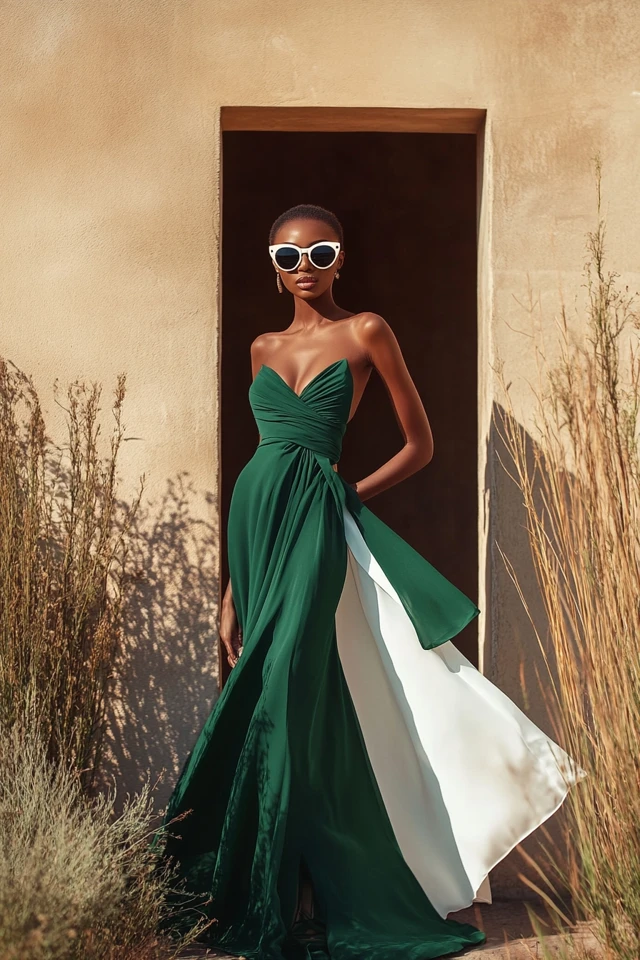
Emerald green and soft ivory work together because one is deep and saturated and the other is light and quiet. Pick one as the lead, use the other for accents, and keep the ivory slightly warm so it sits comfortably next to the green.
Below: which color should lead, how to choose an ivory for your undertone, which fabrics and accessories finish the look, and how to adjust the pairing by season and body shape.
Why do emerald green and ivory look good together?
Emerald is dark and strongly colored, so it reads as the focal point. Ivory is pale and low in saturation, so it reads as a soft edge. Put them side by side and the green looks richer while the ivory looks brighter, a contrast effect you can see in any two-tone dress.
Ivory is also kinder than stark white next to emerald. Pure white can look cold and harsh against a deep green, while ivory carries a hint of yellow that echoes the warmth in the green.
Through the lens of evidence-based design, I'd treat the proportion as the deciding factor: a large area of dark color with a small area of light color feels grounded, and flipping it feels lighter and more romantic.
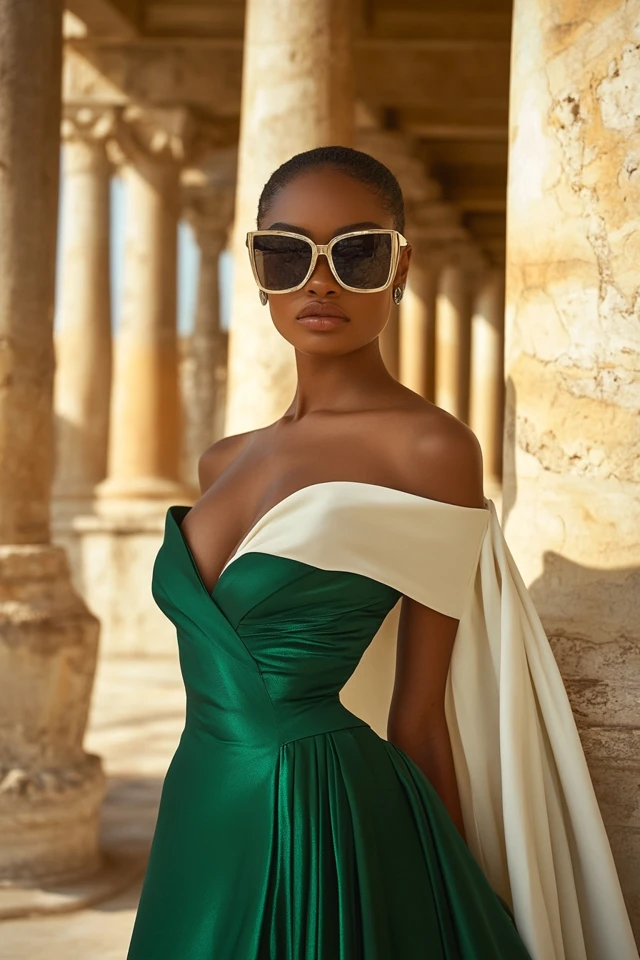
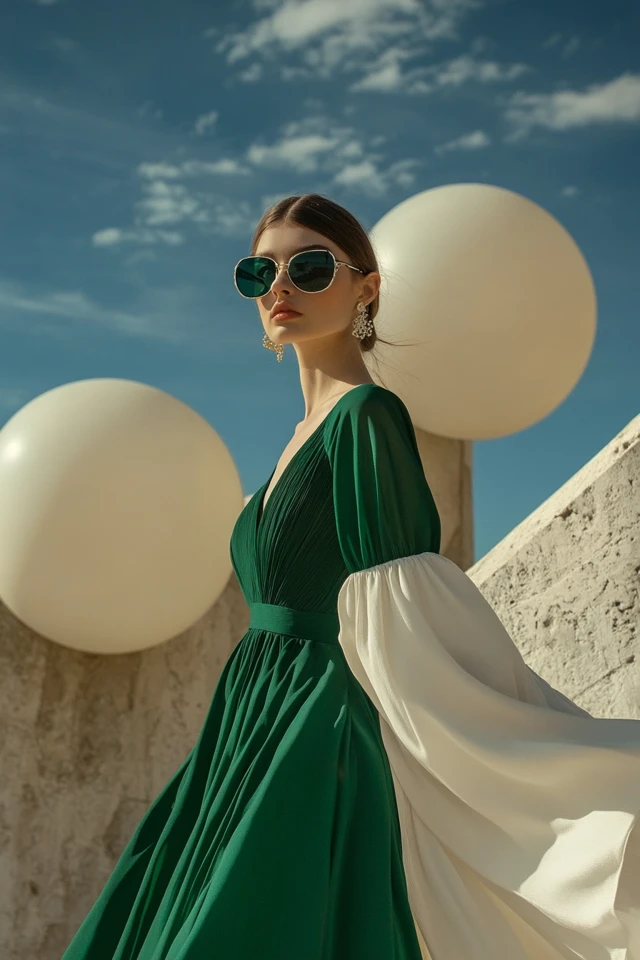
Should emerald or ivory be the main color?
A solid emerald gown with ivory shoes, clutch or jewelry is the bolder choice. It photographs well, hides little, and needs almost no other color.
An ivory dress with emerald detail is softer. Think an emerald sash, a velvet belt, or green embroidery on a pale bodice. This suits weddings and daytime formal events, where you may not want the dress to dominate the room.
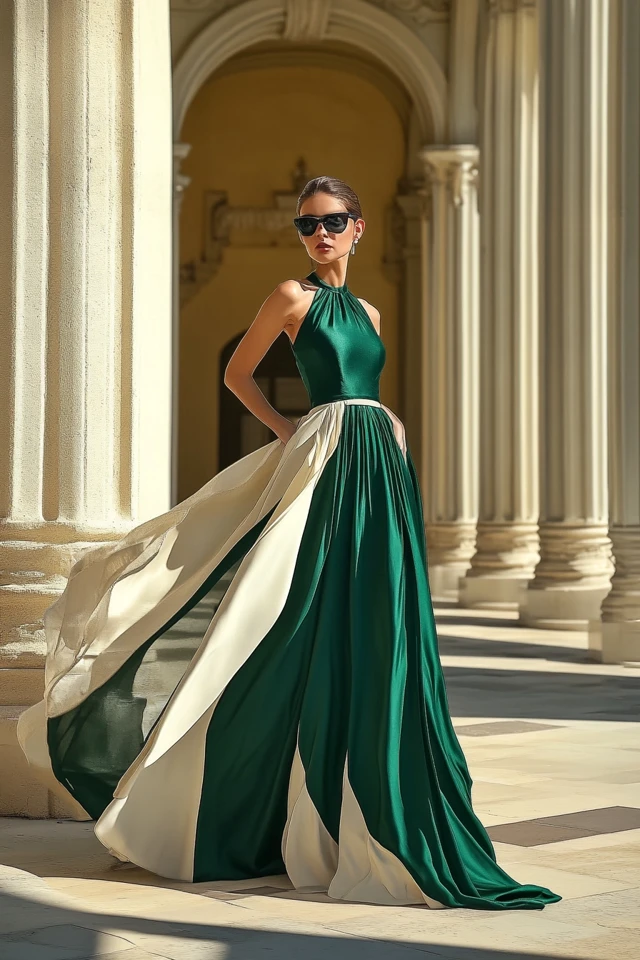
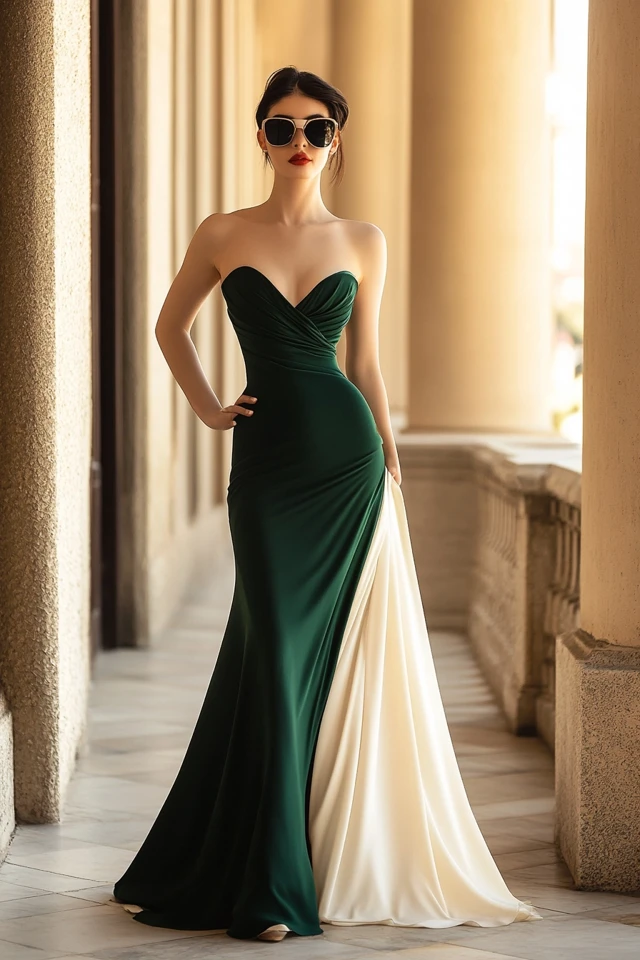
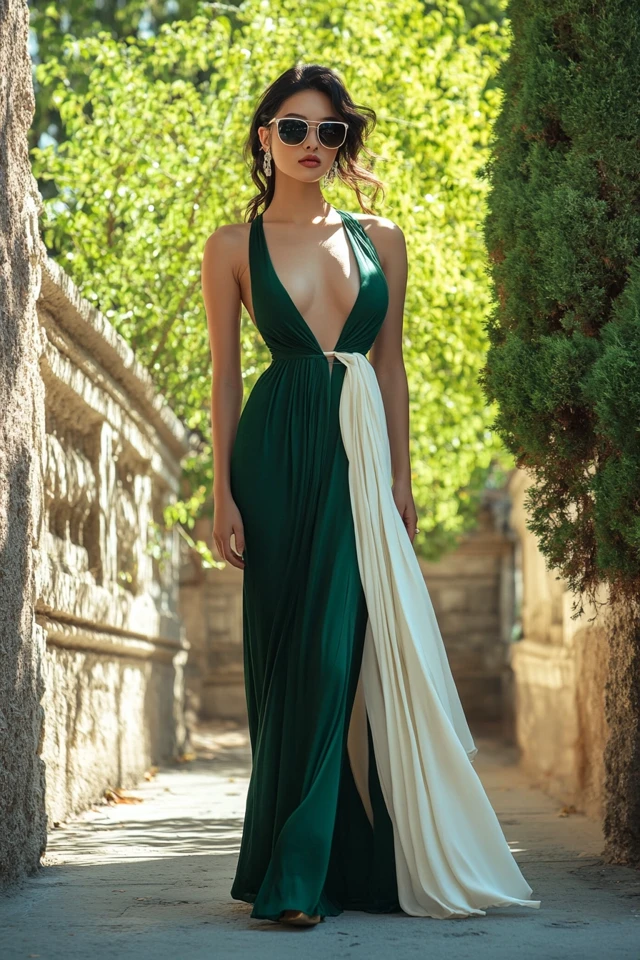
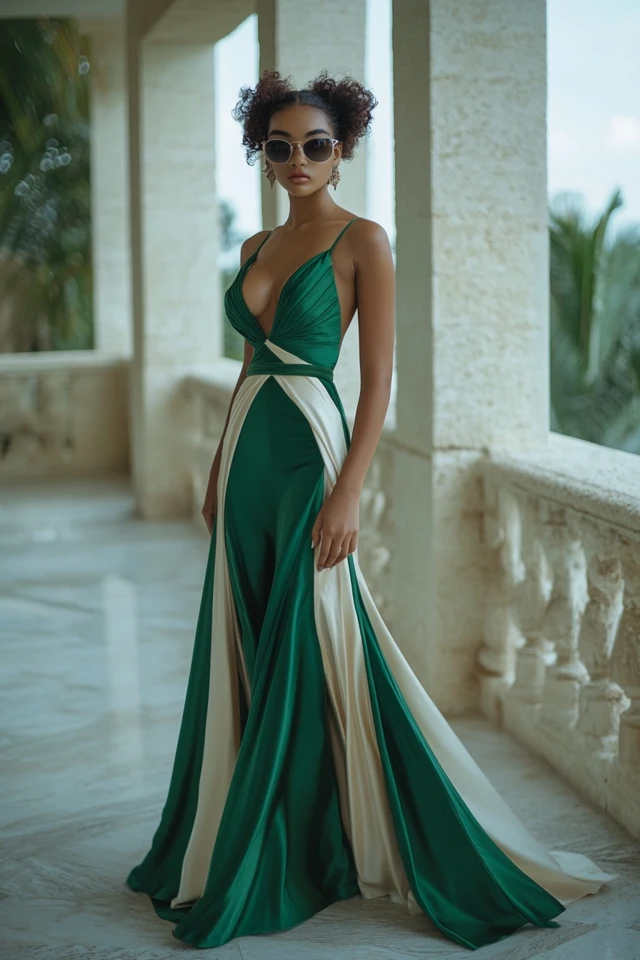
Two-tone dresses sit in between, such as an ivory bodice with an emerald skirt. Check where the color break falls: at the waist it defines your middle, at the bust it draws the eye up.
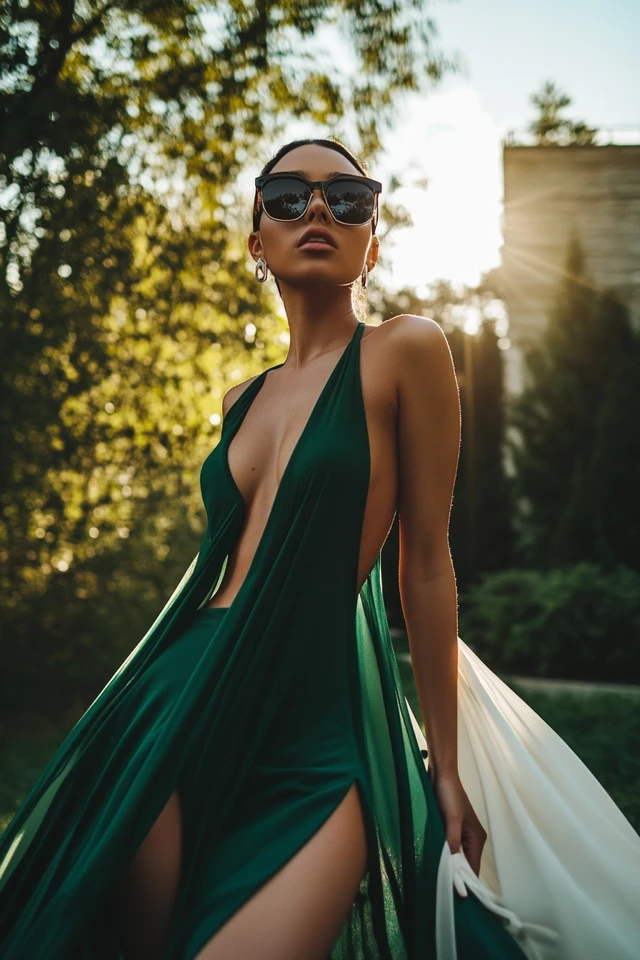
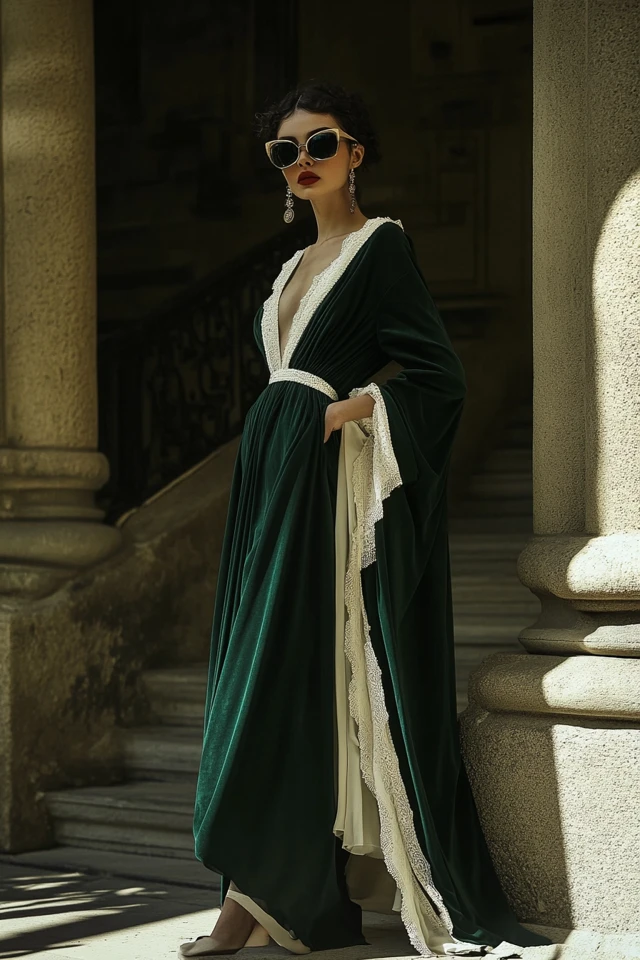
How do you pick the right ivory for your skin tone?
Ivory is not one color. Some are creamy with a yellow cast, some lean pink, and some are closer to a pale gray-white. Hold the fabric near your face in daylight and see whether your skin looks fresh or tired.
- Warmer undertones usually look good in creamy ivory with a touch of yellow.
- Cooler undertones often suit an ivory with a faint pink or silvery note.
- If you are unsure, a champagne-leaning ivory is a safe middle ground.
Emerald itself is forgiving, but the shade shifts the mood. A bluer emerald looks crisper and a yellower, mossier green looks warmer. Choose whichever looks best against your face, since the neckline is the first place the eye lands.
Which fabrics work best?
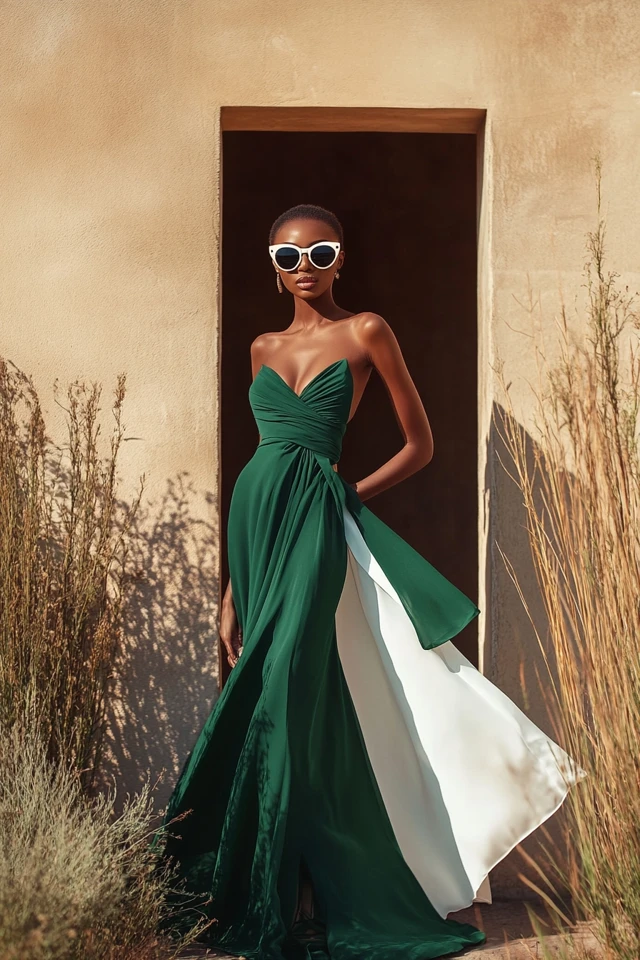
Texture changes how a color reads. A matte velvet absorbs light, so emerald looks deep and almost dark. A satin or silk reflects light, so the same green looks brighter and shows highlights along the folds.
Ivory behaves the same way. In silk or satin it glows, and in crepe or lace it looks softer and flatter. I'd pair a velvet emerald with a satin ivory accent, because the shine gives the pale color presence next to the heavy green. For more on mixing these two fabrics, see pairing velvet and silk for formal gowns.
Lace overlays, beading and sequins can add detail. Keep to one embellished area so the two colors stay the story.
What accessories and makeup finish the look?
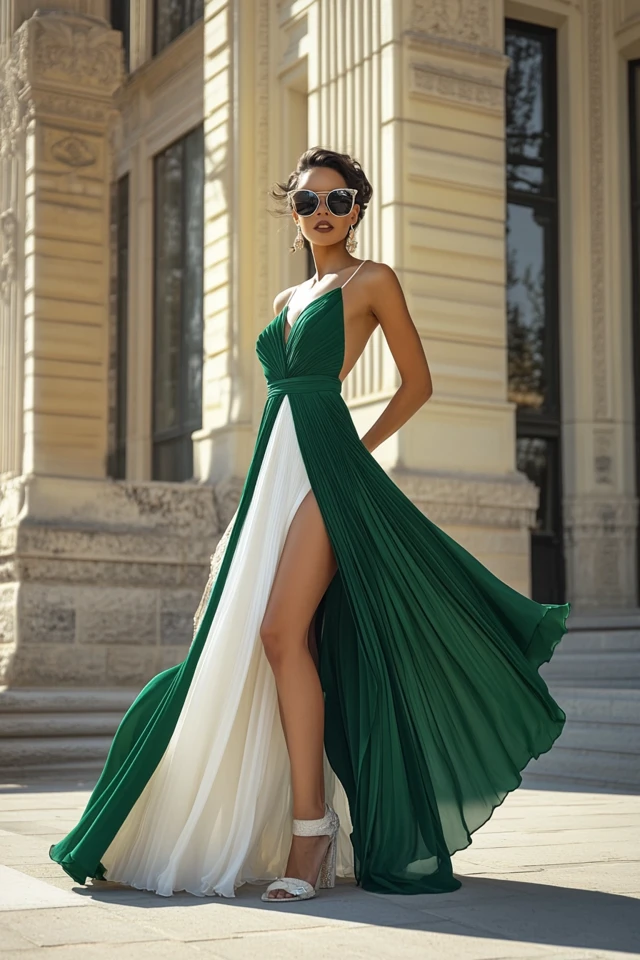
Gold suits both colors and ties them together. Pearls are a natural fit for ivory, and emerald earrings repeat the dress color near your face.
- Choose shoes in ivory, nude or gold, and keep the clutch in the same family.
- Repeat the accent color once or twice, not everywhere.
- Keep makeup classic: a red lip works with emerald, and softer peach or rose tones work with ivory.
If the dress is already two-tone, simplify the accessories and let the dress do the work.
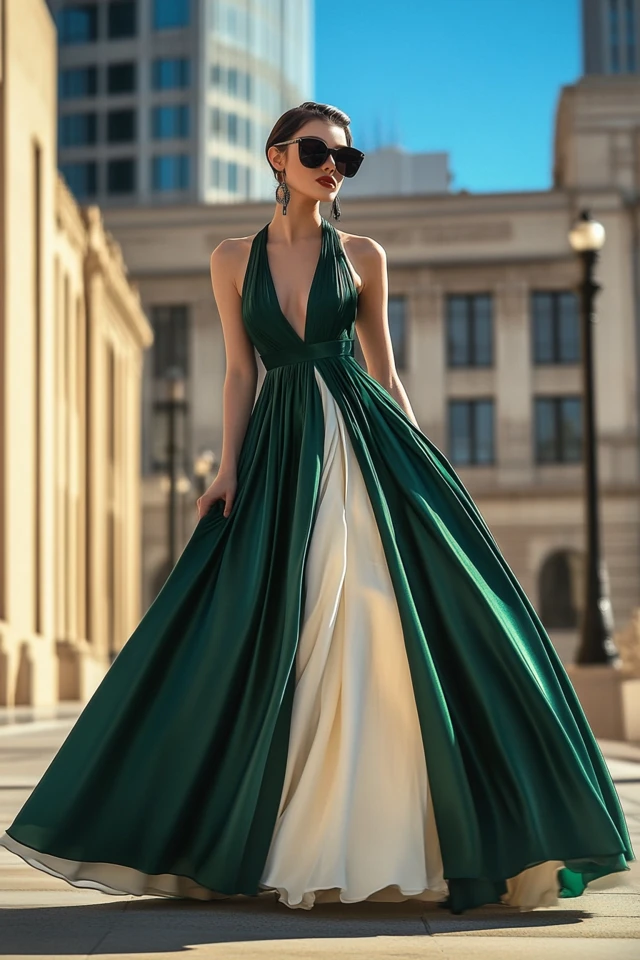
How do you style emerald and ivory by season and body shape?
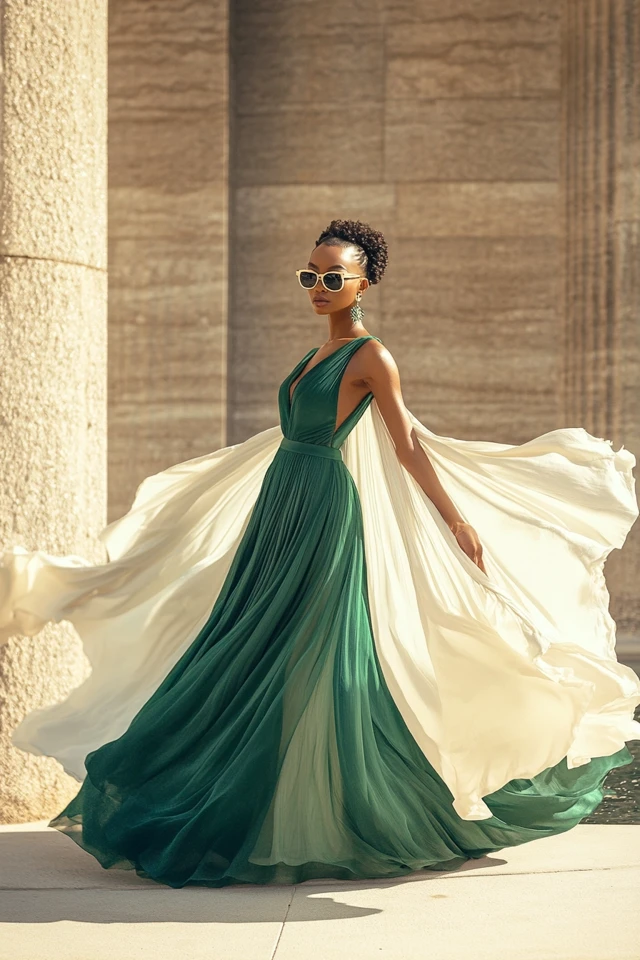
Deep greens are common in fall winter color trends, and emerald in velvet or brocade suits cold-weather events. If you follow fashion color trends, jewel tones tend to turn up in colder months, though a classic pairing like this does not depend on any one season. Look at the color trends for fall and winter if you want inspiration, then choose the shade that looks best on you. For spring and summer, chiffon or lightweight silk keeps the same colors from feeling heavy.
For shape, a few general guidelines help:
- Fitted bodice and flared skirt define the waist. An ivory belt adds emphasis.
- A-line emerald with ivory on the bodice draws the eye upward.
- Empire-waist emerald skims the midsection, and ivory jewelry points attention to the neckline.
- Ruching, a peplum or a cinched waist adds shape on a straighter frame.
If a dress pulls or gapes, that is a fit problem, not a you problem. A tailor can often fix it.
For more ideas, see emerald dresses for Christmas galas, ivory and blush daytime dresses, or plum and ivory formal looks.
Frequently asked questions
Can emerald green and ivory work for daytime events?
Yes. Choose lighter fabrics and simpler cuts, such as an ivory midi dress with emerald accessories or a flowy emerald dress with ivory shoes.
What jewelry goes with emerald and ivory?
Gold works with both colors. Emerald studs, a gold bracelet or pearls all fit, and a single statement piece is enough.
Can I add a third color to emerald and ivory?
Yes. Gold or silver metallics work, as do quiet neutrals like taupe or champagne. Keep the third color to one small item.
How do I wear emerald and ivory in winter?
Use heavier textures such as velvet or brocade, and add an ivory wrap or an emerald cape. Metallic accessories fit the evening mood.
Filed under Color Palettes