
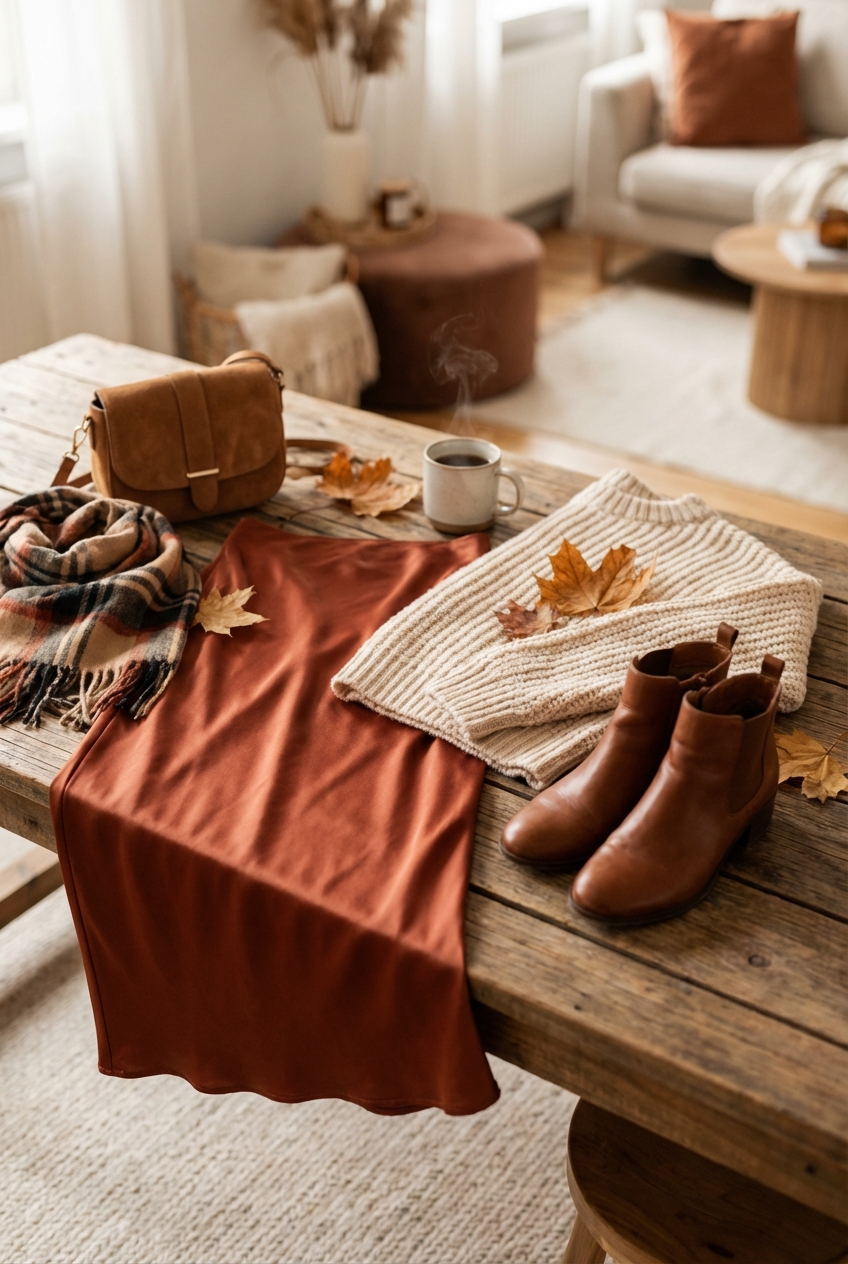
Fall Satin Skirt Dressing Guide
For years, I compartmentalized my wardrobe. Satin and silk were strictly reserved for summer evenings or holiday parties, while wool and leather dominated my autumn rotation. It wasn’t until I styled a particularly challenging editorial shoot in late October that I realized the untapped power of the satin skirt as a transitional hero piece. When paired correctly, the fluidity of satin provides a necessary counterpoint to the heavy, structured textures we typically wear in cooler months.
The magic of a satin skirt in the fall lies in the tension between fabrics. It is the visual break that prevents a heavy knit outfit from looking suffocating or bulky. However, styling this delicate fabric when the temperature drops requires a distinct set of rules regarding layering, static control, and footwear proportions to keep the look intentional rather than accidental.
In this guide, I am breaking down exactly how to construct these outfits with the precision of a stylist. We will cover everything from the physics of the bias cut to the exact boot heights that flatter the leg line. For a massive dose of visual inspiration, be sure to check out the curated Picture Gallery at the end of the blog post.
Understanding the Bias Cut and Fabric Weight
Before we discuss what to wear with the skirt, we must address the architecture of the skirt itself. Most high-end satin skirts are cut on the “bias,” meaning the fabric is cut at a 45-degree angle to the grain. This allows the fabric to drape sinuously over the body’s curves rather than hanging straight down.
For fall, the weight of this fabric is paramount. A thin, unlined polyester satin will cling to tights and look cheap under heavy coats. You need a skirt with substantial “momme” weight (a unit used to measure silk density) or a high-quality heavy crepe-back satin.
When selecting a skirt for cooler weather, I always look for a midi-length that hits roughly three inches above the ankle bone. This specific length is crucial because it allows for versatility with footwear. If the skirt is too short, it looks out of place with heavy boots; too long, and it drags in autumn slush.
Designer’s Note: The Fit Test
In my years of fitting clients, the number one mistake women make with bias-cut skirts is buying them too small. Bias fabric contracts horizontally when it stretches vertically.
If you see “whiskering” (horizontal pull lines) across the hips, size up. The skirt should graze your body, not grip it. A slightly looser fit actually makes the fabric look more expensive and allows room for tucking in thicker fall tops.
The Art of Texture: Pairing Knits with Sheen
The most sophisticated way to style satin in the fall is by utilizing the concept of high-contrast texture. You want to place the matte, light-absorbing surface of a chunky knit directly against the glossy, light-reflecting surface of the skirt. This creates visual depth that makes an outfit look expensive.
My go-to formula involves an oversized, heavy-gauge cashmere or wool sweater. The visual weight of the sweater grounds the floatiness of the skirt. However, the silhouette is tricky to master without looking drowning in fabric.
The “French Tuck” is essential here. Grab just the front two inches of your sweater hem and tuck it into the waistband, slightly off-center. Blouse the rest of the sweater over the tuck. This defines the waistline without losing the cozy, oversized aesthetic.
Common Mistakes + Fixes
- Mistake: Wearing a tight, thin cardigan with a satin skirt.
- Fix: This often reads as “office wear” or dated. Swap the fitted cardigan for a boxy, crew-neck pullover. The boxy shape contrasts beautifully with the slim skirt profile.
- Mistake: Matching the texture too closely.
- Fix: Avoid wearing satin tops with satin skirts for daywear. It looks too much like a bridesmaid dress. Always aim for matte fabrics (wool, cotton, denim) up top.
Footwear Anchors: From Knee-High Boots to Sneakers
Shoes are usually the failure point for this look. Because satin is a formal fabric, our instinct is to wear heels. In the fall, however, you must anchor the look with something substantial to balance the visual weight of your outerwear.
Knee-high leather boots are the gold standard for this season. The shaft of the boot should disappear under the hem of the skirt. This creates a continuous, unbroken line that elongates the body and keeps you warm.
If you prefer a gap between the boot and skirt, the proportions must be precise. Aim for no more than two to three inches of skin (or tights) showing between the top of the boot and the skirt hem. Anything more cuts the leg in half visually.
What I’d Do in a Real Project
If I am styling a client for a day in the city, here is the footwear hierarchy I follow:
- Option A (Chic & Warm): A structured knee-high boot with a block heel. The structure contrasts the fluid skirt.
- Option B (Casual Cool): A retro sneaker (like a Samba or Gazelle). This dresses the skirt down immediately. Ensure the socks are invisible or intentionally styled crew socks.
- Option C (Edgy): A heavy combat boot (Dr. Martens style). This adds a grunge element that works surprisingly well with feminine satin.
Outerwear Layering: Proportions and Silhouettes
When you throw a coat over a midi skirt, you risk looking like a rectangle. The goal of outerwear styling here is to either highlight the waist or embrace a deliberate column shape. The “in-between” lengths are where outfits go to die.
The Cropped Jacket approach is the easiest to execute. A leather moto jacket or a cropped denim jacket that hits exactly at the high hip bone is perfect. It preserves the leg-lengthening effect of the skirt and highlights the smallest part of your waist.
Alternatively, the Long Coat approach creates a dramatic, flowing silhouette. A wool trench or overcoat should ideally be the same length as the skirt or slightly longer. If the coat is significantly shorter than the skirt (stopping at the knee), it creates a stair-step effect that can look messy.
Pro-Level Rule of Thumb
If you are wearing a blazer, pay attention to the “Rule of Thirds.” An oversized blazer that hits mid-thigh looks fantastic, but you must cinch it with a belt or wear the blazer open to show the waistline underneath. A closed, shapeless blazer over a shapeless skirt swallows the figure.
Color Theory: Transitioning Palettes for Autumn
Summer satin is often pastel or neon. Fall satin requires a shift in the color story to feel appropriate for the season. You do not have to abandon color, but you should adjust the depth and saturation.
Jewel tones are naturally compliant with satin’s sheen. Ruby reds, emerald greens, and deep plums look incredibly luxurious because the fabric reflects light, making the colors appear vibrant rather than flat. These shades pair effortlessly with neutrals like camel, charcoal, and black.
Monochromatic dressing is another stylist secret for looking taller and leaner. Pairing a chocolate brown satin skirt with a chocolate brown heavy knit sweater creates a “column of color.” Because the textures are different, the outfit doesn’t look like a uniform—it looks intentional and high-fashion.
The Neutral Palette
If you prefer neutrals, swap bright white for cream or oatmeal. Swap standard black for charcoal grey or midnight blue. These softer neutrals feel richer and layer better with the earthy tones of autumn foliage.
Practical Maintenance: Static, Wrinkles, and Undergarments
We cannot discuss satin in the fall without addressing the static electricity issue. It is the arch-nemesis of this look. When the air gets dry and you layer tights under synthetic satin, the skirt will cling to your legs uncomfortably.
You must create a barrier. My non-negotiable tool is a classic anti-static spray. Spray the inside of the skirt and the outside of your tights before leaving the house. If you are in a pinch, a light layer of hairspray works, or running a metal hanger over the fabric can discharge the electricity.
Regarding undergarments: satin is unforgiving. It shows every line and bump. Seamless, laser-cut underwear is mandatory. Do not rely on lace or stitched edges.
What I’d Do: The Slip Short Hack
Instead of traditional shapewear which can be uncomfortable, I often recommend “slip shorts” (lightweight, non-compressing biker shorts). They prevent thigh chafing, provide a smooth layer for the skirt to glide over, and eliminate the need for a slip.
Finish & Styling Checklist
Before you walk out the door, run through this quick stylist check to ensure your outfit is polished and proportioned.
- Texture Check: Do you have at least one matte element (knit, leather, suede) to contrast the shine?
- Waist Definition: Is the waist defined, either by a tuck, a cropped jacket, or a belt?
- Hemline Audit: Does your coat length work with the skirt length (either much shorter or roughly the same length)?
- Static Guard: Have you sprayed the interior of the skirt to prevent clinging?
- Shoe Gap: Is the gap between your boot and skirt intentional (either overlapping or a small 2-3 inch gap)?
- Undergarments: Are your panty lines invisible?
FAQs
Can I wear tights with a satin skirt?
Absolutely. Opaque black tights are the easiest to style. However, to prevent the skirt from bunching up as you walk, the anti-static measures mentioned above are crucial. Alternatively, wearing a sheer silk slip between the tights and the skirt allows for better movement.
Is a satin skirt too dressy for the school run or grocery store?
Not if you style it down. This is where the “High-Low” mix comes in. Pair the skirt with a graphic tee, a denim jacket, and retro sneakers. The casual nature of the other items neutralizes the formality of the skirt.
How do I get wrinkles out of satin without ruining it?
Never iron satin directly on the face of the fabric; it will leave shiny scorched marks. A handheld steamer is the safest bet. If you must iron, turn the skirt inside out and use the lowest setting with a pressing cloth between the iron and the fabric.
What do I do if my stomach feels exposed in bias cut satin?
This is a common concern. The bias cut hugs the belly. The solution is not to wear a tight top. Wear a sweater that has a split hem or is slightly longer in the back. This provides coverage over the hips and tummy while still allowing you to tuck a small portion in the front to show leg length.
Conclusion
The satin skirt is far more than a fleeting trend or a summer staple; it is a foundational garment for the modern wardrobe. By understanding the principles of texture contrast and proportion, you can extend the life of this piece well into the deep autumn months.
Remember that fashion is about solving a puzzle. You are balancing shine with matte, flow with structure, and delicacy with utility. Once you master the mix of a heavy knit and a fluid skirt, you will find it becomes a uniform that feels both comfortable and effortlessly chic.
Don’t be afraid to experiment with heavy boots or oversized coats. The durability of your style comes from your confidence in mixing these opposing elements. Treat your satin skirt as you would your favorite pair of jeans—versatile, reliable, and ready for anything.
Picture Gallery


