
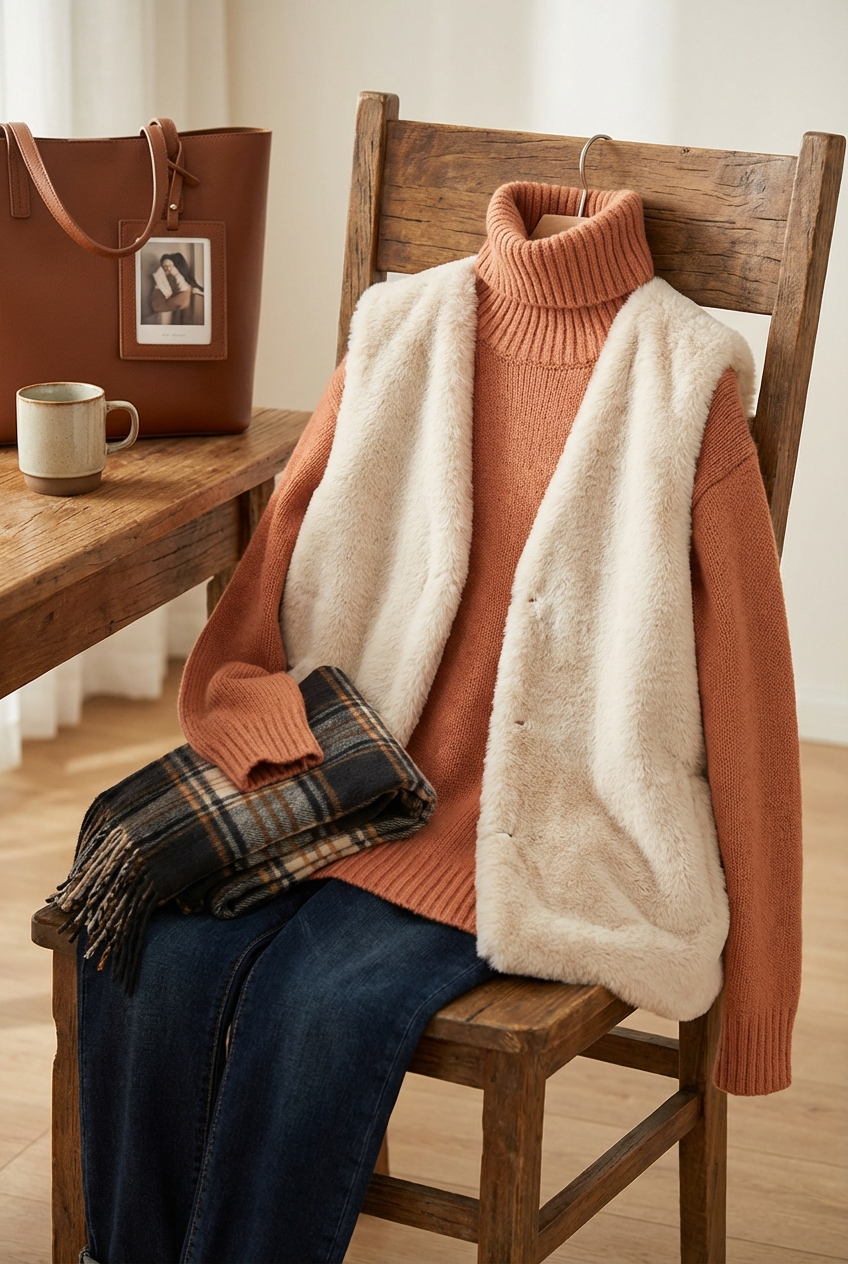
Faux Fur Vests For Layered Winter Looks
Introduction
There is a distinct moment every autumn when the temperature drops just enough to require warmth, but not enough to demand a heavy wool coat. This is the sweet spot for the faux fur vest. Over my years in the fashion industry, I have seen this piece misunderstood as merely “boho” or overly trendy. However, when styled with intention, it is one of the most architectural and luxurious tools in a winter wardrobe.
I recall a styling session with a client who was terrified of adding volume to her frame. She avoided anything textured, assuming it would make her look bulky. We layered a sleek, low-pile mink-style vest over a monochromatic cashmere column, and her posture immediately changed. She didn’t look larger; she looked expensive, curated, and warm. That is the power of the right third layer. It provides dimension that a flat cardigan simply cannot achieve.
In this guide, we are going to break down the mechanics of layering. We will look at proportion, texture mixing, and the specific metrics you need to look for when buying a vest to ensure it fits your lifestyle. For a visual breakdown of these outfit formulas, be sure to check out the Picture Gallery at the end of the blog post.
1. Understanding Pile and Volume: The Foundation of Fit
The biggest mistake women make with faux fur is ignoring the “pile”—the length and density of the fur fibers. Not all faux furs are created equal, and the volume of the vest dictates what you can wear underneath it. If you choose the wrong pile for your frame or your base layer, the outfit will look costume-like rather than high-end.
For a versatile, everyday look, I always recommend starting with a “sheared” texture. This mimics the look of shearling or plucked mink. These vests usually add less than half an inch of visual depth to your silhouette. They are streamlined enough to be worn indoors without looking like you forgot to take your coat off.
Conversely, “shaggy” options, like Mongolian lamb or long-hair fox replications, add significant drama and volume. These are fantastic for balancing out wide-leg trousers but can overwhelm a petite frame if the length isn’t right. If you are under 5’4″, a long-hair vest should never go past your hip bone. If it hits the knee, the volume will swallow you whole.
Designer’s Note: The Armhole Issue
One technical detail that often ruins a look is the size of the armhole. In cheaper garments, the armhole is often cut too high and small.
The Lesson: When fitting clients, I always check that the armhole drops at least 1.5 to 2 inches below the armpit. Why? because you need room for a chunky knit sweater. If the armhole is tight against a fine t-shirt, it will bunch up and look ill-fitted the moment you try to layer it over a cable knit or a leather jacket. Always test the vest with the thickest layer you intend to wear.
2. The Art of Monochromatic Layering
If you want to look wealthy and polished, monochrome is the cheat code. However, when wearing faux fur, you cannot simply match colors flatly. You must rely on tonal shifts and texture differences to keep the eye moving. A black vest over a black cotton shirt looks flat. A black faux fur vest over a black silk blouse and black leather pants looks dimensional and intentional.
The goal is to match the undertones rather than the exact shade. For example, if you have a warm cream vest (yellow undertones), do not pair it with a stark white shirt (blue undertones). The shirt will make the vest look dirty. Instead, pair it with oatmeal, camel, or soft beige.
This technique elongates the body. By keeping the color column unbroken from neck to hem, the vest acts as a framing device rather than a horizontal block. This is particularly effective for those who are worried about the bulk of the fur. The column of color underneath draws the eye vertically.
Common Mistakes + Fixes
Mistake: Wearing a light-colored vest over a high-contrast dark outfit (e.g., white vest, black top, black pants).
The Fix: While color blocking can work, this specific contrast often chops the body in half visually. Instead, try a “sandwich” method or soft transition. If you wear a light vest, wear a light top and dark pants, or a medium-tone grey top to bridge the gap.
3. Balancing Proportions: What Goes Underneath
The golden rule of styling volume is the “Rule of Opposites.” If one piece creates volume, the adjacent piece must reduce it. Since a faux fur vest is inherently bulky, the sleeves poking out from underneath must be fitted. This creates a visual check that shows your actual body size, preventing the “marshmallow” effect.
My go-to pairing is a ribbed turtleneck or a fitted merino wool sweater. The tightness of the ribbing contrasts beautifully with the chaotic texture of the fur. You want to see the definition of the arm. Avoid dolman sleeves or “batwing” sweaters under vests; the excess fabric will bunch at the armpit and ruin the silhouette.
For the bottom half, you have two choices depending on the vest length. If you are wearing a cropped vest (hitting at the waist), you can get away with a wide-leg trouser or a midi skirt. If you are wearing a longer tunic-style vest (hitting mid-thigh), a slim-leg pant or straight-leg denim is non-negotiable to anchor the look.
What I’d Do in a Real Project
If I were styling a client for a winter brunch who wanted to wear a mid-length, shaggy faux fur vest:
- Base Layer: A fitted, black cashmere turtleneck.
- Bottoms: Dark wash, high-waisted skinny jeans or leather leggings.
- Footwear: Over-the-knee suede boots.
This formula works because the leggings and boots create a long, lean line that supports the heavy visual weight of the vest.
4. Belted vs. Open: Defining the Silhouette
Many women assume a vest must be worn exactly as it hangs. However, adding a belt is the quickest way to transform a vest from “outerwear” to “part of the outfit.” This is especially useful for vests that are boxy or lack structural tailoring.
When belting faux fur, you need substantial hardware. A skinny half-inch belt will get lost in the pile and look like a mistake. You need a belt that is at least 2 to 3 inches wide. Leather or suede obi belts work beautifully here because they lie flat against the waist and don’t add bulk.
The technique is key: do not pull the belt too tight. You want to cinch the fur slightly to suggest a waist, not strangle the fabric. If the vest has no buttons or closures, wrap the front panels so they overlap slightly before belting. This creates a surplice neckline effect that is very slimming.
Pro Tip: The Back-Tie Trick
If you love the open look but feel the vest is too boxy, try tying the belt only at the back (under the vest, looped through side tabs if available, or just cinched at the back panel). This gathers the excess fabric at the small of your back, giving the vest a tailored shape from the rear while leaving the front open and breezy.
5. Fabric Pairing: Leather, Silk, and Knits
High-end styling is all about tension. We want to place materials together that shouldn’t logically work but visually sing. Faux fur is soft, organic, and cozy. To make it look modern, you need to introduce materials that are hard, sleek, or delicate.
Leather and Faux Leather: This is the ultimate power pairing. The slick, cool surface of leather trousers or a leather skirt creates a tactile barrier against the soft fur. It screams “urban luxury.” If you are wearing a matte fur vest, try patent leather leggings for high impact.
Silk and Satin: This works best for evening or holiday parties. A silk slip dress under a heavy fur vest is a classic 90s revival look that feels very current. The weight of the vest grounds the floating nature of the silk. It makes a flimsy dress appropriate for winter temperatures.
Denim: For casual wear, denim acts as a neutral. However, avoiding distressing is best when wearing fur. Ripped jeans plus faux fur can look a bit messy. Stick to clean, dark washes or crisp white denim for a look that resembles “Aspen ski chic” rather than “college festival.”
Styling Checklist: Texture
- Soft on Hard: Pair fluffy vests with coated denim or leather.
- Matte on Shine: If the fur is matte, add gold jewelry or a silk blouse.
- Heavy on Light: Use chiffon or silk underneath to reduce visual weight.
6. Care and Maintenance for Faux Fur
You cannot have a stylish outfit if the garment looks matted or dusty. Faux fur is made of synthetic fibers (usually acrylic or modacrylic), which means it reacts to heat and friction differently than real animal hair.
The most common issue I see in clients’ closets is “seatbelt matting.” This happens where the seatbelt rubs across the chest, flattening and frizzing the fibers. To fix this, you need a pet slicker brush (yes, really). Gently brush the fibers in the opposite direction of the matting to lift the pile.
Never, under any circumstances, put faux fur in a dryer. Heat will melt the tips of the fibers, causing them to hook together and feel like rough Velcro. Once this happens, the vest is ruined. If it gets wet, shake it out vigorously and hang it to air dry in an open space.
Designer’s Note: Storage Logic
Faux fur needs to breathe. Never store your vests in plastic dry-cleaning bags. The plastic traps moisture and can cause the fibers to become brittle or yellow over time.
The Solution: Use cotton garment bags or simply leave them hanging with plenty of space on the rail. If you crowd a fur vest between two wool coats, the pile will be permanently crushed. Give it at least 2 inches of breathing room on either side in your closet.
Finish & Styling Checklist
Before you head out the door, run through this quick mental checklist to ensure your look is polished and proportional.
- Check the Hemline: Does the vest end at a flattering point on your body? (Ideally high hip or mid-thigh, never the widest part of your hip).
- The Sleeve Test: Is the sleeve of your under-layer fitted? Loose sleeves create lumps.
- Hardware Check: If your vest has zippers or heavy buttons, match your jewelry metals to them for a cohesive look.
- Lint Roll: Faux fur sheds, especially when new. Lint roll your dark trousers before leaving the house.
- Collar Placement: If the vest has a large collar, ensure your hair is pulled back or styled up to elongate the neck.
- Proportion Control: If the vest is oversized, the bottom half of your outfit must be slim.
FAQs
Can I wear a faux fur vest to the office?
Yes, but keep the pile short and the color neutral. A sheared black or navy vest looks very similar to a structured wool gilet. Pair it with a crisp white button-down shirt and tailored trousers. Avoid shaggy, multi-colored furs in corporate settings.
How do I stop the vest from shedding on my clothes?
Shedding is common with new items. You can lightly vacuum the vest using an upholstery attachment to remove loose fibers. Alternatively, place the vest in a Ziploc bag and put it in the freezer for 24 hours; this helps set the fibers and reduce shedding.
Is a hood on a faux fur vest stylish or too casual?
Generally, hoods lean very casual and athletic. They are great for après-ski looks or running errands with leggings. For a dressed-up dinner or work look, opt for a collarless vest or a wide lapel style without a hood.
Can curvy or plus-size women wear thick faux fur?
Absolutely. The key is structural tailoring. Look for vests that have vertical panels or chevron patterns carved into the fur, as these draw the eye up and down. Avoid vests that are one solid, thick block of fabric. Also, wearing the vest open creates two vertical lines down the front of your body, which is universally flattering.
Conclusion
The faux fur vest is more than just a trend piece; it is a textural powerhouse that can revive the most basic winter staples. By understanding the rules of volume, mastering the art of the monochromatic column, and caring for the fibers correctly, you can elevate this item from “cozy” to “couture.”
Remember that fashion is about balance. The wilder the texture of the vest, the more disciplined the rest of your outfit should be. Whether you are belting a tunic vest over a silk dress or throwing a cropped shag over a leather jacket, the goal is always intentional layering. embrace the warmth, play with the proportions, and don’t be afraid to take up a little space.
Picture Gallery


