
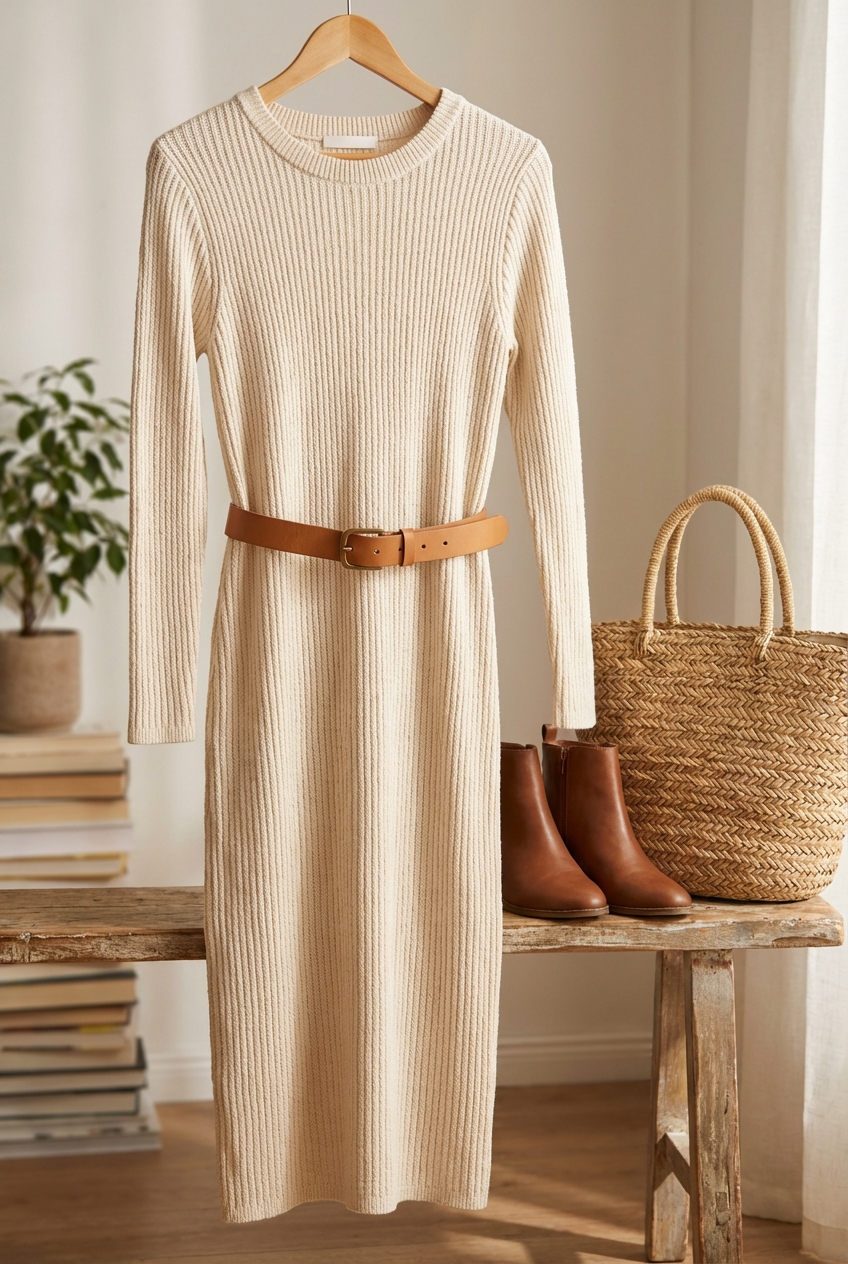
Fitted Knit Dresses For Casual Elegance
There is a distinct misconception that comfort and polish exist on opposite ends of the fashion spectrum. In my years styling high-profile clients for everything from long-haul flights to casual Friday board meetings, I have found the fitted knit dress to be the ultimate rebuttal to that idea. It is the architectural wonder of a wardrobe, providing structure without rigidity and softness without sloppiness.
I remember a specific fitting with a client who insisted she could only wear structured wool suits to feel powerful. We slipped her into a heavyweight, ribbed cashmere midi dress in a charcoal gray. The transformation was immediate; she looked taller, felt more at ease, and projected a quiet, confident luxury that stiff tailoring simply couldn’t achieve. That is the power of a well-selected knit.
The secret lies not just in buying a dress, but in understanding the mechanics of yarn, stretch recovery, and proper underpinnings. If you need visual inspiration on how to execute these looks, remember that a curated Picture Gallery is waiting for you at the end of this blog post.
Understanding Fiber and Weight: The Foundation of Elegance
In interior design, you select upholstery based on durability and hand-feel; in fashion, selecting the right yarn is equally critical for the drape of a dress. A fitted knit dress requires a material that holds its own shape while skimming yours.
If the fabric is too thin, it will reveal every line and ripple beneath it. If it is too thick, it can add unnecessary bulk. You are looking for a “mid-weight” knit with high recovery.
The Fiber Hierarchy
- Merino Wool: The gold standard for cooler months. It regulates body temperature and has a natural elasticity that resists sagging.
- Cotton Blends: Ideal for transitional seasons. Look for long-staple cotton mixed with a small percentage of elastane or nylon for shape retention.
- Viscose/Rayon: These offer a beautiful, heavy drape that mimics silk but with a matte finish. They are excellent for evening elegance but require careful handling when wet.
- Cashmere: The ultimate luxury. However, pure cashmere can sometimes stretch out. A blend is often more practical for a fitted silhouette.
Stylist’s Note: The “Recovery” Test
Before buying, perform a stretch test. Gently pull the fabric horizontally about two inches and let go. If it snaps back immediately, the dress will maintain its fitted silhouette throughout the day. If it slowly drags back into place, that dress will likely be sagging at the knees and rear by lunchtime. Avoid low-recovery fabrics for fitted garments.
The Architecture of Fit: Ease vs. Squeeze
The term “fitted” is often misinterpreted as “tight.” In the world of high-end styling, there is a massive difference. A dress that is too tight looks constricting and cheapens the overall aesthetic. A dress that is fitted skims the body, allowing for movement and breathability.
We often talk about “negative ease” in knitting—where the garment is smaller than the body measurements to stretch over curves. For casual elegance, you want negative ease at the bust and hips, but neutral ease at the waist.
Key Measurements to Watch
- Shoulder Seams: These must sit precisely at the edge of your shoulder bone. If they droop, the dress looks ill-fitting.
- The Waist: The knit should gently hug the waist without creating horizontal pull lines (whiskering). If you see horizontal lines stretching across your midsection, size up.
- The Hem: For a sophisticated look, aim for a midi length. Ideally, the hem should hit the part of your leg that begins to taper in, usually just below the calf muscle.
The Invisible Infrastructure: Undergarments
You simply cannot discuss fitted knit dresses without addressing what goes underneath. This is the number one area where I see potential outfits fail. Knits are unforgiving; they will highlight the texture of lace, the ridge of a seam, and the band of a waistline.
A seamless foundation is non-negotiable. This does not always mean heavy-duty shapewear, which can be uncomfortable for daily wear. It means laser-cut edges and smooth fabrics.
My Go-To Underpinning Checklist
- Seamless Thong or Boyshort: Look for “laser-cut” edges. Sewn elastic hems will dig in and create visible panty lines (VPL).
- Smoothing Shorts: For lighter-colored knits, a lightweight smoothing short is essential to prevent transparency in direct sunlight.
- T-Shirt Bra: Avoid lace or embroidery. A molded cup or a smooth bralette provides the best silhouette under ribbed or flat knits.
- Slips: If the knit is wool, a silk slip prevents the dress from “climbing” up your legs as you walk (static cling).
Textural Contrast: Styling for Dimension
A knit dress is essentially a column of a single texture. To elevate it from “loungewear” to “casual elegance,” you must introduce contrasting materials. This is similar to how an interior designer mixes wood, metal, and fabric in a room to create depth.
If you wear a matte wool dress with suede boots, the look can feel flat because both textures are light-absorbing. You need to introduce light-reflecting elements to break up the visual weight.
Winning Combinations
- Leather: A leather motorcycle jacket or tall leather boots adds a sleek, hard edge to the softness of the knit.
- Metal: Chunky gold or silver jewelry pops beautifully against the matte surface of wool or cotton.
- Denim: A structured denim jacket provides a casual, rigid frame that juxtaposes the fluidity of the dress.
- Silk/Satin: A silk scarf tied at the neck or a satin bag adds a touch of polish.
Common Mistakes + Fixes
Even the most stylish women can stumble when styling knits. Here are the issues I encounter most frequently in fitting rooms and how to correct them immediately.
Mistake 1: The “Knee Bag”
The Issue: After sitting for an hour, the dress retains the shape of your knees even when you stand up.
The Fix: This is a material failure. Look for “milano stitch” or “interlock” knits, which are double-knitted for stability. If you already own the dress, a quick steam (not iron) can sometimes shrink the fibers back into place temporarily.
Mistake 2: Ignoring Static
The Issue: The dress clings awkwardly to your tights or bare legs, ruining the line.
The Fix: Carry a small travel spray of anti-static guard. In a pinch, running a wire hanger over the inside of the dress or applying a thin layer of lotion to your legs neutralizes the charge.
Mistake 3: The Wrong Footwear Scale
The Issue: Wearing a delicate ballet flat with a heavy, chunky cable-knit dress. The visual weight feels top-heavy.
The Fix: Match the “weight” of the shoe to the weight of the knit. Chunky knits need boots, loafers with a lug sole, or substantial sneakers. Fine gauge knits can handle strappy sandals or delicate heels.
Proportions and Layering Techniques
The fitted knit dress is a versatile base layer. However, because it hugs the body, your outer layers need to provide volume to create a balanced silhouette. This plays into the “Rule of Thirds”—a golden ratio in visual aesthetics.
If you wear a fitted dress with a tight, short cardigan, the look can feel dated or shrunken. You want to play with opposing volumes.
The “Coatigan” Strategy
For a look that screams “rich mom” elegance, pair a fitted midi dress with a long, unstructured coatigan (coat-cardigan hybrid). The outer layer should be slightly longer or exactly the same length as the dress. This creates a vertical column of color that is incredibly slimming.
The Belt Debate
Should you belt a knit dress? Proceed with caution. Belting a thick knit adds bulk to the waist, which is rarely flattering. However, on a fine-gauge knit, a belt can define the waist.
My rule: If the dress has vertical ribbing, do not belt it, as it distorts the lines. If it is a flat knit, a belt is permissible.
Care and Maintenance: Longevity of the Look
You can buy the most expensive knit dress in the world, but if you hang it up, you have ruined it. Gravity is the enemy of knitwear. The weight of the skirt will pull down on the shoulders, stretching the garment out of shape permanently.
How to Store
Always fold your knit dresses. I recommend the “rolling” method for thicker knits to avoid hard creases. Lay the dress flat, fold the sleeves in, fold it in half vertically, and then roll from the hem up to the neck.
Washing Protocols
Dry cleaning is safe, but hand washing is often better for the fibers. Use cool water and a wool-specific detergent (like Eucalan). Never wring the dress out. Roll it in a clean towel to press the water out, then reshape it on a drying rack. Never let it dry in direct sunlight, as this can fade the dye and make natural fibers brittle.
Depilling
Pilling is not necessarily a sign of bad quality; it is a natural occurrence in natural fibers where friction occurs (under the arms, where a purse rubs). Invest in a battery-operated fabric shaver. Do not pull pills off by hand, as this pulls the fiber further out and creates more pills.
What I’d Do In A Real Project: The Client Checklist
If I were styling you for a week of appointments and dinners using a fitted knit dress, here is the exact formula I would use to ensure success.
- Base: A ribbed merino wool midi dress in camel or navy.
- Lighting Check: I would have you stand in front of a window to ensure the silhouette is opaque.
- The “Sit” Test: I would ask you to sit down to ensure the slit (if present) doesn’t rise too high and the stomach area remains comfortable.
- Hardware: I would pair it with knee-high leather boots to close the gap between the hem and the shoe for a seamless line.
- Third Piece: An oversized blazer thrown over the shoulders to add structure to the soft knit.
Finish & Styling Checklist
Before you head out the door, run through this quick mental audit to ensure your look is polished and purposeful.
- Opacity: Can you see the outline of your pockets or legs in the light? If yes, add a slip.
- Lines: Are there visible panty lines or bra straps? Switch to laser-cut seamless options.
- Proportion: Does the hemline hit a flattering point on the leg (not the widest part of the calf)?
- Texture: Have you added a contrasting texture (leather, metal, denim) to break up the knit?
- Condition: Is the fabric free of pills and lint? Give it a quick shave if needed.
FAQs
Can I wear fitted knit dresses if I am curvy?
Absolutely. In fact, fitted knits are often more flattering on curves than stiff fabrics because they mold to the body. The key is choosing a fabric with a higher gram weight (thicker) and high elasticity. Vertical ribbing is also an excellent tool for elongating the body visually.
How do I stop the dress from stretching out in the rear?
This comes down to fiber content. Look for blends that include nylon or spandex. 100% cotton knits are the worst offenders for “bagging out.” If you are sitting for long periods, try to gently lift the fabric at the hips before sitting to reduce tension on the knees and seat.
Are knit dresses appropriate for formal events?
They can be. A fine-gauge, viscose-blend knit in black or jewel tones can read very formal. Avoid chunky cables or marled yarns, which look casual. Pair it with a heel, statement jewelry, and a structured clutch to elevate the look.
Can I wear them in summer?
Yes, but switch the fiber. Look for linen/cotton blends or bamboo knits. These are breathable and wick moisture. Stick to sleeveless or tank silhouettes to keep the look airy.
Conclusion
The fitted knit dress is more than just a trend; it is a modern classic that respects the reality of a woman’s life. We move, we travel, we sit, and we work. Our clothing should facilitate that movement, not restrict it. By focusing on quality materials, understanding the importance of fit and underpinnings, and applying simple styling rules regarding texture and proportion, you can achieve an aesthetic that is both comfortably casual and undeniably elegant.
It is about respecting the architecture of the garment and the architecture of your body. When those two align, the result is effortless style.
Picture Gallery


