
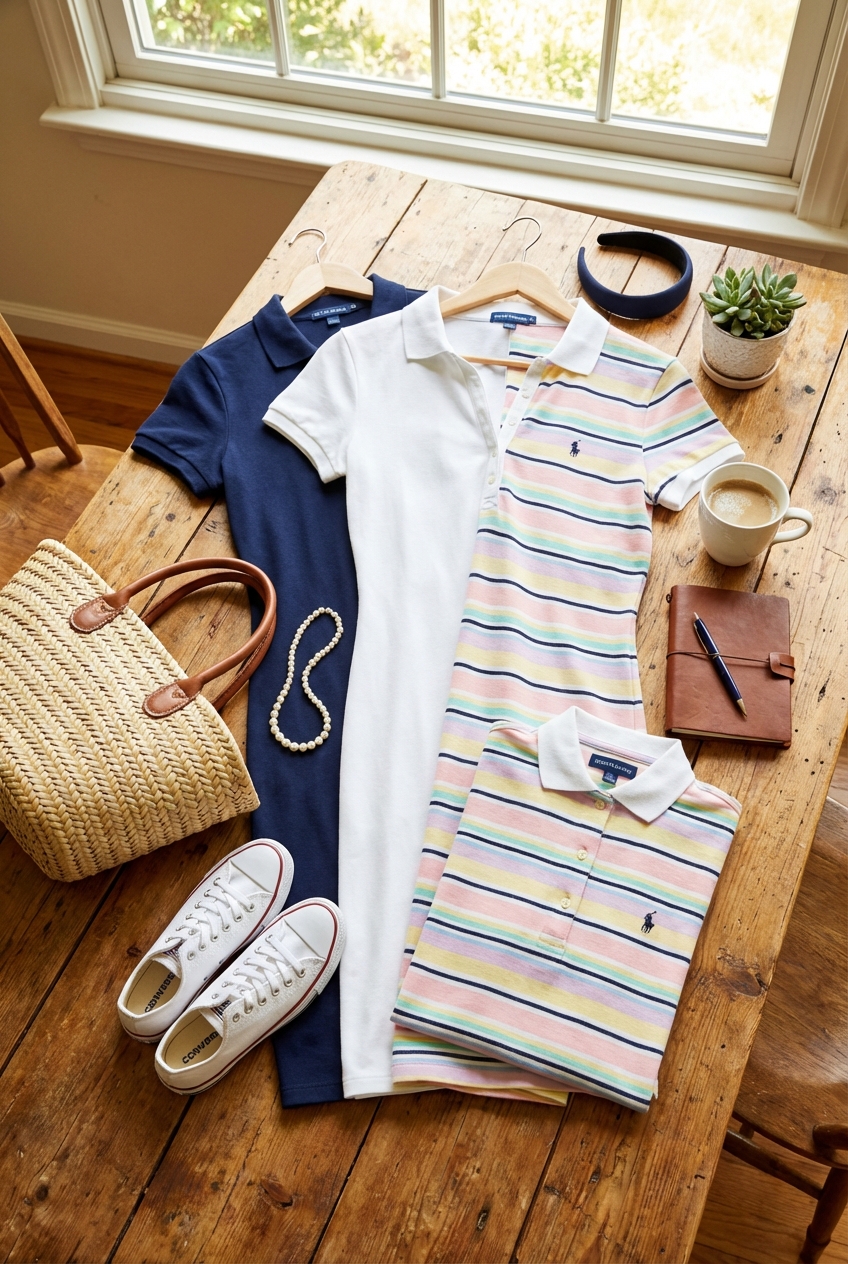
Fitted Polo Dresses For Preppy Vibes
Introduction
There is something undeniably timeless about the polo dress. It sits at the intersection of athletic function and country club polish, invoking images of vintage tennis courts and sun-drenched afternoons in the Hamptons. However, the modern interpretation has moved far beyond boxy, uniform-style cuts. Today, the fitted polo dress is a staple of high-end capsule wardrobes, offering a silhouette that frames the body while maintaining an air of sophisticated ease.
I remember styling a campaign last summer where the entire concept pivoted around “off-duty luxury.” We initially tried oversized shirting, but it felt too messy. The moment we switched the model into a ribbed, fitted polo dress in a deep navy hue, the look clicked. It conveyed authority and femininity simultaneously without trying too hard. That is the power of this garment: it does the heavy lifting for you.
When styled correctly, this piece transitions seamlessly from a morning coffee run to a client meeting. The secret lies entirely in the fit, the fabric weight, and how you accessorize the neckline. For a complete look at how to style these pieces, be sure to scroll down to the Picture Gallery at the end of this blog post.
1. The Anatomy of the Perfect Fit
The difference between looking polished and looking like you squeezed into a child’s garment comes down to technical fit points. A fitted polo dress relies on precision, particularly around the shoulders and the hip curve. Unlike a t-shirt dress, the collar structure demands that the shoulder seams sit exactly at the edge of your shoulder bone.
If the seam droops, the dress looks ill-fitting and sloppy. If it sits too high toward the neck, it will pull across the chest, causing the buttons to gape. When I fit clients, I always check the “placket placement” first. The button placket should lay flat against the sternum without pulling, even when seated.
For the body of the dress, we look for “skimming” rather than “clinging.” There is a distinct difference. Clinging fabric highlights undergarment lines and bunches at the waist. Skimming fabric follows the line of your torso and hips but maintains enough structural integrity to hang straight down when you stand still.
Designer’s Note: The Sit Test
Always perform a “sit test” when trying on a fitted knit dress. The fabric should not ride up more than two inches when you sit down. If it hikes up significantly or creates horizontal stress lines across your lap, the hip measurement is too small, or the fabric lacks the necessary recovery (elasticity).
2. Fabric Selection: Piqué vs. Ribbed Knits
The vibe of your outfit is dictated almost entirely by the material. The two heavyweights in this category are traditional cotton piqué and modern ribbed knits. Understanding the behavior of these fabrics helps you choose the right dress for the setting.
Cotton piqué is the traditional choice. It has a waffle-like texture that is highly breathable and holds its shape well. This fabric tends to have less stretch, meaning the fit must be more precise. It offers a crisper, more structured look that leans heavily into the tennis aesthetic. It is ideal for humid days because the texture lifts the fabric slightly off the skin.
Ribbed knits are the contemporary favorite for a fitted look. Usually a blend of viscose, nylon, and elastane, these fabrics offer a heavier drape and a luxurious hand-feel. The vertical ribbing creates an optical illusion that elongates the torso. However, weight is crucial here. You want a “high-gauge” knit—meaning it is dense and opaque.
Common Mistakes + Fixes
- Mistake: Buying thin, jersey-style blends that are semi-sheer in sunlight.
- Fix: Place your hand under the fabric in the store. If you can see your skin tone through it, put it back. Look for double-faced knits or compact cotton blends.
- Mistake: Choosing 100% synthetic fibers for summer.
- Fix: Ensure the blend has at least 50% natural fiber (cotton or viscose) for breathability, mixed with spandex for shape retention.
3. Mastering Length and Proportion
Because a fitted polo dress has a high neckline and a collar, the hemline length dictates the overall balance of your silhouette. We generally work with two key lengths in high-fashion styling: the structured mini and the midi column.
The structured mini should hit roughly at the mid-thigh or fingertip length. This length balances the conservative nature of the collar with a youthful energy. It is the quintessential “preppy” look. If you go this route, ensure the hem is weighted or finished with a wide band so it doesn’t curl up.
The midi column is more sophisticated and suitable for professional environments. Ideally, this hem should hit the narrowest part of your calf (usually about two inches below the thickest part of the calf muscle). This creates a long, lean line.
Real-World Project Rules
When I am tailoring a midi polo dress for a client, I follow the “Rule of Thirds.”
- The top third is the collar and bust.
- The middle third is the waist and hips.
- The bottom third is the leg exposure.
If the dress is a midi, we often unbutton the top two buttons to open up the neckline. This breaks up the fabric density and prevents the look from becoming too heavy or severe.
4. Footwear Pairings for Every Occasion
Footwear is the lever that shifts the formality of a polo dress. Because the dress itself is a hybrid of sport and style, your shoes will tip the scale in one direction or the other.
For a classic, daytime look, a clean white leather sneaker is unbeatable. However, the profile of the sneaker matters. Avoid chunky, athletic running shoes. You want a low-profile, minimalist leather sneaker (think court shoes). This maintains the clean lines of the dress.
For an elevated, “old money” aesthetic, loafers are the go-to. A chunky loafer adds a bit of edge and modernity to a mini polo dress, playing with proportions. If you are wearing a midi length, a backless mule or a slide loafer often works better as it shows a bit of ankle, preventing the legs from looking cut off.
What I’d Do in a Real Project
- Weekend Brunch: White leather court sneakers + ankle socks (folded, not scrunchy).
- Creative Office: Horsebit loafers in oxblood or black leather.
- Summer Evening: Low block-heel sandals. Avoid stilettos with polo dresses; the vibe clash is usually too jarring.
5. Layering Techniques for Transitional Weather
One of the reasons the polo dress remains a wardrobe staple is its versatility across seasons. Layering over a fitted dress requires a careful eye for volume. Since the base layer (the dress) is tight, your outer layer should provide contrast in silhouette.
The “sweater drape” is the most iconic styling move for this genre. Take a cable-knit sweater or a cashmere pullover and tie it loosely around your shoulders. This softens the sporty collar and adds texture. It also draws the eye upward, framing the face.
For outerwear, an oversized blazer is a fantastic counterpoint to a fitted mini dress. The boxy shoulders of the blazer contrast with the curve of the dress, creating a modern, architectural look. Ensure the blazer is longer than your hip bone but slightly shorter than the dress hem if wearing a mini.
Designer’s Note: The Trench Coat Rule
If wearing a midi polo dress with a trench coat, the coat should always be longer than the dress. Having the dress hem peek out three inches below the coat ruins the visual line and makes the outfit look unintentional.
6. Accessorizing the Preppy Look
Accessories for a polo dress should lean into structure and heritage rather than bohemian or eclectic styles. The preppy aesthetic is defined by intentionality and polish.
Headbands are having a major resurgence and pair perfectly with the collar detail. A padded velvet headband or a simple grosgrain ribbon creates a finished look. Keep jewelry classic. Small gold hoops, tennis necklaces, or a simple pearl pendant work best. The collar is already a focal point, so avoid large statement necklaces that compete with the neckline.
Bags should be structured. A slouchy hobo bag tends to look messy against the sharp lines of a polo collar. Opt for box bags, structured totes, or crisp leather shoulder bags. Canvas totes with leather trim also work beautifully for a more casual, nautical vibe.
Color Coordination
- Classic: Navy dress, gold jewelry, cognac leather bag.
- Modern: Black dress, silver jewelry, black leather bag (monochrome).
- Sporty: White dress, green sweater drape, canvas tote.
Finish & Styling Checklist
Before you head out, run through this quick mental checklist to ensure the look is cohesive. This is the exact rundown I use on set before a model steps in front of the camera.
The Fit Check:
- Does the shoulder seam sit on the bone?
- Is the button placket laying flat against the chest?
- Are there visible underwear lines? (If yes, switch to seamless, laser-cut undergarments).
The Style Check:
- Collar: Is it popped or flat? (Flat is generally more modern; popped is very specific retro).
- Buttons: Are the top one or two unbuttoned to elongate the neck?
- Socks: If wearing sneakers, are the socks clean and crisp? No pilling allowed.
- Third Piece: Do you have a sweater, blazer, or structured bag to complete the look?
FAQs
Can I wear a fitted polo dress to a corporate office?
Yes, but opt for a midi length in a darker color like navy, black, or forest green. The fabric must be thick and high-quality (no flimsy jersey). Pair it with a blazer and loafers or pointed flats to professionalize the sporty neckline.
How do I wash a cotton piqué dress without it shrinking?
Cotton piqué is notorious for shrinking in length. Always wash in cold water on a gentle cycle and reshape the dress while it is damp. Never put it in the dryer. Lay it flat to dry to prevent the weight of the water from stretching the fabric vertically.
What is the best underwear for fitted knit dresses?
Seamless, laser-cut thongs or high-waisted shaping briefs in a nude tone are essential. Knits grab onto texture, so lace is out of the question. A seamless bodysuit can also provide a smooth foundation.
Are striped polo dresses still in style?
Absolutely. Varsity stripes (thin stripes at the collar or sleeve cuffs) are timeless. Wide, horizontal rugby stripes are also trending, but they are more casual. For a slimming effect, look for dresses with vertical ribbing or color-blocking on the sides.
Conclusion
The fitted polo dress is a masterclass in “less is more.” It relies on clean lines, high-quality fabrics, and the wearer’s confidence to make a statement. By focusing on the correct fit—specifically at the shoulders and hips—and choosing substantial fabrics that skim rather than cling, you elevate this piece from simple sportswear to high-end fashion.
Whether you lean into the heritage look with loafers and a sweater drape or modernize it with leather sneakers and minimalist gold jewelry, the polo dress remains a versatile canvas. It is one of the few garments that feels as appropriate at a summer garden party as it does in a creative boardroom. Trust the silhouette, invest in quality materials, and enjoy the effortless polish it brings to your wardrobe.
Picture Gallery


