
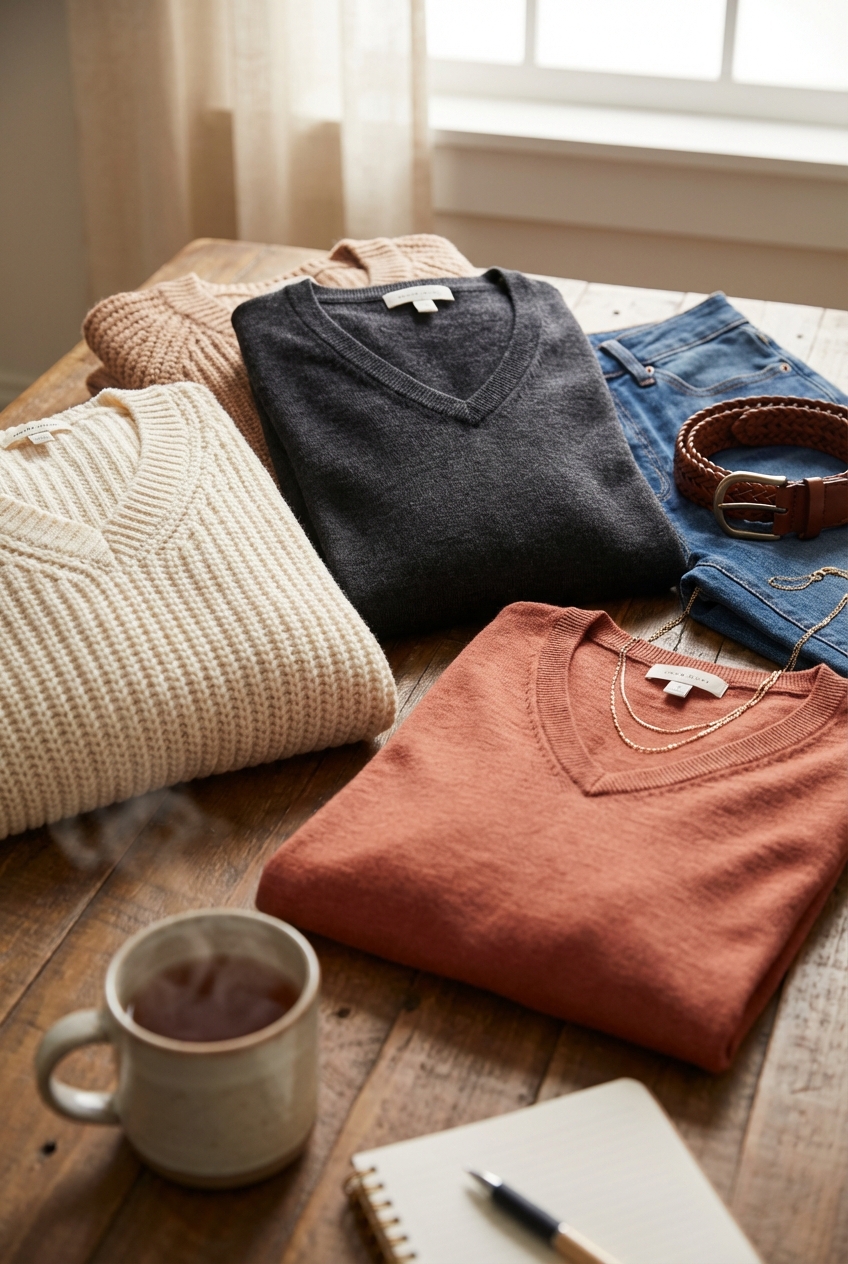
Flattering V Neck Sweaters For Year Round Style
There are very few items in a woman’s wardrobe that work as hard as a classic V-neck sweater. Over my years styling private clients and curating editorial shoots, I have found that the V-neck is the ultimate equalizer. It elongates the neck, balances the shoulders, and offers a canvas for accessories that crew necks simply cannot compete with. Whether you are dressing for a drafty office in mid-July or layering up for a snowy February morning, this silhouette remains a cornerstone of chic, effortless style.
However, many women shy away from them because they haven’t found the right cut or weight for their specific body type. A V-neck that plunges too deep can feel exposing, while one that sits too high misses the opportunity to create that elegant vertical line we are looking for. The secret lies in understanding the architecture of the knit and how it interacts with the rest of your outfit.
In this guide, I am going to break down exactly how to select, style, and care for V-neck sweaters so they become the most reliable pieces in your closet. For plenty of visual inspiration on how to style these looks, be sure to check out the Picture Gallery at the end of this blog post.
The Anatomy of the Perfect V-Neck
When styling a client, the first thing I assess is the “drop” of the neckline. The depth and width of the V shape drastically change the vibe of the outfit. A shallow V is more sporty and collegiate, often looking best when paired with a collared shirt underneath. A deep, plunging V is inherently more glamorous and evening-appropriate, but requires careful consideration of undergarments.
The width of the ribbing around the neck also plays a massive role in the visual weight of the sweater. Thick, chunky ribbing draws the eye inward and feels more casual, making it perfect for weekend wear. A fine, rolled edge or a minimal seam looks more expensive and refined, suitable for boardrooms or dinner dates.
Finally, consider the shoulder placement. A drop-shoulder creates a relaxed, slouchy silhouette that works well for casual French-tuck styles. A set-in shoulder seam, where the seam sits right at the edge of your shoulder bone, provides structure. If you have sloping shoulders or a petite frame, always opt for a set-in seam to give your upper body definition.
Designer’s Note: The “Hanger” Trap
A common issue I see is clients buying sweaters based on how they look on the hanger. A V-neck often looks shapeless until it is on a body. The weight of the bust pulls the V open. Always try it on. If the V gapes open when you lean forward, the fit is wrong for your torso length, regardless of the size on the tag.
Fabric Composition and Seasonal Weight
In high-end fashion, material is everything. You cannot achieve a luxury look with poor-quality synthetics. For a sweater to be flattering year-round, it must breathe. Synthetic blends often trap heat and create a sheen that looks inexpensive under bright lights.
For winter and late autumn, cashmere is the gold standard. It offers the highest warmth-to-weight ratio, meaning you don’t need a bulky garment to stay warm. A 2-ply cashmere V-neck drapes beautifully over the body without clinging to lumps or bumps. If cashmere is outside the budget, look for Merino wool. It is finer than traditional wool and lacks the “itch factor.”
For spring and summer transition pieces, I look for cotton-cashmere blends, linen blends, or pure silk knits. Linen adds a beautiful texture and crispness, though it can wrinkle. Silk knits have a lovely luster and drape like liquid, making them incredibly flattering for evening wear.
Fabric Rules of Thumb:
- 100% Cotton: Great for structure and durability, but can stretch out over the day. Best for oversized, beachy styles.
- Merino Wool: The workhorse. Sleek, smooth, and usually machine washable on delicate. Perfect for office layering.
- Synthetics (Acrylic/Polyester): Avoid anything with more than 30% synthetic content. It will pill quickly and won’t drape naturally.
Mastering Proportions for Your Body Type
Styling is largely a game of geometry. The V-neck is a tool we use to direct the eye. If you have a larger bust, a V-neck is your best friend because it breaks up the expanse of fabric across the chest, reducing visual bulk. The ideal depth for a larger bust is about 2 to 3 inches below the collarbone—low enough to elongate, high enough to conceal.
For petite women, the goal is to avoid being swallowed by the knit. I advise my petite clients to avoid tunic-length V-necks unless they are belting them. Instead, look for “cropped” lengths that hit right at the high hip or the natural waist. This elongates the legs. A monochromatic look—matching your sweater color to your trousers—will also add inches to your perceived height.
If you have a pear shape (wider hips), choose a V-neck with some detail at the shoulders or a slightly wider, boat-neck style V. This widens the shoulder line to balance the hips. Avoid hems that cut right across the widest part of your hips; aim for a hem that hits the upper hip bone or falls below the seat.
Common Mistakes + Fixes:
- Mistake: Wearing a long, tight sweater over jeans. This creates a “tube” effect that is rarely flattering.
- Fix: Employ the “half-tuck” or “French tuck.” Tuck just the front couple of inches of the hem into your waistband. This defines the waist while leaving the back loose for coverage.
Layering Like a Pro
The versatility of the V-neck comes from its ability to be layered. In the colder months, a thin turtleneck layered underneath a deep V-neck sweater is an incredibly chic, architectural look. Stick to a fitted, tissue-weight turtleneck to avoid bulk in the arms.
The classic button-down shirt under a V-neck is a preppy staple, but it can easily look stuffy. To modernize this, ensure the shirt collar is popped or lying flat but open. Do not button the shirt all the way to the top unless you are going for a very specific avant-garde look. Roll the cuffs of the shirt over the sweater sleeves to tie the layers together visually.
For evening, the most flattering layer is often a lace camisole. Let just a hint of the lace peek out from the bottom of the V. It adds texture and sensuality to a heavy knit, balancing the masculine energy of a sweater with a feminine touch.
What I’d do in a real project:
When styling a client for a fall capsule wardrobe, I always include a white silk button-down, a striped tissue turtleneck, and a nude bodysuit. These three base layers allow one grey cashmere V-neck to create three entirely distinct outfits.
Transitioning into Spring and Summer
We often pack away our knits the moment the thermometer hits 60 degrees, but a lightweight V-neck is a summer essential. The “Tennis Core” trend has revitalized the cricket sweater—a white or cream V-neck with colored striping at the neck and cuffs. This looks fantastic paired with a pleated skirt or tailored linen shorts.
For summer evenings, an open-weave or crochet V-neck styling is perfect. These allow for airflow and look effortless over a swimsuit or a simple slip dress. The key here is fit; summer knits should be looser and have more movement than winter ones.
Don’t forget the “shoulders only” look. Knotting a lightweight V-neck sweater over your shoulders (the sleeves loosely tied in front) adds color and texture to a simple T-shirt and jeans outfit. It serves as an accessory during the day and a practical warmer once the sun goes down.
Care and Maintenance for Longevity
You can buy the most expensive sweater in the world, but if you treat it poorly, it will look cheap within a month. The biggest enemy of the knit is the dryer. Heat destroys fibers and causes shrinkage. Always lay your sweaters flat to dry on a clean towel or a drying rack. Hanging a wet sweater will stretch the shoulders and lengthen the torso permanently.
Pilling is inevitable with natural fibers, especially in friction areas like under the arms. It does not mean the sweater is low quality. I recommend every client own a fabric shaver or a sweater comb. A quick pass with a shaver once a month keeps your knits looking brand new.
Storage matters just as much as washing. Moths love soiled natural fibers. Never store a sweater at the end of the season without washing it first, even if you don’t think it’s dirty. Body oils attract pests. Store them in breathable cotton bags or a cedar chest, never in plastic bins which can trap moisture and yellow the fabric.
Finish & Styling Checklist
Before you head out the door or finalize a purchase, run through this mental checklist to ensure your look is polished and proportional.
- The Neckline Check: Does the V sit flat against your chest, or is it gaping? If it gapes, you need a smaller size or a different cut.
- The Hemline Rule: If wearing wide-leg trousers, is the sweater tucked or cropped? If wearing skinny jeans, is the sweater looser/longer? Balance is key.
- The Sleeve Length: Do the sleeves hit at the wrist bone? If they are too long, cuff them. Too-long sleeves can make you look like you are wearing a child’s garment.
- The Undergarment Test: Bend over in front of a mirror. Can you see your bra? If yes, add a camisole or choose a different bra.
- The Texture Mix: Are you mixing textures? A fuzzy angora sweater looks best with sleek leather or denim, not with corduroy (too much fuzz).
FAQs
Q: Can I wear a necklace with a V-neck sweater?
Absolutely. The V-shape creates a natural frame for jewelry. A delicate pendant that sits on the skin within the V is a classic choice. Alternatively, a short, chunky chain that sits right at the collarbone works well to fill the negative space. Avoid necklaces that hit exactly at the neckline of the sweater, as they will get tangled in the fabric.
Q: How do I stop my V-neck from slipping off my shoulder?
This usually happens with oversized or wide-cut V-necks. You can use a small strip of “fashion tape” (double-sided tape for skin) on your shoulder to keep the knit in place. Alternatively, layering a shirt with a structured shoulder underneath provides friction to hold the sweater.
Q: Is a V-neck appropriate for a formal office?
Yes, it is one of the most professional knitwear options. Stick to fine-gauge knits (thin, smooth fabric) rather than chunky cables. Neutral colors like navy, black, camel, and charcoal are safest. Always wear a camisole underneath to ensure modesty during meetings.
Q: Can I wear a V-neck sweater backwards?
This is a styling hack I love! If the sweater is a solid color and has a high back, turning it around gives you a high boat-neck in the front and a plunging V in the back. This is a very chic, evening-appropriate look. Just make sure the tags are removed carefully.
Conclusion
The V-neck sweater is far more than a basic layer; it is a transformative piece that offers flattering lines for every body type. By paying attention to the depth of the cut, the quality of the fabric, and the balance of your overall silhouette, you can elevate this humble staple into a high-fashion moment.
Whether you are investing in a forever piece of cashmere or picking up a trendy cotton blend for the season, remember that fit comes first. Use the vertical lines to your advantage, layer with intention, and care for your knits so they return the favor by making you look polished for years to come.
Picture Gallery


