
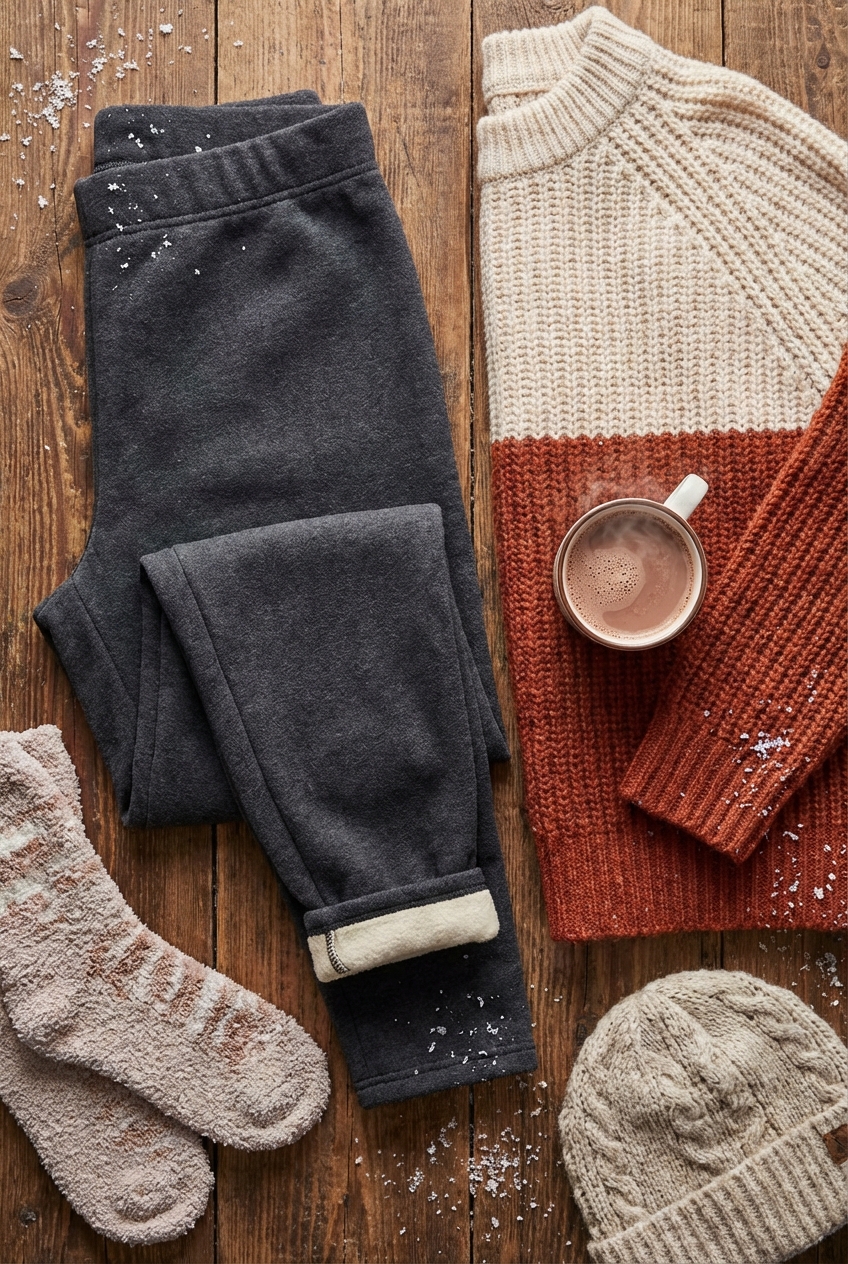
Fleece Lined Leggings For Freezing Winter Temperatures
There is a precise moment every year, usually around mid-January, when I find myself standing in my walk-in closet bargaining with the weather. I want to look chic, pulled together, and sleek, but the sub-zero wind chill outside demands I dress like a shapeless marshmallow. For years, this was the ultimate trade-off in high-end fashion: you could either be warm, or you could be stylish. Rarely could you be both.
That paradigm shifted dramatically with the evolution of technical fabrics. We aren’t talking about the flimsy, synthetic leggings of the early 2000s anymore. We are looking at high-denier, architectural garments that utilize thermal engineering to trap body heat while maintaining a streamlined silhouette. As a fashion expert, I have tested countless pairs during Fashion Weeks in snowy capitals, from New York to Copenhagen, discovering that the secret lies in the lining technology and the finish of the exterior fabric.
Navigating this category requires a discerning eye because not all fleece is created equal. Some add unwanted bulk that ruins your proportions, while others pill after a single wear. In this guide, I will break down exactly how to select, style, and care for the ultimate winter staple. For a dose of visual inspiration on how to style these looks, be sure to check out the Picture Gallery at the end of the blog post.
The Science of Warmth: Denier, GSM, and Material Composition
When clients ask me why their leggings aren’t keeping them warm, the answer is almost always in the technical specifications. In the world of luxury hosiery and athletic wear, we look at GSM (Grams per Square Meter) and Denier. Standard leggings usually sit around 200 GSM. For freezing temperatures, you need to look for a minimum of 300 GSM, with some extreme-weather options going up to 500 GSM.
The composition of the fleece lining is equally critical. You will generally encounter two types: brushed backing and bonded fleece. Brushed backing is a single piece of fabric that has been mechanically brushed on the inside to create a fuzzy texture. This is excellent for moderate cold and offers better flexibility. Bonded fleece involves a second layer of thermal fabric glued to the outer shell. This provides superior warmth for deep freezes but can limit mobility and add circumference to the leg.
Fashion Expert’s Note: The Fabric Blend Ratio
In my experience, the ideal fabric blend for a high-end look is a specific ratio. Look for at least 10% to 15% Spandex or Elastane. Cheaper versions often use only 5%, which results in sagging knees and a waistband that slides down throughout the day. A higher Spandex count ensures the “snap-back” quality that keeps the leggings looking like a second skin rather than long underwear.
The “Sheer” Illusion Trend
One of the most brilliant innovations in recent winter fashion is the “fake translucent” fleece legging. These garments are designed with a beige or skin-tone fleece lining underneath a sheer black nylon exterior. From a distance, it looks exactly like you are wearing 20-denier sheer pantyhose, which is the gold standard for evening elegance. In reality, you are wearing a thick, thermal pant.
This style is a game-changer for winter formal wear. It allows you to wear shorter hemlines and skirts without freezing your legs. However, the execution matters. If the skin tone lining doesn’t match your actual skin tone, the effect looks artificial and jarring. High-end brands now offer a spectrum of lining shades to accommodate different complexions.
Common Mistakes + Fixes
- Mistake: Buying a “universal” nude lining that looks yellow or gray against your skin.
- Fix: Treat these like foundation makeup. Hold the lining up to your wrist or neck in natural light before purchasing. If shopping online, look for brands that offer specific shades (e.g., mocha, caramel, beige) rather than a generic “nude.”
- Mistake: Ignoring the foot transition. Some fleece tights have a harsh line at the ankle where the fleece stops.
- Fix: Look for “stirrup” styles or styles with a graduated ankle transition if you plan to wear loafers or low-cut shoes. Ideally, wear these with boots to hide the seam.
Silhouette Architecture: Balancing Proportions
The number one rule in styling thick, fleece-lined leggings is managing volume. Because the fabric adds a few millimeters to centimeters of bulk to your legs, you must counterbalance this with your upper body styling. We call this “architectural balance” in styling. If the bottom is tight and streamlined, the top needs volume and texture to create a pleasing visual weight.
Avoid wearing tight, fitted tops with fleece leggings unless you are layering a blazer or coat over them. The “tight-tight” combination often looks more like gym wear than street style. Instead, embrace the concept of the “inverted triangle” silhouette.
What I’d Do in a Real Project (Styling a Client)
If I were styling a client for a day in the city with temperatures below freezing, here is the formula I would use:
- Base: Matte black, high-compression fleece leggings (bonded fleece).
- Top: An oversized, chunky cable-knit cashmere sweater that hits mid-thigh. The length is non-negotiable; it must cover the hips.
- Outerwear: A structured wool camel coat or a shearling aviator jacket. The structure of the coat contrasts with the softness of the leggings.
- Accessories: A wide woolen scarf wrapped multiple times to add volume near the face, drawing the eye up.
The Matte vs. Shine Debate
Nothing cheapens an outfit faster than leggings that shine under artificial light. Unless you are specifically going for a “liquid leather” or vinyl aesthetic, your winter leggings should have a completely matte finish. Cheap polyester reflects light, highlighting every curve and muscle in an unflattering way. It also signals “athletic wear” rather than “ready-to-wear.”
High-end leggings use a specialized yarn treatment to absorb light. When you are shopping, do the “flash test.” Take a photo of the fabric with your phone’s flash on. If it reflects white light heavily, put it back. You want a fabric that absorbs the light, creating a deep, saturated color. This is particularly important for black leggings; you want a “midnight black,” not a “charcoal shine.”
Rules of Thumb for Finishes
- For the Office: Strictly matte. Look for a dense ponte-knit finish if possible, as this mimics the look of heavy trousers.
- For Weekend/Casual: Slight sheen is acceptable if it mimics leather (faux leather fleece-lined leggings are a category of their own).
- For Evening: The sheer illusion tights discussed earlier are the only exception where shine is acceptable, as they mimic nylon.
Footwear Pairings for the Elite Look
The transition between the hem of your leggings and your footwear is the make-or-break point of the outfit. In interior design, we worry about the transition between flooring types; in fashion, we worry about the ankle gap. With fleece-lined leggings, which are thicker, stuffing them into tight boots can be uncomfortable and create bunching.
The Knee-High Boot Strategy
The most seamless, high-end look is pairing leggings with knee-high or over-the-knee boots. This creates an unbroken vertical line, which elongates the leg. Because the leggings are thick, ensure your boots have a wide enough shaft. “Slouchy” suede boots are excellent for this as they naturally accommodate the extra fabric bulk.
The Ankle Boot Dilemma
If you are wearing ankle boots (Chelsea boots or combat boots), you must ensure the leggings hit at the right spot. They should tuck cleanly into the boot without bunching.
- Combat Boots: Pair excellently with fleece leggings. Use a thick wool sock scrunched over the legging but inside the boot to bridge the gap and add texture.
- Loafers/Sneakers: This is tricky. If you show ankle, ensure it doesn’t look like you are wearing thick thermal underwear. I generally advise against loafers with heavy fleece leggings unless you are wearing the sheer illusion style.
Investment vs. Budget: Where to Spend Money
Is it worth spending $100 or more on a single pair of leggings? In this specific category, the answer is often yes. The price difference usually reflects the longevity of the elastic and the pill-resistance of the outer fabric. Budget fleece leggings tend to pill between the thighs after only three or four wears due to friction.
High-End Indicators
- Gusset Construction: High-quality leggings will have a diamond-shaped or triangular gusset in the crotch area. This prevents the fabric from riding up and adds durability to the highest-tension area.
- Waistband Engineering: Look for a wide, bonded waistband (3-4 inches) that doesn’t rely on a thin strip of elastic at the very top. The compression should be distributed evenly across the stomach.
- Seam Flatness: Flat-lock seams are essential. If the seams stick out, they will chafe and leave marks on your skin, especially when the fit is snug for warmth.
Finish & Styling Checklist
Before you head out the door into the cold, run through this quick mental checklist to ensure your look is polished and practical.
- The Opacity Check: Bend your knee deeply in front of a mirror. If you can see skin through the fabric at the knee, they are too thin for freezing temps.
- The Crotch Coverage: If you are not wearing a blazer or coat, is your top long enough to cover your front and back? (The answer should be yes).
- The Ankle Tuck: Are the leggings tucked smoothly into your socks or boots? No bunching allowed.
- The Lint Roll: Fleece leggings, especially black ones, are magnets for lint and pet hair. Always lint roll before leaving.
- The Static Guard: Friction generates static. Spray a light mist of anti-static spray on your thighs to prevent your coat from clinging awkwardly.
FAQs
Q: Can I put fleece-lined leggings in the dryer?
A: Absolutely not. Heat is the enemy of Spandex and Elastane. It destroys the elastic fibers, causing the leggings to lose their shape and compression. Wash them on a cold, gentle cycle and lay them flat to dry. Never hang them by the waistband while wet, as the weight of the water in the fleece will stretch them out.
Q: Do fleece leggings make you look bulky?
A: They add a small amount of volume, naturally. However, if you choose a pair with high compression and a matte black finish, the visual effect is often slimming because the fabric smoothes out natural leg contours. The key is to avoid “plush” linings if you are very concerned about bulk; stick to “micro-fleece” which is thinner but dense.
Q: Can I wear them to a corporate office?
A: It depends on the dress code. In a creative or casual office, yes, provided your hips are covered by a long tunic, shirt dress, or oversized blazer. In a strictly formal corporate environment, standard leggings are not appropriate. However, the “sheer illusion” tights worn with a pencil skirt are a perfect hack for formal offices.
Q: How do I stop them from sliding down?
A: Sliding is usually caused by two things: the size is too big (insufficient compression), or the rise is too low. Always opt for high-waisted styles that sit above the belly button. The narrowest part of your torso acts as an anchor.
Conclusion
Surviving winter does not mean you have to abandon your sense of style. Fleece-lined leggings have graduated from being purely functional gear for hikers to becoming a cornerstone of the modern woman’s winter wardrobe. By understanding the nuances of denier, fabric finish, and proportion, you can navigate freezing temperatures while looking impeccably curated.
Remember that the goal is to create a seamless integration of comfort and luxury. Whether you opt for the architectural look of matte black compression leggings with a structured coat, or the deceptive elegance of sheer illusion tights for a night out, the technology is there to support you. Stay warm, stay stylish, and don’t let the thermometer dictate your confidence.
Picture Gallery


