
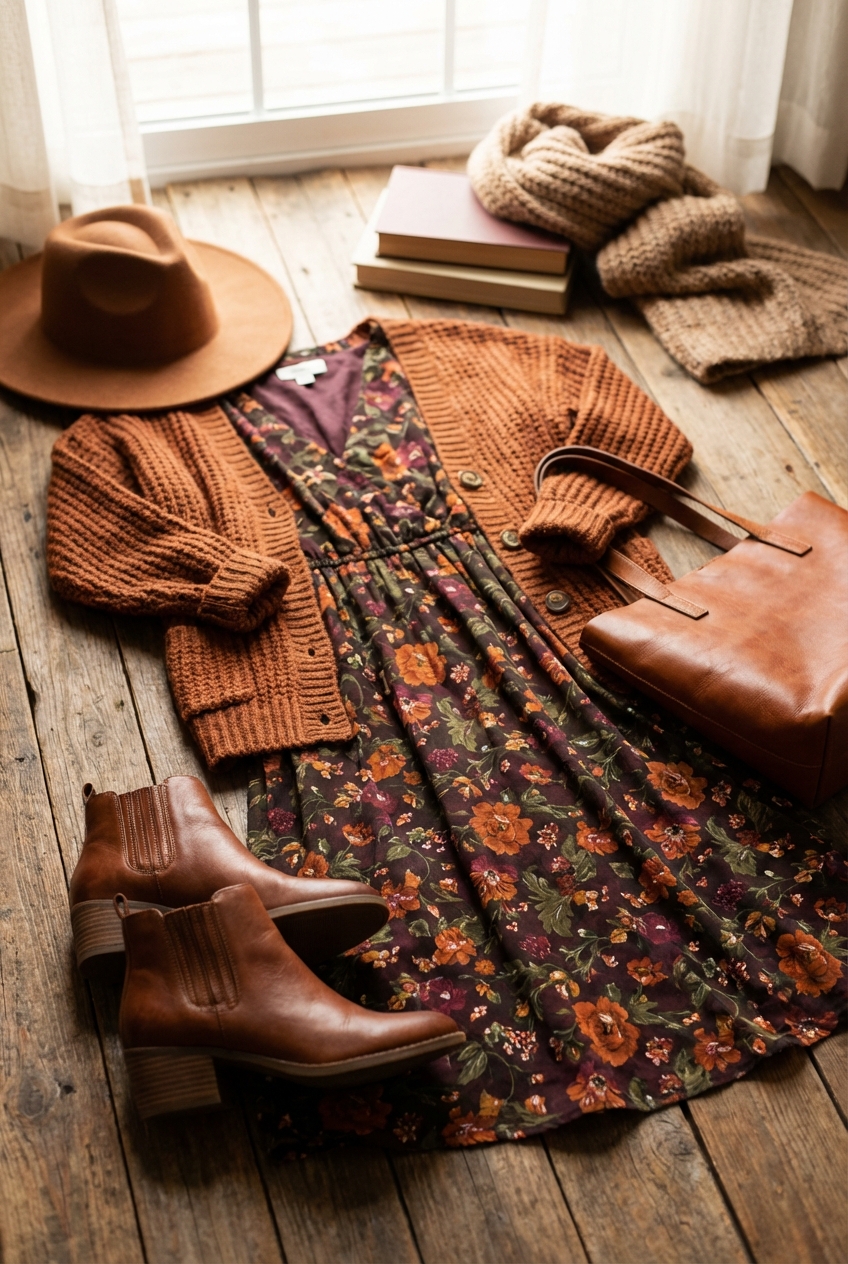
Floral Maxi Dresses With Boots For Fall Layers
One of the most persistent myths in fashion is that floral prints and maxi lengths are reserved strictly for the carefree days of summer. As the temperature drops and the leaves begin to turn, many women instinctively pack away their romantic, sweeping gowns in favor of heavy denim and chunky knits. However, retiring your favorite pieces too early is a missed opportunity to create some of the most visually interesting silhouettes of the year.
The transition from summer to autumn is actually the ideal time to experiment with the juxtaposition of soft, feminine fabrics against the structural weight of fall accessories. The key lies in mastering the art of layering and understanding the architecture of an outfit. By anchoring a light, airy floral dress with substantial leather boots and tailored outerwear, you create a look that is complex, functional, and deeply stylish.
In my years styling high-end editorial shoots and private clients, I have found that the floral maxi and boot combination is a secret weapon for transitional weather. It offers full coverage for warmth while maintaining a sense of movement and grace that trousers simply cannot replicate. See the picture gallery at the end of this blog post for visual inspiration on how to execute these looks.
1. Analyzing the Print: Grounding the Floral for Autumn
Not all floral prints are created equal, especially when moving into the colder months. When selecting a maxi dress for fall, the background color of the print—often referred to as the “ground”—is the most critical element to consider. Summer florals usually feature white, cream, or pastel grounds. While these can be styled for fall, they require significantly more effort to make sense in an autumn landscape.
For a seamless transition, prioritize floral prints with dark grounds. Look for dresses where the flowers float on a canvas of black, navy, forest green, deep burgundy, or chocolate brown. These darker tones naturally absorb the heavier textures of fall fashion, such as wool, suede, and leather. If you do choose a light-ground floral, ensure the floral pattern itself contains rich, autumnal tones like rust, mustard, or olive to tie the look together.
Designer’s Note: The Scale of the Print
In design, scale determines the mood. Large, oversized blooms tend to look more modern and graphic, which pairs beautifully with sleek, architectural boots. Conversely, tiny “ditsy” florals read as more vintage and bohemian. I often pair ditsy prints with rugged, lace-up combat boots to create a deliberate friction between the delicate pattern and the tough footwear.
2. The Architecture of the Boot: Height and Silhouette
The interaction between the hem of your dress and the top of your boot is the single most important technical detail in this look. This is where most styling mistakes happen. The goal is to create a continuous line or a deliberate break, rather than an awkward gap that chops the leg visually.
Knee-High and Over-the-Knee Boots
For maximum warmth and a seamless vertical line, tall boots are the superior choice. When wearing a maxi dress, the boot shaft should disappear underneath the hemline. This provides practical insulation and ensures that when you walk or sit, there is a flash of leather or suede rather than bare skin.
- Heel Shape: Opt for a block heel or a structured architectural heel. A stiletto can snag on a long hem and often feels too delicate for the visual weight of fall layers.
- Fit: Ensure the boot shaft is fitted to the calf. A slouchy boot under a maxi dress can create unwanted bulk at the lower leg, making the silhouette look bottom-heavy.
Ankle Boots and Chelseas
If you prefer ankle boots, you must pay attention to where the dress ends. A true floor-sweeping maxi works well with ankle boots because the shoe is mostly concealed. However, if your dress is a “midi-maxi” (ending at the lower calf), you risk exposing a strip of skin.
- The Fix: If there is a gap between the top of the boot and the hem, bridge it with opaque tights in the same color as the boot. This extends the leg line visually.
- The Style: Western-style ankle boots add a fantastic Americana edge to floral dresses, while Chelsea boots offer a minimalist, city-chic vibe.
3. Mastering the Third Piece: Jacket Layering Strategies
Once you have the dress and boots sorted, the outerwear determines the final silhouette. This is an exercise in proportion. Because a maxi dress has a lot of volume and length, your jacket needs to either define the waist or streamline the entire figure. Avoid mid-length coats that hit at the widest part of the hip, as this can create a boxy, unflattering shape.
The Cropped Jacket
A cropped leather moto jacket or a fitted denim jacket is the most reliable partner for a maxi dress. By hitting at the natural waist (usually the narrowest part of the torso), the jacket counteracts the volume of the skirt. This follows the “Rule of Thirds” in design: the jacket occupies the top third, allowing the dress to flow for the bottom two-thirds, elongating the body.
The Long Coat
For colder days, a long wool coat or a trench coat is incredibly chic. The key here is length matching. Ideally, your coat should fall within two to three inches of the dress hem. If the coat is significantly shorter than the dress (e.g., knee-length coat over ankle-length dress), it can look unintentional. A floor-grazing duster coat worn open creates a stunning vertical column that frames the floral print beautifully.
4. Texture Play: Mixing Materials for Depth
Interior designers know that a room feels flat without texture; the same rule applies to your outfit. Fall fashion is tactile. Since a floral maxi dress is typically made of smooth materials like silk, chiffon, viscose, or rayon, you must introduce contrasting textures to make the outfit feel appropriate for the season.
Common Mistakes + Fixes
- Mistake: Wearing a cotton cardigan over a cotton dress. This often reads as “summer evening” rather than “autumn day.”
- Fix: Swap the cotton cardigan for a chunky cable-knit sweater or a fuzzy mohair blend. The roughness of the wool against the sheen of the dress fabric creates visual interest and luxury.
Consider adding a shearling vest or a suede jacket. Suede absorbs light, while silk reflects it. This interplay gives the outfit depth and richness. If your boots are patent leather (high shine), balance them with a matte wool coat. If your boots are matte suede, a leather jacket adds the necessary shine.
5. The Hidden Layer: Practical Warmth
High-end style is rarely just about aesthetics; it must also be functional. A shivering woman never looks stylish. The beauty of a maxi dress is that it offers ample room for concealed layering, allowing you to wear lightweight florals even in forty-degree weather.
Thermal Base Layers
Invest in high-quality, thin thermal shorts or leggings to wear underneath. Unlike jeans, where bulky thermals are uncomfortable, the volume of a maxi skirt hides a pair of merino wool leggings or bike shorts perfectly. This protects your legs from the wind without altering the silhouette of the dress.
The Turtleneck Trick
A technique I frequently use on set is layering a thin, tight turtleneck underneath the dress. This works exceptionally well for slip-style maxi dresses or those with deep V-necks. Choose a turtleneck in black, cream, or a color pulled directly from the print. This transforms a sleeveless summer garment into a long-sleeved fall staple instantly.
6. Proportions for Different Heights
One of the most frequent concerns I hear from clients is that a maxi dress and boots will “swallow” them up. This is a valid concern, particularly for petite women, but it is easily solvable with the right adjustments to scale and fit.
For the Petite Frame
If you are under 5’4″, the goal is to avoid breaking the vertical line.
- Monochrome Boots: Match the color of your boots to the background color of the dress. If the dress is black-based, wear black boots. This tricks the eye into seeing one continuous line.
- Pointed Toes: Choose boots with a pointed or almond toe rather than a square or round toe. This physically adds an inch or two to the visual length of the foot and leg.
- Defined Waist: Ensure the dress is cinched at the waist. If the dress is loose, add a belt. A visible waistline is non-negotiable for avoiding the “drowning in fabric” look.
For the Tall Frame
If you are tall, you have more freedom to play with color blocking. You can get away with tan boots paired with a navy dress, or a mid-calf boot that shows a bit of leg. However, watch the hem length. A “maxi” dress that hits four inches above the ankle can look like it shrank in the wash. Ensure you are buying “tall” sizing so the hem hits the proper point on the boot.
Finish & Styling Checklist
Before you head out the door, run through this quick mental checklist to ensure your look is polished and cohesive.
- Hem Check: Does the dress graze the top of your foot or boot? Avoid dragging hems that collect street debris. Ideally, the hem should be 1 inch off the ground for flats or 0.5 inches off the floor for heels.
- Waist Definition: Can you see your shape? If you are wearing a bulky coat, ensure the dress underneath is belted, or wear the coat open.
- Hardware Harmony: Match your metals. If your boots have silver buckles, try to coordinate with silver jewelry or belt hardware.
- Fabric Static: Fall tights and dress linings often cause static cling. Carry a small anti-static spray or run a wire hanger over the tights before dressing to discharge electricity.
- Bag Selection: Avoid cross-body bags that crush the volume of the dress. A structured top-handle bag or a shoulder bag with a short strap usually works best.
FAQs
Can I wear white boots with a dark floral dress?
Absolutely. White or cream boots were a massive trend in the 60s and 70s and have returned in full force. They add a brightness that lifts the outfit. Just ensure you tie the white back into the outfit elsewhere, perhaps with a cream sweater or a light-colored bag, so the boots don’t look like an afterthought.
Is it okay to wear a dress with a slit?
Yes, and it is actually encouraged. A slit adds movement and allows you to show off your boots. If it is very cold, simply wear textured or patterned tights underneath. A fishnet or sheer polka-dot tight peeking through a slit adds a high-fashion, editorial touch.
What about rain and suede boots?
As a general rule, suede and rain do not mix. If the forecast calls for precipitation, swap the suede for treated leather or a high-quality patent boot. Water stains on suede are difficult to remove and can ruin the investment. If you must wear suede, ensure they have been treated with a professional waterproofing spray at least 24 hours in advance.
How do I stop the dress from bunching between my legs when I walk?
This is usually caused by friction between tights and the dress lining. Wearing a slip helps significantly. If you don’t have a slip, wearing bike shorts over your tights creates a smoother surface that allows the dress fabric to glide rather than stick.
Conclusion
Transitioning your wardrobe into fall does not mean abandoning femininity or color. The floral maxi dress, when paired with the right boots and thoughtful layers, is a powerhouse of versatility. It bridges the gap between the romance of summer and the cozy, structured reality of autumn.
By focusing on the “ground” color of your prints, paying attention to the gap between hem and boot, and mastering the proportions of your outerwear, you can extend the life of your wardrobe significantly. Fashion is about adaptation. With these rules of thumb, you can confidently step into the cooler months feeling secure, warm, and effortlessly chic.
Picture Gallery


