
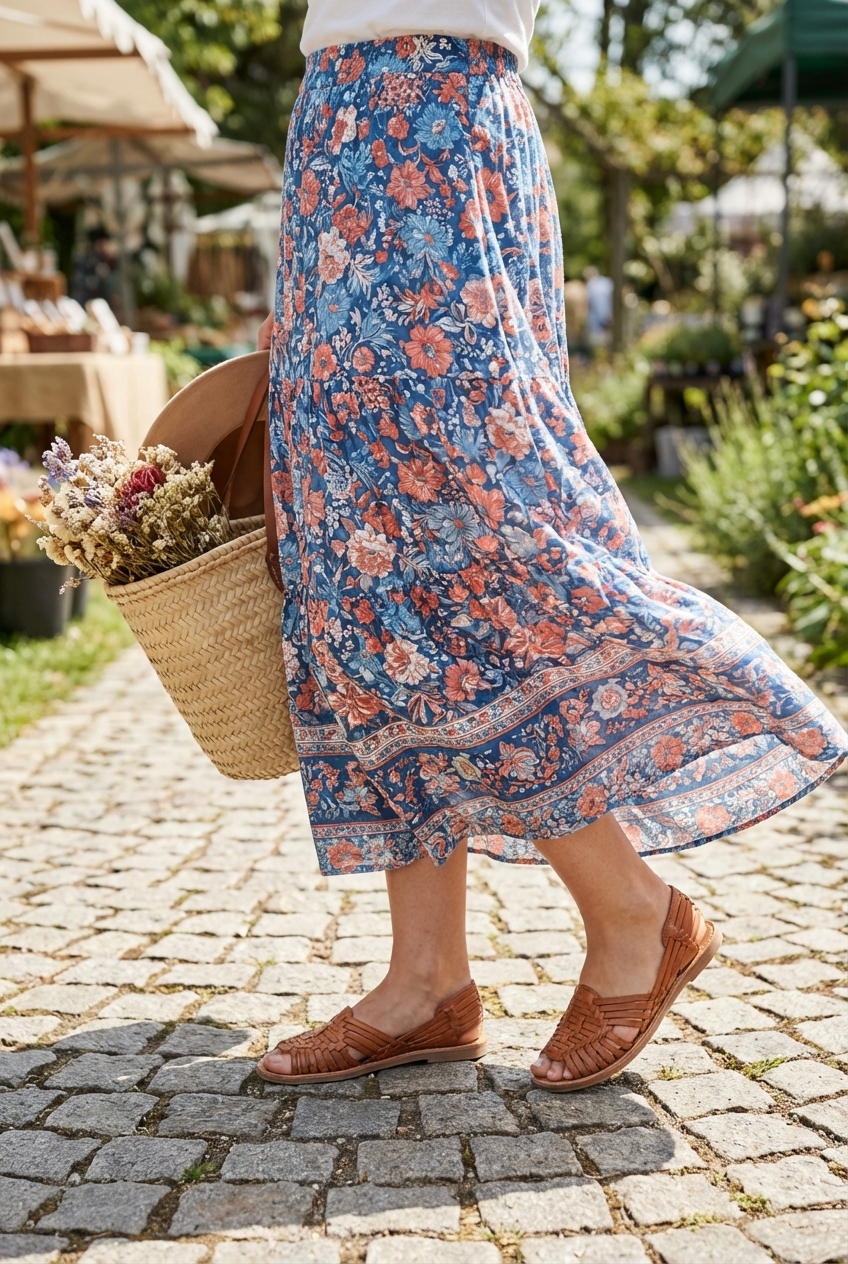
Flowy Maxi Skirts For Feminine Styling
There is a specific kind of magic found in the movement of a well-tailored maxi skirt. It offers a level of drama and elegance that trousers simply cannot replicate, creating a silhouette that is both commanding and incredibly soft. In my years styling private clients for everything from gallery openings to summer galas, I have found that the maxi skirt is the most versatile yet misunderstood weapon in a woman’s arsenal.
I recall a consultation with a client who stood just over five feet tall and was convinced she couldn’t pull off a floor-length hem without looking overwhelmed. The issue wasn’t her height; it was the volume of the fabric she had been choosing and where the waistband sat on her frame. Once we switched her to a bias-cut silk skirt that sat at her true waist, the transformation was instant—she looked taller, leaner, and effortlessly chic.
The secret to mastering this look lies not just in the skirt itself, but in understanding proportion, fabric weight, and the subtle art of balance. If you are looking for visual examples of these silhouettes, make sure to check out the picture gallery at the end of the blog post.
1. The Foundation: Selecting the Right Fabric and Weight
When we talk about “flowy,” we are referring to the drape of the textile. As a stylist, I prioritize how a fabric behaves in motion over almost any other attribute. If the material is too stiff, you lose the feminine allure; if it is too flimsy, it reveals undergarment lines and clings to the legs due to static.
Natural Fibers vs. Synthetics
For high-end styling, natural fibers are generally superior. Silk charmeuse and silk crepe de chine offer a fluid, water-like drape that catches the light beautifully. These fabrics regulate body temperature, making them ideal for all-day wear.
However, high-quality rayon and viscose can mimic this drape effectively at a lower price point. Avoid cheap polyester satins. They tend to look plastic under direct light and do not breathe, which ruins the “effortless” vibe we are aiming for.
The Importance of Weight
You need a fabric with enough weight to hang straight down when you are standing still. Light cotton voiles are lovely for the beach, but for city wear, they require a lining to provide structure. A weighted hem or a double-layered chiffon adds the necessary gravity to the skirt, ensuring it swings around your ankles rather than getting tangles between your legs.
Designer’s Note: The Static Factor
One lesson I learned the hard way on a photoshoot involved a beautiful synthetic plisse skirt and a dry winter day. The skirt clung to the model’s legs relentlessly. Always keep a can of anti-static spray in your closet, or better yet, invest in a separate half-slip made of natural silk. It creates a barrier that allows the maxi skirt to float independently of your legs.
2. Mastering Proportions: The Rule of Thirds
In fashion styling, the “Rule of Thirds” is critical. You want to avoid cutting your body in half (1:1 ratio). A maxi skirt creates a long vertical line (2/3 of your body), so you generally want your top to occupy the remaining 1/3 to maintain a flattering visual balance.
Defining the Waist
Because a flowy maxi skirt adds volume to the lower half of your body, you must define the waist to anchor the look. If you wear a loose top over a loose skirt, you risk looking like a rectangle. The waistband should sit at your natural waist—the smallest part of your torso—not on your hips.
The Top Tuck
A fitted bodysuit is the fail-safe pairing for a voluminous skirt. It eliminates the bulk of excess fabric around the midsection. If you prefer a blouse, it must be tucked in completely. For chunkier knits, use the “French tuck” (tucking just the front) to reveal the waist button or band, ensuring the leg line remains visible.
Common Mistakes + Fixes
- Mistake: Wearing a tunic-length top over a maxi skirt.
- Fix: Tie the shirt at the waist or swap it for a cropped silhouette that ends exactly where the skirt begins.
- Mistake: Wide belts that shorten the torso.
- Fix: Use a thin, 1-inch belt in a matching color to the skirt to elongate the leg line, or a contrasting belt only if you have a long torso.
3. Hemline Mechanics and Footwear Pairings
The most common question I receive regarding maxi skirts is about length. Where exactly should the hem hit? In the world of high-end tailoring, precision is everything. A skirt that drags on the floor looks messy, but one that hovers awkwardly above the ankle bone looks shrunken.
The Golden Rules of Hemming
- Floor Sweepers: For a true maxi look, the hem should sit 0.5 to 1 inch off the floor while you are wearing your intended shoes. This allows the skirt to move without collecting street dust or tripping you.
- Shoe Commitment: You generally cannot wear the same maxi skirt with 4-inch stilettos and flat sandals unless you don’t mind the length being incorrect for one of them. I advise clients to hem their skirts for their “most likely” heel height.
Footwear Logic
The flowy nature of the skirt requires a shoe that creates balance. A heavy, chunky sneaker can work for an edgy street-style look, but for feminine styling, we want to extend the line.
- Pointed Toe Boots/Pumps: These are excellent for elongating the leg, especially if the skirt is floor-length. The sharp toe poking out from the hem maintains a crisp silhouette.
- Strappy Sandals: These maximize the “naked” foot look, which is perfect for summer. It reduces visual weight at the bottom, letting the skirt be the star.
- The “No” List: Avoid mid-calf gladiator sandals or boots that cut off the ankle if your skirt has a slit. It chops up the leg line visually.
4. Managing Volume and Layers
A flowy skirt takes up space. When styling for cooler weather or professional settings, adding a third piece (a jacket or cardigan) requires careful consideration of volume. You want to avoid the “snowman” effect where layers simply add bulk upon bulk.
Cropped Jackets
A cropped leather moto jacket or a tailored denim jacket is usually the best companion for a maxi skirt. Ideally, the hem of the jacket should hit right at the waist of the skirt. This preserves that 1/3 to 2/3 ratio we discussed earlier.
Long Coats
If you must wear a longer coat, opt for a trench or wool coat that is either significantly shorter than the skirt (knee length) or matches the length of the skirt entirely. A coat that ends just two inches above the skirt hem can look unintentional. A long, structured coat worn open creates a beautiful column effect, framing the outfit underneath.
What I’d Do in a Real Project
If I were styling a client for a transitional autumn look, I would pair a pleated chiffon maxi skirt (plisse texture) with a cashmere turtleneck. I would belt the cardigan over the skirt with a thin leather belt to reclaim the waist, then finish with knee-high leather boots hidden underneath. This provides warmth without sacrificing the feminine silhouette.
5. Undergarments and Foundation
This topic is often skipped in blog posts, but it is the foundation of luxury styling. Flowy fabrics, particularly bias-cut silk or rayon, are unforgiving regarding texture. Lace underwear or ill-fitting shapewear will show through instantly.
Seamless Solutions
Laser-cut, seamless thongs or briefs in your skin tone are non-negotiable. Even if the skirt is patterned, the texture of lace will disturb the drape of the fabric.
The Slip
Many modern maxi skirts are sold unlined to save on manufacturing costs. If your skirt is unlined, you must wear a separate slip. It adds weight, prevents the skirt from caving in between your legs when you walk, and ensures opacity in bright sunlight. A weighted silk slip is an investment that you will use across your entire wardrobe.
Shapewear Cautions
Be wary of shapewear shorts (biker short style) with high slits. There is nothing worse than sitting down and crossing your legs, only to have the leg of your Spanx visible through the slit of your maxi skirt. Opt for high-cut briefs instead.
6. Occasion-Specific Styling
The maxi skirt is a chameleon. The same silhouette can transition from a farmer’s market run to a black-tie wedding depending entirely on the fabrication and accessories.
Weekend Casual
Look for cotton poplin, linen, or soft viscose. These fabrics wrinkle slightly, which adds to the lived-in, casual aesthetic. Pair a floral tiered maxi with a simple white tee and leather slides. A straw tote bag completes the texture story.
Office Polish
Yes, you can wear a flowy maxi to work, provided it isn’t sheer or overly bohemian. Stick to solid colors like navy, charcoal, or camel. A pleated maxi skirt offers architectural structure while remaining fluid. Pair it with a crisp button-down shirt tucked in tight, and closed-toe pumps. Avoid tiers or ruffles in the corporate environment; keep the lines clean.
Formal Events
For evening wear, fabric is king. Silk satin, taffeta, or chiffon with metallic threads elevate the look. A floor-length maxi skirt paired with a matching silk camisole can mimic the look of a gown but with more versatility. Accessorize with statement jewelry and a structured clutch to contrast the softness of the skirt.
Finish & Styling Checklist
Before you walk out the door, run through this quick mental checklist to ensure your look is polished and proportional.
- Check the Hem: Is the skirt dragging? If you switched shoes last minute, ensure you aren’t stepping on the fabric.
- Waist Definition: Can you see where your torso ends and your legs begin? If not, tuck your top or add a belt.
- Static Check: Does the skirt swing freely? If it’s clinging to your thighs, apply anti-static spray or lotion to your legs.
- Undergarment Scan: Check your rear view in good lighting. Are there visible panty lines (VPL) or texture showing through the fabric?
- Volume Balance: If the skirt is very puffy, is your top fitted? If the skirt is sleek/straight, do you have enough volume on top to balance it?
FAQs
Can petite women wear voluminous maxi skirts?
Absolutely. The key is to avoid horizontal stripes or large prints that overwhelm the frame. Opt for a monochrome look (top and skirt in the same color family) to create an unbroken vertical line. Ensure the waistband sits high on the natural waist to maximize leg length.
How do I keep my maxi skirt from getting dirty on the street?
This is the reality of floor-length fashion. You must learn the “skirt lift.” When walking up stairs or navigating dirty sidewalks, gather a small handful of fabric at the hip (not the front hem) to lift it slightly. Ultimately, accept that the hem may need dry cleaning more often than a midi skirt.
What is the best way to store flowy maxi skirts?
Hang them using clips on the waistband. Do not fold them over a hanger bar, as this creates a crease in the middle of the fabric flow. If the skirt is a heavy knit or a bias cut that might stretch out over time, store it folded loosely in a drawer with tissue paper to prevent hard creases.
Can I wear a maxi skirt in the rain?
I generally advise against it. The hem acts like a wick, absorbing water from the pavement. If you must, wear a skirt made of a quick-drying synthetic and pair it with waterproof boots, tucking the hem up while you are in transit if you are wearing a coat.
Conclusion
Embracing the flowy maxi skirt is about embracing a specific kind of feminine confidence. It requires you to take up space and move with intention. Whether you are drawn to the bohemian romance of a tiered floral skirt or the sleek sophistication of a satin bias cut, the principles remain the same: fit the waist, manage the hem, and balance the volume.
When styled correctly, this garment ceases to be just a piece of clothing and becomes a statement of effortless style. It is comfortable enough for a long flight yet striking enough for a cocktail party. Use the rules of proportion we discussed, invest in the right undergarments, and enjoy the sway of the fabric with every step you take.
Picture Gallery


