
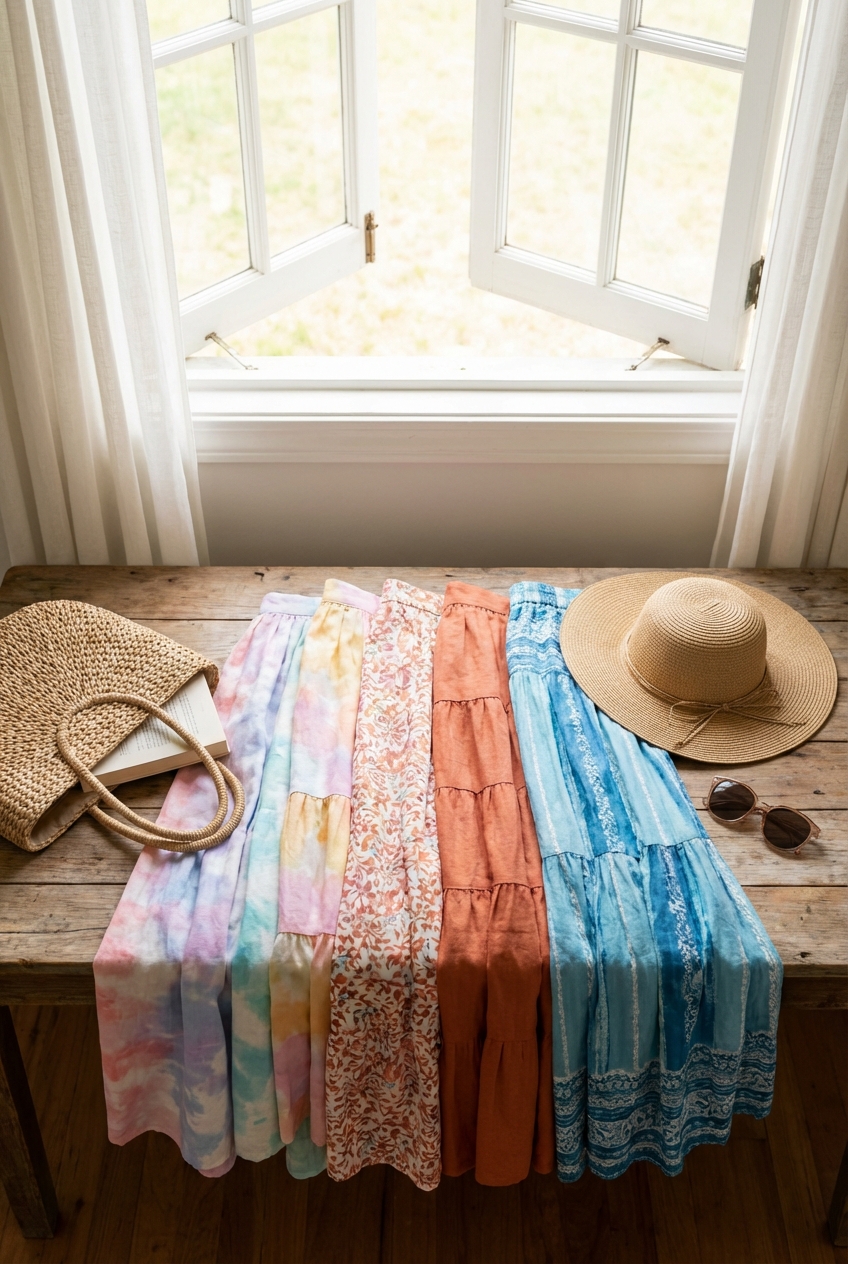
Flowy Maxi Skirts For Warm Breezy Days
There is a specific moment every summer when the humidity breaks, the air turns golden, and the thought of wearing structured denim becomes physically painful. For me, this usually happens in mid-June. I remember styling a campaign in Savannah, Georgia, where the heat was practically rising in visible waves off the pavement. My team was in shorts, swatting away mosquitoes, while I remained surprisingly comfortable in a floor-length, bias-cut silk skirt.
The maxi skirt is often misunderstood as difficult to style or exclusively reserved for resort wear. However, when you approach it with a designer’s eye for proportion and fabric weight, it becomes the most highly functional garment in a warm-weather wardrobe. It creates its own airflow, protects your skin from direct sun, and elongates the silhouette without the constriction of trousers. It is architectural elegance meeting absolute comfort.
In this guide, we are going to break down the mechanics of the perfect flowy maxi skirt. We will look at fabric composition, the mathematics of hem lengths, and how to balance volume so you never feel like the fabric is wearing you. If you are looking for visual inspiration on how to combine these elements, you can find our curated Picture Gallery at the end of the blog post.
The Physics of Fabric: Material Selection
In high-end fashion styling, the “hand” (feel and drape) of the fabric dictates the success of the garment. When selecting a maxi skirt for warm days, the fiber content is not just a detail; it is the entire ballgame. You need materials that breathe and move, rather than trap heat against the legs.
Natural Fibers are Non-Negotiable
For a summer maxi, I almost strictly enforce a natural fiber rule. Synthetic fabrics like polyester or heavy rayon blends might look flowy on the hanger, but they act as plastic wrap in the sun. They trap moisture and heat.
- Linen: The gold standard for structure and breathability. A linen maxi will have more volume and hold an A-line shape away from the body, which encourages airflow. Expect wrinkles; in the design world, we call this “rich texture.”
- Cotton Voile or Gauze: These are softer and more fluid than linen. They offer a romantic, effortless drape. However, they are often sheer, so check the lining.
- Silk: Silk is a natural thermoregulator. It keeps you cool in the heat. A silk maxi offers the most movement and sophistication but requires careful maintenance.
The Lining Trap
Designer’s Note: The “Lining Trap”
One of the most common mistakes I see clients make is buying a gorgeous 100% cotton skirt, only to realize the lining is 100% polyester. This negates the purpose of the natural shell. The polyester lining will stick to your legs and cause sweating. Always check the care tag. The lining should be cotton, rayon, or breathable viscose. If it is polyester, leave it on the rack.
Understanding Silhouettes and Volume
Not all “flowy” skirts are created equal. The cut of the skirt changes how it interacts with your body shape and your other garments. As a stylist, I categorize maxis into three primary architectural shapes.
The Tiered Skirt
This is currently the most popular silhouette. It consists of horizontal panels of fabric stitched together, widening as they go down.
- The Vibe: Bohemian, relaxed, casual.
- The Rule: Tiered skirts add significant visual volume to the lower body. To balance this, the waist must be defined, and the top should be relatively minimal.
- Best For: Adding curves to a rectangular figure or balancing broad shoulders.
The Bias Cut
A bias-cut skirt is cut diagonally across the grain of the fabric. This allows woven fabric (like satin or linen) to stretch and drape over the curves of the body without zippers or pleats.
- The Vibe: Slinky, elegant, evening-ready.
- The Rule: Because this hugs the hips before flaring at the hem, seamless undergarments are essential. This cut is unforgiving of texture underneath but incredibly flattering to the silhouette.
- Best For: Creating an hourglass shape and evening events.
The Wrap Skirt
The wrap is the most adjustable option. It creates a natural vertical line (the slit) which breaks up the mass of fabric, making it look lighter.
- The Vibe: Classic, French-girl chic, breezy.
- The Rule: Ensure the overlap is sufficient. A “windy day” test is crucial. You want a clear 4-6 inches of fabric overlap when standing still to ensure coverage when moving.
- Best For: Fluctuating sizes and maximum airflow.
The Rule of Thirds: Styling the Top
The biggest fear women have with maxi skirts is looking “frumpy” or overwhelmed by fabric. This is almost always a failure of proportion, not the skirt itself. In design, we use the “Rule of Thirds.” You never want to cut the body in half (1:1 ratio). You want a 1:3 or 2:3 ratio.
With a maxi skirt, the skirt takes up the bottom two-thirds of your visual body. Therefore, the top must occupy the top one-third.
Tucking and Cropping
To achieve that one-third proportion, your top needs to end at your natural waist.
- The Full Tuck: If you are wearing a t-shirt or button-down, it must be fully tucked in to define the waistline.
- The Crop: A crop top that ends exactly at the waistband of the skirt is the modern way to handle this. It eliminates the bulk of tucking in fabric.
- The Bodysuit: For the smoothest line, a bodysuit prevents the “bunching” that happens when you tuck a shirt into a thin waistband.
Necklines and Balance
If the skirt is very voluminous (like a tiered cotton skirt), I prefer to keep the neckline open. A scoop neck, square neck, or tank top balances the weight. High-neck tops combined with floor-length skirts can sometimes look too modest or heavy for a warm day, unless the fabrics are very sheer.
Hemline Engineering: The Shoe Equation
The interaction between the hem of your skirt and the floor is a precise science. Unlike jeans, where “stacking” is a style choice, a maxi skirt that drags on the ground looks messy and ruins the garment. Conversely, a maxi that hits the mid-calf is just an awkward midi.
The Ideal Clearance
For a floor-length look that is actually wearable, aim for the hem to hit between the ankle bone and the top of the foot.
- Measurement Guide: Ideally, the fabric should hover 0.5 to 1 inch off the ground when you are wearing your intended shoes. This allows the fabric to swing freely without collecting city dust or garden soil.
Shoe Pairings
- Flat Sandals: The most natural partner for a maxi. Look for slides or gladiator styles. Avoid chunky “dad sandals” unless you are aiming for a very specific edgy juxtaposition, as they can weigh down the look.
- Espadrille Wedges: If you need height, wedges are superior to stilettos for maxi skirts. The wedge heel catches the hem less often than a thin heel, which can easily puncture delicate chiffon or silk.
- Sneakers: A white leather sneaker works beautifully with a jersey or cotton maxi. It dresses the look down for travel or errands.
Common Mistakes + Fixes
Even with high-quality pieces, styling can go wrong. Here are the issues I correct most often on set and with private clients.
Mistake 1: The “Tent” Effect.
This happens when you wear a loose, flowy tunic over a loose, flowy skirt.
The Fix: Create structure. Use a belt to cinch the waist, or knot the top to expose the waistband. You must see the body somewhere, usually at the waist or shoulders.
Mistake 2: Ignoring Static Cling.
A beautiful silk skirt that clings to your legs ruins the “breezy” aesthetic instantly.
The Fix: Keep a travel-size anti-static spray in your bag. In a pinch, running a wire hanger over the skirt or applying a small amount of lotion to your legs can discharge the static.
Mistake 3: The Wrong Undergarments.
Visible panty lines (VPL) or dark underwear showing through light linen.
The Fix: Invest in “skin tone” seamless shorts. Not shapewear—just lightweight, seamless slip shorts. They prevent chafing (the enemy of summer) and provide a smooth opacity layer for sheer skirts.
Color Theory for Large Surface Areas
A maxi skirt covers a large percentage of your body, meaning the color or print you choose becomes the dominant theme of your outfit.
Solids vs. Prints
- Solid Colors: A solid maxi lengthens the body significantly. Monochromatic looks (wearing a top in the same shade) create a continuous vertical line that is incredibly slimming and chic.
- Small Scale Prints: Florals or polka dots that are small (ditsy prints) read almost like a texture from a distance. They are forgiving of wrinkles and stains.
- Large Scale Prints: Big, bold tropical prints are fantastic but require confidence. Keep the top neutral (white, black, or tan) to let the skirt be the artwork.
Transitioning from Beach to Dinner
The true value of a flowy maxi skirt lies in its versatility. It is the ultimate travel garment because it packs flat and works in multiple scenarios.
The Beach Look
Wear the skirt over your swimsuit. Pair it with rubber flip-flops, a straw hat, and an oversized raffia tote. The skirt acts as an elevated cover-up. Keep the waistband loose.
The Dinner Transformation
To take the same skirt to dinner:
1. Swap the flip-flops for metallic strappy sandals.
2. Change the swimsuit for a silk camisole or a fitted off-the-shoulder top.
3. Add statement earrings.
4. Slick your hair back into a low bun.
The volume of the skirt provides enough drama for evening wear without requiring you to change into something tight or uncomfortable.
Care and Maintenance
A flowy skirt loses its charm if it looks dingy or tattered. Because the hem is close to the ground, it requires specific care.
- The Hem Check: After every wear, check the bottom two inches of the skirt. This area collects street dust. Spot clean this area by hand if the rest of the skirt is clean to avoid over-washing the fabric.
- Steaming vs. Ironing: For flowy fabrics like tiered cotton or chiffon, always use a steamer. Ironing can flatten the pleats and kill the volume. Steaming relaxes the fibers and restores the “breezy” bounce.
- Storage: Hang maxi skirts by the waistband loops. Do not fold them over a hanger bar, as this creates a weird crease mid-thigh. If it is a heavy knit, fold it on a shelf to prevent stretching the waist.
Finish & Styling Checklist
Before you walk out the door, run through this mental checklist to ensure the look is polished and functional. This is exactly what I do before sending a model onto the runway or a client to an event.
- Waist Definition: Can I see where my torso ends and legs begin? If not, tuck or belt.
- Hem Clearance: Is the skirt dragging? If yes, change shoes or use fashion tape for a temporary hem.
- Opacity Check: Stand in bright light (or sunlight). Can you see the silhouette of your legs too clearly? If so, add a slip.
- Volume Balance: If the skirt is big, is the top small?
- Fabric Movement: Walk a few steps. Does the fabric flow behind you, or does it get stuck between your legs? (Check static).
FAQs
Can petites wear flowy maxi skirts?
Absolutely. The myth that maxis overwhelm petites is false; it is about fit. Petites should look for high-waisted cuts (to elongate the legs) and ensure the hem is tailored perfectly to graze the floor. Avoid massive horizontal tiers, which can widen the frame. A column or bias cut is best.
How do I stop my skirt from getting caught in my heels?
This is a common hazard. The best fix is to choose a shoe with a closed heel counter or a wedge. If you must wear a stiletto, you simply have to be mindful when walking backward or stepping down curbs. Lift the skirt slightly when navigating stairs.
What is the best fabric for high humidity?
100% Linen or a very lightweight Cotton Voile. Silk is beautiful but can show sweat marks if it gets wet. Synthetics are the enemy of humidity.
Can I wear a maxi skirt to the office?
Yes, but the fabric matters. Jersey or t-shirt material often looks too casual. Opt for a crisp poplin, linen blend, or silk. Pair it with a structured blazer or a button-down shirt and closed-toe mules to professionalize the look.
Conclusion
The flowy maxi skirt is more than just a piece of clothing; it is a mood. It signals a shift from the rigidity of the colder months to the ease and openness of the warm season. Whether you choose a dramatic tiered linen piece or a liquid-like silk slip, the key is to respect the proportions. Keep the volume balanced, pay attention to the hemline, and prioritize natural fabrics that let you live comfortably in the heat.
When styled correctly, it offers a level of sophistication that shorts simply cannot compete with. It allows you to move through your day with a sense of drama and grace, catching the breeze as you go.
Picture Gallery


