
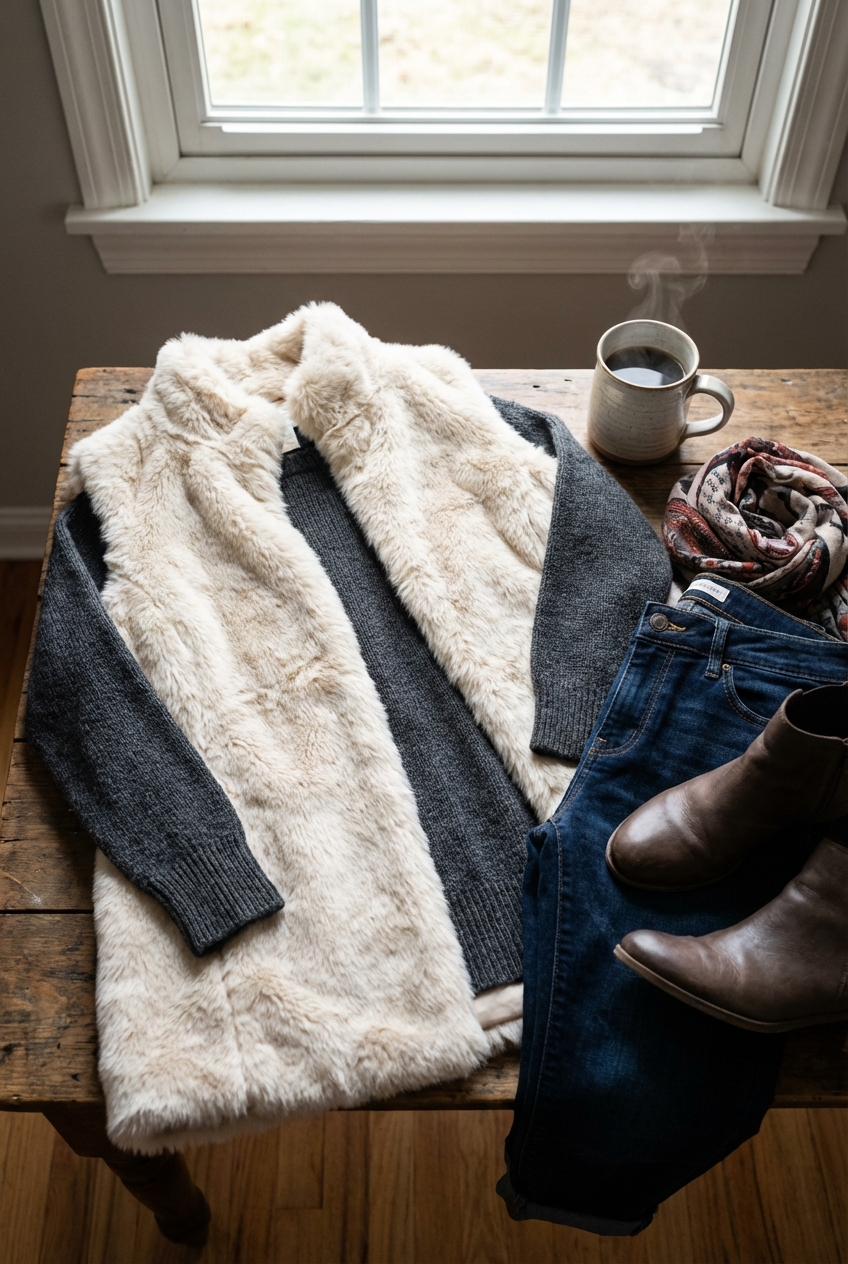
Fluffy Faux Fur Vests For Transitional Cool Evenings
Introduction
There is a specific week every year, usually in late September or early April, where the weather refuses to commit. The mornings are crisp enough to see your breath, but by noon, the sun is blazing enough to make a wool coat feel like a sauna. This transitional period is the ultimate sartorial challenge, and as a stylist, I have found that the faux fur vest is the most reliable tool in a client’s arsenal. It provides core warmth without sleeve restriction, acting as the perfect temperature regulator.
Beyond the practical warmth, a faux fur vest introduces immediate texture and luxury to an outfit. It operates on the “third piece” rule of fashion styling. You might be wearing a simple turtleneck and denim, but adding that textural layer elevates the look from “getting dressed” to “styled.” However, the line between chic and bulky is incredibly thin. It requires understanding volume, pile length, and silhouette to ensure the vest wears you, rather than the other way around.
In this guide, I will break down exactly how to select and style these pieces with high-end precision. We will cover fabric quality, proportion rules, and specific outfit formulas that work for different body types. If you are looking for visual inspiration on specific color combinations, make sure to look at the Picture Gallery at the end of the blog post.
Understanding Pile and Fabric Quality
The first step in mastering the faux fur vest is sourcing the right material. Not all faux furs are created equal. In the luxury sector, we look for “modacrylic” blends. These fibers are designed to mimic the weight and drape of real animal hair. Cheaper polyester options often look shiny or plastic-like under direct sunlight and tend to mat quickly.
You must also consider the “pile” of the fur, which refers to the length and density of the fibers. A short-pile vest (shearling style) offers a streamlined silhouette that works well for office settings or petite frames. It adds warmth without significant bulk. Long-pile vests (Mongolian or shaggy styles) are high-drama pieces. They add significant visual weight and width to the torso.
Designer’s Note: The Mesh Test
A quick rule of thumb I use when shopping for clients is the “Mesh Test.” Part the fur with your fingers as if you are looking at the roots of hair. If you can instantly see the mesh or fabric backing grid, put it back. High-quality faux fur should have a dense undercoat that hides the construction. If the backing is visible, the vest will look patchy within a month of wear.
Mastering the Silhouette and Proportions
The most common mistake I see with faux fur vests is incorrect sizing relative to the rest of the outfit. Because the material is inherently voluminous, the fit must be precise. The shoulder seam of the vest should end exactly at your natural shoulder point. If it extends over the shoulder, it creates a sloping, linebacker effect that broadens the upper body unflatteringly.
Length is equally important. For most body types, the ideal hemline hits at the high hip or the top of the thigh. This elongates the torso. Cropped vests that hit at the waist can be tricky; they tend to cut the body in half and can make the midsection appear wider. If you are taller than 5’8″, you can pull off a “longline” vest that hits mid-thigh, but ensure it has some shaping at the waist.
Common Mistakes + Fixes
- Mistake: Wearing a bulky vest over a bulky sweater.
- Fix: Create contrast. If the vest is fluffy, the layer underneath must be fitted. Opt for ribbed turtlenecks, cashmere crews, or silk blouses.
- Mistake: Closing the vest.
- Fix: Leave it open. A faux fur vest creates a vertical column of color down your center front, which is slimming. Zipping or hooking it closed often creates a blocky shape.
The Color Palette Strategy
When investing in a high-quality piece, neutrals are your best friend. In my styling practice, I categorize faux fur into two families: Warm/Natural and Cool/Modern. Warm tones include chocolates, deep caramels, and “wolf” variations (a mix of grey and brown). These are timeless and mimic natural furs, making them look more expensive.
Cool tones include pure black, slate grey, and snowy white. These offer a sharper, more urban aesthetic. A black faux fur vest is arguably the most versatile evening piece you can own. It pairs seamlessly with leather and denim. Avoid neon or overly saturated brights unless you are styling a very specific editorial look; they tend to date quickly and are harder to mix and match.
What I’d Do in a Real Project
If I were building a capsule wardrobe for a client, I would start with a multi-tonal vest. Look for fibers that have “guard hairs”—tips that are darker than the base color. This adds depth and dimension. A flat, solid-color beige vest can look like a bathroom rug. A beige vest with espresso-tipped fibers looks like a luxury garment.
Layering Logistics: The “Under” Layers
The success of a vest outfit relies entirely on the sleeve that emerges from it. Since your arms are exposed, the texture of the sleeve becomes a major design element. This is where you can play with fabric contrast. Leather sleeves are a classic pairing with faux fur; the sleek, tough leather balances the soft, organic fur.
For a daytime look, a chambray shirt or a flannel button-down offers a fantastic textural clash. The roughness of the denim against the softness of the fur creates a “high-low” fashion balance that feels effortless. Ensure the cuffs of the shirt are neat—either buttoned or rolled precisely—to maintain polish.
Specific Measurements for Layering
When trying on vests, pay close attention to the armhole depth. In high-end design, we look for an armhole that sits about 1.5 to 2 inches below the armpit. If it is higher, it will bunch up your sweater underneath. If it is lower (deep cut), you risk exposing the side of your bra or the unflattering “gap” where shirts tend to untuck.
Bottoms Up: Balancing the Lower Half
Because a fluffy vest adds volume to the top half of your body, the traditional rule of thumb is to keep the bottom half slim. Skinny jeans, leather leggings, or fitted pencil skirts are the standard go-to options. This creates an inverted triangle silhouette that is generally flattering and easy to wear.
However, fashion is currently moving toward wider silhouettes. You can wear a faux fur vest with wide-leg trousers, but the engineering of the outfit must change. To make this work, the vest needs to be slightly shorter (hitting the hip bone), and the trousers must be high-waisted. This defines the waistline and prevents you from looking like a shapeless column.
Styling Checklist: Pants and Skirts
- Leggings: Must be opaque and high quality. Pair with a longer vest that covers the rear.
- Mini Skirts: Great for transitional weather. Wear with opaque tights and ankle boots to balance the heaviness of the vest.
- Boyfriend Jeans: Proceed with caution. Ensure the ankle is exposed (rolled cuff) and wear a heel to add height, counteracting the bulk.
Accessories and Hardware
Hardware selection can make or break the luxury feel of faux fur. If your vest has zippers or clasps, they should be heavy and substantial. Flimsy, shiny plastic zippers are a dead giveaway of lower quality. If you find a vest with perfect fur but cheap buttons, have a tailor replace them. It is a $20 fix that adds hundreds of dollars in perceived value.
When accessorizing, avoid crossbody bags. The strap presses into the pile of the fur, creating a permanent indentation and ruining the fluffiness. It also breaks the visual line. Opt for a top-handle bag, a clutch, or a tote carried in the crook of the arm.
Jewelry Rules
- Necklaces: Long pendants get lost in the fluff. Opt for a choker or a short statement necklace that sits on the skin or the fabric of your under-layer.
- Earrings: Go bold. Since the neck area is busy with fur texture, a simple stud disappears. A gold hoop or architectural earring stands out beautifully.
Finish & Styling Checklist
Before you head out the door, run through this quick stylist check to ensure the look is polished.
- The Shake Out: Hold the vest by the shoulders and give it a vigorous shake to fluff the pile and remove dust.
- The Static Check: Faux fur loves static electricity. Run a dryer sheet over the lining or mist with a static guard spray to prevent it from clinging to your legs.
- The Tuck: Ensure your base layer (shirt/sweater) is tucked in or lays flat. You don’t want bunching at the waist adding extra circumference.
- The Collar: If the vest has a collar, ensure it is standing up or lying flat as intended, not folded awkwardly inward.
- The Lint Roll: Check your black leggings or dark denim. Faux fur sheds, especially when new. Clean up any stray hairs on your bottom half.
FAQs
How do I wash a faux fur vest?
Never put faux fur in a standard dryer; heat melts the fibers and causes “singing,” which feels like rough velcro. Most high-end vests are dry clean only. For spot cleaning, use a damp cloth and mild detergent, then let it air dry flat. Once dry, brush it gently with a wide-tooth comb to restore the fluff.
Can I wear a faux fur vest to a formal event?
Absolutely. A black or white faux fur vest over a silk slip dress is a stunning evening look. It provides warmth without the heaviness of a coat. Choose a finer, shorter pile for formal events rather than a shaggy, boho style.
Is faux fur okay for rain?
It is not ideal. While synthetic fibers won’t rot like real fur, they can absorb water and become extremely heavy and matted. If you get caught in a drizzle, shake it out immediately and let it dry in an open area. Do not put it near a radiator or heater.
Does a fur vest make you look larger?
It adds physical volume, yes. However, if styled correctly with a column of color (monochrome outfit underneath) and left open, it creates vertical lines that are actually slimming. The key is contrasting the volume with fitted pieces elsewhere.
How do I store it in the summer?
Do not compress it. Hanging it in a crowded closet between a wool coat and a blazer will flatten the pile. Give it space. Use a breathable garment bag (cotton, not plastic) to prevent dust while allowing air circulation.
Conclusion
Embracing the faux fur vest is about more than just staying warm; it is about adding a layer of sophisticated drama to your daily rotation. It bridges the gap between the practicality of outerwear and the expression of personal style. Whether you are running errands in a shearling style or heading to a gallery opening in a floor-length shag, the principles remain the same: respect the proportions, invest in quality textures, and keep the rest of the silhouette intentional.
By following these guidelines, you ensure that your transitional weather outfits are not just functional, but fashion-forward. The vest is a timeless staple that, when treated with care and styled with precision, serves as a loyal companion through the most unpredictable seasons.
Picture Gallery


