Warm Winter Scarves: Fabrics and Styles That Work
- Words by
- Julio Arco
- Published
- Reading
- 4 min
The warmest scarf is a thick, wide one in wool, with cashmere as the softer alternative, wrapped so it covers your neck and tucks into your coat. Fluffy knits, fleece and faux fur also hold heat well because they trap air, but weight, width and how closely the scarf seals at the collar matter as much as the fiber.
Below: which fabrics to look for, which shapes suit which coats, and how to wrap a scarf so the cold stays out.
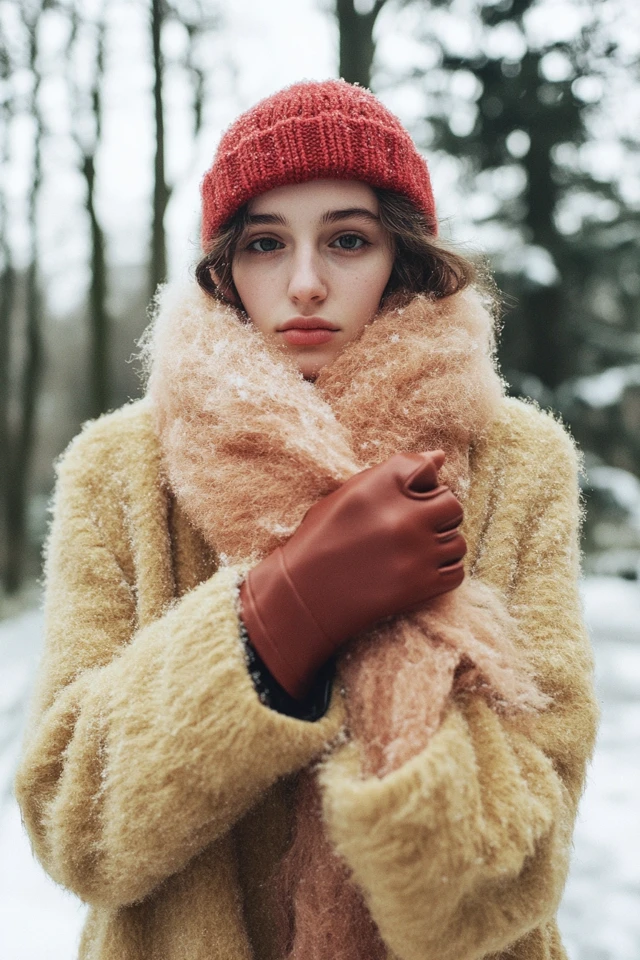
What scarf is the warmest?
Warmth comes from trapped air. A dense, fuzzy or chunky scarf holds a layer of still air against your neck, and a wide one covers more skin. A thin scarf in a great fiber will still lose to a thick one in a decent fiber.
If you want one pick, choose a wool or wool-blend scarf that is wide enough to wrap twice. It handles wind better than most fluffy options, which can let gusts through the open loops of a loose knit.
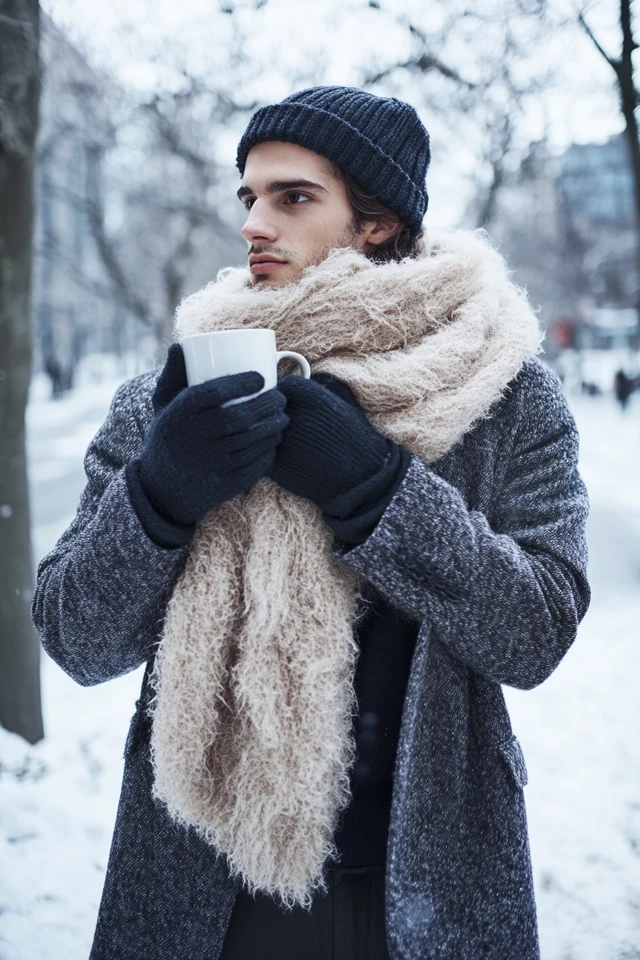
Best fabrics for warm winter scarves
Wool and wool blends
Wool is the dependable choice. It insulates well, handles damp air better than most fabrics, and a brushed or boiled finish makes it denser against wind. Some people find coarse wool itchy on the neck, so touch it to your jaw before buying. Our guide to heavy wool scarves for wind chill goes deeper on weights.
Cashmere
A winter scarf in cashmere is the softest option and warm for its weight, which makes it good under a tailored coat where bulk would spoil the line. It costs more and wears faster at the edges, so it suits daily commuting less than a sturdy wool.
Fleece, faux fur and chunky knits
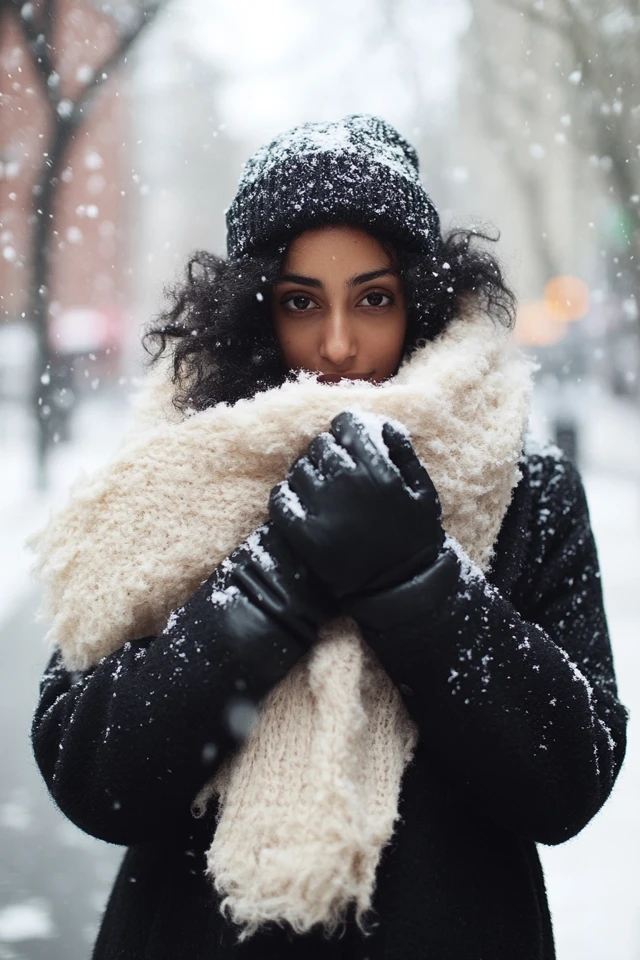
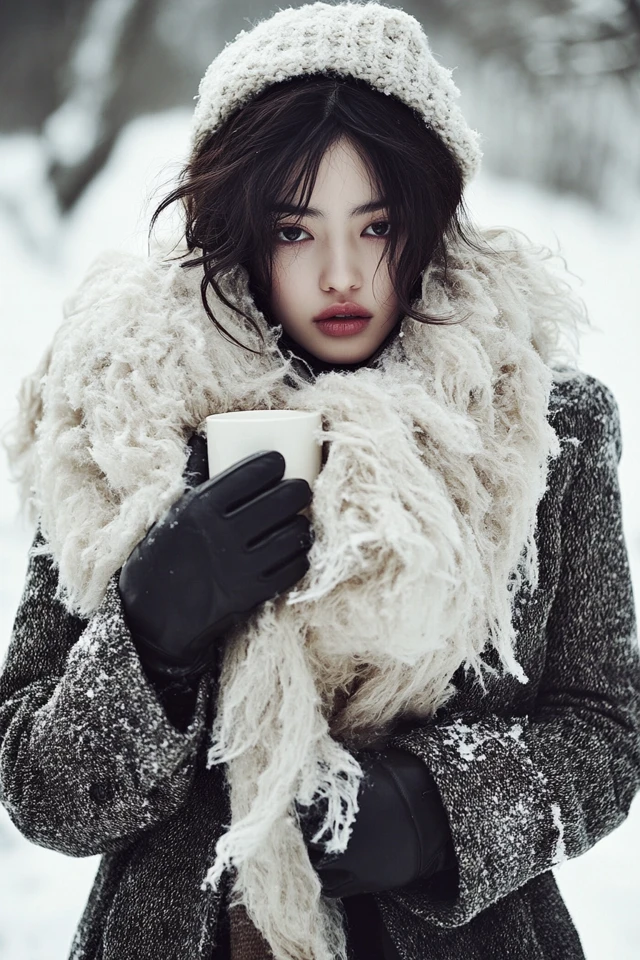
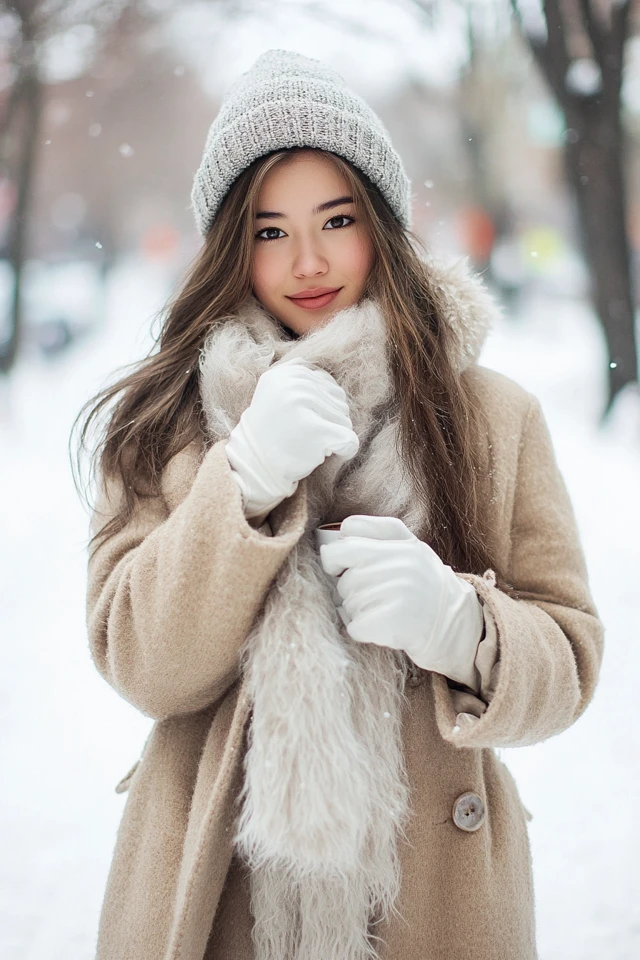
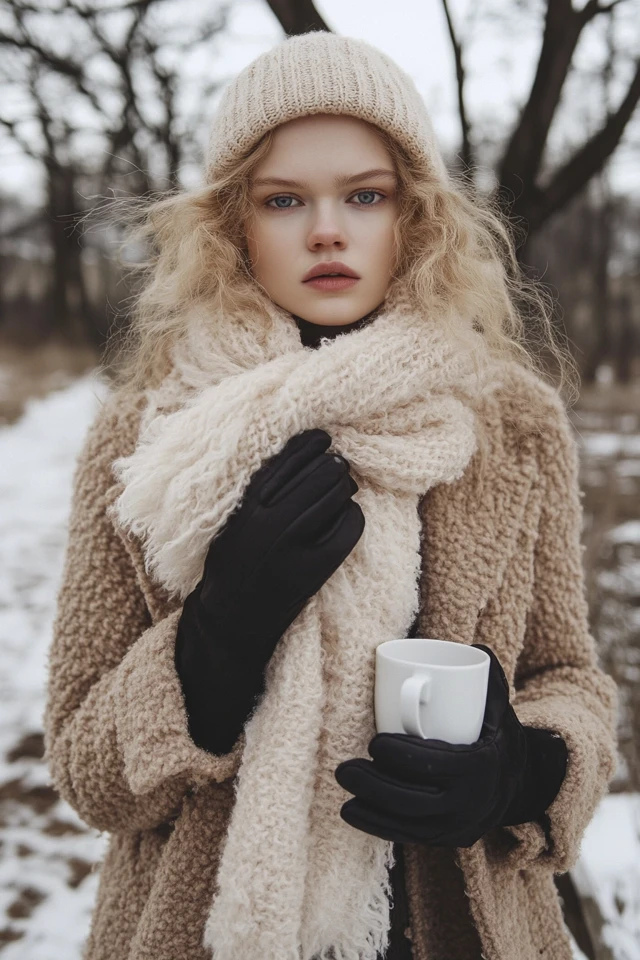
These are the fluffy ones. Fleece and faux fur are plush, light and easy to care for, and they add visible texture. Through the lens of evidence-based design, I'd say texture changes how a color reads: the same cream looks softer and deeper in a brushed pile than in a flat weave, because the surface scatters light.
What to avoid next to skin when you're active
If you're walking briskly or exercising outdoors, Texas A&M's Howdy Health advises avoiding cotton because it absorbs moisture and can keep it next to your skin, making you cold. That is a good reason to skip a thin cotton scarf for long walks in the cold.
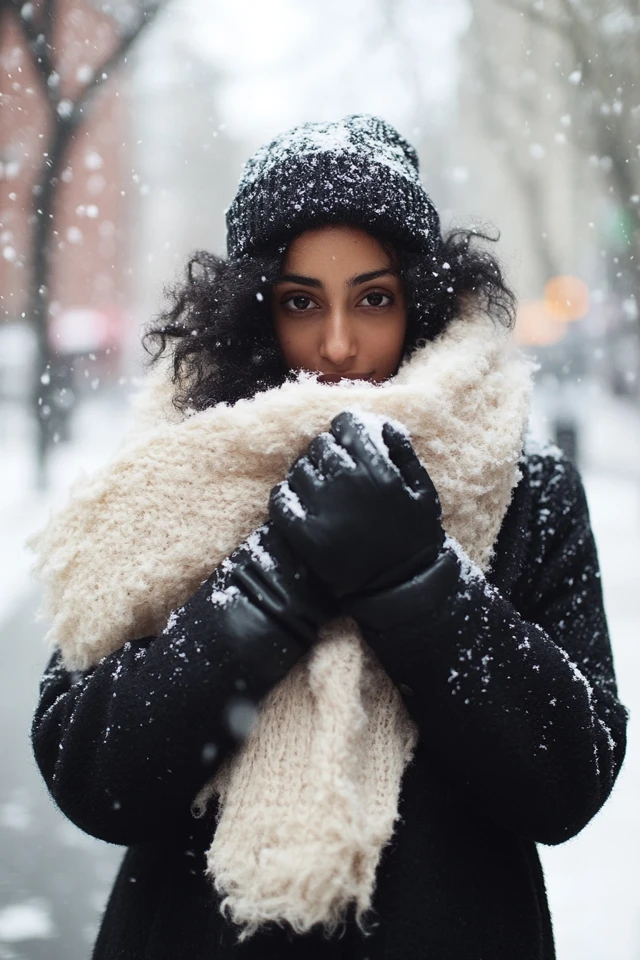
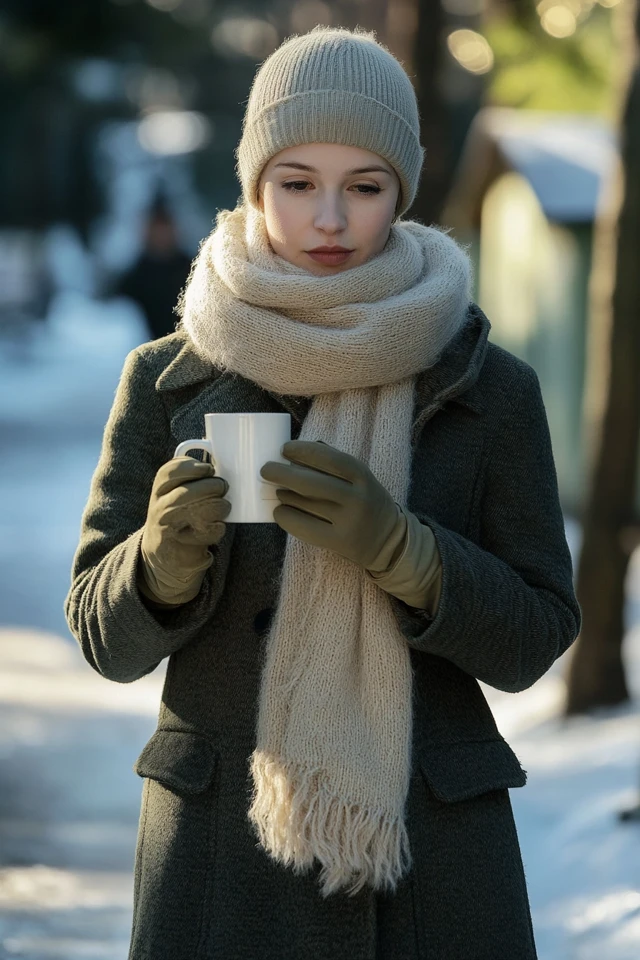
Which scarf is best for winter: blanket, infinity or classic?
Blanket and oversized scarves
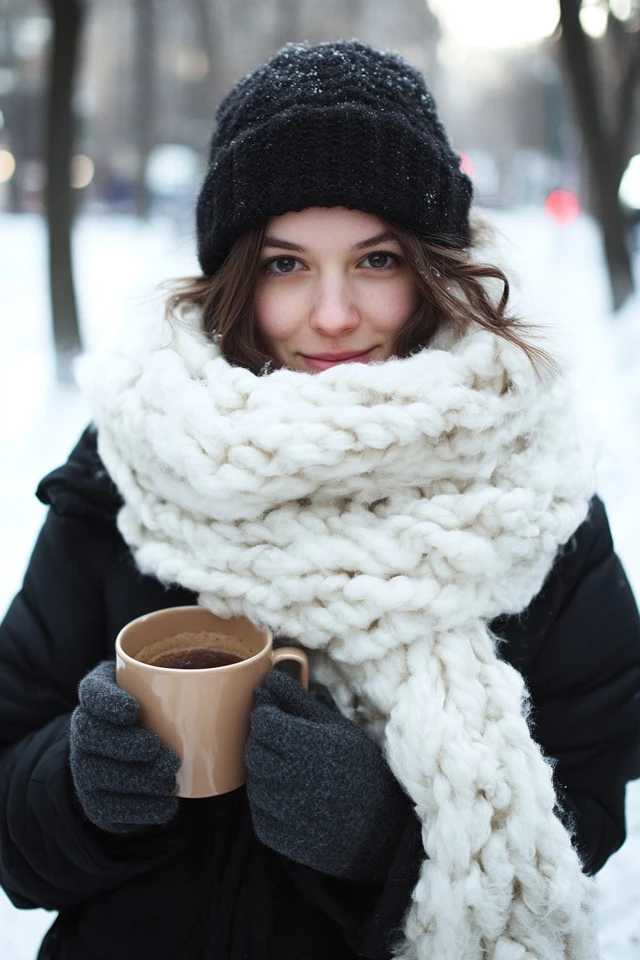
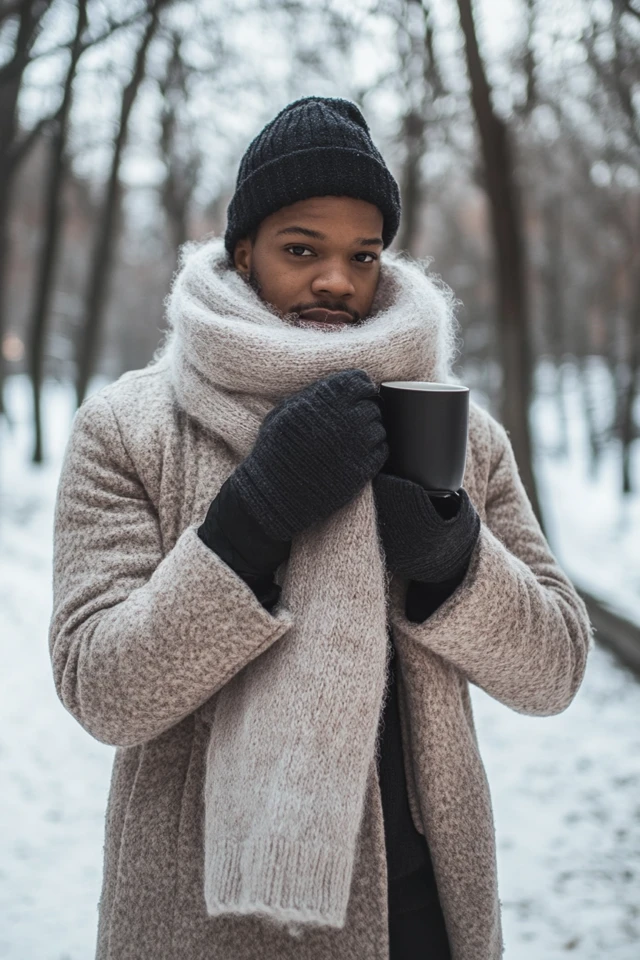
Big squares and wide rectangles give the most coverage. You can wrap them twice, pull one end over your shoulders or even up over your chin in wind. They pair well with a plain coat, and our picks of cozy blanket scarves show the range.
Infinity and tube scarves
A loop has no ends to flap loose, so it stays put when you're carrying bags or walking in wind. Doubled up, it sits close to the neck. See soft infinity scarves for options.
Fringed, knit and pashmina styles
Fringe and pashmina drape more than they insulate, so they are better for mild days, indoors or layered over another scarf. Chunky cable knits are the warm exception, with plenty of air in the stitches.
How to choose a winter scarf for women (or anyone)
A few checks make the choice easier, whatever the label says.
- Width: at least 8-10 inches for a standard scarf, much wider for a blanket style.
- Length: long enough to wrap twice and still leave a tail to tuck in.
- Feel: test it against your neck, not your hand.
- Frame: on a petite frame, a narrower or medium-weight scarf avoids swallowing your face. On a tall frame, long and oversized styles balance your height.
- Coat: a bulky puffer needs a softer, thinner scarf, while a smooth wool coat can handle volume.
How to wrap it and what to wear it with
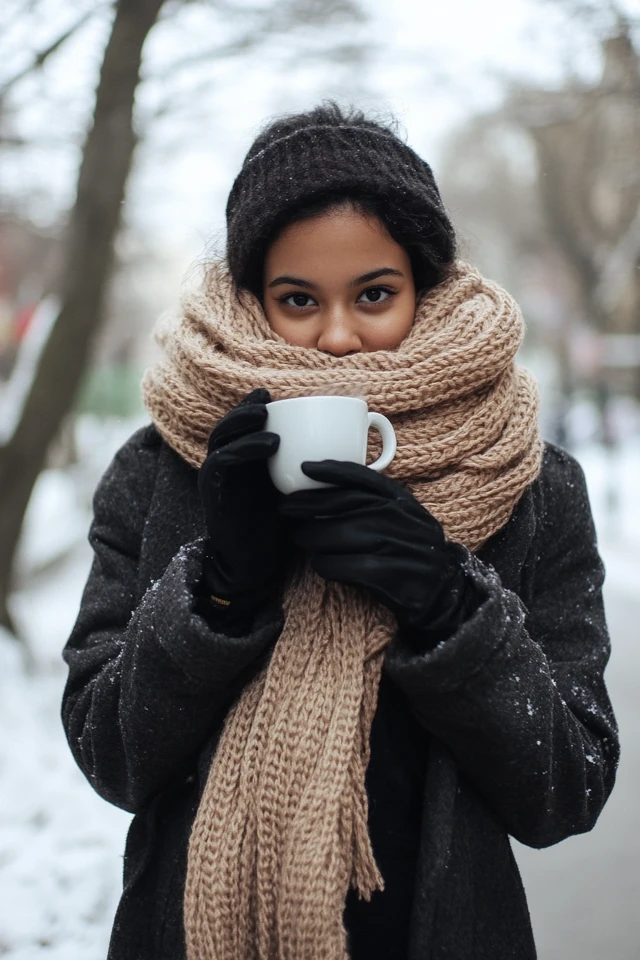
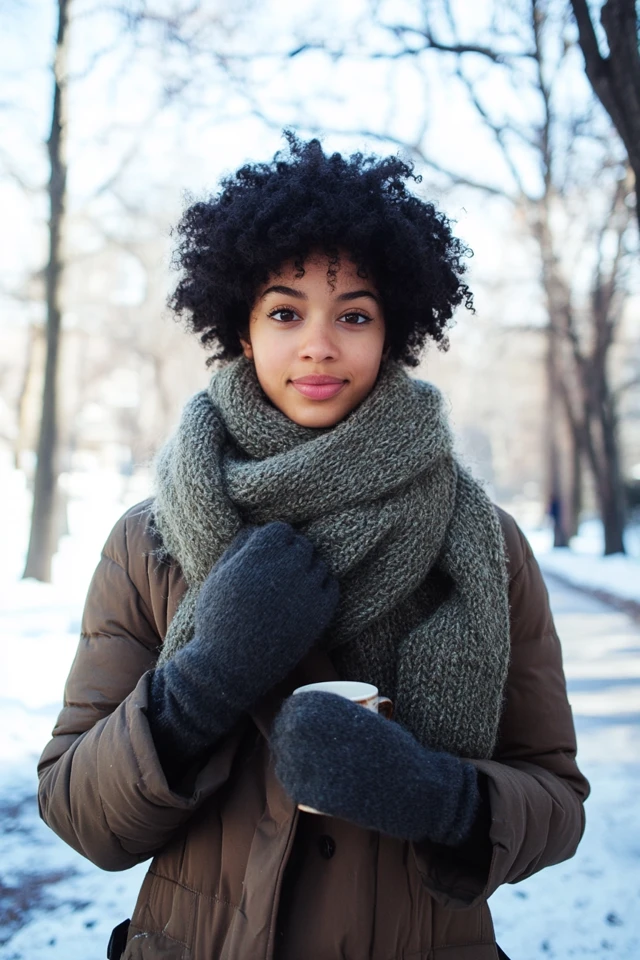
Fold the scarf in half, drape it around your neck, and pull the ends through the loop for a snug knot that seals the collar gap. For maximum warmth, wrap twice and tuck the ends inside your coat.
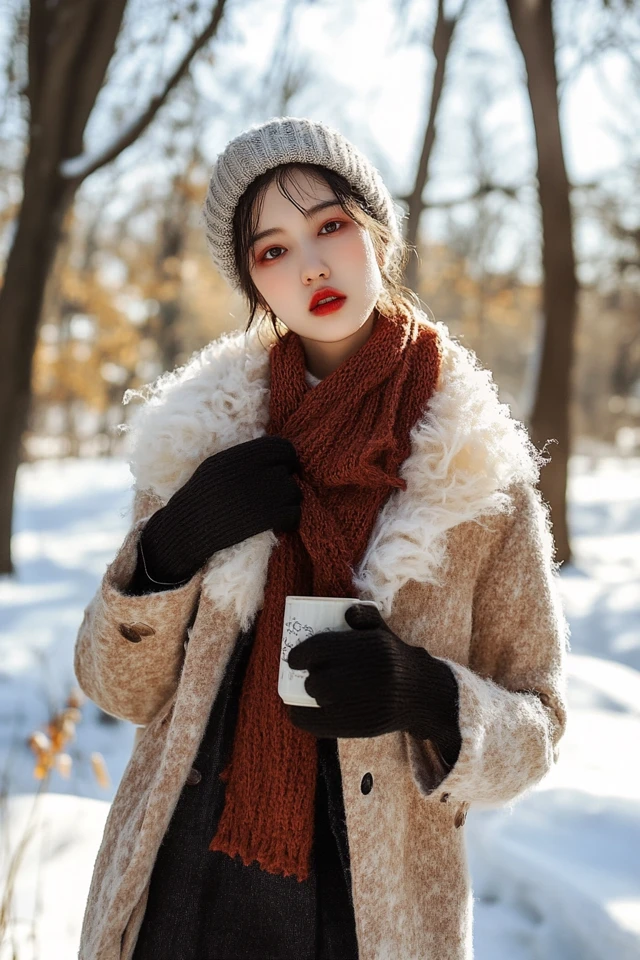
Neutral scarves in beige, gray or cream go with nearly everything. A bright red, green or mustard works best against a neutral coat so the scarf is the only strong color. Plaid in two shades echoing your coat looks intentional.
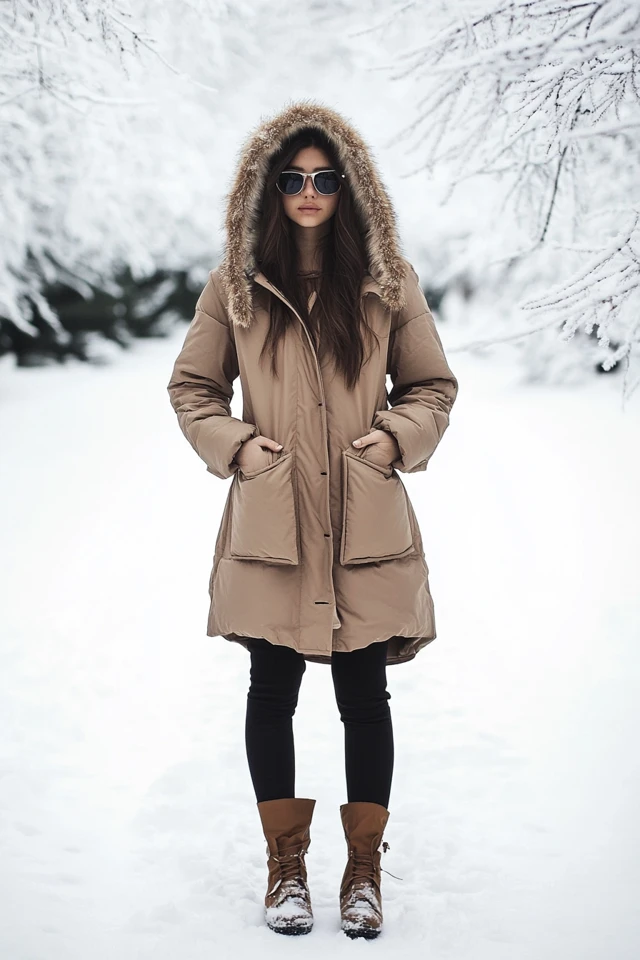
Matching the rest of your cold-weather layers helps too: try a quilted jacket, fluffy ear warmers or a faux shearling jacket for a coordinated texture story.
How to care for a fluffy scarf
Check the label first. Faux fur and delicate knits usually do best with gentle hand washing or spot cleaning, then air drying flat so the pile keeps its shape. Avoid wringing, and brush faux fur lightly once dry.
Frequently asked questions
What are the best scarves for staying warm in winter?
Thick wool or wool-blend scarves, chunky knits and wide blanket scarves hold the most heat. Cashmere is warm for its weight and the softest on skin.
Are scarves in or out for 2026?
Scarves are a practical cold-weather staple, so they rarely go away. Oversized and textured styles are common right now, but pick the shape and fabric that keep you warm.
Can a petite person wear a fluffy scarf?
Yes. Choose a medium-weight or narrower scarf, or a faux-fur collar, so the volume doesn't overwhelm your frame.
Are fluffy scarves appropriate for formal outfits?
A neutral, smooth faux-fur or fine knit scarf over a tailored coat looks polished. Keep the rest of the outfit simple so the texture stands out.
Filed under Weather Style