
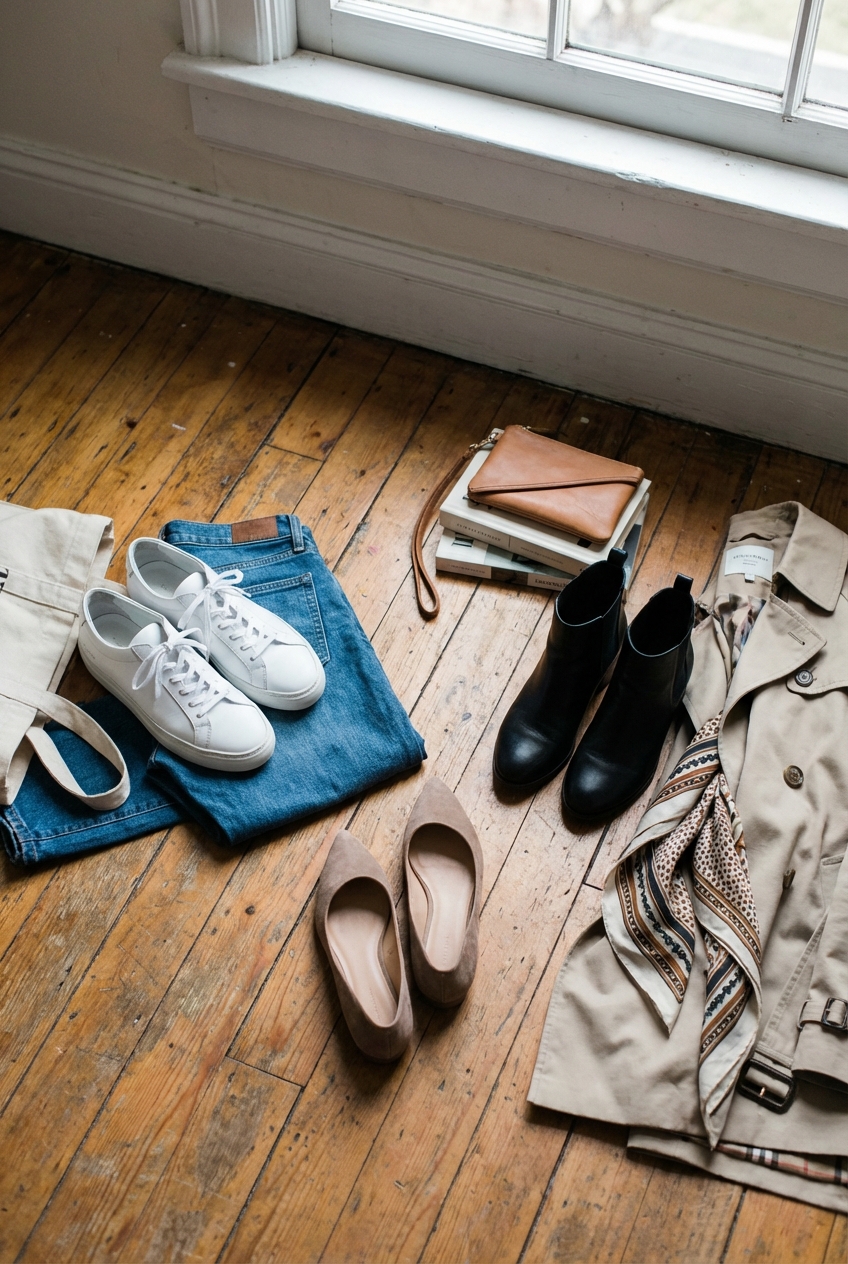
Footwear Capsule Essential Shoes For Every Occasion
I used to believe that being “fashionable” meant having a closet bursting with options. My shelves were lined with trendy platforms, neon strappy sandals, and heels so high they were purely ornamental. Yet, every morning, I faced the same paralyzing dilemma: I had a mountain of shoes, but nothing actually worked for my day.
The turning point in my career as a stylist came when I stopped viewing shoes as individual accessories and started viewing them as architectural foundations for an outfit. Just as a rug anchors a room, your footwear dictates the tone, proportion, and functionality of your entire look. A curated shoe capsule isn’t about restriction; it is about eliminating the friction between looking polished and getting dressed quickly.
In this guide, I am breaking down the absolute non-negotiables of a high-functioning footwear wardrobe. We will cover the specific heel heights that offer the best return on investment, the materials that withstand city commutes, and the styling formulas I use with my private clients. If you are looking for visual inspiration on how to style these pairs, make sure to check out the Picture Gallery at the end of the blog post.
1. The Architecture of the Everyday: The Structured Loafer
The loafer is the workhorse of the modern wardrobe. It bridges the gap between the casual nature of a sneaker and the formality of a pump. For a capsule wardrobe, you need a pair that feels substantial, not flimsy.
I always advise clients to look for a “structured” loafer. This means the leather should be stiff enough to hold its shape when not being worn. Soft, unstructured driving moccasins wear out quickly and offer zero support for a long day on your feet. You want a shoe that commands presence.
When selecting the toe shape, consider the visual line. An almond or slightly squared toe is timeless and elongates the leg more effectively than a round toe. This subtle detail prevents the shoe from looking juvenile.
Designer’s Note: The “Break-In” Myth
A high-quality leather loafer will be stiff at first, but it should never be painful. If a shoe pinches your toes or rubs your heel raw in the store, do not buy it expecting it to stretch significantly. The correct fit should feel like a firm handshake—snug and secure, but not crushing.
Common Mistakes + Fixes
- Mistake: Buying synthetic “pleather” loafers to save money.
- Fix: Synthetic materials trap moisture and do not mold to your foot. Invest in calfskin leather; it breathes and creates a custom fit over time.
- Mistake: Ignoring the sole thickness.
- Fix: Opt for a sole that is at least 0.5 inches thick. Paper-thin soles ruin the proportions of wide-leg trousers and offer no shock absorption.
What I’d do in a real project
For a client with a corporate job who walks to work, I source a penny loafer with a Goodyear welt (stitched sole) rather than a glued sole. I immediately have them take the shoes to a cobbler to add a thin rubber “Topy” protective layer. This extends the life of the leather sole by years and adds necessary grip for rainy pavements.
2. The Elevated Essential: The Minimalist Leather Sneaker
We are long past the era where sneakers were reserved for the gym. However, not all sneakers belong in a fashion capsule. The goal here is a shoe that can be worn with a suit just as easily as it can be worn with denim.
The key characteristic of a capsule sneaker is a lack of branding. You want a clean, low-profile silhouette. The moment you introduce heavy logos, neon colorways, or chunky “dad shoe” soles, you limit the versatility of the footwear. White or off-white is the gold standard, though a monochromatic black leather sneaker works well for winter capsules.
Pay close attention to the grain of the leather. Smooth, full-grain leather is easier to wipe clean and resists scuffing better than canvas or suede. This is critical because a dirty sneaker ruins the “polished” aesthetic immediately.
Styling Proportions
The tongue of the sneaker matters. A lower tongue that exposes the ankle bone allows you to wear cropped trousers or ankle-length denim without shortening your leg line. High-top sneakers require very specific hem lengths and are generally less versatile for a core capsule.
Maintenance Reality Check
If you commit to the white sneaker look, you must commit to the maintenance. I keep a magic eraser and a white leather polish in my kit at all times. Laces should be washed or replaced once a month. Crisp laces can make a two-year-old shoe look brand new.
3. The Transitional Hero: The Black Ankle Boot
For six months out of the year, this will likely be your most worn shoe. The ankle boot needs to be sleek enough to wear with tights and a dress, but durable enough to handle slush or rain. This is the hardest shoe to shop for because the “shaft height” (where the boot ends on your leg) dictates everything.
The ideal shaft height hits about two inches above the ankle bone. This height ensures that your jeans can fall over the boot without bunching, and it looks flattering when worn with skirts. If the boot is too short, it cuts the foot off visually. If it is too tall, it interferes with pant hems.
Regarding the heel, I recommend a block heel between 2 and 3 inches. A stiletto heel on a boot limits its functionality for daily wear, while a flat boot can feel too casual for evening events. The block heel provides stability on uneven city streets and cobblestones.
Designer’s Note: The “Skin Gap”
One of the most common styling frustrations I see is the awkward gap of skin between the top of the boot and the bottom of the jeans. This breaks the vertical line of the body.
The Fix: Ensure your jeans are long enough to cover the top of the boot shaft, OR wear black socks/tights that bridge the gap seamlessly. The goal is a continuous line of color to elongate the leg.
Material Selection
- Smooth Leather: Best for wet climates and everyday durability. Easy to polish.
- Suede: more luxurious and softer on the foot, but requires heavy waterproofing sprays. Save suede for dry climates or evening capsules.
- Stretch Leather: Excellent for a “sock boot” fit that hugs the ankle, perfect for wearing under wide-leg culottes.
4. The Power Player: The Pointed Toe Pump
Even if you work from home, you need one pair of heels that makes you feel invincible. The pointed-toe pump is non-negotiable for weddings, interviews, date nights, and high-stakes meetings. It is the definition of power dressing.
The silhouette must be a classic pointed toe. Round toes in heels tend to look dated and can make the foot look shorter and wider. A sharp point extends the line of the leg, making you appear taller and leaner regardless of your actual height.
Let’s talk about heel height mechanics. For a capsule wardrobe, the “sweet spot” is between 70mm and 85mm (roughly 3 to 3.5 inches). This height gives you the desired posture lift and calf definition without forcing your foot into an unnatural arch that makes walking impossible.
Common Mistakes + Fixes
- Mistake: Buying a heel that is too high for your arch flexibility.
- Fix: Test the “pitch.” When standing in the heels, try to lift yourself onto your tiptoes. If you cannot lift the heel at least an inch off the ground, the shoe is already at your max flexibility. You will be in pain within an hour.
- Mistake: Choosing a trendy color.
- Fix: Stick to nude (closest to your skin tone) or black. A nude pump extends the leg; a black pump grounds the outfit.
What I’d do in a real project
I always check the placement of the heel on the sole. The heel should be positioned directly under the center of your calcaneus (heel bone), not at the very back edge of the shoe. When the heel is centered, it supports your weight. When it is too far back, you are pitched forward onto the ball of your foot.
5. The Warm Weather Staple: The Flat Leather Slide
Summer footwear is often where style goes to die. People default to rubber flip-flops, which ruin the aesthetic of a polished linen dress or tailored shorts. Your capsule needs a refined, leather slide sandal.
Look for a slide with a wide strap across the vamp (the top of the foot). A single thin strap often cuts into the skin when feet swell in the heat. A wider band distributes pressure more evenly and keeps the shoe securely on your foot while walking.
Avoid embellished sandals with beads, rhinestones, or loud logos. These elements limit versatility and often fall off, leaving the shoe looking tattered. A simple cognac, tan, or black leather slide works with everything from swimwear to a maxi dress.
Designer’s Note: The Sole Factor
Many designer slides have completely flat, hard leather soles. While beautiful, they are terrible for your back if you are walking all day.
The Fix: Look for slides with a slightly padded footbed or a very low micro-heel (0.5 inch). If you fall in love with a completely flat pair, take them to a cobbler to add a rubber sole for shock absorption. It makes a massive difference in comfort.
6. The Seasonal Statement: The Knee-High Boot
To round out the capsule, you need a knee-high boot. This is the item that transitions your summer skirts into fall and adds a layer of warmth and sophistication to winter leggings or skinny jeans. It adds a texture and volume element that ankle boots cannot achieve.
Fit is paramount here. You must measure your calf circumference before shopping. A boot that gapes too wide at the top looks sloppy, while one that cuts into your calf creates an unflattering silhouette and restricts circulation.
For a timeless look, opt for a “riding boot” style with a low heel, or a structured 70s-inspired boot with a block heel. Avoid slouchy styles for your core capsule; structured leather looks more expensive and holds up better over years of wear.
Styling Checklist
- With Skirts: Ideally, the hem of your skirt should overlap the top of the boot slightly, or there should be a gap of no more than 2 inches.
- With Jeans: Only wear skinny jeans or leggings inside these boots. Attempting to tuck straight-leg or boyfriend jeans will result in uncomfortable bunching around the ankles.
Finish & Styling Checklist
Before you purchase any shoe for your capsule, run it through this mental checklist. This is the exact filter I use when shopping for high-net-worth clients to ensure we aren’t wasting budget on “filler” items.
- The 3-Outfit Rule: Can I visualize this shoe with at least three completely different outfits currently in my closet? (e.g., Jeans, a Suit, a Dress).
- The 8-Hour Test: Can I realistically wear this shoe for 8 hours? If it is a “sitting only” shoe, it does not belong in a core capsule.
- The Material Audit: Is it 100% natural leather or high-grade textile? If it is synthetic, is there a specific functional reason (like rain boots)?
- The Toe Box Check: can I wiggle my toes? Fashion should never compromise the bone structure of your feet. Pointed shoes should taper after the toes, not at them.
FAQs
How many pairs of shoes do I actually need?
For a functional capsule, you really only need 6 to 8 pairs per season. This includes the categories above plus perhaps a dedicated workout shoe and a heavy-duty weather boot depending on your climate. Quality always trumps quantity.
How do I store my shoes to make them last?
Never throw shoes in a pile. Use shoe trees for your loafers and closed-toe shoes to absorb moisture and maintain shape. For tall boots, use boot shapers or rolled-up magazines to prevent the leather from creasing at the ankle. Store them in dust bags if you are putting them away for the season.
Is it worth resoling expensive shoes?
Yes, absolutely. A good cobbler can replace the heel caps and soles multiple times. If the “upper” (the leather part) is still in good condition, resoling is a fraction of the cost of buying a new high-quality pair. It is also the sustainable choice.
Can I wear black shoes with a navy outfit?
This is an old fashion rule that no longer applies. Black shoes with navy trousers is a very chic, modern color combination. The key is intentionality—make sure the materials are sharp and polished.
Conclusion
Building a footwear capsule is an exercise in realism. It requires being honest about your lifestyle, your comfort tolerance, and your daily activities. When you strip away the impulse buys and the “fantasy life” shoes, you are left with a collection that serves you rather than stresses you.
By investing in these core silhouettes—the structured loafer, the minimal sneaker, the perfect pump, and the essential boots—you ensure that you are never left standing in your closet wondering what to wear. These are the foundations of great style. They allow your clothes to shine and your day to run smoothly, which is the ultimate luxury.
Picture Gallery


