
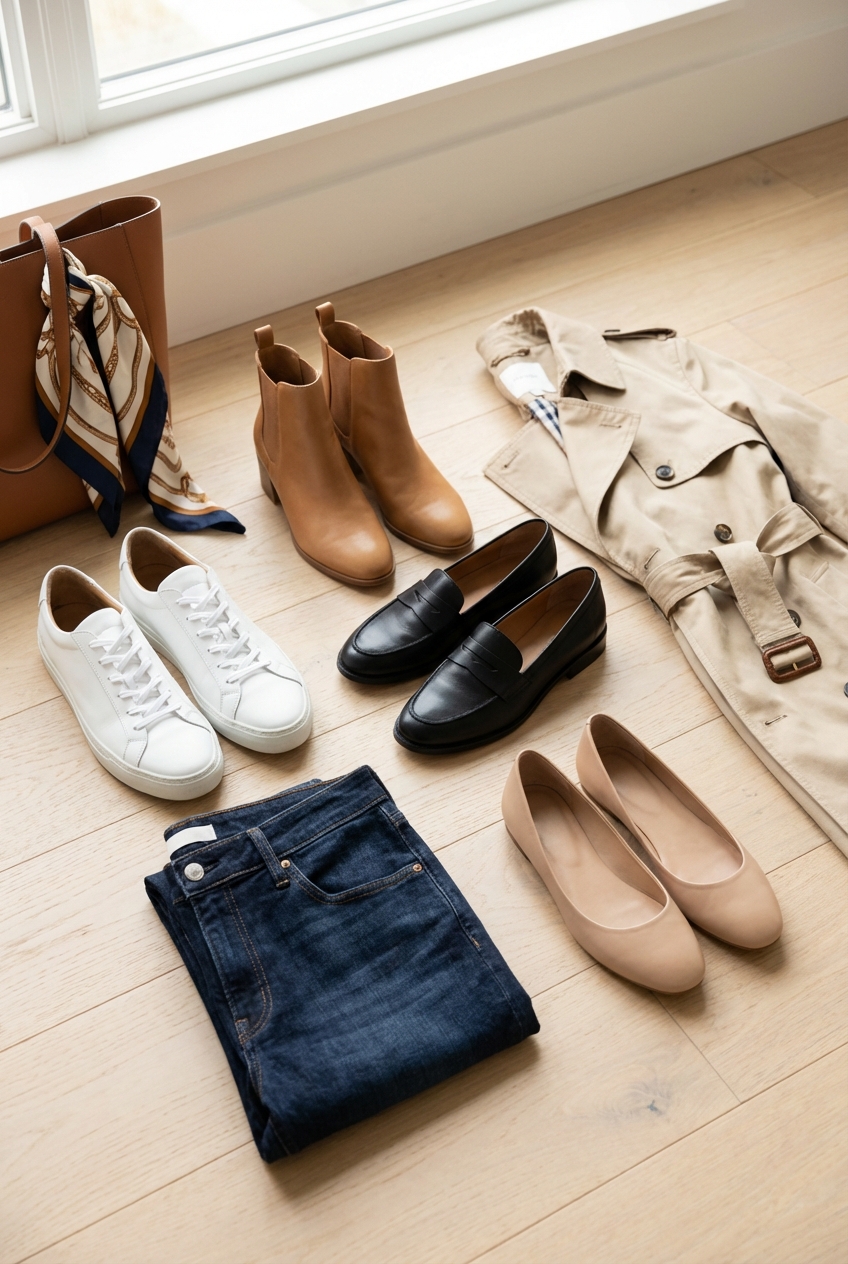
Footwear Fundamentals Shoes To Include In Your Capsule Wardrobe
Introduction
We have all experienced the specific frustration of standing before a closet full of boxes, yet feeling like we have absolutely nothing to put on our feet. You might have a pair of teetering stilettos bought for a wedding five years ago or trendy sneakers that looked great on a mannequin but hurt your arches. The goal of a capsule wardrobe is not just to have fewer things; it is to have the right things that work harder for you.
Building a footwear foundation requires a shift in mindset from “buying shoes” to “curating a rotation.” As a stylist, I often see clients spending small fortunes on impulsive purchases that don’t play well with their existing hemlines or lifestyle. A true capsule shoe collection relies on versatility, high-quality materials, and a cohesive color palette that grounds your entire look.
If you are ready to stop buying duplicates and start investing in pieces that offer a genuine return on investment, you are in the right place. We are going to break down the six non-negotiable pairs that cover every occasion, from the boardroom to Sunday brunch. If you want to see exactly how I style these specific pairs together for a cohesive aesthetic, make sure to check out the Picture Gallery at the end of the blog post.
1. The Elevated White Sneaker
The white sneaker has graduated from the gymnasium to the front row of fashion week. It is the anchor of modern casual style, capable of dressing down a suit or polishing up a pair of leggings. However, for a capsule wardrobe, not just any sneaker will do.
You need a low-profile silhouette. This means avoiding overly chunky “dad shoes” or athletic runners with heavy technical mesh. Look for a sleek, leather or vegan leather upper with minimal branding and a slim sole.
Leather is generally superior to canvas for a capsule wardrobe because it is easier to wipe clean and holds its shape longer. A leather sneaker looks intentional and expensive, whereas canvas can quickly look scruffy after a sudden rain shower.
Styling Rules of Thumb
- Hemlines: These work best with ankle-length trousers or denim that hits just above the tongue of the shoe.
- Volume: If you are wearing wide-leg trousers, a slim sneaker balances the visual weight.
- Socks: In warmer months, use no-show socks. Visible athletic socks can ruin the clean line unless you are intentionally going for a specific streetwear aesthetic.
Stylist’s Note: The Maintenance Factor
The most critical element of the white sneaker is that it must remain white. I always tell my clients to buy a dedicated leather cleaner and a “magic eraser” sponge when they buy the shoes. Scuffed, graying sneakers downgrade an outfit instantly, while pristine ones elevate it.
Common Mistakes + Fixes
- Mistake: Wearing actual running shoes with jeans.
- Fix: Keep your gym shoes in your gym bag. Your lifestyle sneaker should have a flat sole and a fashion-forward shape, usually with a rounder toe box.
2. The Structured Loafer
The loafer is the ultimate transitional shoe. It provides the polish of a heel without the discomfort, making it essential for women who commute or spend hours on their feet. It brings a slightly masculine, academic edge to feminine outfits, creating a balanced and sophisticated look.
When selecting a loafer for a capsule, focus on hardware and finish. A classic horsebit detail in gold or silver can act as jewelry for your feet. If you prefer minimalism, a penny loafer style offers a timeless, preppy appeal that never ages.
Fit is paramount here because loafers do not have laces to tighten. You want a snug fit initially, as leather will stretch and mold to your foot over time. If your heel slips out when you walk in the store, the shoe is too big, even if it feels comfortable in the toes.
Styling Rules of Thumb
- The Ankle Gap: Loafers look best when you show a sliver of ankle. Pair them with cropped cigarettes pants or straight-leg denim.
- Textures: A patent leather loafer adds a nice contrast to matte fabrics like wool or denim.
- Socks: Don’t be afraid of a thin, mercerized cotton sock in a neutral tone for cooler months. It is a very chic, intentional look.
What I’d Do in a Real Wardrobe
If I were building a capsule from scratch, I would choose a black or deep oxblood leather loafer with a slight heel (0.5 to 1 inch). Completely flat loafers can be bad for your arches, and that tiny lift improves posture and lengthens the leg line just enough.
Common Mistakes + Fixes
- Mistake: Buying stiff, cheap leather that causes blisters.
- Fix: Invest in soft, high-quality calfskin. If you are on a budget, look for second-hand designer loafers rather than new high-street plastic versions. The comfort difference is non-negotiable.
3. The Classic Pointed-Toe Pump
Even if you work from home, a classic pump is a mandatory tool in your arsenal. It is the shoe you reach for when you need to feel powerful, dress up for a dinner, or attend a formal event. The objective here is longevity and line, not trendiness.
The silhouette should be a pointed or almond toe. A round toe can make the leg look shorter and the overall vibe more juvenile. A pointed toe extends the visual line of the leg, making you appear taller and leaner regardless of your actual height.
Stick to the “70mm Rule” for heel height. This is roughly 2.75 inches. It is the sweet spot where the shoe looks elegant and sexy, but you can still walk with a normal gait. Anything over 3.5 inches moves into “sitting shoe” territory, which has no place in a functional capsule wardrobe.
Styling Rules of Thumb
- Color: Black is the default, but a nude that matches your skin tone is equally important for leg-lengthening magic.
- Material: Suede is softer and more comfortable quickly, but leather is more durable against weather. Choose based on your climate.
- Pants Length: Ensure your trousers are hemmed to hover half an inch off the floor when wearing these heels.
Stylist’s Note: Buying for Comfort
Always shop for pumps in the late afternoon. Your feet swell throughout the day. A shoe that fits perfectly at 10:00 AM might be excruciatingly tight by 6:00 PM. Sizing up half a size and adding a gel insole is a pro trick for all-day comfort.
Common Mistakes + Fixes
- Mistake: Buying a platform pump for a classic look.
- Fix: Platforms date quickly and can look clunky. Stick to a single-sole pump. It is timeless and much more versatile for formal events.
4. The Everyday Ankle Boot
For fall, winter, and unpredictable spring days, the ankle boot is your workhorse. This shoe needs to be tough enough to handle pavement but sleek enough to wear to a client meeting.
The most versatile style is a Chelsea boot or a sleek zip-up boot with a block heel. The block heel provides stability for walking on grate or cobblestones. Aim for a shaft height that hits about two inches above your ankle bone. This height is critical for seamless layering under jeans.
Avoid overly wide shafts. A boot that hugs the ankle creates a continuous line. If the boot gapes open around your leg, it can ruin the silhouette of your pants and allow cold air to sneak in.
Styling Rules of Thumb
- The Tuck vs. The Crop: Skinny jeans can be tucked in, but straight-leg jeans should fall over the boot shaft.
- Dresses: Ankle boots pair beautifully with midi dresses. The gap between the top of the boot and the hem of the skirt balances the look.
- Color Continuity: If you wear a lot of black tights, get black boots. This makes your legs look miles long.
What I’d Do in a Real Wardrobe
I prioritize a rubber sole or a leather sole with a rubber “topy” added by a cobbler. Leather soles can be slippery and absorb water. For a capsule boot, function is just as important as form. I would choose a pebbled leather over smooth leather, as it hides scuffs much better.
Common Mistakes + Fixes
- Mistake: A shaft that is too short (a “shootie”).
- Fix: Ensure the boot covers the ankle bone completely. Anything lower cuts the foot off visually and often causes pant hems to get caught on the back of the shoe.
5. The Strappy Sandal
When the temperature rises or a formal event calls for something lighter than a pump, the strappy sandal is key. This is the definition of “barely there” footwear. The goal is to let the foot and the outfit shine while the shoe plays a supporting role.
In a capsule wardrobe, you generally need one casual pair and one elevated pair, or one “unicorn” pair that does both. A block-heel sandal in a metallic tone (gold or silver) or a neutral nude is incredibly versatile. Metallics act as a neutral in the evening and pair with literally every print and color.
Avoid heavy embellishments, logos, or chunky hardware. Simple, thin straps are timeless. They look just as good with vintage denim shorts as they do with a silk slip dress at a wedding.
Styling Rules of Thumb
- Pedicures: This sounds obvious, but your feet are part of the outfit here. Grooming is essential when the shoe reveals this much skin.
- Strap Placement: Watch out for ankle straps if you have shorter legs, as they can cut the visual line. A mule style or a slingback can be more flattering.
- Formal vs. Casual: A flat leather slide is great for day, but a 2-inch heel transitions better to night.
Stylist’s Note: The Blister Factor
Strappy sandals are notorious for friction blisters. I advise clients to use a friction stick or anti-blister balm on their toes before wearing them for the first time. Also, break them in at home with socks on (yes, it looks silly) to soften the leather straps before a big event.
Common Mistakes + Fixes
- Mistake: Toes hanging over the edge (the “cliffhanger”).
- Fix: Sizing is critical. If your toes touch the edge, the shoe is too small. There should be about a 1/8th inch rim of sole visible beyond your toes for a high-end look.
6. The Statement Knee-High Boot
The final piece of the puzzle is the tall boot. This serves a dual purpose: warmth in deep winter and serious style impact. A knee-high boot makes a statement that says you put effort into your outfit.
For a classic capsule, you have two main routes: the flat riding boot or the heeled dress boot. The riding boot is preppier and more practical for walking. The heeled boot (think 70s style) is more fashion-forward. Both should be relatively fitted to the calf.
Material quality is most obvious in a tall boot because there is so much surface area. Cheap faux leather looks very plastic in this size. This is the item to save up for. A good pair of leather riding boots can last 10 to 15 years with proper care.
Styling Rules of Thumb
- Skirts: Tall boots look incredible under midi skirts where the hem covers the top of the boot. It creates a seamless, warm, and chic layer.
- Denim: Styling tall boots over jeans requires very skinny jeans or leggings to avoid bunching at the knee.
- Proportions: If you are petite, look for brands that offer specific shaft heights so the boot doesn’t hit the back of your knee when you sit.
What I’d Do in a Real Wardrobe
I would choose a rich cognac or chocolate brown for this category. While black is safe, brown leather develops a beautiful patina over time and adds warmth to the grays and blacks usually found in winter coats.
Common Mistakes + Fixes
- Mistake: Buying a wide-calf boot when you don’t need it, or vice versa.
- Fix: Measure your calf circumference at the widest part. Compare this to the boot’s shaft measurements online. A boot that gaps significantly looks ill-fitted, and one that squeezes is uncomfortable.
Finish & Styling Checklist
Before you consider your capsule complete, run your collection through this maintenance and styling checklist to ensure longevity.
- The Cobbler Test: immediately take new leather-soled shoes to a cobbler to have rubber soles added. This doubles the life of the shoe.
- Rotation Rule: Never wear the same pair of leather shoes two days in a row. Leather needs 24 hours to dry out from foot moisture. This prevents odors and cracking.
- Storage: Use shoe trees or stuff the toes with acid-free tissue paper when not in use. This prevents deep creases from forming across the toe box.
- Waterproofing: Spray all suede and leather items with a high-quality protectant spray before they ever leave the house.
- Heel Tips: Check the plastic tips on your heels regularly. If the metal starts to show, get them replaced immediately to avoid damaging the heel structure.
FAQs
How much should I spend on capsule shoes?
Budget according to “Cost Per Wear.” If you wear boots 150 days a year, a $400 pair costs less than $3 a wear. Spend more on everyday boots and comfortable pumps; spend less on seasonal sandals.
Do I really need black and nude pumps?
If you have to choose one, choose the one that matches your most common pants or your skin tone. However, having both covers 99% of formal styling needs.
How do I break in shoes without pain?
Wear them around the house with thick socks for 30-minute intervals. Heat helps mold leather, so the warmth from your feet combined with the socks will stretch them gently.
Can I include trendy shoes in a capsule?
A capsule is about foundation. Once you have these six essentials, you can add one “wild card” trend piece per season, but don’t rely on it for daily wear.
What if I can’t wear heels at all?
Swap the pumps for a pointed-toe flat or a dressy loafer. The goal is polish, not height. A sleek, pointed flat serves the same aesthetic purpose as a heel.
Conclusion
Curating a footwear capsule is not about depriving yourself of options; it is about eliminating the stress of decision fatigue. When you open your closet and see high-quality, well-cared-for shoes that you know fit perfectly and coordinate with your clothes, getting dressed becomes a joy rather than a chore.
Start with the pair you are missing most desperately—perhaps the versatile ankle boot or the crisp white sneaker—and build from there. Focus on fit, natural materials, and classic silhouettes. Your feet (and your wallet) will thank you in the long run.
Picture Gallery


