
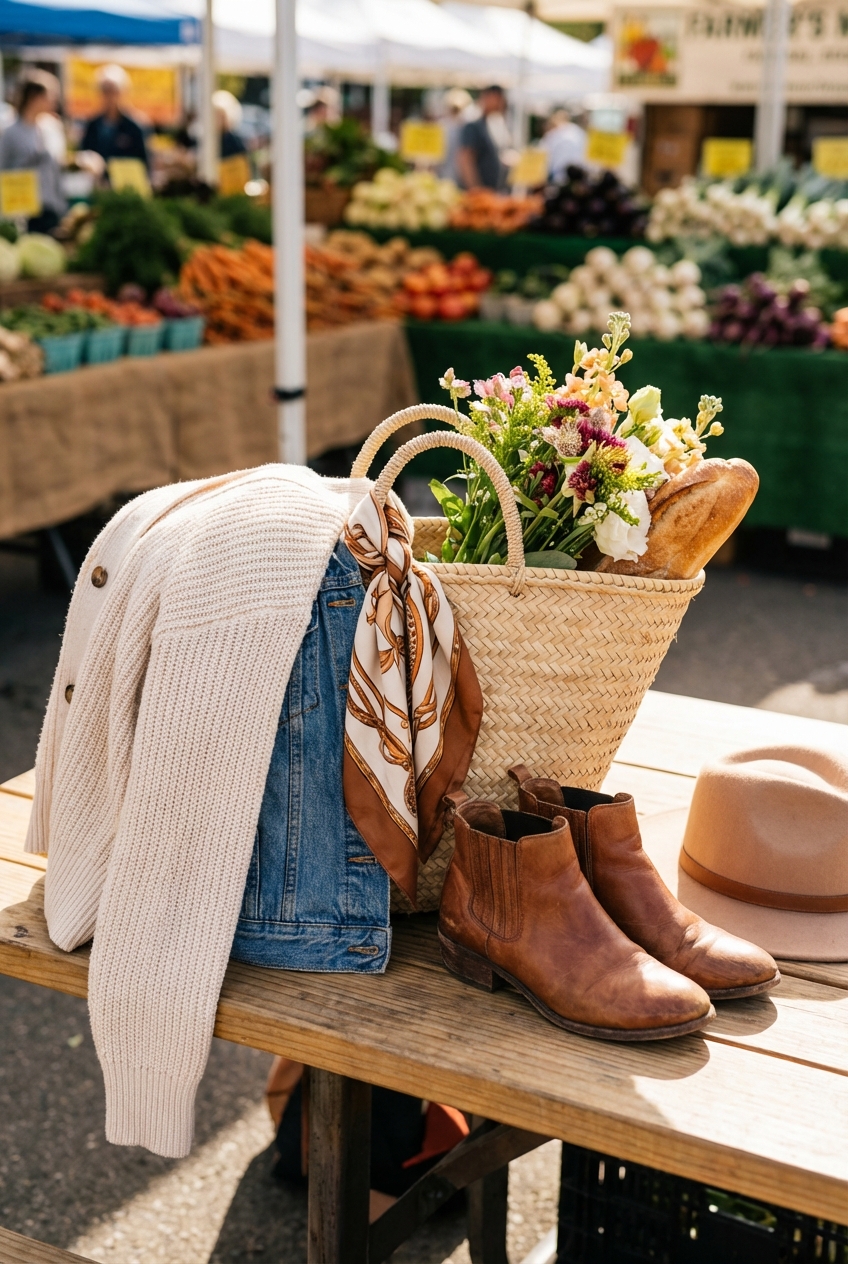
Fun Weekend Farmers Market Styles With Easy Layers Effortless And Chic For A Day Of Strolling
Introduction
There is a specific kind of romance attached to Saturday mornings spent at the farmers market. It is the promise of fresh espresso, the scent of artisan sourdough, and the vibrant explosion of locally grown dahlias. However, as a fashion stylist, I know that the effortless aesthetic we associate with these mornings actually requires a bit of strategy.
The weather during these early hours is often deceptive. You step out into a crisp, cool morning, but by the time you are hauling heirloom tomatoes and bouquets back to the car, the sun is high and the temperature has spiked. This thermal shift makes layering not just a style choice, but a functional necessity for your comfort.
My goal is to help you cultivate a look that bridges the gap between high-end casual and practical utility. We want outfits that look sophisticated enough for an impromptu brunch afterward, yet durable enough to handle dusty paths and heavy totes. For a visual guide on how these elements come together, be sure to check out the curated Picture Gallery at the end of this blog post.
1. The Foundation: Selecting the Right Denim and Trousers
The base of your market outfit sets the tone for the entire silhouette. For a day of walking and bending down to inspect produce, rigid, high-waisted denim is often my top recommendation. A vintage-wash straight leg offers a timeless, Parisian vibe that pairs beautifully with almost any top.
If you want to elevate the look beyond standard blue jeans, opt for wide-leg trousers in a heavy cotton twill or linen blend. These fabrics offer breathability while maintaining a structured shape that looks expensive. Avoid synthetic blends that cling; you want fabric that moves with you.
Length is critical here. Because farmers markets often take place in parking lots or grass fields, you want a hemline that hits right at the ankle bone or just below. Puddling trousers—pants that drag on the floor—are a major mistake in this environment as they will inevitably collect dust and dirt.
Designer’s Note: The Rise Matters
I always advise clients to stick to a high-rise fit for market days. When you are reaching for a crate of apples or leaning over a flower bucket, a high rise ensures everything stays tucked in and secure. It elongates the leg line and allows you to wear cropped layers without exposing skin unintentionally.
2. The Art of the Top Layer: Trenches, Shackets, and Blazers
The third piece is what transforms a basic outfit into a styled look. For the farmers market, the classic trench coat is unrivaled. It is lightweight, offers large pockets for small items like keys or cash, and instantly makes leggings or jeans look pulled together.
If a trench feels too formal, a “shacket” (shirt-jacket) in a wool blend or heavy flannel strikes the perfect weekend chord. Look for neutral tones like oatmeal, camel, or soft gray. These colors reflect sunlight and hide artisan flour dust better than stark black.
For a fashion-forward approach, an oversized blazer is excellent. However, ensure the fit is intentionally loose, not ill-fitting. You need enough room in the arms to wear a light knit underneath without the fabric pulling across the shoulders when you move.
Common Mistakes + Fixes
Mistake: Wearing a stiff leather moto jacket.
Why it fails: Leather is heavy, hot in the sun, and restricts arm movement when carrying bags.
The Fix: Swap it for a soft suede jacket or a utility field jacket with a drawstring waist. You get the texture without the restriction.
3. Strategizing Your Base Layers: Tees and Lightweight Knits
Beneath your coat or jacket, your base layer must be able to stand on its own. The moment the sun comes out, that top layer is coming off, so your t-shirt or tank needs to be pristine. I recommend high-quality Pima cotton or a silk-cotton blend for optimal temperature regulation.
Striped Breton tops are a cliché for a reason—they work. They add a graphic element that looks chic in photos and hides minor spills or wrinkles better than a solid white tee. If you prefer solids, ensure the neckline is durable; a stretched-out collar ruins the “luxury” aesthetic immediately.
For cooler months, a thin cashmere crewneck is ideal. Cashmere regulates body heat incredibly well, keeping you warm in the shade but breathing when you step into the sun. Stick to neutral colors so you can easily tie the sweater around your shoulders if it gets too warm.
What I’d Do in a Real Styling Appointment
If I were styling a client for a weekend getaway, I would pair a white ribbed tank top with a camel cashmere cardigan. I would instruct them to button only the middle button of the cardigan and half-tuck the tank into high-waisted denim. This creates a waistline while maintaining that relaxed, “off-duty model” vibe.
4. Footwear: Balancing Terrain with Trend
Footwear is where many farmers market outfits fail. You are likely walking on asphalt, gravel, or uneven grass. Stilettos or kitten heels are strictly forbidden; sinking into the mud is not a high-fashion statement.
A sleek, white leather sneaker is the most versatile option. Brands that offer a minimalist profile without heavy logos look the most sophisticated. They pair effortlessly with both dresses and denim, providing the arch support needed for an hour or two of strolling.
If you want a dressier look, opt for a chunky loafer or a flat Chelsea boot. The thick sole protects the leather upper from getting scuffed by gravel. Ensure your socks are intentional—either invisible no-show socks or a crisp, ribbed crew sock that complements your trousers.
Pro-Tip on Materials:
Avoid suede footwear if the forecast shows even a hint of rain or if the market is on grass. Morning dew can ruin a pair of suede boots in minutes. Stick to treated leather or canvas that can be easily wiped down when you get home.
5. The Vessel: Selecting the Perfect Market Tote
Your bag is the ultimate accessory in this scenario. It is a functional tool that dominates the visual space of your outfit. A structured straw or raffia tote is the gold standard for high-end market style. It holds its shape when you set it down to pay, which prevents your produce from rolling away.
Look for a tote with leather handles. Straw handles can be scratchy against your skin and tend to fray under the weight of heavy produce. Leather straps add a touch of luxury and durability.
The “double bag” strategy is often necessary. Carry a small crossbody bag for your phone, wallet, and keys. This keeps your hands free to shop and ensures your valuables don’t get buried under heads of lettuce in your large tote.
Scale and Proportion Rules:
If you are petite (under 5’4″), avoid massive, horizontal boat totes that widen your frame. Opt for a vertical bucket style instead. If you are tall, you can pull off the oversized, architectural baskets that make a dramatic statement.
6. Accessories: Practicality Meets Polish
Jewelry at the market should be minimal but present. A pair of thick gold hoops or a simple chain necklace adds just enough shine to show you made an effort. Avoid stackable rings that might slip off if your hands get cold or if you are washing fruit samples.
Sunglasses are non-negotiable. Not only do they protect your eyes, but they also serve as a headband to push hair back when it gets breezy. An oversized tortoiseshell frame creates an instant glamorous look, even if you are wearing zero makeup.
Headwear serves a dual purpose: sun protection and style. A felt fedora is lovely for autumn, but a simple baseball cap in a neutral tone (navy, forest green, or beige) is currently very on-trend. It dresses down a trench coat and hides “second-day hair” perfectly.
Styling Lesson: The Scarf Trick
Tie a silk square scarf around the handle of your market tote. It adds a pop of color to a neutral outfit. More importantly, if the wind picks up or your neck gets cold, you can untie it and wear it. It is a functional accessory that looks incredibly chic.
Finish & Styling Checklist
Before you head out the door, run through this quick mental checklist to ensure your look is cohesive and functional.
The Sit Test: Can you squat down comfortably? If your jeans cut into your waist, change them. You will be bending often.
The Layer Check: Does your outfit still look good if you remove the jacket? Ensure your base layer is wrinkle-free and fitted.
Bag Hardware: Do you have a hands-free option for your wallet? Trying to dig for a credit card while holding a coffee and flowers is stressful.
Sole Support: Are your shoes flat and stable? Verify that the soles have some grip for potentially slick pavement.
Fabric Weight: Are you wearing too many synthetics? Stick to natural fibers (cotton, linen, wool) to prevent overheating.
The “Third Piece”: Do you have a jacket, scarf, or hat? That third element is what takes a look from “getting dressed” to “styled.”
FAQs
What should I wear if it rains?
Swap the trench for a waxed cotton jacket (like a Barbour style) and wear waterproof Chelsea boots. Avoid umbrellas in crowded markets as they poke other shoppers; a hood or a rain hat is much more polite and practical.
Can I wear a dress to the farmers market?
Absolutely. A midi-length floral dress with a denim jacket and white sneakers is a classic look. Avoid maxi dresses that sweep the ground, and avoid mini skirts that might be revealing when you bend over to look at lower shelves.
How do I mix patterns without looking messy?
Stick to the rule of scale. If your top has a thin, subtle stripe, your scarf or bag can have a larger, bolder print. Keep one pattern neutral (like black and white) to anchor the look. If you are unsure, stick to textures instead of prints.
What is the best color palette for fall markets?
Earth tones are foolproof. Rust, olive green, camel, and cream look expensive and photograph beautifully against the backdrop of pumpkins and autumn leaves. Navy is a great alternative to black if you want something softer.
Conclusion
Styling yourself for the farmers market is about respecting the environment while expressing your personal taste. It is one of the few occasions where functionality and high fashion can overlap seamlessly. By focusing on natural fabrics, strategic layering, and sensible footwear, you create a look that is both comfortable and effortlessly chic.
Remember that the goal is to look as though you threw the outfit together in five minutes, even if it took twenty. That is the secret to high-end casual style. Enjoy your weekend strolling, coffee sipping, and flower gathering in style.
Picture Gallery


