
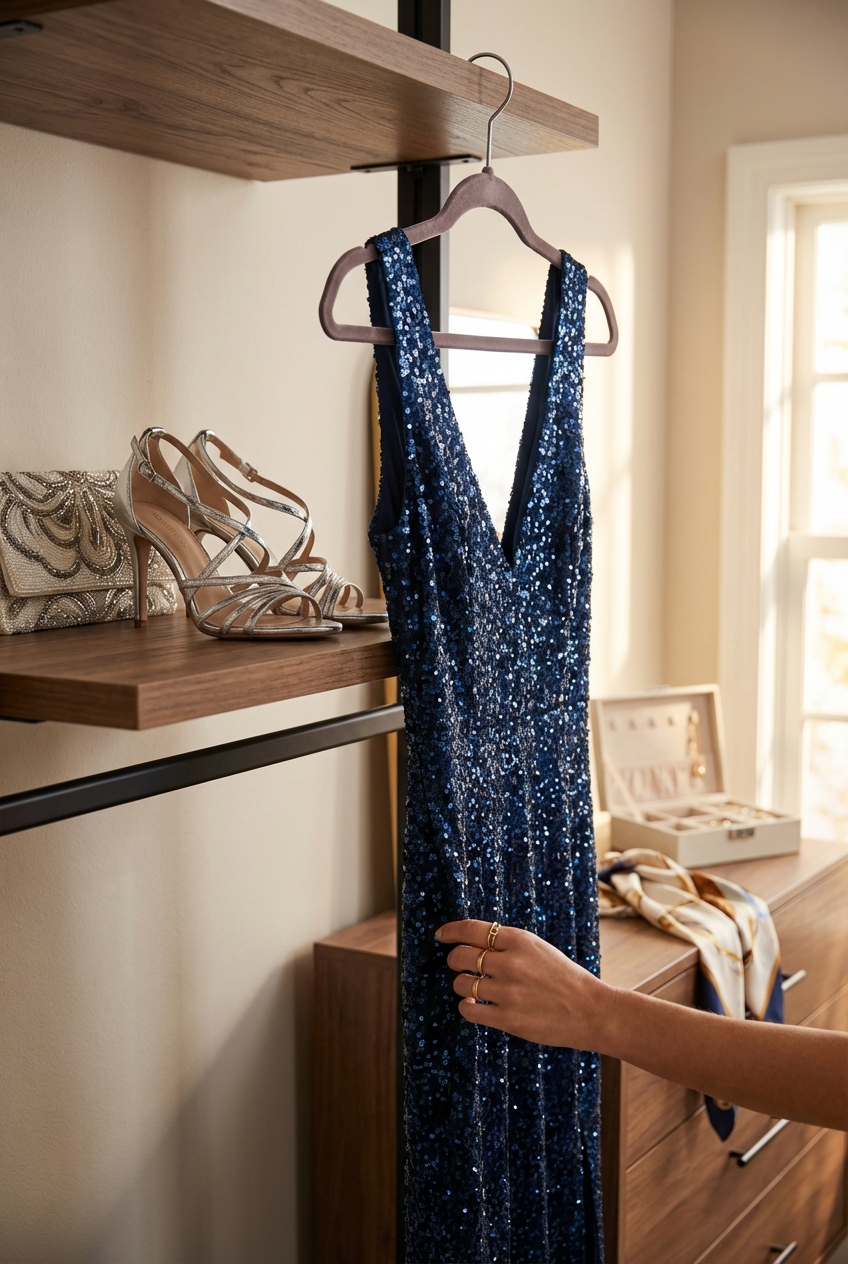
Glamorous Evening Gowns For Black Tie Galas
The arrival of a heavy cardstock envelope with “Black Tie” embossed in gold script often triggers two immediate emotions. First, there is the excitement of an elegant evening out, followed closely by the sheer panic of finding something to wear. In my years styling clients for the Met Gala, charity balls, and high-stakes weddings, I have learned that navigating formal wear is less about following trends and more about understanding architecture.
Finding the perfect gown is not unlike designing a room; you must consider proportion, lighting, and how the materials will function in the space. You need a garment that commands presence without overwhelming your frame, and it must withstand hours of sitting, standing, and dancing. The stakes feel high because, unlike a cocktail party, black tie implies a strict code of conduct and aesthetic uniformity.
However, once you understand the mechanics of fit and fabric, the process becomes a creative joy rather than a chore. If you are looking for immediate visual inspiration, make sure to check out the curated collection of glamorous looks in the Picture Gallery at the end of this blog post.
Decoding the Black Tie Dress Code
The most common question I receive from clients is, “How strict is ‘Black Tie’ really?” In the world of high-end fashion, definitions matter. A true Black Tie event requires a floor-length gown. While “Black Tie Optional” might allow for a very dressy cocktail tea-length dress, a formal gala demands a hem that reaches the ground.
When I style a client, I treat the dress code as the foundational blueprint. Deviating too far—like wearing a short dress or a casual fabric—is the equivalent of putting a folding chair in a formal dining room. It disrupts the visual harmony of the event.
However, “floor-length” has nuances. You have options ranging from a column gown that barely grazes the floor to a full ballgown with a train. The key is ensuring the silhouette matches the venue. A massive tulle skirt might be difficult to maneuver in a crowded ballroom, while a sleek crepe sheath offers easier mobility for networking events.
Designer’s Note: The “Grazing” Rule
A common amateur mistake is hemming a dress so it hits the top of the shoe. This makes the gown look like it shrank in the wash. In professional styling, we hem the dress to “graze” the floor—specifically 0.5 to 1 inch off the ground while you are wearing your heels. This ensures the shoe is mostly hidden, creating a seamless, elongated vertical line.
Fabric Physics: Weight, Drape, and Durability
In interior design, you select upholstery based on durability and texture; in fashion, we select gown fabrics based on “hand” and “drape.” The material of your gown dictates how it hangs on your body and how it photographs.
For black tie galas, avoid jersey or cheap cotton blends. They lack the structural integrity needed for formal evening wear. Instead, look for fabrics that absorb or reflect light intentionally.
- Silk Crepe and Cady: These are matte fabrics with a heavy drape. They are excellent for skimming over curves without clinging. Because they absorb light, they are incredibly slimming in photographs.
- Velvet: Perfect for winter galas. Velvet is rich, tactile, and has a natural depth that looks expensive. It is also heavier, providing natural smoothing without needing excessive shapewear.
- Chiffon and Tulle: These create movement and romance. They are lightweight and breathable, making them ideal for summer events or crowded, warm venues.
- Brocade and Jacquard: These are stiff, structured fabrics often used in interior design. They are excellent for A-line gowns because they hold their shape independently of your body, which can be very forgiving.
Lighting Reality Check
Galas usually have dim ambient lighting mixed with harsh flash photography. Satin is risky because it reflects light aggressively, often highlighting every seam, wrinkle, and soft spot on the body. If you choose satin, ensure it is a high-weight silk or strictly lined to prevent puckering.
The Architecture of Fit: Measuring for Success
A gown is only as good as its tailoring. When I work on a project, I assume every garment will need at least two rounds of alterations. Off-the-rack gowns are made for a standardized mannequin, not a real human body.
The most critical fit point is the torso. The bodice of your gown must fit like a second skin. If the bodice is loose, you will spend the entire night pulling it up, which ruins your posture and your confidence. Conversely, if it is too tight, it will create “spillover” at the underarms.
Here are the specific measurements and adjustments to discuss with your tailor:
- The Strap Length: Most straps are too long. Shortening them by even half an inch can lift the entire bustline and eliminate gaping at the neckline.
- The Waist Stay: This is a secret weapon in high-end couture. It is an internal grosgrain ribbon hook-and-eye belt inside the dress. It anchors the weight of the gown to your waist so the dress doesn’t hang from your shoulders or chest.
- The Hem Break: As mentioned earlier, bring the exact shoes you plan to wear. Do not guess. A heel height difference of two inches changes the entire silhouette.
Common Mistake + Fix: The Zipper Buckle
The Issue: The zipper bunches up or waves along the spine, ruining the back view.
The Fix: This usually means the torso length of the dress is too long for your body. A skilled tailor can lift the skirt at the waistline to smooth out the zipper.
Foundation Engineering: Undergarments and Shapewear
Think of undergarments as the framing and insulation of a house—nobody sees them, but the structure collapses without them. You cannot wear everyday lingerie with a black tie gown.
For evening wear, seamlessness is the priority. Laser-cut edges are non-negotiable to avoid Visible Panty Lines (VPL). If your dress has a high slit, you need a bodysuit or high-cut shaping brief to prevent a wardrobe malfunction.
The Tape Strategy
Fashion tape is essential, but most people use it wrong. Do not apply it to skin that has just been moisturized; it will slide right off. Clean the skin with rubbing alcohol first to remove oils. Place tape at the neckline to prevent gaping and at the top of the slit to anchor the fabric to your thigh.
For backless gowns, do not rely on sticky silicone bras if you plan on dancing. Sweat will break the adhesive bond. Instead, look for a “low back” converter strap or have your tailor sew bra cups directly into the lining of the gown.
Color Theory and Photography
Choosing a color for a black tie gala is different than choosing a paint color for a wall because the “lighting” changes as you move through the event. You must consider how the color reads in low light and under camera flashes.
Black is the safest and most classic choice. It is universally appropriate and always reads as formal. However, it can sometimes disappear in photos if the venue has dark backgrounds. If you wear black, ensure the gown has texture (like beading, lace, or velvet) or an interesting silhouette to separate you from the background.
Jewel tones are my “go-to” for clients who want to stand out. Emerald green, sapphire blue, and deep burgundy read beautifully on almost all skin tones. They look vibrant in flash photography but remain sophisticated in candlelight.
Designer’s Note: The White Tie Danger
Unless the invitation specifically says “White Tie” (which is even more formal) or you are the bride, be very careful with white or pale silver. In a dark room, pale silver can photograph as white. You never want to look like you are crashing a wedding. Stick to saturated colors or metallics like gold and bronze.
Styling the Look: Accessories and Proportions
The final polish comes from accessories. In interior design, we use the “rule of three” for decor. In fashion styling for black tie, I prefer the “rule of one.”
If you are wearing a gown with heavy beading or a complex neckline, the dress is the statement. Skip the necklace and opt for simple diamond or pearl studs. If the dress is a simple black crepe column, that is when you bring out the statement chandelier earrings or a bold collar necklace. Never do both.
The Clutch Equation
Your evening bag must be functional. It needs to hold your phone, lipstick, breath mints, and ID. If it is too small, you will end up holding your phone in your hand all night, which ruins photos. Avoid bags with shoulder straps; they ruin the line of the gown and damage delicate fabrics like lace. A hard-shell minaudière or a soft velvet pouch is best.
Shoe Logic
If your gown has a slit, your shoes are a focal point. Wear a strappy sandal or a jeweled pump. If your gown is a full ballgown with no slit, nobody will see your shoes. In this specific case, I often advise clients to wear a comfortable block heel or even a platform wedge for stability. Comfort allows you to stand taller and look more confident.
Common Styling Mistakes + Concrete Corrections
Over the years, I have seen many beautiful gowns ruined by poor styling choices. Here is a quick troubleshooting guide.
Mistake: Wearing a Shawl
Many women worry about being cold and bring a pashmina. It often looks messy and downgrades the formality of the look.
Correction: Wear a faux fur stole, a structured capelet, or a velvet opera coat. These are structured pieces that add to the outfit rather than covering it up.
Mistake: The Wristwatch
An Apple Watch or a bulky fitness tracker kills the vibe of a black tie gown immediately.
Correction: Leave the tech at home. If you must check the time, use a delicate cocktail watch that looks like a bracelet, or simply check your phone discreetly.
Mistake: Hair Down with High Necks
If your dress has a high neck, halter, or heavy embellishment near the face, wearing your hair down creates visual clutter.
Correction: Sweep the hair up into a chignon or high pony. This elongates the neck and lets the dress detail shine.
Finish & Styling Checklist: What I’d Do in a Real Project
Before I send a client out the door, we run through this final checklist. I recommend you do the same 24 hours before your event.
The “Sit Test”
Put the dress on and sit down on a low chair for 5 minutes. Does the boning dig into your ribs? Does the zipper split? Does the slit open too high? It is better to know this now than at the dinner table.
The Steaming Protocol
Never iron a gown; you risk melting the synthetic fibers or crushing the pile of velvet. Use a vertical steamer. Steam from the inside of the garment to relax the fibers without water spotting the exterior.
The Emergency Kit
Pack a small Ziploc bag in your partner’s pocket or your clutch with:
- Two safety pins (one small, one large).
- Three strips of double-sided fashion tape.
- A blister plaster for your heels.
- A blotting sheet for facial shine.
Static Guard
Long gowns generate static electricity as they rub against your legs. Spray an anti-static spray on the inside of the skirt and on your tights or shapewear. If you don’t have spray, rubbing a dryer sheet on your legs works in a pinch.
FAQs
Can I wear a dress with pockets to a black tie gala?
Absolutely. In fact, I highly recommend it. Many modern formal gowns include hidden pockets. They are excellent for posing (gives your hands something to do) and practical for holding a lipstick. Just ensure you don’t overload them, or it will distort the hip line.
Is it acceptable to wear a jumpsuit?
Yes, but it must be an evening jumpsuit. It should be made of formal fabric like silk, crepe, or velvet, and usually features some embellishment or a dramatic silhouette (like wide palazzo legs). A cotton or linen jumpsuit is not appropriate.
How do I handle a train in a crowded room?
If your dress has a train, look for a “bustle” or a finger loop. A finger loop is a small ribbon at the end of the train that you loop around your finger to lift the fabric off the floor while walking or dancing. If the dress didn’t come with one, a tailor can add a bustle loop easily.
What if I’m cold?
As mentioned in the mistakes section, structure is key. A tuxedo blazer draped over the shoulders (the “shrobing” look) is very chic and modern. Avoid cardigans or denim jackets at all costs.
Conclusion
Attending a black tie gala is a rare opportunity to step outside the mundane and inhabit a more glamorous version of yourself. It is about respecting the occasion and contributing to the beauty of the evening.
When you focus on the fundamentals—precise tailoring, high-quality fabrics, and the correct foundation garments—you stop worrying about the dress and start enjoying the experience. The most stylish woman in the room is always the one who looks comfortable in her own skin, supported by a gown that fits her life and her body perfectly.
Picture Gallery


