
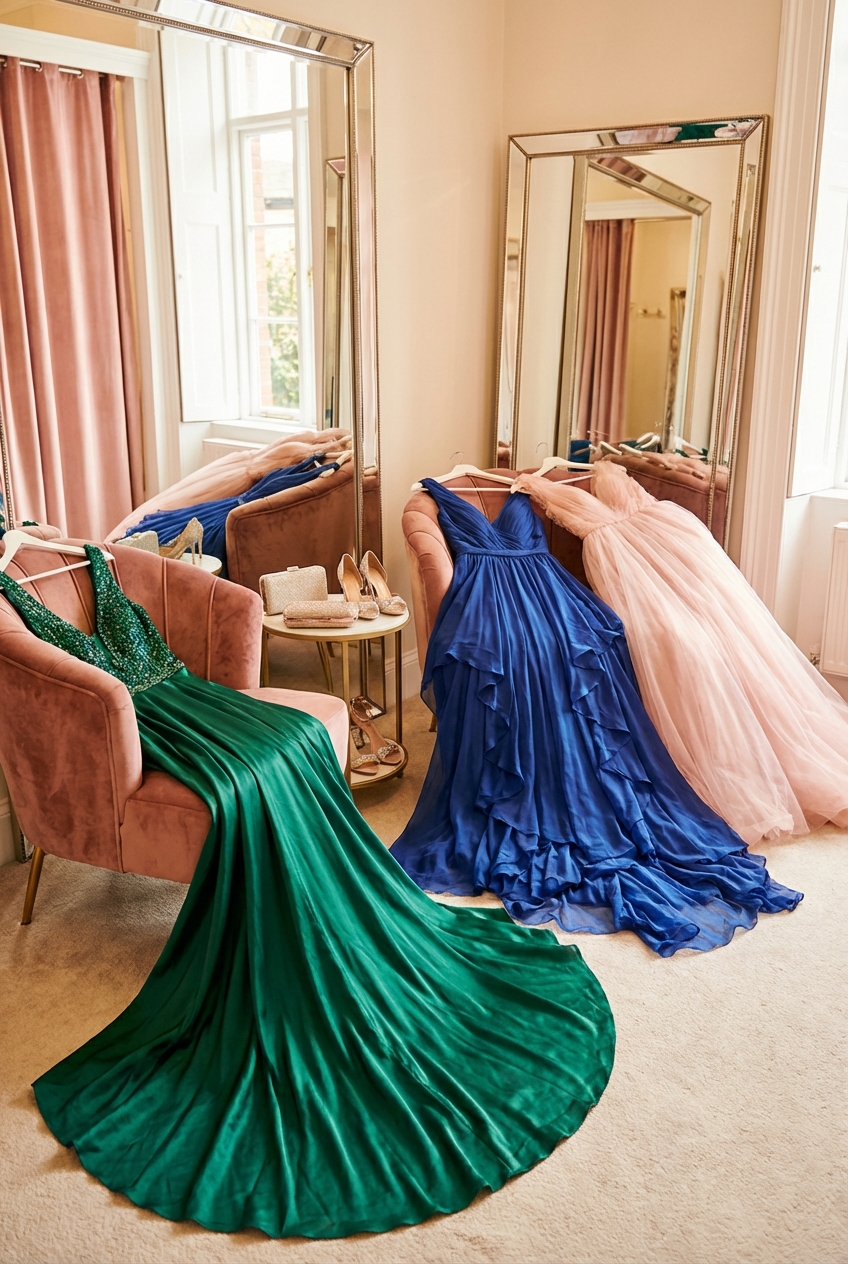
Glamorous Prom Dresses With Dramatic Trains
There is a specific moment of silence that happens when you step onto the red carpet—or in this case, the promenade—wearing a gown that trails elegantly behind you. In my years of styling clients for high-stakes events, nothing commands attention quite like a dramatic train. It creates an elongated silhouette that immediately signals elegance, transforming a standard formal look into a true fashion moment.
However, choosing a dress with a train requires more strategy than simply picking a pretty fabric. I once worked with a client who chose a stunning, cathedral-length sequined gown but failed to account for the weight of the fabric during the dance. Without the proper bustle mechanics, she spent the entire evening holding 15 pounds of dress in her arms, unable to hold a drink or her date’s hand.
We want you to have the drama without the distress. This guide breaks down exactly how to select, style, and manage a prom dress with a train so you can glide through the night effortlessly. We have curated a stunning picture gallery at the end of this blog post to inspire your final choice.
1. The Architecture of the Train: Choosing Your Length
Not all trains are created equal, and the length you choose dictates your mobility for the entire evening. In fashion design, we categorize trains by how far they extend from the heel. For prom, you generally want to stay within the “Sweep” or “Court” range unless you are prepared for significant management.
A Sweep Train is the most practical choice for a high-energy event like prom. It extends about six to ten inches along the floor. It provides that glamorous “puddling” effect in photos but is short enough that you won’t trip over it constantly. It adds volume to the hem without adding excessive weight.
A Court Train extends about two feet behind you. This is where the drama really begins. It demands attention and looks incredible on stairs. However, this length requires you to be hyper-aware of your surroundings. You cannot simply back up or turn around quickly without adjusting the fabric.
Designer’s Note: If you are petite (under 5’4″), be very careful with wide, heavy trains. They can visually shorten your frame. I recommend a detachable overskirt instead. This gives you the dramatic train for photos, but you can remove it to reveal a sleek, fitted column dress for the actual party.
2. Fabric Physics: Weight, Movement, and Snags
The material of your gown determines how the train behaves as you move. A heavy satin train will glide smoothly and lie flat, creating a clean, architectural line. It is excellent for concealing footwork but can be heavy to drag around for four or five hours.
Tulle and organza trains create a fairytale, ethereal vibe. They float beautifully and look light as air. However, they are magnets for high heels. If someone steps on a satin train, it might get dirty; if someone steps on a tulle train with a stiletto, it will rip immediately.
Pay close attention to embellished trains. If your dress has sequins or beading all the way to the hem, the train will be significantly heavier. Furthermore, beaded hems often catch on the delicate fabric of the underskirt or even your own stockings.
Common Mistakes + Fixes:
- Mistake: Choosing a soft chiffon train for an outdoor photo session.
- Fix: Soft fabrics snag on concrete and grass instantly. If you plan to take photos outside, bring a sheer drop cloth or a designated “hem lifter” helper to keep the fabric off the ground until the shutter clicks.
3. The Mechanics of the Bustle: A Non-Negotiable Necessity
Unless you have a very short sweep train, you need a bustle. A bustle is a sewing alteration that lifts the train off the floor and attaches it to the back of the dress, allowing you to dance without tripping. Many prom dresses do not come with a bustle installed; you must have a tailor add one.
There are two main types of bustles suitable for prom gowns. The American Bustle (or over-bustle) lifts the train up and hooks it to the outside of the waistline. This creates cascading layers of fabric down the back. It is great for ballgowns with full skirts.
The French Bustle (or under-bustle) folds the fabric inward and secures it underneath. This creates a puffier, more voluminous hemline but keeps the back of the dress looking smooth. This is often preferred for satin or mermaid silhouettes.
What I’d do in a real project:
- I always ask the tailor to add a “finger loop” to the underside of the train’s hem.
- This is a small ribbon loop that fits around your wrist or finger.
- It allows you to carry the train elegantly while walking to the car or entering the venue, giving you total control before you bustle it for the dance floor.
4. Analyzing the Silhouette: Mermaid vs. A-Line Trains
The shape of the dress changes how the train impacts your body proportions. A Mermaid or Trumpet silhouette with a train is one of the most glamorous looks available. The train usually flares out from the knee. This style restricts your stride length, so you must practice walking in it. The train here acts as an anchor; you have to “kick” the fabric forward with every step to avoid stepping on the front hem.
An A-Line or Ballgown train flows from the waist. These are much easier to walk in because the fabric is not tight against your legs. The train simply follows you. This style is generally more comfortable for a long night of sitting, standing, and eating.
For a modern, high-fashion approach, look for Watteau trains. These attach at the shoulders or upper back rather than the waist. They create a cape-like effect that is incredibly regal. The benefit here is that the train doesn’t pull on your waist or hips, making the dress feel lighter to wear.
Designer’s Note: When wearing a fitted dress with a long train, undergarments are critical. The weight of the train can pull the back of the dress down. Ensure you have a long-line bodysuit or a dress with a built-in corset structure to keep the bodice firmly in place against the drag of the fabric.
5. Shoe Strategy for Floor-Sweeping Gowns
When you have a train, your shoes are mostly hidden, but they are technically the most important tool you have. The height of the heel must be decided before your first alteration appointment. You cannot switch from 4-inch heels to flats halfway through the night without dragging your expensive hem on the floor.
Avoid shoes with intricate rhinestones, buckles, or pronged settings on the toe box or ankle strap. These sharp elements will catch on the inner lining of your train every time you take a step. I have seen clients rip the lining of their expensive gowns within ten minutes because their shoes acted like Velcro against the fabric.
Opt for a satin or smooth leather pump. If you need height but want comfort, a platform sneaker is actually a stylist’s secret weapon for prom. Since the train covers your feet, you can wear a comfortable 3-inch platform sneaker that gives you height without the arch pain of a stiletto.
Pro-Level Rule of Thumb:
The front hem of your dress should hover exactly 1 inch off the ground while you are wearing your shoes. This prevents you from stepping on the front while allowing the back train to sweep seamlessly.
6. Navigating the Venue: Logistics of the Look
Living with a train requires a different set of movement rules. You cannot walk backward. If you need to retreat, you must turn in a wide circle. Walking backward is the number one way girls trip and rip their bustles.
Stairs present a unique opportunity for photos but a hazard for walking. When going up stairs, you must lift the front of your dress. The train will trail safely behind you. When going down stairs, you need to be extremely careful. The train will rush forward as you descend. You must gather the train in one arm or have your date assist you.
Getting in and out of cars requires the “Scoop and Sit” method. Gather the entire skirt and train into your arms, turn your back to the open car seat, sit down first, and then rotate your legs into the car. Never try to step into a car head-first while wearing a train; the fabric will get caught in the door mechanism.
Designer’s Note: Be wary of rolling office chairs or stools at the after-party. Trains love to get caught in wheels. Always sweep the fabric to your lap before sitting on anything with casters.
Finish & Styling Checklist
Before you head out the door, run through this final stylist check to ensure your dramatic look stays polished all night.
The “High-End” Review:
- The Shake Test: Put the dress on and shake your hips. Does the bustle hold? If it feels loose, reinforce it now.
- The Static Check: Trains generate a lot of static electricity as they drag. Spray the inside of the lining with anti-static spray to prevent it from bunching up between your legs.
- The Wrinkle Release: Steam the train last. It will wrinkle in the car, but starting with a crisp hem makes a difference for the first round of photos.
- The Emergency Kit: Pack huge safety pins (diaper pins are best for heavy fabrics) in your clutch. If a bustle point breaks, a standard safety pin will bend. You need heavy-duty hardware.
- The Bathroom Plan: You cannot go to the bathroom alone in a cathedral train. Bring a friend to hold the fabric while you navigate the stall.
FAQs
Q: How much does it cost to hem a dress with a train?
A: Hemming a dress with a train is significantly more expensive than a standard hem. A tailor cannot just cut a straight line; they have to reshape the curve to ensure it transitions smoothly from the front to the back. Expect to pay between $80 and $150 depending on the number of layers (lining, tulle, satin) that need to be cut.
Q: Can I wear a train if I plan on dancing all night?
A: Absolutely, provided you have a bustle. Without a bustle, you will end up holding the dress in your hand all night, which ruins your posture and gets tiring. If you are a serious dancer, consider a dress with a detachable train/overskirt so you can remove the bulk entirely after the slow dances.
Q: What if someone steps on my train?
A: It will happen. Do not panic. Most trains are durable enough to withstand a shoe or two. If you feel a tug, stop moving immediately. Do not pull forward, or you will rip the fabric. Turn around, smile, and let the person step off. If the bustle loop snaps, use the safety pins from your emergency kit.
Q: Does a train work for short girls?
A: Yes, but scale is key. A massive cathedral train can swallow a petite frame. Look for a modified court train or a semi-cathedral length. The continuous line of fabric actually elongates the legs, making you look taller, provided the front hem is tailored perfectly to your shoe height.
Conclusion
Choosing a prom dress with a dramatic train is a bold style declaration. It speaks to a love of fashion history and a desire to make the evening feel larger than life. While it requires a bit more logistical planning regarding shoes, alterations, and movement, the visual payoff is undeniable.
When you look back at your photos, that sweeping curve of fabric on the staircase or that perfect silhouette on the dance floor will be worth the extra effort. Remember to stand tall, walk with intention, and let the dress do the work. You aren’t just wearing a dress; you are orchestrating an entrance.
Picture Gallery


