
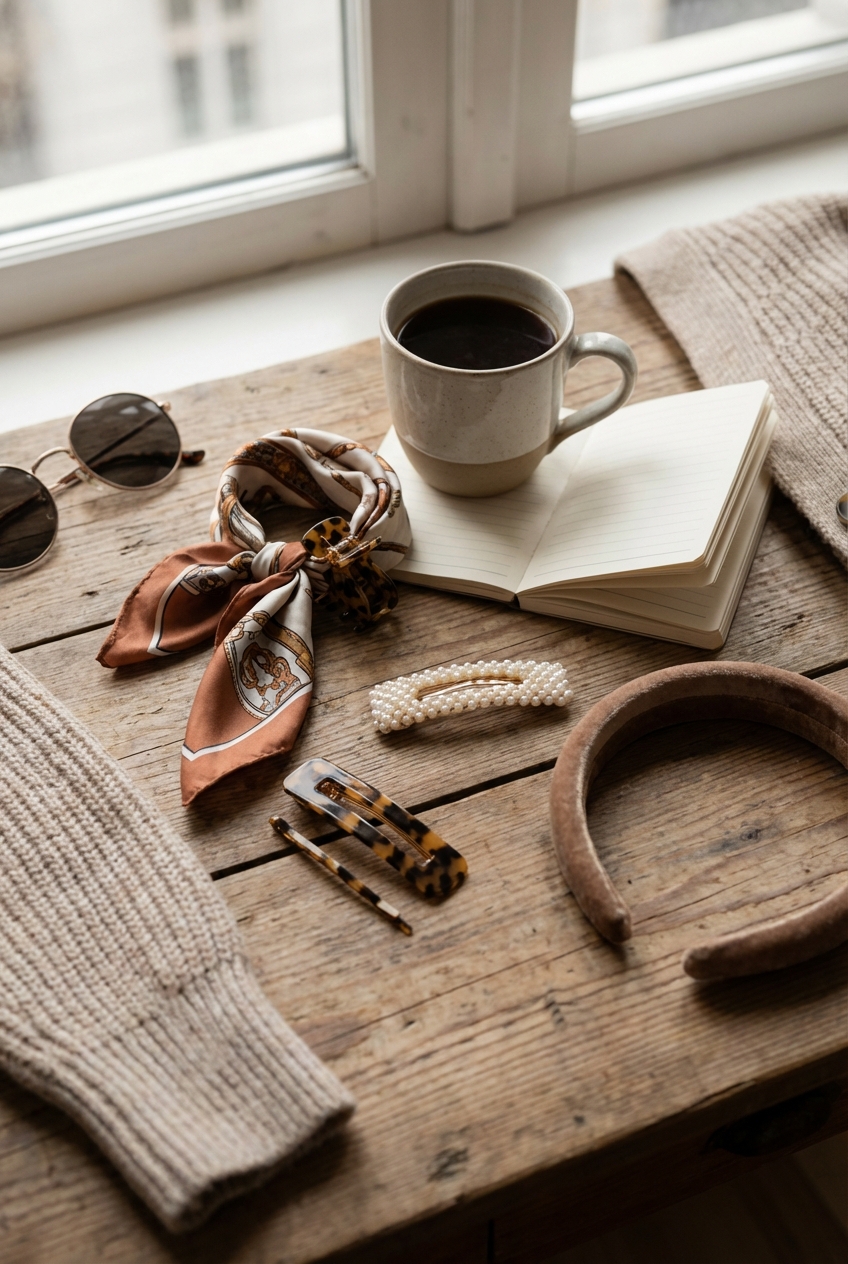
Hair Accessories For Short Hair Ideas Youll Love
The biggest myth in the fashion industry is that short hair limits your styling options. As a stylist who has worked on countless editorial shoots and runway shows, I have seen the exact opposite. Short hair—whether it is a textured pixie, a blunt bob, or a lob—is actually the perfect canvas for accessories. When you take away the length, the focus shifts entirely to the structure of the face and the architecture of the accessory itself.
I remember a specific campaign shoot last season where the model arrived with a freshly chopped buzz cut. She felt “naked” without her usual waves. We opened the accessory kit, pulled out oversize pearl slides and structural gold cuffs, and suddenly, the look went from simple to high-fashion in seconds. The accessory wasn’t just an addition; it became the centerpiece of the silhouette.
If you have recently gone short or are looking to refresh your current style, you need to rethink how you view hardware and textiles for your hair. It is about scale, balance, and visual weight. For a massive dose of inspiration, make sure you scroll down to the Picture Gallery at the end of this blog post.
1. The Padded Headband: Creating Height and Structure
The padded headband is the closest thing to an architectural element in hair styling. For short hair, specifically bobs and pixies, volume can sometimes fall flat throughout the day. A structured, padded headband acts like a frame, adding immediate height to the crown without teasing or product buildup.
In high-end fashion styling, we use headbands to balance the proportions of the face. If you have a rounder face shape, a headband with a slight peak (about 1 to 1.5 inches high) elongates the profile. For longer faces, a wider, flatter band in a rich textile like velvet creates necessary width.
Designer’s Note: The “Temple Pinch” Lesson
One of the most common complaints I hear from clients is that headbands cause headaches. This usually happens because the band is too tight at the temples.
- The Fix: Always look for bands with flexible ends or those wrapped in grosgrain ribbon, which provides grip without pressure.
- My Rule: Before buying, stretch the band gently. If it snaps back aggressively, it will hurt. If it yields slowly, it is a keeper.
Material Matters
- Velvet: Best for winter and evening events. The pile of the fabric grabs onto fine hair, preventing slippage.
- Satin/Silk: Ideal for formal looks but requires a grit spray on the hair first to stay in place.
- Leather/Faux Leather: Adds an edgy, modern texture that pairs well with denim or structured blazers.
2. Architectural Barrettes and Stacked Clips
Gone are the days when barrettes were just for keeping hair out of your eyes. In the current fashion landscape, clips are jewelry. When styling short hair, the placement of the clip is critical because you do not have length to hide mistakes. The trend right now is “stacking”—using multiple clips in a cluster rather than a single lonely barrette.
I treat clip placement like hanging art on a wall. You want composition. A single clip can look accidental, but three parallel clips look intentional and high-design.
What I’d Do in a Real Project
If I am styling a client with a side-part bob for a dinner party, here is my go-to formula:
- Create a Deep Part: Align the part with the arch of the eyebrow.
- Apply Texture: Spray a dry texturizer on the side with less hair.
- The Stack: Place one large resin clip just above the ear. Place a thinner metallic pin slightly behind it, and a third decorative clip (pearl or stone) slightly above the first one.
- Angle Check: Ensure all clips are parallel to the jawline. This lifts the face visually.
Common Mistakes + Fixes
- Mistake: Using heavy metal clips on fine, freshly washed hair. They will slide out in minutes.
- Fix: never style on “squeaky clean” hair. Use a dry shampoo paste to create a “velcro” effect on the strands before sliding the clip in.
3. Silk Scarves: The French Girl Aesthetic
A silk scarf is incredibly versatile for short hair, but the folding technique is what separates a messy look from a chic one. For short hair, you want to avoid drowning the head in fabric. We want to see the neck and the hairline.
The scale of the scarf is paramount here. A standard 35-inch scarf is often too bulky for a pixie cut. I recommend seeking out “twilly” scarves (long, thin ribbons of silk) or smaller 20-inch square neckerchiefs. These provide a pop of color without creating a mushroom effect on your head.
Styling Techniques for Short Cuts
- The Turban Knot: Fold a square scarf into a triangle, then roll it into a band. Place the center of the roll at the nape of your neck, bring the ends forward, tie a knot at the hairline, and tuck the ends under.
- The Pony Wrap (For tiny ponytails): If you have just enough hair for a stubby ponytail, wrap a twilly around the elastic and let the long ends hang down. This mimics the look of long hair and adds movement.
Pro-Level Rule of Thumb: Color Coordination
Treat the scarf like a piece of art in a room.
- Monochrome: If you are wearing a busy print outfit, choose a solid color scarf that matches one tone in the clothing.
- Contrast: If you are wearing neutrals (beige, black, denim), choose a scarf with a vibrant, acid-tone print (chartreuse, electric blue) to act as the focal point.
4. Exposed Bobby Pins: Industrial Chic
For years, we tried to hide bobby pins. Now, we highlight them. This is one of the most budget-friendly ways to accessorize, but it requires precision styling to look expensive. This look works exceptionally well on very short pixies or undercut styles where traditional clips might be too large.
We refer to this as “hardware styling.” It gives a slightly punk, industrial edge that contrasts beautifully with feminine dresses or soft knitwear.
Designer’s Note: The Finish Selection
Don’t just use the drugstore pins that match your hair color. Go for contrast.
- Dark Hair: distinct Gold, Silver, or White matte pins.
- Blonde/Light Hair: Matte Black, Navy, or Gunmetal.
- Red Hair: Rose Gold or emerald green.
Graphic Shapes to Try
Instead of sliding them in randomly, create geometric shapes:
- The Chevron: Slide two pins in at an angle so they meet at a point. Repeat this three times in a row for a chevron pattern.
- The Hash Tag: Create a tic-tac-toe board shape behind the ear to pull back face-framing layers.
- The Fan: Place five to seven pins in a radial fan shape. This looks incredible on the side of a sleek, gelled finger wave.
5. Velvet Bows and Ribbon Accents
There is a misconception that bows are childish. When styled correctly, they are deeply romantic and sophisticated. The key to making bows work for adult fashion is the fabric and the structure. A stiff, perky bow can look costume-y. A floppy, velvet, or grosgrain bow looks elegant.
For short hair, the placement of the bow changes the vibe entirely. A bow on top of the head reads “preppy,” while a bow at the nape of the neck reads “minimalist.”
Scale and Proportion
- The Pixie: Use a small, 2-inch bow attached to a small alligator clip. Clip it to the side sweeping bangs. Anything larger will overwhelm your features.
- The Bob: You can handle a larger statement bow. Try a “half-up” style where you pull the top third of your hair back and secure it with a 4 to 5-inch wide bow.
Realistic Constraints: Durability
Ribbons fray. It is a fact of life. If you are investing in high-quality hair ribbons:
- Tip: Apply a tiny amount of clear nail polish or Fray Check to the cut ends of the ribbon.
- Storage: Never throw ribbons in a drawer. Roll them or hang them to prevent deep creases that are impossible to iron out of velvet.
6. Crystal Combs and Evening Sparkle
When styling for black-tie events or weddings, short hair can feel tricky because you cannot rely on an elaborate updo. This is where crystal combs and vines come in. They mimic the look of jewelry woven into the hair.
However, metal combs are notorious for sliding out of short, silky hair. They need an “anchor.” Without an anchor, you will spend the entire night pushing the accessory back into place.
The Anchor Technique (Step-by-Step)
This is the exact method I use on set to ensure heavy metal accessories stay in fine or short hair:
- Identify the Spot: Decide where the comb will sit.
- Create a Base: Lift the top layer of hair. Tease (backcomb) the hair underneath gently to create a cushion.
- X Marks the Spot: Cross two bobby pins over the teased area to create an “X” shape against the scalp.
- Insert: Slide the teeth of the fancy comb under the bobby pin X. The metal teeth will lock into the pins, creating an immovable structure.
What I’d Do in a Real Project
For a modern evening look, I avoid symmetry. I would slick back one side of a bob completely tight to the head using a strong-hold gel. I would place a vintage-style crystal brooch or comb on that slicked side, just above the ear. I would leave the other side loose and textured. The contrast between the wet-look side and the dry-texture side is pure editorial magic.
Finish & Styling Checklist
Before you rush out to buy accessories, run through this mental checklist to ensure you can actually wear them comfortably.
1. The Grip Test
- Does your hair have enough “tooth” to hold the accessory?
- Action: Always prep short hair with a sea salt spray or texturizing paste before adding clips.
2. The Weight Ratio
- Is the accessory heavier than the section of hair holding it?
- Action: If the clip drags the skin of your face down, it is too heavy. Move it further back to a denser section of hair or choose a lighter resin material.
3. The Profile Check
- Accessories look different from the front than they do from the side.
- Action: Use a handheld mirror to check the profile view. Ensure the headband isn’t creating a strange gap at the nape of your neck.
4. Color Harmony
- Does the metal tone clash with your earrings?
- Action: I prefer mixing metals in jewelry, but for hair accessories, match your metals. If you are wearing silver hoop earrings, stick to silver or cool-toned hair clips to keep the look cohesive.
FAQs
Q: Can I wear big headbands if I have a very short pixie cut?
A: Absolutely. In fact, a bold, padded headband looks incredible on a pixie because it frames the face completely. Just ensure the band isn’t so wide that it covers your ears entirely. Look for bands that taper (get thinner) toward the ends behind the ears.
Q: My hair is extremely fine and slippery. Nothing stays in. What do I do?
A: You are likely skipping the prep product. Clean, fine hair is like glass—everything slides off. You must dirty it up. Use a dry shampoo powder (even on clean hair) on the specific patch of hair where the clip will go. This adds friction. Also, look for clips that have a rubberized or silicone strip on the inside arm.
Q: Are scrunchies okay for short hair?
A: Standard scrunchies are usually too large and will slide off a tiny ponytail. Look for “micro-scrunchies” or silk skinny scrunchies. These are scaled down for thinner/shorter bundles of hair and won’t look like a giant donut on the back of your head.
Q: How do I mix accessories without looking messy?
A: Stick to the “Rule of Three.” Limit yourself to three focal points. For example: Headband + Earrings + Necklace. Or: Statement Hair Clip + Bold Lip + Simple Studs. If you do big earrings, a big necklace, and a big hair clip, the eye doesn’t know where to rest.
Conclusion
Short hair is not a limitation; it is an invitation to play with proportion and structure in a way that long hair simply cannot. Whether you choose the architectural height of a padded headband or the delicate shine of a scattered bobby pin design, the key is confidence and execution.
Remember that accessories are the finishing touches that turn a haircut into a “look.” Don’t be afraid to experiment with scale and texture. The most stylish women are the ones who treat their hair accessories with the same level of thought as their shoes or handbags. Start with a simple gold slide or a velvet band, and work your way up to the more complex stacked looks.
Picture Gallery


