
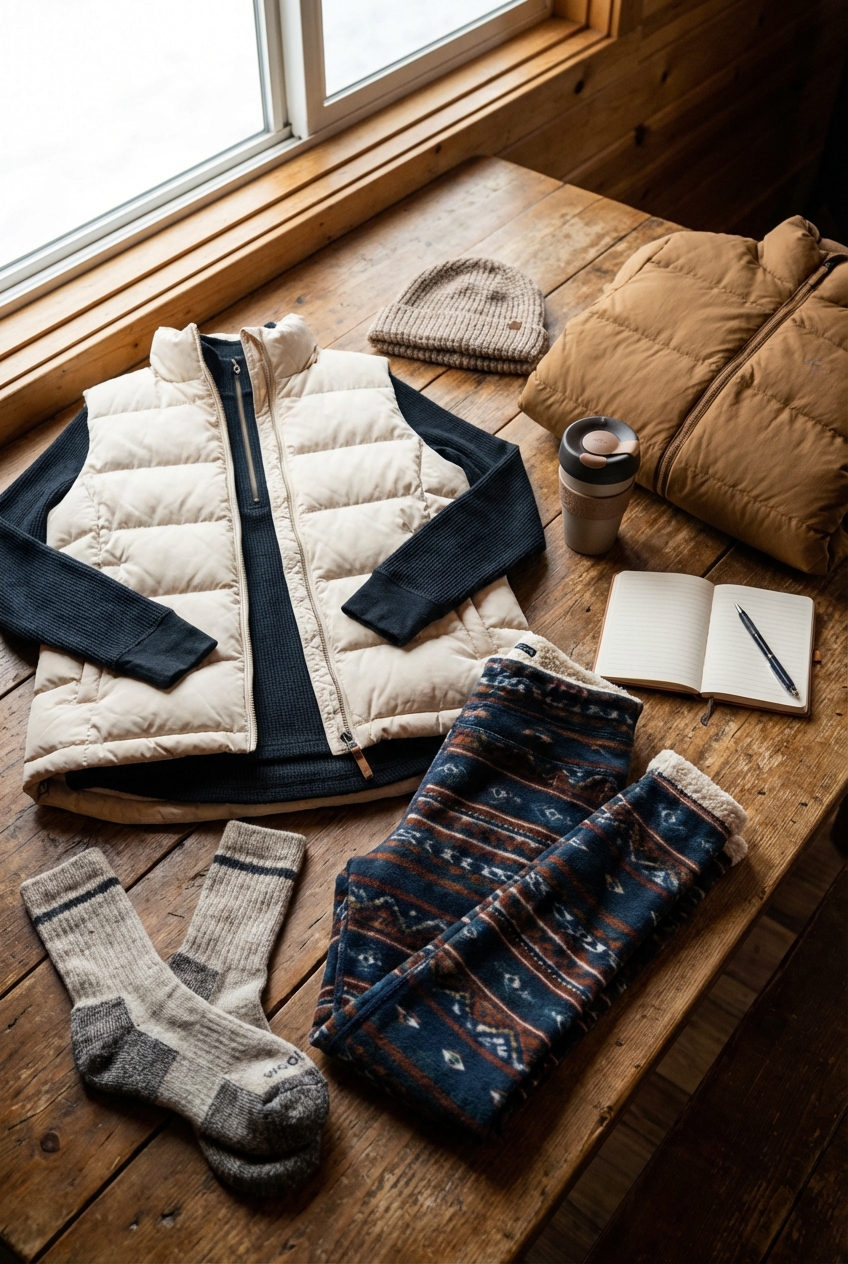
Heat Retention Clothing Staying Warm Without Bulk
I distinctly remember my first season attending winter Fashion Week in New York City. I assumed that looking chic meant freezing in thin layers, sacrificing comfort for the sake of a sharp silhouette. I spent hours shivering in a taxi line, realizing that my beautiful wool coat was purely decorative and offered zero protection against the biting wind.
That experience completely shifted my approach to winter dressing. I learned that true style requires confidence, and you cannot project confidence when your teeth are chattering. The secret to surviving sub-zero temperatures isn’t wearing a sleeping bag; it is understanding the physics of heat retention and the hierarchy of fabrics.
Staying warm without adding bulk is an art form that blends textile science with sartorial strategy. For visual inspiration on how to layer these pieces seamlessly, make sure to check out the Picture Gallery at the end of this blog post.
The Science of Warmth: Fabric Hierarchy
Before buying a single garment, you must understand that not all fabrics are created equal. In the world of high-end fashion, we prioritize fibers that offer the highest warmth-to-weight ratio. The goal is to trap body heat in small pockets of air close to the skin without requiring thick, heavy material to do it.
Merino wool is the gold standard for a reason. Unlike traditional wool, which can be scratchy and heavy, high-grade Merino is microscopic in diameter. Look for fibers labeled “superfine” or those under 18.5 microns. These are soft enough to wear directly against the skin and are naturally temperature-regulating.
Cashmere is another heavyweight champion in the lightweight category. It provides approximately three times the insulation of sheep’s wool. However, density matters here. A single-ply cashmere sweater from a fast-fashion retailer will not hold heat like a two-ply or four-ply garment from a luxury knitwear house. When shopping, hold the knit up to the light; if you can see through it easily, it will not retain heat.
Stylist’s Note: The Synthetic Trap
What usually goes wrong: Clients often buy acrylic sweaters because they feel soft in the store. Acrylic is plastic; it does not breathe, and it often fails to insulate effectively once it gets cold.
How to prevent it: Always check the care label. Aim for natural fibers or high-tech proprietary blends specifically engineered for thermal properties. Avoid 100% acrylic for warmth; save it for summer novelties.
The Base Layer: Your Second Skin
The most critical layer in any winter outfit is the one no one sees. Your base layer must fit like a second skin. If there is a gap between your body and the fabric, cold air will circulate, and your body heat will escape. This layer’s job is moisture management and initial heat trapping.
Silk is an unsung hero for thermal layering under formalwear. A long-sleeve silk undershirt adds virtually zero bulk—it is paper-thin—but adds a surprising amount of insulation. It slides easily under tailored blazers or fitted blouses where a wool layer might cause friction or bunching.
For colder days, look for “thermal weight” tech fabrics or lightweight Merino. The fit should be snug but not compressive. You want the fabric to maintain contact with your skin at the wrists, waist, and neck. A common mistake is wearing a camisole as a base layer; this leaves your arms and upper chest exposed, which are key areas for heat loss.
Common Mistakes + Fixes:
- Mistake: Wearing cotton T-shirts as a base layer.
- Fix: Cotton absorbs moisture and holds it against your skin, making you colder. Switch to moisture-wicking synthetics or wool.
- Mistake: A base layer that is too loose.
- Fix: Size down if necessary. The fabric must touch you to work.
Mid-Layers: The Insulating Air Gap
The mid-layer is where you build your insulation. This is the “air gap” layer. The goal here is to create a space of dead air that your body heat warms up. This layer should be slightly looser than your base layer but slim enough to fit under a coat.
Thin down vests or “sweater vests” are excellent options here. A down vest keeps your core warm—which signals your body to send blood to your extremities—without adding bulk to your arms. This allows for full range of motion and prevents that “stuffed sausage” feeling when you put on a tailored wool coat.
Textured knits, such as cable knit or waffle weave, are actually warmer than flat knits of the same weight. The three-dimensional texture creates more pockets to trap warm air. If you are choosing between a flat weave merino sweater and a waffle knit of the same thickness, the waffle knit will generally perform better thermally.
Legwear: The Forgotten Zone
Many women focus entirely on their upper body and forget their legs, leading to a miserable commute. Denim is a terrible insulator; it freezes quickly and holds the cold against your skin. If you must wear jeans in deep winter, you need a barrier underneath.
Fleece-lined tights are the single greatest invention for winter fashion. From the outside, they look like sheer 20-denier pantyhose. On the inside, they are lined with a beige, soft fleece that mimics the look of skin while providing the warmth of sweatpants.
For trousers, look for wool flannel or wool gabardine. These fabrics have a natural loft that retains heat better than cotton chinos or polyester blends. If you are wearing wide-leg trousers, you have the secret advantage of wearing full leggings underneath without ruining the line of the pant.
What I’d do in a real wardrobe project:
- Client Profile: City commuter who walks 15 minutes to the subway.
- Legwear Strategy: I would replace all standard tights with 100+ denier merino tights or fleece-lined “fake translucent” tights.
- Footwear Pairing: I would add shearling insoles to her leather boots. This separates the foot from the frozen pavement, which is a major source of heat loss.
Outerwear: Loft and Windproofing
Your outer layer has two jobs: block the wind and retain the heat generated by the inner layers. A coat can be thick, but if the wind cuts through it, you will be cold. This is why the weave density of your coat matters immensely.
When selecting a wool coat, look for “melton wool.” This fabric is felted, meaning the fibers are matted together tightly to make it wind-resistant. A loosely woven bouclé coat might look fashionable, but the wind will pass right through the loops unless it has a high-tech windbreaker lining.
If you prefer down or puffer coats, pay attention to “fill power.” This number measures the loft and quality of the down. A jacket with 800 fill power is warmer and lighter than a jacket with 500 fill power. You can get a very slim, non-bulky silhouette with 800+ fill power down because it requires less material to trap the same amount of heat.
Accessories as Thermal Seals
You can wear the most expensive cashmere sweater in the world, but if your neck, wrists, and ankles are exposed, you are venting heat. Think of your clothing system like a house; you need to seal the drafts.
Scarves are non-negotiable. They seal the “chimney” effect at the top of your coat. Without a scarf, warm air rises up from your body and escapes out the neck of your jacket. A large cashmere scarf tucked into the coat acts as a gasket, keeping that precious warm air inside.
Gloves should be long enough to tuck under your coat sleeves. If there is a gap of bare skin at the wrist, your hands will get cold much faster because the blood flow to the hands is being cooled at the wrist pulse point. Look for leather gloves with cashmere or silk linings for the sleekest look.
Strategic Footwear sizing
One of the most common reasons for cold feet is wearing boots that are too tight. When your boots squeeze your feet, they restrict circulation. Blood flow is your body’s natural heater. If you cut it off, your toes will freeze regardless of how warm the boot is rated.
I always advise clients to buy winter boots half a size larger than their summer shoes. This creates a small air pocket around the foot, which acts as insulation. It also allows room for a thicker wool sock without compression.
Avoid cotton socks entirely in winter. Once your feet sweat (and they will, even in the cold), cotton stays wet. Wet feet are cold feet. Merino wool socks absorb moisture away from the skin and retain heat even when damp.
Finish & Styling Checklist
Before you head out into the cold, run through this mental checklist to ensure your outfit is calibrated for warmth and style.
- Check the Gap: Is your base layer tucked into your bottoms? Is your scarf sealing your neck? Are your wrists covered?
- Material Check: Are you wearing cotton next to your skin? If yes, swap it for silk or wool.
- Loft Check: Do you have one layer that traps air (waffle knit, cashmere, down)?
- Wind Check: Is your outer layer tightly woven enough to block the breeze?
- Circulation Check: Can you wiggle your toes in your boots? If not, wear thinner wool socks to restore blood flow.
- Proportion Check: If your top layers are voluminous, keep the bottom silhouette slim to avoid looking bulky.
FAQs
Is higher thread count warmer for clothing?
Not necessarily. In bedding, thread count matters, but in clothing, we look at fabric weight (GSM) and fiber type. A dense, heavy silk is warmer than a thin cotton, but the weave density is more important for wind blocking than heat retention.
Can I wear shapewear as a base layer?
Shapewear is often made of dense nylon and spandex. While it does block wind well, it doesn’t breathe. This can cause you to sweat, which eventually makes you colder. It is better to wear a natural fiber base layer over your shapewear if possible.
Why am I still cold in my puffer jacket?
It is likely too big or you are not wearing a base layer. Puffer jackets work by trapping your body heat. If the jacket is too large, there is too much empty space to heat up. Alternatively, the wind might be coming up from the bottom hem; look for jackets with a drawstring waist.
How do I wash wool without shrinking it?
Always use cold water and a specific wool detergent. Never wring it out. Lay it flat to dry on a towel. Agitation and heat are the enemies of wool; they cause the fibers to felt and shrink.
Conclusion
Mastering winter style is about respecting the elements while maintaining your personal aesthetic. You do not need to resign yourself to six months of shapeless dressing. By investing in high-quality natural fibers like cashmere and merino, and understanding the mechanics of layering, you can create a wardrobe that is as warm as it is elegant.
The key takeaway is that warmth comes from the efficiency of the material, not the thickness of it. A smarter wardrobe is a warmer wardrobe. Focus on sealing the gaps, protecting your extremities, and choosing fabrics that work with your body’s natural heat. Stay warm, and stay stylish.
Picture Gallery


