
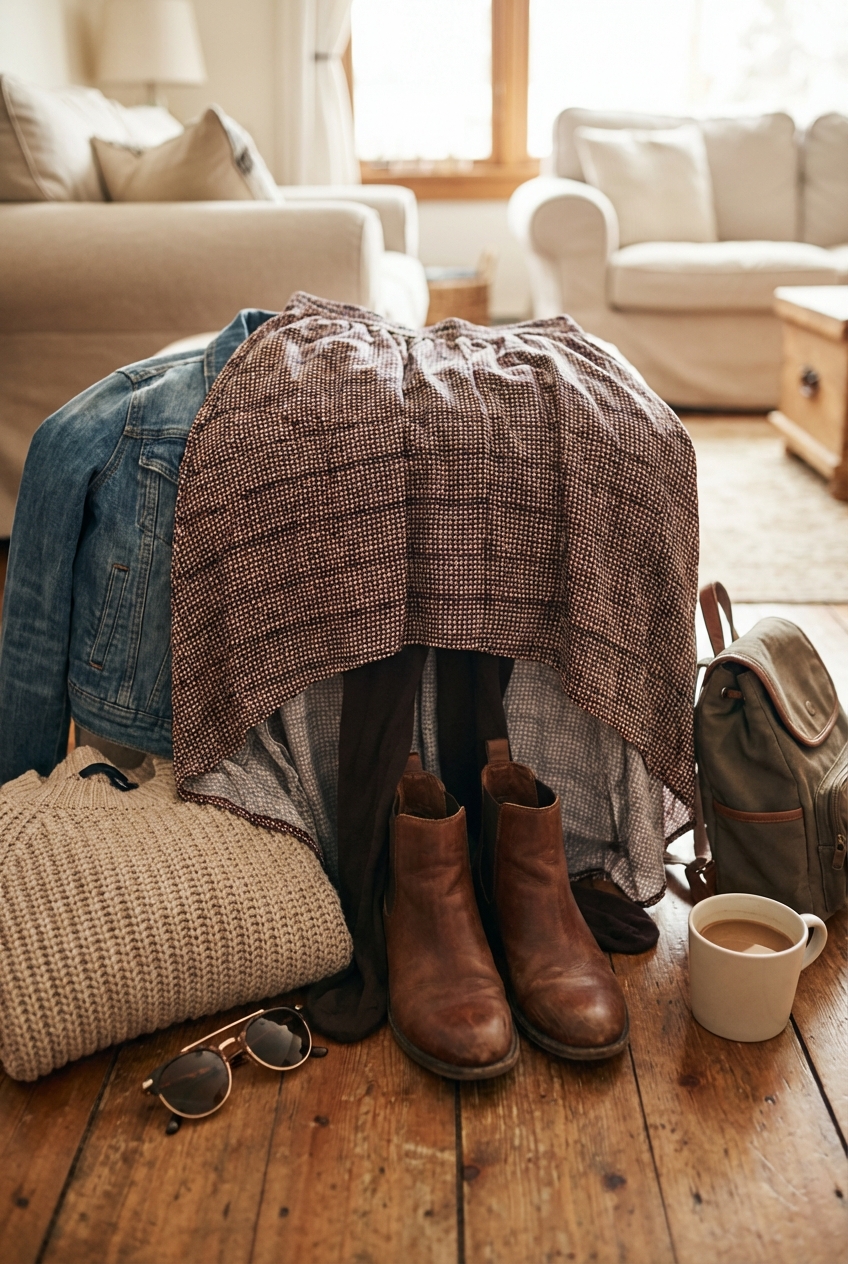
High Low Skirts For Layered Styling
The high-low skirt, sometimes affectionately (or skeptically) referred to as the “mullet skirt,” has evolved significantly from its early 2010s ubiquity. In the world of high-end styling, this silhouette offers a unique architectural advantage that a standard maxi or midi simply cannot provide. It creates instant movement and drama while offering a practical window to showcase footwear and layers. As a stylist, I love them because they break up the visual heaviness of a full skirt, allowing us to play with proportions in a way that elongates the leg line while retaining the elegance of a train.
However, styling this cut requires a precise eye for balance. The danger with high-low hemlines is that they can look dated or costume-like if the fabric quality is poor or the layering is haphazard. The key to modernizing this look lies in the “low” not being a trailing tail, but a structured graduation, and the “high” hitting at the anatomically correct point for your specific leg shape. It is about intentionality—treating the skirt as a framing device for the rest of the outfit rather than just a quirky hemline.
In this guide, I will walk you through the structural rules I use when fitting clients for editorial shoots and events. We will cover how to layer textures to avoid bulk, which footwear anchors the look, and how to transition this piece from a breezy summer staple to a heavy-duty winter ensemble. Be sure to scroll all the way down, as I have curated a specific Picture Gallery at the end of the blog post to visualize these concepts.
1. The Geometry of the Hem: Ratios and Drop Length
The first rule of thumb in selecting a high-low skirt is analyzing the “drop distance.” This is the measurement difference between the shortest point in the front and the longest point in the back. In high-end design, we look for a gradual, seamless transition rather than a sharp, jarring cut. A drop of 10 to 15 inches is usually the “golden zone” for wearability. Anything more extreme tends to look theatrical and is difficult to walk in without stepping on the back fabric.
For the front hem, placement is critical for leg lengthening. If you are petite (under 5’4″), the front hem should hit about one to two inches above the knee. This exposes the thinnest part of the leg and the knee joint, creating a vertical line. If the hem cuts right across the widest part of the calf, it will visually shorten you. For taller clients, a “tea length” front that hits mid-shin with a floor-grazing back creates an incredibly statuesque silhouette.
Designer’s Note: The “Stair Test”
One lesson I learned the hard way on a location shoot is the “Stair Test.” When you try on a high-low skirt, walk up a flight of stairs. If the back hem is long enough to get caught under your heel as you lift your foot, it needs to be tailored. For everyday luxury wear, I always recommend having a tailor take the back hem up to “ankle clearance” height—meaning it hovers one inch off the ground when you are wearing your intended shoes. This prevents the fabric from dragging through city grime and keeps the movement fluid.
2. Anchoring with Footwear: The Critical Gap
Because a high-low skirt acts as a curtain revealing a stage, your choice of shoes is more important here than with any other skirt style. The most common mistake I see is pairing a knee-length front hem with ankle booties that cut the leg off at the ankle. This leaves a small strip of skin exposed, which visually chops the leg into blocks.
To elongate the leg, you have two primary options. The first is to go low-profile. A pump, a strappy sandal, or a mule exposes the instep of the foot. This continues the skin line from the hem all the way to the toe, maximizing height. This is my go-to for evening styling or lighter fabrics like chiffon and silk.
The second option, which is ideal for layered styling, is the “overlap technique.” This involves wearing a tall boot (knee-high or over-the-knee) that disappears underneath the hem of the skirt. When the skirt hem overlaps the top of the boot, you create a continuous column of color and texture. This is fantastic for fall and winter layering as it provides warmth without sacrificing style.
Common Mistakes + Fixes
Mistake: Wearing a chunky, mid-calf combat boot with a skirt that hits at the mid-calf.
Fix: Either raise the hem to the knee to show more skin, or switch to a taller, more fitted boot that slides under the skirt. You want to avoid the shoe and the hem fighting for the same visual space on your leg.
3. Mastering Volume: Tops and Outerwear
High-low skirts generally have inherent volume. They are often pleated, gathered, or circle-cut to allow for the drape in the back. Because the bottom half of your silhouette is voluminous and architectural, the top half requires discipline. The rule of thumb here is “fitted or cropped.”
When I am styling a voluminous taffeta or heavy wool high-low skirt, I almost exclusively reach for bodysuits or slim-fit turtlenecks. Tucking in your top is non-negotiable to define the waist. If you lose the waistline, the dip in the hemline can make the whole outfit look like it is dragging downwards.
For outerwear, you must be careful not to ruin the lines of the skirt. A knee-length trench coat over a high-low skirt often looks messy because the hemlines compete. Instead, I use cropped leather jackets or waist-length blazers. These hit exactly at the waistband or high hip, preserving the drama of the skirt’s back trail. If you must wear a long coat, ensure it is longer than the longest point of the skirt, essentially hiding the skirt until the coat is removed.
4. Fabric Weight and Layering Mechanics
The ability to layer successfully depends entirely on the “hand” (weight and drape) of the fabric. A flimsy jersey knit high-low skirt is difficult to style in a high-end way because it clings rather than flows. I always advise clients to invest in fabrics with structure or substantial weight.
Good Materials for Structure:
- Wool Crepe: Holds the shape of the high-low cut without collapsing. Excellent for office or day wear.
- Structured Denim: A denim high-low skirt offers a utilitarian vibe. It pairs beautifully with opaque tights and chunky knits.
- Organza or Tulle: For evening wear, these materials hold volume on their own. They create a distinct silhouette that doesn’t rely on your legs to give it shape.
When layering underneath the skirt, consider tights carefully. In cooler months, opaque matte tights (80 denier or higher) in the same color as your shoes will elongate the leg. Avoid sheer pantyhose with reinforced toes if you are wearing open shoes, as the high front hem will expose everything.
What I’d Do in a Real Project
If I were styling a client for a winter event using a satin high-low skirt:
- Base: Wolford merino wool tights (matte black).
- Skirt: Emerald green satin high-low midi.
- Top: Black cashmere turtleneck, tucked in perfectly flat.
- Waist: A wide leather belt to cover the waistband seam.
- Shoes: Black suede pointed-toe boots to merge with the tights.
5. Playing with Texture and Color Blocking
Since the high-low silhouette is inherently dramatic, you can afford to be more conservative with prints. I find that solid colors often work best because they highlight the architectural line of the hem. However, mixing textures is where the “high fashion” element comes into play.
Contrast is your friend. If the skirt is a soft, flowy chiffon, pair it with a heavy, cable-knit sweater. The weight of the knit grounds the airiness of the skirt. This is a classic “editor” look that signals you understand balance. If the skirt is a stiff leather or heavy wool, pair it with a silk blouse or a delicate lace camisole to soften the overall effect.
Color blocking with the lining is another advanced styling tip. Many high-end high-low skirts feature a lining color that contrasts with the outer fabric. For example, a black skirt with a champagne lining. When you walk, the flash of the lining becomes an accessory in itself. You can coordinate your top or accessories with that inner lining color to tie the whole look together cohesively.
6. Occasion Mapping: From Office to Gala
Context is everything. The high-low skirt is versatile, but the severity of the cut dictates where it belongs.
For the Office:
Look for “subtle graduation.” The front hem should definitely cover the knee when seated. The back hem should only be 3-4 inches lower than the front. This looks like a design detail rather than a ballgown. Stick to suit fabrics like gabardine or wool blends. Style it with a crisp button-down shirt and a blazer.
For Casual/Weekend:
This is where you can play with bohemian styles. Floral prints, rayon fabrics, and ruffles work here. The difference in length can be more extreme. Pair with a denim jacket and clean white sneakers. The key to making sneakers work is ensuring the front hem hits well above the ankle bone so the shoe has breathing room.
For Formal Events:
This is the domain of the dramatic train. The front can be mini or knee-length, and the back can touch the floor. Volume is key here. To elevate the look, focus on jewelry. Because the legs are the focal point, keep the neckline simple and opt for statement earrings rather than heavy necklaces.
Finish & Styling Checklist
Before you head out, run through this mental checklist to ensure the proportions are polished.
- Check the Hemline Drop: Does the back drag on the floor? If yes, are you wearing the correct heel height to lift it, or do you need to pin it?
- The Sit Test: When you sit down, does the front hem ride up too high? High-low skirts often pull back when seated. Ensure you have modest coverage for your specific environment.
- Waist Definition: Is your top tucked in or cropped? If your top covers the waistband, you risk looking like a shapeless triangle. Define the waist with a belt or tuck.
- Shoe Gap: Is there an awkward slice of skin between your boot and the hem? Either close the gap with taller boots/tights or widen it by choosing a lower-cut shoe.
- Volume Balance: If the skirt is poofy, keep the top sleek. If the skirt is fitted/sleek, you can afford a billowy blouse.
FAQs
Q: Can petite women wear high-low skirts without looking shorter?
A: Absolutely. In fact, they are often better than maxi skirts for petites because the exposed leg in the front breaks up the block of fabric. The key is ensuring the front hem hits above the knee and choosing a nude shoe to extend the leg line.
Q: Are high-low skirts still in style this year?
A: Yes, but the style has shifted. We moved away from the flimsy, sheer jersey skirts of 2012. The current trend focuses on “architectural” high-lows—think structured satin, heavy cotton poplin, and tulle. It is less about “boho festival” and more about “modern evening wear.”
Q: How do I alter a high-low skirt if it is too long?
A: You must take it to a professional tailor who specializes in bridal or evening wear. Because the hem is curved, it cannot be folded up and sewn in a straight line. It requires facing or a rolled hem to maintain the drape. Ask them to pin it while you are wearing the shoes you plan to style it with.
Q: Can I wear flat shoes with a high-low skirt?
A: Yes, specifically pointed-toe flats or loafers. Avoid round-toe ballet flats if your legs are on the shorter side, as they can look a bit juvenile with this skirt cut. A pointed toe extends the visual line of the leg.
Conclusion
The high-low skirt is a powerful tool in a layered wardrobe because it offers the best of both worlds: the drama of length and the freedom of movement. It allows you to showcase statement boots in the winter and strappy sandals in the summer, making it a true year-round investment piece.
By paying attention to the “drop distance,” managing your proportions with fitted tops, and being intentional about your footwear, you can elevate this silhouette from a trend item to a timeless staple. Remember, the goal is effortless architecture. You want the skirt to move with you, framing your movement, rather than overwhelming your frame. Trust the measurements, respect the fabric weight, and layer with confidence.
Picture Gallery


