
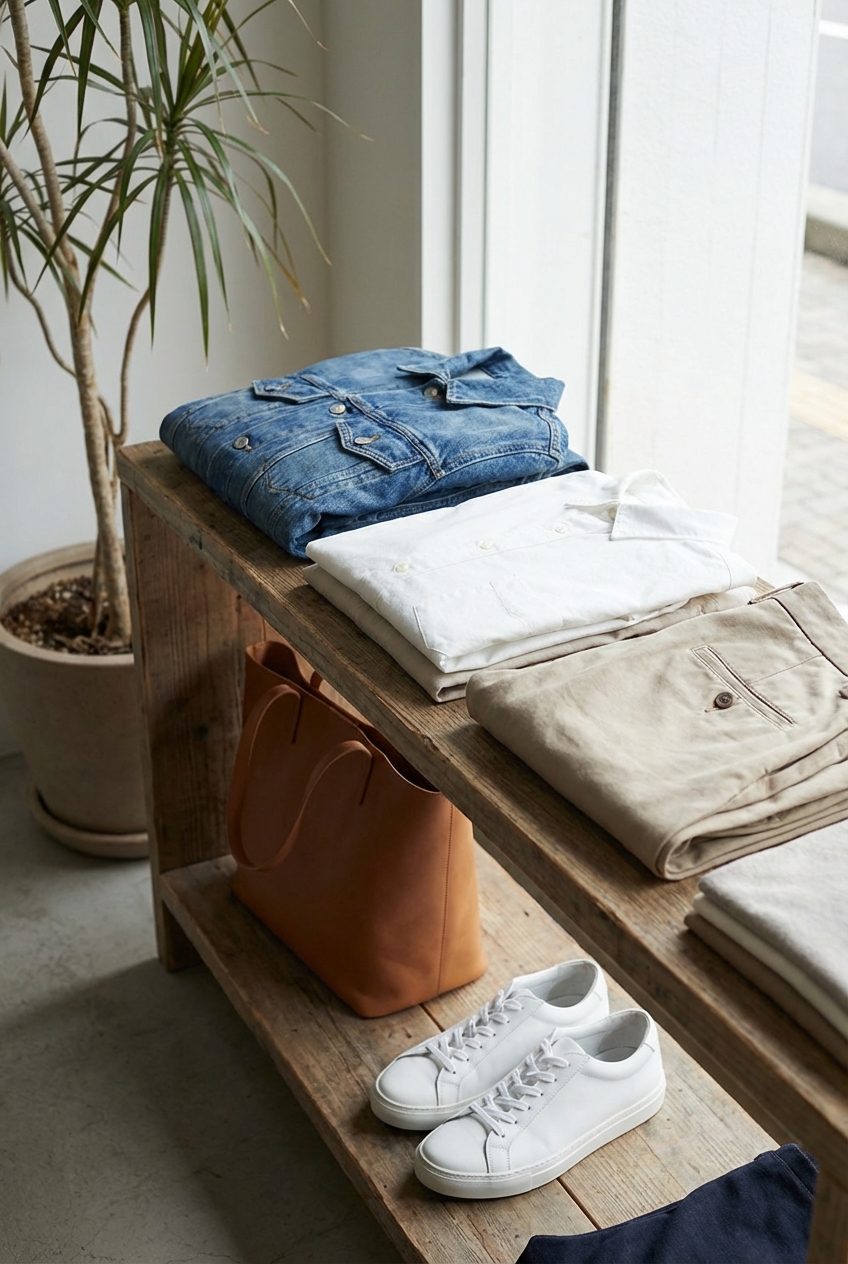
How To Build A Budget Friendly Capsule Wardrobe
Introduction
We have all experienced the dreaded morning paradox: standing in front of a closet bursting with clothes yet feeling like we have absolutely nothing to wear. It usually stems from a disconnect between our fantasy self—the one who buys sequins for a Tuesday—and our real life, which requires functional comfort. As a fashion stylist, I see this chaotic accumulation of “stuff” constantly, and it is almost always the result of impulse buying rather than curating.
Building a capsule wardrobe often gets a bad reputation for being boring or restrictive, but I view it as the ultimate luxury. It is the practice of editing your life down to the very best pieces that make you feel confident, comfortable, and chic every single day. The best part is that you do not need a designer budget to achieve this high-end look; you simply need a designer’s strategy regarding fabric, fit, and versatility.
In this guide, I will walk you through the exact process I use to build streamlined wardrobes for clients, focusing specifically on how to do it without breaking the bank. We will cover how to audit what you own, where to save money, and the specific tailoring tricks that make cheap clothes look expensive. If you are looking for visual inspiration on how these pieces come together, be sure to check out the Picture Gallery at the end of the blog post.
Step 1: The Mathematics of a Functional Closet
Before we buy a single hanger, we have to talk about the numbers. A functional capsule wardrobe typically consists of 30 to 40 pieces per season. This count includes tops, bottoms, dresses, outerwear, and shoes, but generally excludes workout gear, swimsuits, and pajamas. While that number might sound small, the mathematical combinations are vast if you stick to the rules of interchangeability.
The golden rule for a budget-friendly capsule is the “Rule of Three.” Before you keep an item or buy a new one, you must be able to pair it with at least three other items you currently own. If a blouse only works with one specific skirt, it does not earn its place in the capsule. This ensures that you are building a cohesive web of outfits rather than a collection of lonely separates.
We also need to rethink how we calculate value. In the fashion industry, we look at “Cost Per Wear” (CPW). A $200 pair of high-quality denim that you wear 100 times costs you $2 per wear. A $30 trendy top that falls apart after two washes costs you $15 per wear. When building on a budget, we often make the mistake of buying cheap upfront, which is expensive in the long run.
Designer’s Note: The 50/30/20 Budget Rule
I use a specific formula when allocating a client’s shopping budget.
- 50% on Essentials: Shoes, coats, and denim. These take the hardest beating and need higher quality construction.
- 30% on Basics: T-shirts, button-downs, and knitwear. These can be mid-range or sourced from high-quality budget brands.
- 20% on Accents: Scarves, trendy accessories, or a statement top. This is where you can buy cheaper, fast-fashion items because they won’t be worn daily.
Step 2: The Ruthless Closet Audit
You likely already own the foundation of your capsule wardrobe, but it is buried under clutter. To build a budget-friendly wardrobe, we must first “shop your closet.” This requires removing every single item from your wardrobe and piling it on the bed. Seeing the volume of clothing is usually enough to shock anyone into better habits.
Create three distinct piles: “Love,” “Maybe,” and “Go.” The “Love” pile is for items that fit perfectly right now and make you feel fantastic. The “Go” pile is for anything stained, damaged beyond repair, or that you haven’t worn in two years. The “Maybe” pile is tricky; put these items in a box and store them under the bed. If you haven’t reached for them in three months, donate the box without opening it.
Be honest about your lifestyle reality. If you work from home but have ten blazers and no elevated loungewear, your closet is not serving you. A budget capsule must reflect 90% of your actual life, not the life you wish you had.
Common Mistakes + Fixes
- Mistake: Keeping clothes that are “one size away” from fitting.
- Fix: This creates psychological stress every time you open the closet. Remove them. If you reach that size later, you deserve a new reward, not an old garment.
- Mistake: Holding onto expensive mistakes because of guilt.
- Fix: Sell them on Poshmark or Depop. Recouping even $20 is better than letting a $100 mistake gather dust. Use that cash to fund your new capsule.
Step 3: Defining Your Palette and Silhouette
The secret to a high-end look on a budget is color coordination. When everything matches, you can get dressed in the dark and still look put together. You need to select a “Base Neutral” and a “Secondary Neutral.”
For example, your base might be Black (formal, sharp) or Navy (classic, softer). Your secondary neutral could be Camel, Grey, or White. These colors make up 70% of your wardrobe. Why? because neutral fabrics generally look more expensive than bright, synthetic dyes at lower price points. A $30 black sweater often looks indistinguishable from a $200 one, whereas a $30 neon pink sweater often looks cheap.
Once the neutrals are set, pick one or two accent colors for the season. This allows you to scratch the itch for trends without ruining the capsule. Maybe this season it is sage green or burgundy. These colors appear in accessories or low-cost tops.
What I’d Do in a Real Project
If I were building a starter capsule for a client with a $500 budget, I would restrict the palette to:
- Base: Black and Denim Blue.
- Secondary: White and Cream.
- Accent: Olive Green.
- Metals: Gold jewelry only (mixing metals can look messy if not done perfectly).
Step 4: The Strategic Shopping List
Now that we have purged and planned, we identify the gaps. Do not go to the mall without a list. The goal is to own fewer, better things. Here are the core items every budget capsule generally needs, adjusted for your lifestyle.
The Outerwear Layer: You need one classic trench coat or a tailored wool coat, and one casual jacket (denim or leather). In cooler climates, these are your most worn items, so buy them second-hand if you need high quality on a low budget. Look for vintage wool coats; they are often constructed better than modern fast-fashion equivalents.
The Bottoms: Aim for two pairs of jeans (one dark wash, one lighter or black), one pair of tailored trousers, and one skirt. Dark wash denim always looks dressier and more professional than distressed light washes.
The Tops: Three T-shirts (white, black, grey), two button-downs (cotton or linen), and two sweaters (one lightweight, one chunky).
The Shoes: This is non-negotiable. You need a white sneaker (clean, not gym shoes), a black boot, and a loafer or flat. If you buy cheap shoes, your whole outfit looks cheap. If you wear simple clothes with a high-quality leather boot, the whole outfit looks expensive.
Step 5: Assessing Quality on a Budget
You don’t need to spend a lot to get quality, but you do need to know how to read a label. As a fashion expert, the first thing I do is check the fabric composition tag inside the garment.
Avoid “Acrylic” at all costs. It pills immediately, makes you sweat, and retains odors. It is the enemy of a long-lasting wardrobe. Instead, look for natural fibers like Cotton, Linen, and Wool. Even 100% Rayon or Viscose is a better alternative to polyester blends because it drapes beautifully, mimicking silk.
Check the construction details. Turn the garment inside out. Are the seams straight? are there loose threads everywhere? Check patterns at the seams—if the stripes on the side of the shirt don’t line up, put it back. These small visual cues are what the eye perceives as “quality” or “messy.”
The Tailor is Your Best Friend
The biggest secret in high-end fashion is that nobody fits into off-the-rack clothing perfectly.
- Hemming: A $20 pair of trousers hemmed to graze the top of your shoe perfectly (cost: ~$15) looks infinitely better than $200 trousers that bunch at the ankles.
- Sleeve Length: Sleeves that are too long make you look like you are wearing a child’s costume. Shortening them is a cheap alteration that polishes your silhouette.
- Waist Nipping: If you have a gap in the back of your jeans, get the waist taken in. It transforms the fit entirely.
Step 6: Maintenance is Modern Luxury
You can build the most beautiful budget capsule wardrobe, but if you treat the clothes poorly, they will look like rags in a month. Preserving your investment is part of the strategy.
Stop washing your clothes so often. Americans tend to over-wash. Unless a garment is stained or touches your armpits/groin directly, it likely does not need a machine wash after one wear. Denim, for example, should only be washed every 5 to 10 wears to preserve the fiber and color.
Invest in a handheld steamer. It costs about $30. Wrinkled clothes always look cheap, regardless of the brand. Steaming is faster than ironing and gentler on fabrics. A crisp, wrinkle-free white T-shirt looks premium; a crumpled one looks sloppy.
Use the right hangers. Wire hangers from the dry cleaner distort the shoulders of your tops and stretch out knits. Buy a pack of velvet non-slip hangers or wooden hangers. They are affordable and immediately make your closet feel like a boutique.
Finish & Styling Checklist
Before you head out the door, run through this quick stylist checklist to ensure your capsule look is working.
- The Third Piece Rule: An outfit usually needs three elements to feel “finished.” Top + Bottom + Jacket (or statement accessory).
- The Shoe Condition: Are your white sneakers actually white? Use a Magic Eraser to clean the rubber soles. Scuffed shoes drag down the look.
- The Tuck: A “French Tuck” (tucking just the front of the shirt) defines the waist and adds intentionality to the outfit.
- Proportion Check: If wearing a loose top, wear slim bottoms. If wearing wide-leg trousers, wear a fitted top. Balance is key.
- Hardware Match: Try to match the metal on your bag to your jewelry for a cohesive, intentional finish.
FAQs
Will I get bored wearing the same things?
Actually, most people find they are more creative. When you limit your options, you are forced to play with styling—rolling sleeves, layering differently, or changing accessories. Boredom usually comes from having clothes that don’t fit well. When you love how you look in everything you own, repetition feels like a signature style, not a chore.
How do I handle trends?
Use accessories for trends. If leopard print is huge this year, buy a leopard print scarf or a cheap belt. Do not buy a leopard print coat that you will hate next year. Keep your core items classic and let the accessories date the outfit.
Can I do this with a uniform for work?
Absolutely. A work capsule is even easier. Focus on three pairs of excellent trousers and five distinct blouses. This removes decision fatigue in the morning.
How often should I replace items?
In a capsule, items wear out faster because you wear them more. Expect to replace white T-shirts annually. Denim and coats should last years. If you buy high-quality leather shoes and resole them, they can last a decade.
Conclusion
Building a budget-friendly capsule wardrobe is about shifting your mindset from consumption to curation. It is about realizing that having 30 amazing items is far superior to having 300 mediocre ones. By focusing on neutral palettes, natural fabrics, and precise tailoring, you can create a closet that feels high-end and luxurious without spending a fortune.
Start slowly. Audit your current closet this weekend, identify your color palette, and make a list of the essentials you are missing. Remember, the most sustainable and budget-friendly garment is the one you already own and actually wear.
Picture Gallery


