
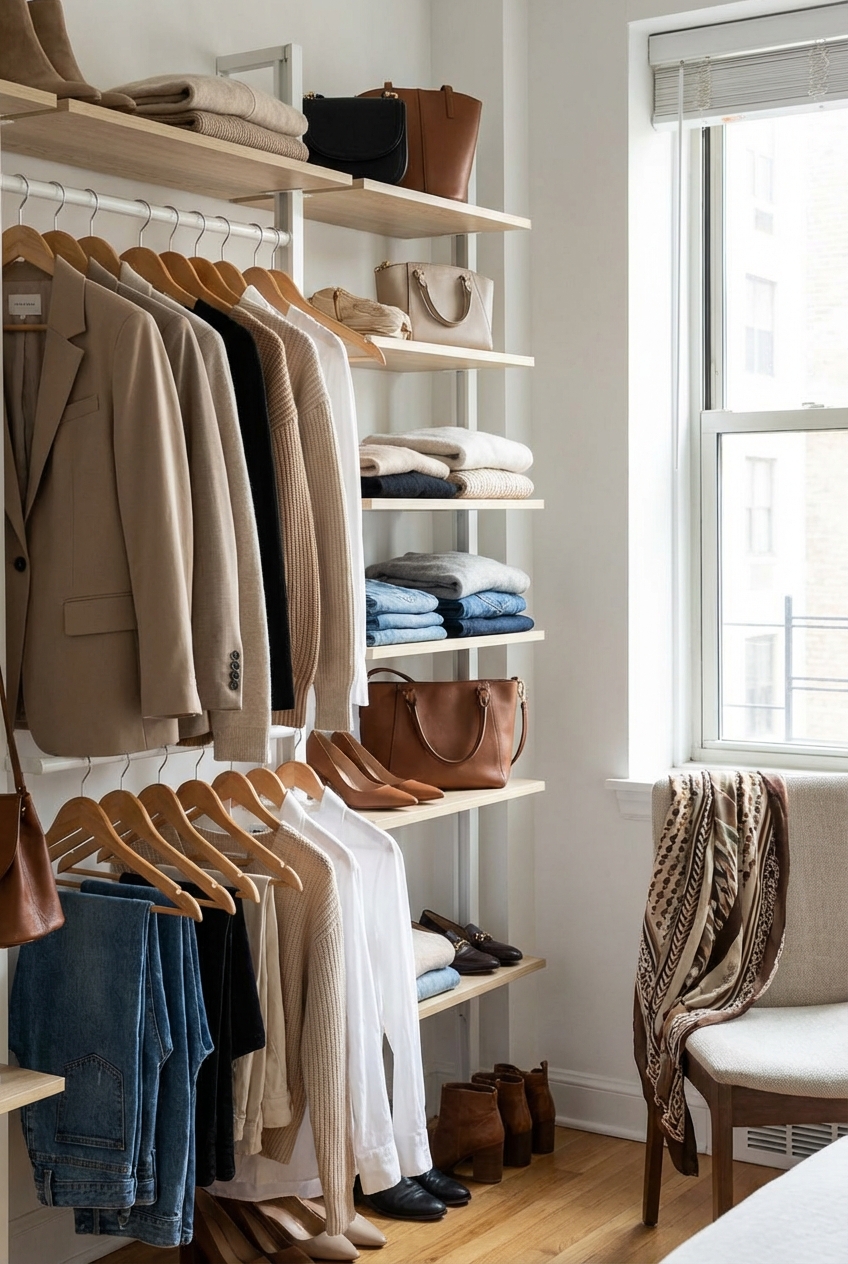
How To Build A Versatile Capsule Wardrobe From Scratch
We have all experienced the paradox of the modern closet. You stand in front of a bursting rail of clothes, hangers tangled together, drawers overflowing, and yet you feel like you have absolutely nothing to wear. This isn’t a lack of options; it is a lack of clarity. In my years styling high-end clients, I have found that clutter is the enemy of style.
Building a capsule wardrobe is not about restriction or minimizing your personality. It is about curating a collection of high-quality, interchangeable pieces that maximize your outfit combinations while minimizing stress. It is the ultimate exercise in design efficiency, ensuring every item serves a purpose and sparks joy.
This guide will walk you through the architecture of a functional wardrobe, from the initial audit to the final tailoring tweaks. We will cover fabric composition, color theory, and the essential pieces that form the foundation of great style. For visual inspiration on how these pieces come together, don’t miss our curated Picture Gallery at the end of this post.
The Ruthless Audit: Editing Your Current Inventory
Before bringing a single new hanger into your space, you must excavate the existing foundation. You cannot build a coherent style on top of chaos. Most people wear 20% of their wardrobe 80% of the time. Our goal is to increase that utilization rate to 100%.
Start by pulling every single item out of your closet. Yes, everything. Pile it on the bed. You need to see the sheer volume of what you own to understand your buying habits. Pick up each item and check for three things: fit, condition, and fabric quality.
Separate items into four distinct piles: Keep, Tailor, Donate, and Trash. Be honest with yourself about the “Tailor” pile. If you haven’t fixed that zipper in two years, you likely never will. Move it to the donate pile or take it to the tailor tomorrow.
Stylist’s Note: The “Fantasy Self” Trap
The biggest lesson I teach my clients is to dress for the life they have, not the life they imagine. A common mistake is holding onto 10 cocktail dresses when you work from home and spend weekends hiking. If an item doesn’t fit your current body or your current lifestyle, it is taking up valuable real estate. Release it.
Establishing Your Core Color Palette
A capsule wardrobe relies on mix-and-match capability. To achieve this, you need a strict color hierarchy. This doesn’t mean your closet has to be black and white, but it does require a foundational palette that anchors the rest of your choices.
Select three neutral base colors. These are the workhorses of your wardrobe—usually coats, trousers, and leather goods. Common combinations include black, charcoal, and white; or camel, navy, and cream. These shades should comprise about 70% of your closet.
Next, choose two to three accent colors. These add personality and can be rotated seasonally. For example, add emerald green or burgundy in the autumn, and switch to powder blue or sage in the spring. By limiting your palette, you ensure that any top you pull blindly will likely match any bottom.
Common Mistakes + Fixes
- Mistake: Buying prints that don’t coordinate with anything.
- Fix: Only buy a print if it contains at least one of your base neutral colors. This visually links the patterned piece back to your solid trousers or jackets.
The “Magic 30” Foundation Pieces
While the exact number varies by lifestyle, a solid capsule usually hovers around 30 to 40 items (excluding workout gear and pajamas). These are the architectural beams of your wardrobe. Invest the majority of your budget here.
The Tops
You need a mix of layering pieces and standalone statements. Aim for high natural fiber content for breathability and longevity.
- The White Button-Down: Look for 100% cotton poplin. It should be crisp enough for the office but soft enough to front-tuck into jeans.
- The Cashmere Crewneck: A neutral grey or camel sweater is non-negotiable. Look for 2-ply cashmere for durability.
- The Silk Cami: Perfect for layering under blazers. Silk regulates temperature better than polyester.
- The Breton Stripe: A classic long-sleeve tee adds visual interest without being loud.
The Bottoms
Fit is paramount here. If your bottoms are uncomfortable, you will revert to leggings.
- Dark Wash Denim: Choose a straight-leg or slight bootcut. Avoid distressing or whiskering, which dates the denim. A composition of 98% cotton and 2% elastane usually offers the best balance of structure and comfort.
- Wool Trousers: A high-waisted, wide-leg trouser in black or navy drapes beautifully and elevates simple t-shirts.
- The Midi Skirt: A bias-cut slip skirt in a heavy satin or silk offers versatility for day-to-night transitions.
Outerwear & Jackets
Your coat is often the only part of your outfit people see in transit. Make it count.
- The Trench Coat: A water-resistant cotton gabardine in beige or khaki. Ensure it has a belt to cinch the waist for a tailored silhouette.
- The Structured Blazer: This is your power piece. Shoulders should be sharp, not sloping. Opt for wool or a wool-blend.
- The Leather or Denim Jacket: A casual layer for weekends.
What I’d Do in a Real Project
When shopping for a client, I always perform the “Sit Test” with bottoms. Sit down on a low bench in the dressing room. If the waistband cuts into your digestion or the fabric pulls uncomfortably across the hips, it stays at the store. Comfort equals confidence.
Understanding Fabric & Texture
The difference between a wardrobe that looks expensive and one that looks cheap is rarely the brand name; it is the fabric. As a stylist, I look at the care tag before I look at the price tag. You want natural fibers that age well.
Avoid acrylics in your knitwear. Acrylic is a plastic-based fiber that pills rapidly and traps odors. Instead, save up for merino wool, alpaca, or cashmere. These fibers breathe, regulate body temperature, and can be de-pilled to look brand new for years.
For t-shirts and shirts, look for Pima or Supima cotton. These have longer staples (fibers), resulting in a smoother fabric that resists twisting and shrinking in the wash. Linen is excellent for summer, but embrace the wrinkles as part of the texture—do not fight them.
Incorporate texture to prevent boredom. If you are wearing a monochrome outfit (like all black), mix textures to create depth. Pair a chunky wool sweater with smooth leather pants or a silk skirt. This contrast makes the outfit look styled rather than accidental.
The Tailoring Equation
Ready-to-wear clothing is made for a symmetrical, standardized mannequin, not a real human body. The secret weapon of every best-dressed woman is a relationship with a good tailor. Small adjustments make a $50 pair of pants look like a $300 designer pair.
Hem Length Rules of Thumb
- Full-Length Trousers: The hem should graze the top of your foot and break slightly. It should hover about half an inch off the ground at the back when wearing your intended shoes.
- Cropped Pants: These should hit just above the ankle bone. Any higher and they look like capris; any lower and they look like “high waters.”
- Sleeve Length: Jacket sleeves should end at the wrist bone, allowing half an inch of your shirt cuff to peek through.
Budget for this. If you buy a blazer for $150, set aside $30 for shortening the sleeves. This extra step removes the sloppy, ill-fitting look that plagues many wardrobes.
Footwear and Accessories
Accessories are the punctuation of your outfit. In a capsule wardrobe, you need fewer shoes, but they must be higher quality. Cheap shoes with poor arch support will ruin your posture and your day.
The Shoe Edit:
- White Leather Sneakers: Clean, minimal, and logo-free. These pair with suits, dresses, and jeans.
- Black Ankle Boots: A pointed or almond toe elongates the leg. Look for a block heel for walkability.
- Loafers or Mules: A polished flat option for days when sneakers are too casual but heels are too much.
- Nude or Black Pumps: The classic “occasion” shoe.
Bag Strategy:
You only need two main bags. First, a structured leather tote that fits a laptop and daily essentials. Second, a crossbody or shoulder bag for evenings and weekends. Match the hardware (gold or silver) to your primary jewelry preference for a cohesive look.
Seasonal Rotation & Storage
To keep your closet feeling airy and manageable, use a seasonal rotation system. If it is July, you do not need to see your heavy wool coats and chunky boots every morning. Visual clutter leads to decision fatigue.
Store off-season items in opaque bins or under-bed storage. Before storing, ensure everything is laundered. Moths are attracted to body oils and food residue, not just the fabric itself. Throw in a few cedar blocks (sand them lightly every year to refresh the scent) to repel pests naturally.
When you swap your wardrobe each season, treat it like a mini-audit. If you didn’t wear an item all winter, don’t pack it away for next year. Donate it. This keeps the capsule refined and relevant to your actual usage.
Finish & Styling Checklist
Before you consider your capsule complete, run your collection through this final verification. This ensures every piece earns its rent in your closet.
- The Rule of Three: Can I create at least three different outfits with this single item?
- The Context Check: Does this wardrobe cover my three main activities (e.g., Work, Weekend, Dinner Out)?
- The Comfort Test: Can I move my arms freely in this jacket? Can I sit comfortably in these jeans?
- The Maintenance Reality: Am I willing to hand-wash or dry-clean this silk blouse? If not, do not keep it.
- The Shoe Sync: Do I have the right shoes for every hem length in my closet?
FAQs
How much money do I need to start a capsule wardrobe?
You do not need to buy everything at once. Start with the “Rule of Three” items (jeans, white shirt, blazer). You can build this over six months. Prioritize spending on shoes and coats, as these take the most wear and tear. Save money on t-shirts and trendy accessories.
Won’t I get bored wearing the same things?
Boredom usually comes from a lack of styling creativity, not a lack of clothes. By having fewer items, you are forced to get creative with layering, accessories, and tucking. You will find that defining a “signature look” is actually more empowering than chasing trends.
How do I handle laundry with fewer clothes?
You may need to do laundry slightly more often, but the loads will be smaller. However, remember that not everything needs washing after one wear. Wool, for example, is self-cleaning and antimicrobial; simply air it out. Jeans should only be washed every 5–10 wears to preserve the fiber.
Can I have a capsule wardrobe if I love bright colors?
Absolutely. A capsule doesn’t have to be beige. If you love bright red, make that your core color. You might pair red trousers with pink tops and burgundy coats. The rule is simply cohesion—ensure your colors talk to each other so you aren’t left with orphaned items.
Conclusion
Building a versatile capsule wardrobe from scratch is a journey of self-discovery. It forces you to evaluate what you actually need versus what you have been told to want. The result is a closet that feels like a boutique curated just for you.
By focusing on fit, fabric, and functionality, you regain lost time in the mornings and present a more polished version of yourself to the world. Style is not about excess; it is about selection. Start your edit today, and enjoy the calm that comes with a curated life.
Picture Gallery


