
How To Elevate Your Outfits With Brooches
For years, brooches were unfairly categorized as antiquated accessories reserved for older generations or vintage collectors. However, in the high-end fashion world, the brooch is currently experiencing a massive renaissance as the ultimate punctuation mark for a curated look. It is the single most versatile piece of jewelry you can own because it is not bound by fit or sizing.
A well-placed brooch does more than add sparkle; it adds architecture and intention to an outfit. When I style clients for events or editorial shoots, I often use brooches to alter the silhouette of a garment or to draw the eye toward a specific focal point. It is a tool of illusion as much as it is an ornament.
The secret lies in abandoning traditional placement rules and treating the brooch as a functional piece of hardware. Whether you are cinching a waist, securing a scarf, or customizing a heavy coat, the application requires technical know-how to protect your fabrics. To help you visualize these techniques, I have curated a detailed Picture Gallery at the end of this blog post.
1. Understanding Visual Weight and Fabric Integrity
Before pinning anything, you must assess the structural relationship between the metal and the textile. The most common error I see is a heavy brooch pulling down a delicate silk blouse, creating unsightly drag lines and potential holes. This ruins the polish of the look instantly.
As a rule of thumb, the weight of the fabric must equal or exceed the weight of the brooch. Heavy crystal or solid metal pieces belong on wool coats, denim jackets, or structured blazers. Delicate filigree or lightweight resin pieces are suitable for thinner cottons or blouses.
If you are desperate to wear a heavier piece on a lighter fabric, you must create an internal support system. Cut a small square of felt or heavy cotton and place it on the inside of the garment. When you insert the pin, ensure it passes through the garment and this hidden backing. This distributes the weight and prevents the fabric from tearing.
Designer’s Note: The “Bra Strap” Anchor
In professional styling, we often encounter a beautiful dress with a neckline that is too low or a fabric too slippery for a brooch. A trick of the trade is to pin the brooch through the garment and catch the edge of your bra strap underneath. This anchors the jewelry to your body rather than just the fabric, keeping it perfectly upright and flush against your chest.
2. Mastering the Classic Lapel Placement
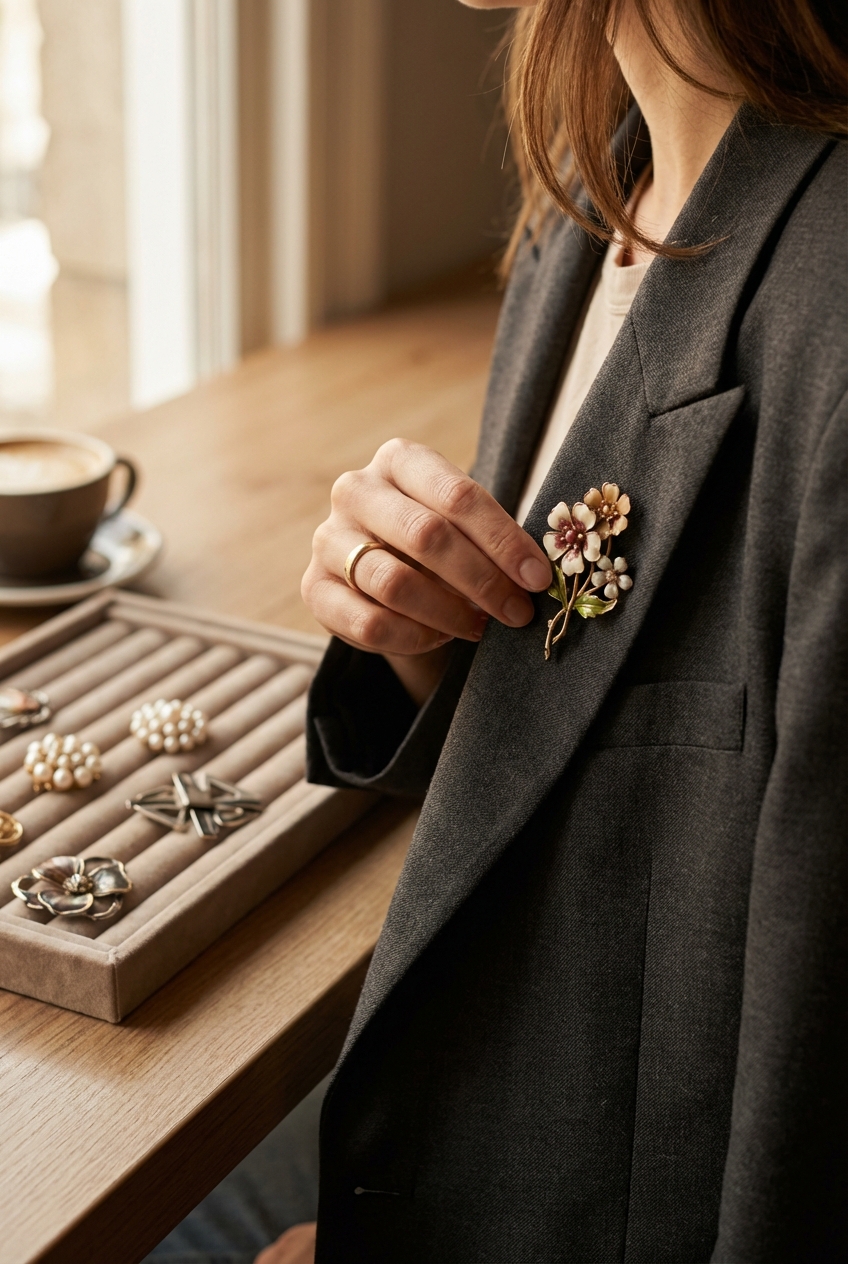
While the lapel is the traditional home for a brooch, the specific placement determines whether the look feels dated or modern. Amateurs often place the pin too low or too close to the armpit. This drags the visual line downward and can make the bust area look cluttered.
The “sweet spot” is higher than you think. Aim for the space roughly two to three inches below the collarbone notch. It should sit closer to the shoulder seam than the center buttons. This placement draws the eye up to your face and broadens the shoulder line, creating a powerful, confident silhouette.
For wide peak lapels on blazers, place the brooch parallel to the angle of the lapel peak. If you are wearing a notch lapel, center the piece in the widest part of the notch. This geometric alignment pleases the eye and makes the accessory look like it was part of the original garment design.
Common Mistakes + Fixes
- The Mistake: The brooch flops forward because the pin mechanism is loose or the fabric is not stiff enough.
- The Fix: Use a small rubber earring back or a piece of a makeup sponge. Push the pin through the fabric, slide the rubber back onto the needle on the inside of the coat, and then secure the clasp. This creates tension and keeps the brooch facing forward.
3. Using Brooches to Manipulate Silhouette
In high fashion, we use brooches as functional tailoring tools. You can use a sturdy brooch to cinch a waist or alter the drape of a dress without visiting a tailor. This is particularly effective with oversized shirts or unstructured maxi dresses that need definition.
To cinch a waist, gather the excess fabric at your natural waistline to one side. Twist the fabric slightly to create a “rose” effect or a simple pleat. Secure this gather with a large, bar-style brooch or a strong circular pin. This instantly creates an hourglass shape and adds an interesting focal point to the hip or waist.
You can also use a brooch to shorten a long necklace or turn a plunging neckline into a modest one. If a wrap dress is gaping at the chest, overlap the fabric to your desired coverage level and pin it securely. Ensure you catch several layers of the hem so the pin doesn’t pull against a single thread.
What I’d Do in a Real Project
- For a boxy blazer: I would pinch the fabric at the back of the jacket, right at the small of the waist, and secure it with a rugged, architectural brooch. This creates a fitted look from the front while adding a surprise detail to the back.
- For a long skirt: If a maxi skirt is dragging, I would lift one side of the hem to knee height and pin it to the hip waistband with a decorative brooch, creating a draped, asymmetrical bustle effect.
4. Styling Knitwear and Scarves
Thick knitwear is the natural habitat for larger brooches. The texture of wool or cashmere accommodates the pin stem easily without leaving permanent marks, provided you are careful. When inserting a pin into a chunky knit, weave the needle in and out of the yarn loops rather than piercing through the yarn fibers themselves.
A brooch is also the most chic way to keep a scarf in place. Rather than constantly adjusting a throw over your shoulder, drape the scarf and secure it to your coat or sweater. For a large blanket scarf, bring one end over the opposite shoulder and pin it high near the neck. This creates a funnel-neck look that is incredibly warm and wind-proof.
When styling finer gauge knits, like merino wool or lightweight cashmere, be cautious. These fabrics can develop “memory” where the hole remains after the pin is removed. Always steam the area immediately after removing the brooch to help the fibers relax back into place.
Styling Checklist regarding Scarves
- Silk Scarves: Use a scarf ring or a specifically designed magnetic brooch to avoid puncturing the silk.
- Wool Scarves: Use a kilt pin or a large safety-pin style brooch for a punk-chic aesthetic.
- Pashminas: Gather the two ends at the center of your chest and pin them with a large floral brooch for a poncho effect.
5. The Art of Clustering: The Rule of Odds
One small brooch on a large coat can look lost and insignificant. To make a true fashion statement, I recommend clustering multiple brooches together. This creates a textured, “messy” look that feels very current and personalized. It turns your jewelry into a collage.
Follow the “Rule of Odds” when grouping. Clusters of three or five items are generally more visually appealing than pairs. The asymmetry keeps the eye moving. You do not need to match the brooches perfectly, but they should share a common language.
For example, you might choose a “Celestial” theme, mixing stars, moons, and suns in different metals. Or, you could choose a “Color” theme, mixing different shapes that all feature emerald green crystals. Mixing silver and gold is absolutely permitted and often encouraged to add depth to the cluster.
Designer’s Note: Spacing and Composition
When creating a cluster, start with the largest piece as your anchor. Place it first. Then, arrange the smaller pieces around it, slightly overlapping the edges if possible. Avoid spacing them out too evenly; you want them to look like a single, organic mass of jewelry rather than polka dots.
6. Unexpected Placements: Hair, Accessories, and Collars
To truly elevate your outfit, move the brooch away from the torso entirely. High-end styling often involves repurposing items for unexpected uses. One of my favorite techniques is placing brooches in the hair. This works exceptionally well for evening wear or weddings.
To wear a brooch in your hair, do not try to pin it directly to the scalp. Instead, secure a sturdy bobby pin or a hair comb into your hairstyle first. Then, pass the brooch pin through the loops of the bobby pin or the structure of the comb. This provides a secure base and prevents the heavy metal from sliding down your hair shaft.
You can also upgrade your accessories. Pin a pair of matching vintage clips to the heels of your satin pumps to create “jeweled” shoes. Attach a large, gem-encrusted brooch to the knot of a simple clutch bag to transform it for a black-tie event. You can even pin a brooch to the ribbon of a fedora or the band of a beret for a touch of Parisian flair.
Collar Tips
For a button-down shirt, try buttoning the collar all the way to the top. Place a brooch directly over the top button, acting as a faux necktie or bow tie. This looks incredibly sharp under a blazer and draws attention directly to your face.
Finish & Styling Checklist
Before you head out the door, run through this mental checklist to ensure your brooch styling is secure and polished.
- Stability Check: Shake your body gently. Does the brooch flop forward? If so, add a felt backing or tighten the clasp.
- Fabric Safety: specific check for holes. If the pin is leaving a visible hole as you insert it, stop. The needle is too thick for that fabric.
- Visual Balance: Look in a full-length mirror. Is the brooch drawing the eye to a feature you want to highlight? Ensure it isn’t competing with a necklace or large earrings.
- Security: If the brooch is valuable, consider adding a safety stopper (a small rubber tube) to the end of the pin stem before latching it. This ensures that even if the clasp opens, the pin won’t slide out.
- Theme Cohesion: Does the vibe of the brooch match the outfit? An acrylic pop-art pin might clash with a formal gown, while a diamond spray might look out of place on a gym hoodie (unless styled with irony!).
FAQs
Can I wear a brooch if I have a large bust?
Absolutely. The key is placement. Avoid placing the brooch on the fullest part of the bust, as this can add unwanted volume. Instead, place it higher up, near the collarbone or on the shoulder strap. This draws the eye upward and creates a more balanced line.
Is it okay to mix gold and silver brooches?
Yes, mixed metals are a sign of a modern, confident stylist. The old rule of matching all your metals is outdated. To make it look intentional, try to have at least one piece that contains both metals, or balance the ratio (e.g., two gold and three silver) so it looks like a curated collection.
How do I clean vintage brooches without damaging them?
Vintage costume jewelry often uses foil-backed stones or glue that dissolves in water. Never submerge them. Use a soft, dry makeup brush to dust away debris. If the metal is tarnished, use a jewelry polishing cloth gently. Avoid harsh chemicals or ultrasonic cleaners.
Can men wear brooches?
Yes, and they should. On men, brooches are often referred to as “lapel pins,” but the mechanics are the same. A floral brooch on a tuxedo lapel or a geometric pin on a denim jacket looks incredibly stylish and sophisticated.
Conclusion
Brooches are far more than decorative heirlooms; they are powerful styling devices that allow you to customize your wardrobe. By mastering the mechanics of weight and placement, you can transform a simple blazer into a couture statement or give a second life to a plain dress.
Don’t be afraid to experiment with clusters, unusual placements, and functional styling. Fashion is about self-expression, and a brooch is one of the most personal signatures you can add to a look. Treat your clothing as a canvas and your brooches as the paint.
Picture Gallery


