
How To Incorporate Layers In A Capsule Wardrobe The Art Of Stylish And Functional Dressing
Creating a wardrobe that feels infinite while containing only a few dozen items is the ultimate goal of the capsule concept. I remember my first season working backstage at fashion week, watching editors arrive in outfits that looked incredibly complex yet were comprised of simple, high-quality staples. The secret wasn’t the quantity of clothes they owned, but how expertly they layered them to create depth and interest.
Layering is often misunderstood as simply piling on clothes to stay warm, which often leads to the dreaded “marshmallow effect.” True layering is architectural; it is about building a silhouette where every visible hem, collar, and cuff serves a visual purpose. When done correctly, it allows a light silk slip dress to function beautifully in the dead of winter or a structured blazer to feel casual enough for a weekend coffee run.
In this guide, I will walk you through the structural rules of layering that I use with my private clients to maximize their capsule wardrobes. We will cover fabric weights, color mapping, and the essential measurements needed to ensure your layers look intentional rather than accidental. Be sure to check out the Picture Gallery at the end of this blog post to see these layering techniques in action.
The Foundation: Selecting High-Performance Base Layers
The success of a layered outfit is entirely dependent on the first piece of fabric that touches your skin. In a capsule wardrobe, your base layers must be thin enough to disappear under other garments but high-quality enough to be worn alone if you get too warm.
I always advise clients to invest in natural fibers for this layer. Synthetic blends often trap heat and moisture, making you sweaty and uncomfortable once you add a sweater or jacket. Look for lightweight merino wool, silk blends, or high-staple cotton that sits close to the body without restricting movement.
Stylist’s Note: The Armhole Issue
One of the most common mistakes I see is buying base layers with bulky sleeves. If your bottom layer has a drop shoulder or a wide sleeve, it will bunch up inside your blazer or cardigan. Always look for fitted, set-in sleeves for your foundational pieces to ensure a smooth line down the arm.
The Middle Layer: Adding Warmth and Texture
The middle layer is the workhorse of your outfit. This is where you introduce personality through texture and color. In a capsule wardrobe, this category usually includes button-down shirts, lightweight cashmere sweaters, cardigans, and vests.
The key here is “loft” without weight. You want fabrics that trap air for warmth but compress easily under a coat. Cashmere is the gold standard here because a 2-ply cashmere sweater provides the same warmth as a bulky chunky knit wool sweater but at a fraction of the thickness.
When styling this layer, consider the neckline carefully. A crew neck sweater layered over a button-down shirt is a classic, but ensure the collar points are tucked in or popped intentionally. If you are wearing a V-neck, the visible triangle of the shirt underneath becomes a focal point for color coordination.
The Outer Layer: Structure and Silhouette
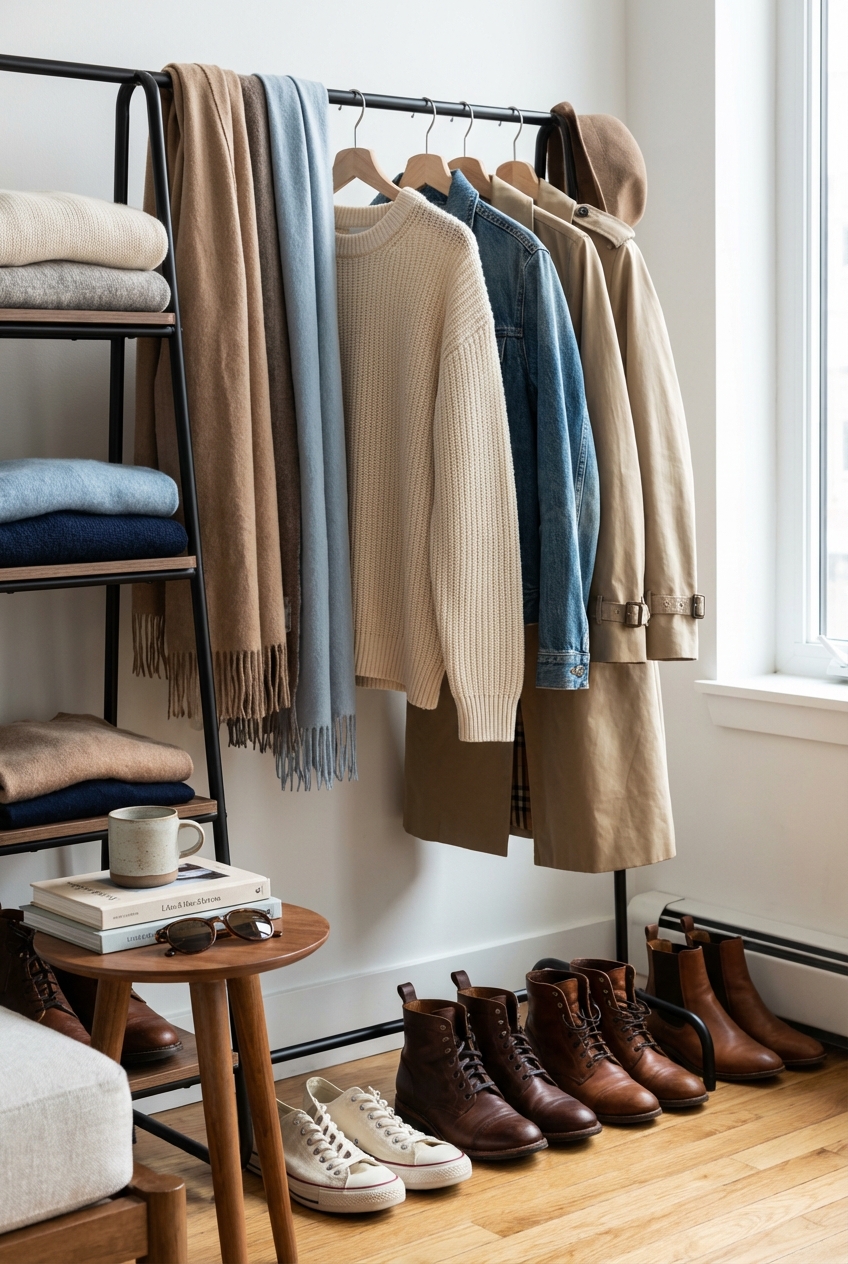
Your outer layer serves as the frame for the entire outfit. Because this piece is the most visible, it dictates the formality and the silhouette of your look. For a functional capsule, you need three distinct outer shapes: a structured blazer, a relaxed trench or wool coat, and a casual jacket (like denim or leather).
Fit is critical here. When I fit clients for coats, I ask them to wear their thickest intended middle layer during the fitting. You should be able to cross your arms and hug yourself without feeling the fabric pull tightly across the upper back.
Common Mistakes + Fixes
Mistake: Buying a coat that fits perfectly over a t-shirt but feels like a straightjacket over a sweater.
Fix: Size up in your outerwear or look for “oversized” cuts. Alternatively, bring a measuring tape and ensure the armhole depth is at least 9-10 inches to accommodate layers.
Mastering Proportions and Lengths
Layering is a game of geometry. If all your layers hit at the same spot on your hip, you will look wider than you are. The goal is to create a cascading effect where different hems hit at different points on the body to elongate the figure.
The Rule of Thirds:
In design, the rule of thirds suggests that 1/3 to 2/3 proportions are more aesthetically pleasing than cutting things in half.
- Short over Long: Try a cropped sweater (top 1/3) over a long tunic shirt or midi dress (bottom 2/3).
- Long over Short: A long duster cardigan worn over a tucked-in camisole and high-waisted trousers creates a long vertical line that slims the body.
Texture Mixing: The Secret to Luxury
Monochromatic capsule wardrobes rely heavily on texture to avoid looking flat. If you are wearing all black, for example, you need at least three different fabric finishes to make the outfit look expensive.
Contrast is your best friend. Pair a shiny silk skirt with a matte, fuzzy mohair sweater. Layer a crisp, stiff poplin shirt under a soft, fluid velvet blazer. This tension between materials creates visual interest that distracts the eye from any bulkiness.
What I’d Do in a Real Project
If I were building a travel capsule for a client going to a variable climate, I would pack:
- 1 Leather item (sleek, wind-blocking)
- 2 Knits (one tight rib, one fluffy finish)
- 1 Silk or Satin item (for sheen and evening transition)
- 1 Denim or Cotton Twill item (for grounding structure)
The Role of Accessories as a Micro-Layer
Accessories are often overlooked in the conversation about layering, yet they are vital for mechanics and style. A belt, for instance, is not just decorative; it is a tool to regain your waistline when wearing multiple loose layers.
Scarves serve as a removable layer that can drastically change the temperature regulation of an outfit. A large cashmere wrap can function as a makeshift cardigan in a drafty office or a blanket on a plane.
Don’t forget tights and socks. In the colder months, the density of your tights (measured in denier) matters. A sheer 20-denier tight adds a formal touch, while an opaque 80-denier tight elongates the leg when paired with boots of the same color.
Finish & Styling Checklist
Before you head out the door, run through this quick stylist checklist to ensure your layered look is polished and practical.
- The Friction Test: Do your layers glide over each other? If your skirt is clinging to your tights, add a slip or anti-static spray.
- The Mobility Check: Can you lift your arms above your head? If the layers are restricting movement, remove the middle layer or drape the outer layer over your shoulders.
- The Hem Check: Are your shirt tails poking out from your sweater evenly? Adjust them so they look intentional, not messy.
- The Cuffs: If wearing a shirt under a sweater, pull the shirt cuffs out about half an inch beyond the sweater sleeve. It frames the hands.
- The Collar: Ensure your collars aren’t fighting. A collared shirt under a blazer lapel needs to sit flat or stand up boldly—no in-between.
FAQs
How do I layer without looking bulky if I am petite?
Stick to monochromatic columns of color. If your inner layers (top and bottom) are the same color, it creates a vertical line. Keep your outer layers open. Avoid oversized, chunky knits and opt for thin, high-thermal fabrics like merino wool.
Can I mix metals and hardware when layering?
Absolutely. While matching metals is traditional, mixing gold and silver is modern and chic. However, try to keep the “vibe” consistent—pair polished metals with polished metals, and brushed with brushed.
What is the best way to layer for a day that starts cold and gets hot?
Use the “onion” method with a focus on the base layer. Ensure your bottom layer is socially acceptable to be worn on its own (e.g., a high-quality tee or silk blouse rather than thermal underwear). Rely on a heavy scarf and a light jacket rather than one heavy coat.
How many layers are too many?
Generally, three visible layers are the maximum before mobility is compromised. Base + Middle + Outer is the standard. You can add a scarf or vest, but once you exceed four restricted pieces, you will likely feel uncomfortable.
Conclusion
Mastering the art of layering transforms a limited capsule wardrobe into a boundless source of style. It allows you to navigate shifting seasons, variable office temperatures, and travel constraints without sacrificing elegance. By focusing on fabric weights, playing with proportions, and respecting the architecture of your clothes, you can create looks that are as functional as they are fashionable.
Remember that layering is a skill that improves with experimentation. Take an afternoon to play with your current wardrobe, mixing textures and lengths you haven’t paired before. You will likely discover that you have far more outfits hiding in your closet than you realized.
Picture Gallery


