
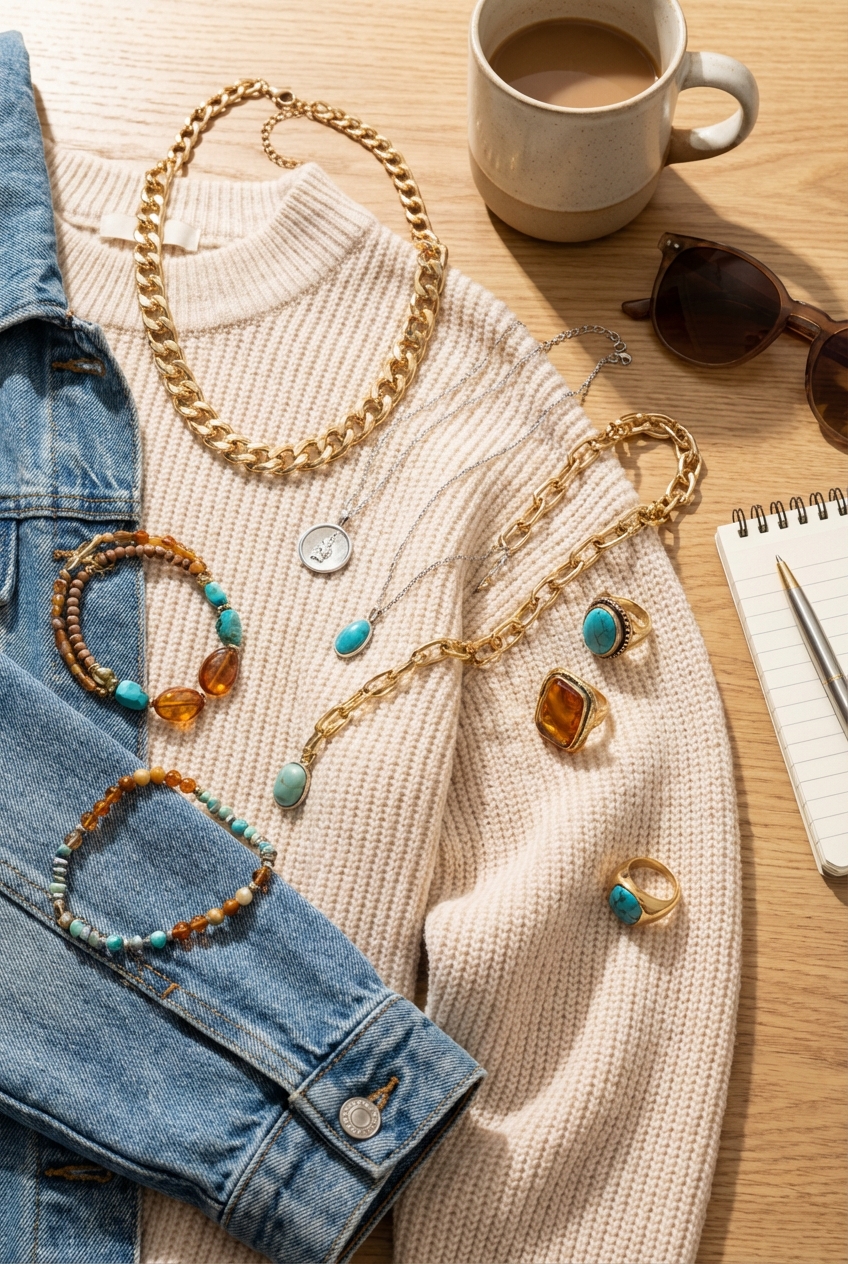
How To Layer Bold And Dainty Jewelry Together
I distinctly remember the first time I attempted to embrace the “more is more” jewelry trend. I had seen an editorial spread featuring a model dripping in heavy gold chains intertwined with delicate diamond strands, and I wanted that look immediately. I threw on every piece I owned, walked out the door, and spent the entire evening untangling a mass of metal at the base of my neck while my heavy bangles clanged loudly against a dinner table.
It was a lesson in physics as much as it was in fashion. Layering contrasting jewelry styles requires a strategic eye for balance, weight distribution, and negative space. It is not about putting on everything you own; it is about creating a curated composition where the whisper-thin pieces soften the heavy ones, and the bold pieces give structure to the delicate ones.
Whether you are dressing for a boardroom meeting or a casual brunch, mastering this juxtaposition creates a look that feels effortless yet expensive. In this guide, I will break down the exact measurements, ratios, and spacing rules I use when styling clients. To inspire your own collection, I have curated a Picture Gallery at the end of the blog post with some of my favorite stacking examples.
The Foundation: Understanding Visual Weight and Scale
Before you unclasp a single necklace, you must understand the concept of visual weight. In high-end styling, we categorize jewelry not just by material, but by “architectural presence.” A bold piece, like a chunky Cuban link chain or a wide cuff, acts as your anchor. It draws the eye immediately and establishes the vibe of the outfit.
Dainty jewelry—think whisper-thin cable chains, pavé bands, or tiny stud earrings—acts as the light. These pieces add texture and shimmer without dominating the silhouette. The secret to layering them effectively is ensuring your anchor pieces do not visually (or physically) crush your lighter elements.
You need to establish a ratio. For most day-to-day looks, I recommend the 1:2 rule. For every one bold, heavy statement piece, pair it with two lighter, delicate pieces. This prevents the look from feeling like a costume and keeps the aesthetic grounded and modern.
Designer’s Note: The Material Hardness Check
One styling disaster I often see is damaged heirlooms caused by improper layering. Heavy gold links are durable, but if they constantly rub against a delicate pearl strand or a soft gemstone like opal, they will scratch the surface. Always check the durability of your materials. Keep soft stones separated from heavy, jagged metal links by using a “buffer” chain of simple polished gold or silver in between.
Necklaces: The Cascade Effect and Spacing Rules
The “neck mess” is a popular term, but as a stylist, I prefer “cascade.” A messy neck looks accidental; a cascade is intentional. The primary challenge here is tangling, which happens when chains of similar weights and lengths fight for the same real estate on your chest.
To avoid this, you must abide by the two-inch rule. Between each necklace in your stack, aim for a minimum of two inches of vertical spacing. If your bold paperclip chain sits at 16 inches, your dainty pendant should hang at 18 inches or 14 inches, never 16.5.
Varying the chain styles is just as important as varying the lengths. If you use three delicate cable chains, they will inevitably knot together. Instead, mix a flat herringbone chain (which lays flush against the skin) with a textured rope chain and a chunky link. The difference in flexibility and texture helps keep them distinct.
Common Mistakes + Fixes
- The Mistake: Wearing three necklaces that all have heavy clasps, causing them to slide around and pull the necklaces backward, choking you.
- The Fix: Use a necklace detangler or separator. This is a multi-strand clasp that holds the back of the chains apart. Alternatively, counterbalance a light chain by adding a heavy pendant to the front, using gravity to keep it centered.
Wrist Stacks: Balancing Cuffs, Chains, and Watches
Arm candy is where you can have the most fun, but it is also the most practical challenge. If you work at a computer, heavy chains digging into your wrist bone are torture. When mixing bold and dainty on the wrist, placement is everything.
Start with your watch or your heaviest cuff. This is your structural piece. It should sit highest up the arm (furthest from the hand) to anchor the stack. This prevents lighter bracelets from sliding underneath the heavy piece and getting pinched.
Layer your dainty pieces closer to the hand. A tennis bracelet or a thin gold bangle allows for movement near the wrist joint without feeling restrictive. The contrast of a masculine, oversized watch face next to a singular, shimmering diamond strand is the epitome of chic.
What I’d Do in a Real Project
If I am styling a client who talks with their hands or types all day, I limit the stack to three pieces total.
- Piece 1: A structural cuff or watch (fitted, not loose).
- Piece 2: A medium-weight chain (like a Figaro or wheat chain).
- Piece 3: A flexible, dainty element (like a silk cord or thin chain).
This “Structure-Texture-Softness” trio looks intentional without sounding like wind chimes every time you move.
Ring Stacking: Verticality and Negative Space
Mixing bold signet rings with thin stacking bands requires you to look at your hand as a map. You cannot have heavy mountains on every finger. You need valleys—negative space—to let the design breathe.
I prefer to place the boldest ring on the index or middle finger. A heavy signet or a cocktail ring here feels powerful. Then, I leave the adjacent finger bare or adorn it with a very subtle midi ring (a ring that sits above the knuckle).
On the ring finger or pinky, stack multiple dainty bands to create a texture that rivals the weight of the bold ring. For example, a stack of three 1mm pavé bands equals the visual weight of one 3mm solid gold band. This creates symmetry across the hand without matching exactly.
Pro-Level Spacing Measurements
Keep comfort in mind. A bold ring often has a thick band (shank). If you wear thick bands on the middle and ring fingers, they will grind against each other. I advise clients to leave at least one “naked finger” between bold rings, or ensure the adjacent rings are ultra-thin (under 1.5mm) to allow the fingers to close fully.
The Curated Ear: Huggies, Hoops, and Studs
Ear curation has exploded in popularity. The days of matching pairs are gone; now it is about the “earscape.” The rule of thumb here is graduation. The boldest, heaviest, or longest piece should almost always go in the first lobe piercing.
As you move up the ear cartilage, the jewelry should generally get daintier. A chunky gold tube hoop in the main piercing pairs beautifully with a tiny diamond huggie in the second hole and a microscopic stud in the helix. This draws the eye upward and lifts the face.
However, you can invert this for an edgier look. A dainty threader earring in the lobe with a bold, diamond-encrusted ear cuff on the cartilage creates a rebellious, high-fashion disruption. The key is ensuring the metals match in tone if you are playing with such drastic proportion differences.
Designer’s Note: Weight Distribution
Heavy earrings can stretch piercings over time. If you love the look of bold statement earrings but have sensitive lobes, look for “hollow ware.” These are bold gold hoops that are hollow inside, giving you the massive volume without the drag. Save the solid, heavy pieces for necklaces, not your ears.
Mixing Metals: The Modern Rulebook
For decades, mixing silver and gold was considered a fashion faux pas. Today, it is a sign of a sophisticated eye. The trick to mixing bold gold and dainty silver (or vice versa) is to ensure the mix looks purposeful, not like you got dressed in the dark.
You need a “bridge piece.” This is a single item that contains both metals. It could be a Rolex with a two-tone band, a ring with twisted gold and silver wire, or a necklace with a mixed-metal pendant. Once you have this bridge piece on, you have free rein to add pure gold or pure silver items elsewhere.
When mixing weights and metals, I like to keep the bold items in the warmer metal (yellow gold) and the dainty items in the cooler metal (white gold, platinum, or silver). Gold feels inherently richer and heavier, making it perfect for the anchor pieces. The coolness of silver or white gold mimics the sparkle of diamonds, making it ideal for the delicate accents.
Finish & Styling Checklist
Before you head out, run through this mental checklist to ensure your layered look is polished and practical.
- The Anchor Check: Do you have one main focal point (a bold piece) that grounds the look?
- The Tangle Test: Lean forward and stand back up. Do your necklaces return to their place, or are they a knot? If they knot, adjust the lengths by 2 inches.
- The Noise Factor: Shake your wrist. If the clanking is deafening, remove one heavy bangle and replace it with a cord or soft chain.
- The Skin Ratio: Can you see skin between your necklaces and rings? Negative space is crucial for keeping the look airy, not suffocating.
- The Fabric Friction: Are you wearing a knit sweater? Check that your bold rings don’t have prongs that will snag the fabric. Smooth bezels are better for knitwear.
FAQs
Can I mix different karat counts of gold?
Yes, but be careful. 14k gold is often more yellow than 10k, and 24k is a very deep, rich orange-yellow. When layering bold and dainty pieces, a drastic color difference can look disjointed. Try to stay within a close range (like 14k and 18k) so the tones blend harmoniously.
How do I stop my layered necklaces from twisting?
The most effective method is mixing chain weights and styles. A heavy rope chain rarely twists with a light snake chain because they move differently. Also, putting the heaviest pendant on the bottom chain helps weigh the whole stack down, keeping it centered.
Is there a limit to how many rings I should stack?
While fashion is subjective, functionality is not. If you cannot make a fist or shake hands comfortably, you are wearing too many. I usually cap it at three rings on one hand if one of them is a bold statement piece.
Does my hardware on my bag need to match my jewelry stack?
In high-end fashion, no. However, if you are wearing a very bold silver chain necklace, carrying a bag with massive gold hardware might clash. If the jewelry is delicate, the bag hardware matters less. If the jewelry is bold, try to coordinate with the bag for a cohesive stream.
Conclusion
Layering bold and dainty jewelry is an art form that balances masculine structure with feminine sparkle. It allows you to wear your investment pieces alongside your fun, trendy finds. By respecting the rules of spacing, visual weight, and material hardness, you can create stacks that tell a story rather than creating clutter.
Remember that confidence is the final accessory. The “right” way to layer is the way that makes you feel adorned and powerful. Start with one bold piece, add two dainty accents, and adjust until the reflection in the mirror feels like you.
Picture Gallery


