
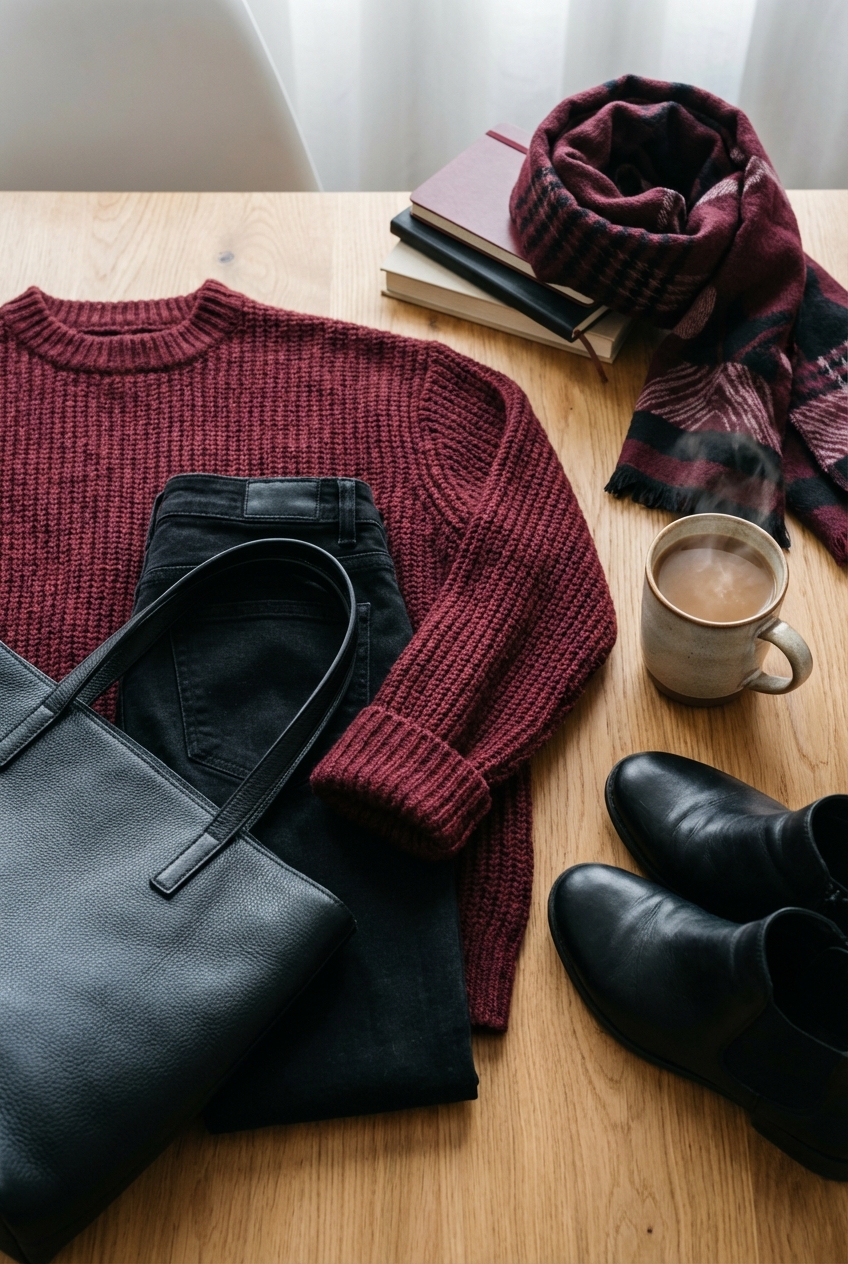
How To Mix Warm Burgundy And Black In Transitional Outfits
There is a specific moment in late September or early March when the air shifts, and your wardrobe demands something deeper than pastels but not quite as heavy as winter greys. This is where the combination of warm burgundy and black thrives. It is a pairing that feels inherently expensive, grounded, and sophisticated without trying too hard.
In my years styling private clients, I have found that many women shy away from mixing black with deep reds because they fear looking too severe or reminiscent of a uniform. However, when you select a burgundy with warm, brown undertones—think oxblood, maroon, or rich merlot—and pair it with textural blacks, the result is pure luxury. It allows you to navigate shifting temperatures while maintaining a sharp, high-fashion silhouette.
I have broken down exactly how to master this color story using the same principles of proportion and texture I apply to editorial shoots. For visual inspiration on how to execute these looks, be sure to check out the curated Picture Gallery at the end of the blog post.
Understanding The Palette: Warm vs. Cool Burgundy
Before you buy a single garment, you must distinguish between warm and cool burgundy. This is the foundation of the look. A cool burgundy leans toward purple, aubergine, or berry; these shades look beautiful with stark white or charcoal but can sometimes look harsh or “vampy” against solid black.
Warm burgundy, conversely, has an undercurrent of brown, brick, or rust. This warmth bridges the gap between the severity of black and natural skin tones. When shopping, place the fabric against a true white surface. If the red reflects orange or brown notes, it is warm. If it reflects blue or violet, it is cool.
For transitional outfits, warm burgundy is superior because it mimics the natural palette of changing leaves and feels more organic. It softens the black, making the overall outfit look cohesive rather than blocked off.
Designer’s Note: The Lighting Test
I always tell my clients to check their color combinations in natural light, not just the dressing room pot lights. Warm burgundy can look muddy in low light if the fabric quality is poor. Ensure the pigment is saturated enough to hold its own against the void of black.
Texture is Non-Negotiable
The biggest mistake I see in street style is a “flat” outfit. If you wear black cotton leggings with a burgundy cotton t-shirt, the look will read as casual and perhaps a bit dull. To elevate this pairing, you must introduce varied surface textures.
Transitional weather is the perfect excuse to mix weights. Pair a heavy, light-absorbing fabric with something that has a sheen or movement. The contrast in how the materials interact with light creates visual interest even when the color palette is simple.
My go-to texture pairings include:
- Black Leather + Burgundy Cashmere: The slickness of leather trousers or a skirt contrasts beautifully with the soft, matte finish of a warm burgundy sweater.
- Burgundy Silk + Black Wool: A slip skirt in oxblood looks incredible under a structured, oversized black wool blazer.
- Black Denim + Burgundy Suede: Suede naturally softens colors, making the burgundy look richer and more tactile against the utility of denim.
Proportions and The 60/30/10 Rule
In design, we often use the 60/30/10 rule to balance a room, and this applies perfectly to your outfit. You never want to split your body exactly in half—50% black on the bottom and 50% burgundy on top creates a distinct horizontal line that cuts your height.
Instead, choose a dominant color for 60% of the look. For a slimming, lengthening effect, let black be the 60%. This could be black trousers and a black blazer.
Let warm burgundy be the 30%. This would be the shell top under the blazer, or perhaps a large handbag and shoes.
The final 10% is your skin or your accent metal (gold jewelry works best here). Allowing some skin to show—whether at the ankle, the wrist, or the neckline—is vital in transitional dressing to keep the heavy colors from swallowing you whole.
What I’d Do in a Real Project
If I were styling a client for a day-to-night event, I would start with a black column base (black trousers and a black fitted top). I would layer a warm burgundy trench coat over it. The coat becomes the statement piece, covering about 60-70% of the visual field when closed, but revealing the slimming black column when worn open.
Footwear: Anchoring the Look
Shoes can make or break a transitional outfit. Because both burgundy and black are visually heavy colors, wearing a delicate, light-colored shoe often looks unbalanced. You need footwear that can stand up to the weight of the clothes.
Black Boots:
A pair of black leather knee-high boots is the standard anchor. If you are wearing a burgundy midi skirt, ensure the boots go up and under the hemline of the skirt. You want to avoid a sliver of skin showing between the boot and the hem, as this chops up your leg line.
Burgundy Loafers or Pumps:
To elongate the leg when wearing black trousers, a burgundy shoe is a bold choice. It draws the eye down. However, ensure the burgundy leather of the shoe is polished. Scuffed oxblood leather looks worn out very quickly.
Sneakers for Weekend Wear:
For a casual look, a black sneaker with white soles can work, but keep the profile sleek. Avoid chunky “dad sneakers” with this color combo, as they can look too athletic for such a moody palette.
Outerwear: The Third Piece
In transitional weather, your coat or jacket is often part of the outfit, not just something you cover it with. This is the “third piece” rule—pant, top, jacket. The jacket completes the thought.
A black leather biker jacket is a staple that instantly modernizes a warm burgundy dress. The hardware on the jacket (zippers, snaps) adds that necessary metallic flash.
Alternatively, a burgundy wool coat is a stunning investment piece. When buying a coat in this color, pay attention to the buttons. Cheap plastic buttons will cheapen the coat. If you find a coat with a perfect fit but cheap buttons, have a tailor swap them for tortoise shell or heavy black horn buttons. It costs very little but upgrades the garment significantly.
Common Mistakes + Fixes
Mistake: Wearing opaque black tights with a burgundy dress that is too light in fabric weight.
Fix: If the dress is chiffon or silk, heavy black tights will weigh it down. Switch to sheer black hose (20 denier or less) to bridge the gap between the airy dress and the dark leg.
Mistake: Ignoring lint and pet hair.
Fix: Black wool and velvet are magnets for debris. Warm burgundy also shows light-colored dust easily. Keep a travel-sized lint roller in your bag. Nothing ruins the “high-end” aesthetic faster than a fuzzy black coat.
Hardware and Accessories
Warm burgundy pairs exceptionally well with gold hardware. The yellow tones in gold highlight the brown undertones in the red. Silver can work, but it creates a cooler, sharper look that leans more toward punk or grunge aesthetics.
When choosing a handbag, consider the scale. If you are wearing a bulky black sweater and wide-leg burgundy trousers, a tiny clutch will look lost. Opt for a structured leather tote or a shoulder bag with significant presence.
Belts are your best friend for transitional layering. If you are wearing an oversized burgundy knit over a black slip dress, use a black leather belt to define your waist. I recommend a width of 1.5 to 2 inches—anything thinner gets lost in knitwear, and anything wider can feel like a corset.
Real-Life Constraints: Practicality
We must be realistic about where you are wearing this. High-fashion looks need to function in the real world.
For Commuters:
If you walk or take the subway, avoid floor-grazing burgundy trousers. City grime is unforgiving, and muddy hems on deep red fabric look terrible. Hem your trousers to hit 1/2 inch above the ground when wearing your shoes, or opt for a cropped ankle length.
For Parents or Pet Owners:
Deep colors hide stains well, which is a bonus. However, burgundy silk shows water spots and oil stains instantly. If you are around kids or cooking, opt for burgundy wool, cotton blends, or leather, which are much more forgiving and easier to spot-clean.
Budget Considerations:
You do not need to spend a fortune to get this look. Spend your money on the black items (shoes, bag, coat) because you will wear them with everything. You can buy the warm burgundy trendy pieces (like a sweater or scarf) at a lower price point, provided the fabric doesn’t look overly synthetic.
Finish & Styling Checklist
Before you walk out the door, run through this final styling checklist to ensure your outfit is polished and proportional.
- Check the Undertone: Does your burgundy item lean brown/orange (good) or purple/blue (save for another day)?
- Texture Audit: Do you have at least two different textures present? (e.g., Knit + Leather, Denim + Silk).
- The Lint Check: Have you rolled your black items? Daylight will reveal every speck of dust.
- Hardware Harmony: Is your jewelry metal consistent with your bag hardware and shoe buckles? Gold is preferred for this palette.
- Proportion Control: If your top is oversized, is your bottom fitted? If your bottom is wide-leg, is your top tucked in or cropped?
- Skin Balance: Are you showing a hint of wrist, ankle, or neck to keep the heavy colors from looking suffocating?
FAQs
Can I wear navy blue with black and burgundy?
Technically yes, but it is very difficult to pull off without looking like you got dressed in the dark. For a transitional look, it is safer to stick to black. If you want a third neutral, try camel or a dark charcoal grey, which pairs beautifully with warm burgundy.
What makeup looks best with this combination?
Avoid matching your lipstick exactly to your clothes. It can look costumey. Instead, opt for a fresh, glowing face with a neutral lip, or go for a brick-red lip stain that is slightly sheer. A sharp black eyeliner ties in nicely with the black in your outfit.
Is this color combination appropriate for the office?
Absolutely. It is one of the most professional color pairings available. A burgundy blouse with a black pencil skirt is a power outfit. Just ensure the burgundy isn’t too bright; keep it deep and muted for corporate environments.
Can I wear this in the spring?
Yes, but shift the fabric weights. Swap wool and leather for linen blends, cotton, and silk. A black sleeveless top with burgundy linen trousers is a chic choice for March or April.
Conclusion
Mixing warm burgundy and black is a styling hack that instantly adds maturity and depth to your wardrobe. It is a combination that signals confidence. By paying attention to the warmth of the red, the texture of the black, and the proportions of your silhouette, you can create transitional outfits that are both practical and profoundly stylish.
Remember that fashion is about balance. The darkness of black needs the richness of burgundy to come alive, and the warmth of burgundy needs the discipline of black to feel modern. Start with the pieces you already own—perhaps a black leather jacket or a pair of burgundy boots—and build from there.
Picture Gallery


