
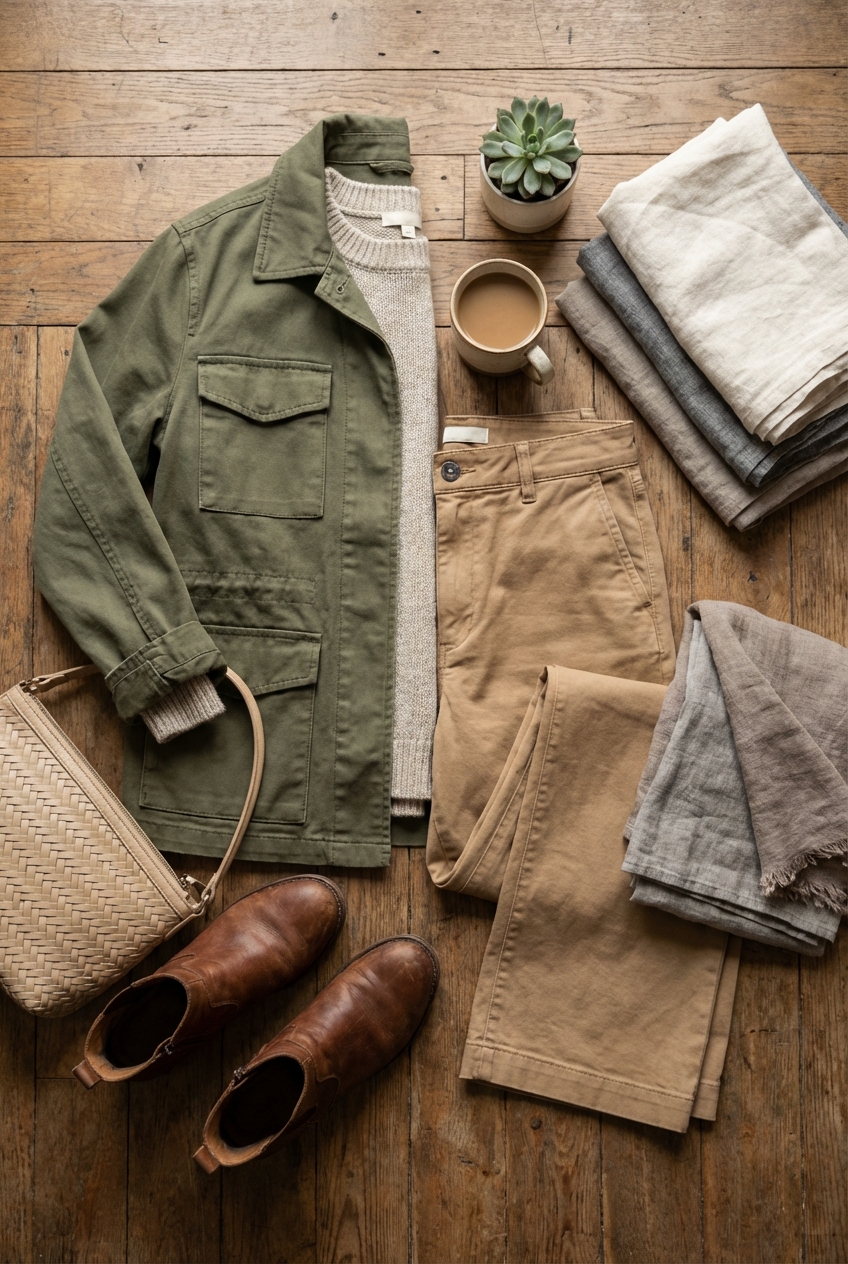
How To Pair Olive Green Jackets With Neutral Tones
Olive green has quietly transcended its military roots to become a cornerstone of the modern capsule wardrobe. In high-end fashion circles, we treat this shade as a foundational neutral, much like camel or navy. It offers a sophisticated depth that grounds lighter tones while adding a subtle richness that black sometimes lacks.
However, styling this color requires a discerning eye for undertones and texture. Many clients come to me feeling that their olive jackets look too casual or “muddy” against their existing wardrobe staples. The secret lies in understanding the temperature of your neutral pairings and the interplay of fabric weights.
When done correctly, an olive jacket acts as the perfect anchor for a chic, understated ensemble. I have curated a comprehensive collection of outfit inspirations, so be sure to check out the Picture Gallery at the end of the blog post.
Understanding Undertones: The Architecture of Color
The first step in styling an olive jacket is identifying the specific hue you are working with. Not all olive greens are created equal. Some lean towards a warm, yellow-based khaki, while others are cooler with gray or blue undertones.
If your jacket has golden or yellow undertones, it will harmonize beautifully with warm neutrals like cream, camel, and rich chocolate brown. These combinations create a cohesive, earthy palette that feels luxurious and intentional.
Conversely, a “drab” olive with gray undertones pairs best with cool neutrals. Think crisp optic white, slate gray, and charcoal. Mixing a warm olive with a cool gray often results in a clash that makes the outfit look disjointed.
Designer’s Note: The Lighting Test
Always check your color combinations in natural daylight before finalizing a look. Indoor lighting can be deceptive, often masking the green or yellow cast in the fabric. I once had a client pair a warm olive blazer with a cool greige sweater, and under office fluorescents, the combination looked sickly. Always aim for harmony in color temperature.
The Crisp Contrast: Pairing with White and Bright Ecru
There is nothing quite as sharp as the juxtaposition of a structured olive jacket against pristine white. This combination works because of the high contrast, which instantly elevates the utility vibe of the jacket into something more refined.
For a daytime look, layer a heavy cotton olive field jacket over a crisp white poplin button-down. The structure of the shirt collar peeking out adds a layer of professionalism. This works particularly well if the jacket has gold hardware, as the white background makes the metal details pop.
If optic white feels too stark for your complexion, opt for bright ecru or bone. These shades provide the same lifting effect without the clinical harshness of pure white. A bone-colored silk camisole under an olive blazer softens the military aesthetic, making it suitable for a dinner date.
Common Mistakes + Fixes
Mistake: Wearing a sheer or flimsy white tee under a heavy utility jacket.
Fix: Match the weight of your fabrics. If the jacket is heavy canvas or wool, the white layer underneath needs substance. Opt for a thick cotton crewneck or a structured blouse to maintain visual balance.
Tone-on-Tone: Mastering Camel, Tan, and Beige
Pairing olive with closely related earth tones creates a sophisticated, monochromatic effect. This approach is a favorite in Italian street style, known as “spezzato,” where separates are mixed to create a fluid but distinct look.
When styling olive with camel or tan, texture is your best friend. A wool olive coat worn over a cashmere camel sweater creates a rich, tactile experience. The warmth of the camel draws out the green notes in the jacket, making the color appear more vibrant.
Be cautious with beige tones that are too close in value to the skin. You want the clothes to frame you, not wash you out. If you are wearing a beige knit, ensure there is enough contrast between the sweater and your neck, or use a scarf to break up the line.
What I’d Do in a Real Project:
For a client seeking a “quiet luxury” aesthetic, I would pair a suede olive jacket with high-waisted oatmeal wool trousers. I would finish the look with a tan leather belt and matching loafers. This keeps the tonal range tight but relies on the suede and wool textures to provide depth.
The Urban Edge: Styling with Black and Charcoal
While earth tones feel natural, pairing olive with black creates a modern, urban aesthetic. This combination is sharper, moodier, and perfect for evening wear or city environments.
An olive bomber jacket over a fitted black turtleneck is a classic silhouette that never fails. The black absorbs light, allowing the olive to take center stage as the primary color. This is particularly effective if the jacket has a slight sheen, such as satin or nylon.
Charcoal grey serves as a softer alternative to black. It offers the same slimming, sleek effect but bridges the gap between the natural green and the harshness of black. A charcoal pencil skirt with an olive blazer is a powerful office look that steps away from the traditional navy suit.
Pro Tip: Anchor with Footwear
If you are wearing black bottoms with an olive jacket, echo the black somewhere else in the top half of the outfit to balance the visual weight. This could be black buttons on the jacket, a black bag, or even dark sunglasses.
Texture Play: Elevating the Look with Fabric Choices
In high-end fashion, the hand-feel of the garment is just as important as the color. Olive green looks significantly more expensive in natural fibers like wool, cotton drill, linen, and silk. Synthetic blends often reflect light poorly, making the green look cheap.
For fall and winter, focus on matte textures. A boiled wool jacket in olive has a dense, saturated color that looks stunning against chunky knitwear in neutral oatmeal. The lack of shine makes the outfit feel cozy and grounded.
In warmer months, linen olive jackets are effortless. Because linen naturally wrinkles and has a slubby texture, it pairs wonderfully with smooth cottons or raw silk. The variation in surface texture keeps a neutral outfit from looking flat or boring.
Designer’s Note: The Denim Exception
While denim is technically blue, dark indigo acts as a neutral in this context. However, avoid pairing olive jackets with “acid wash” or highly distressed light denim, as this leans too far into grunge territory. Stick to uniform, dark washes for a polished result.
The Finishing Touches: Footwear and Hardware
Accessories are the final step in cementing the style of your olive and neutral pairing. The hardware on your jacket—zippers, snaps, and buttons—should dictate your jewelry choices.
Most olive jackets feature brass or gold hardware. Continue this warm metallic theme with gold hoop earrings or a chunky chain necklace. Silver can work if the jacket has a very cool, grey-green undertone, but gold is generally the safer, more complimentary choice.
For footwear, avoid bright colors that fight for attention. Stick to cognac, chocolate brown, black, or clean white sneakers. A cognac leather boot is perhaps the most timeless partner for an olive jacket, as the reddish undertone of the leather complements the green perfectly.
Scale and Proportion:
1. Bag Choice: If wearing a bulky utility jacket, carry a structured leather bag to offset the slouchiness.
2. Shoe Volume: Ensure your shoes aren’t too dainty if the jacket is oversized. A chunky loafer balances a heavy coat better than a ballet flat.
Finish & Styling Checklist
Before you head out, run through this quick checklist to ensure your look is polished and cohesive. These are the same mental checks I perform on set during a photoshoot.
Check the Temperature: Does the undertone of your olive jacket match the undertone of your neutral top (warm with warm, cool with cool)?
Fabric Balance: Are you mixing textures? Ensure you aren’t wearing head-to-toe flat cotton. Add a knit, leather, or silk element.
Hardware Harmony: Is your jewelry metal consistent with the jacket’s zippers or buttons?
The Third Piece: Have you added a belt, scarf, or structured bag to define the silhouette?
* Hemline Check: If the jacket is long, is the layer underneath fitted to avoid looking swamped? If the jacket is cropped, are high-waisted bottoms used to elongate the leg?
FAQs
Can I wear an olive jacket to a formal event?
Yes, provided the fabric is appropriate. A tailored olive blazer in wool, velvet, or silk can be very formal. Avoid canvas or cotton drill utility jackets for formal occasions. Pair the blazer with black trousers and heels for a sleek evening look.
Does olive green work with grey hair?
Absolutely. Olive green frames silver and grey hair beautifully. I recommend opting for a cooler, deeper forest olive rather than a yellow-based khaki, as the cooler tones will make grey hair sparkle rather than look dull.
What is the best neutral shoe color for olive jackets?
Cognac or saddle tan is universally the most flattering. The warmth of the leather contrasts nicely with the green. For a sharper, more modern look, black leather is the best choice.
Is olive green considered a neutral?
In the fashion world, yes. We treat it as a “colored neutral.” It pairs with almost everything that black, navy, or tan would. It is versatile enough to be worn daily without being memorable in a negative way.
Conclusion
Pairing olive green jackets with neutral tones is a hallmark of sophisticated, effortless style. By paying attention to undertones, prioritizing high-quality natural fibers, and balancing your proportions, you can elevate this wardrobe staple far beyond its utilitarian origins.
Remember that fashion is architectural. It is about building a look foundation by foundation—color, texture, fit, and finish. Use these guidelines to experiment with your own wardrobe, and you will find that olive green is one of the most versatile tools in your arsenal.
Picture Gallery


