
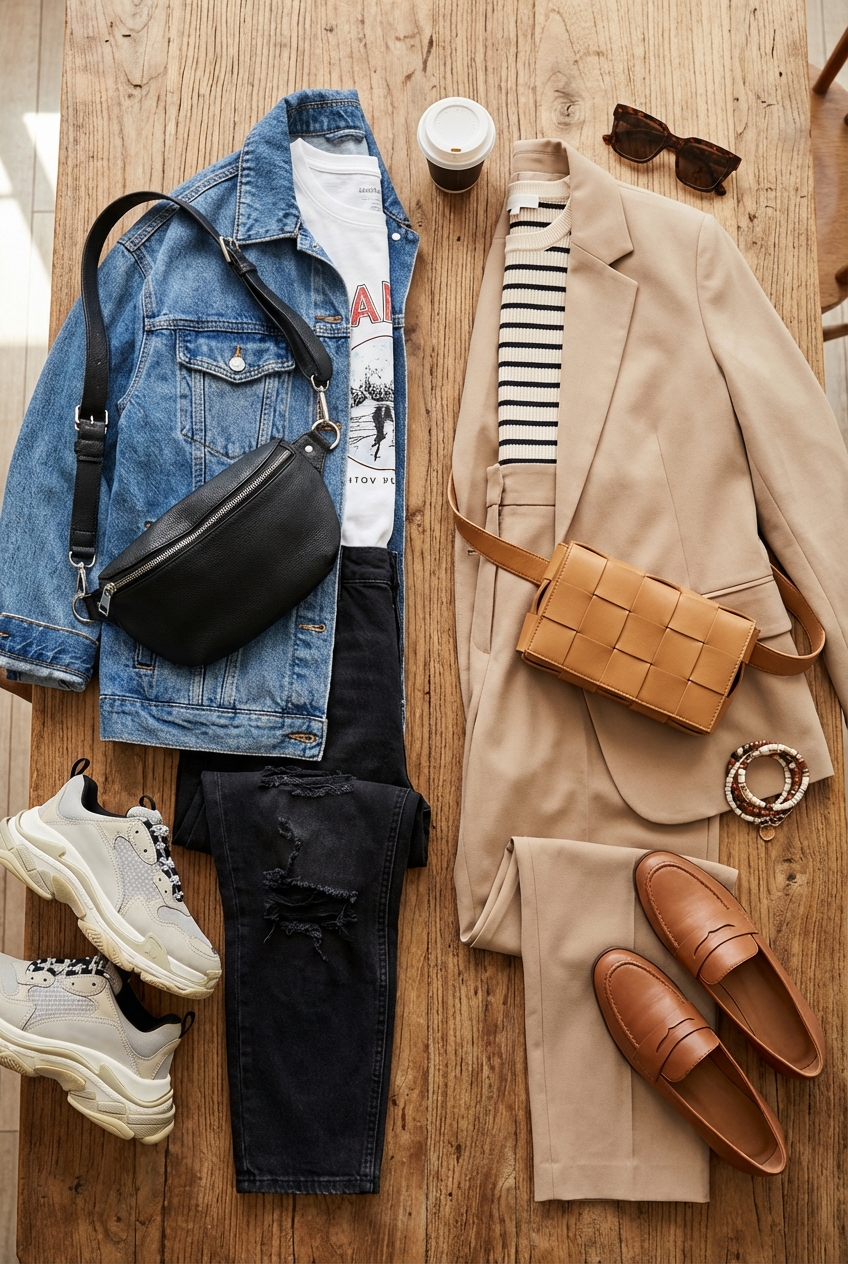
How To Style Belt Bags For Streetwear And Casual Chic
The evolution of the belt bag has been one of the most fascinating arcs in modern fashion history. What was once dismissed as a purely utilitarian tourist accessory has transformed into a staple of high-end luxury wardrobes. I remember sitting front row at a show in Milan a few years ago when I first saw a structured leather belt bag cinched over a cashmere coat. It wasn’t retro; it was architectural, functional, and undeniably chic.
Since then, the accessory has proven it has staying power, bridging the gap between convenience and high fashion. Styling them, however, requires a specific eye for proportion and silhouette. You cannot simply strap one on and hope for the best; the placement determines whether you look effortless or accidental.
In this guide, I will walk you through the precise mechanics of styling a belt bag for both streetwear and elevated casual looks. We will cover the geometry of strap placement, material coordination, and how to use this accessory to alter the visual shape of your outfit. If you are looking for visual inspiration, make sure to check out the Picture Gallery at the end of the blog post.
1. Mastering the Cross-Body Placement
The most contemporary way to wear a belt bag is across the chest, but the “set it and forget it” mentality often ruins the look. The placement of the bag on your torso is critical to the overall balance of your silhouette.
When worn cross-body, the bag acts as a focal point, drawing the eye diagonally across the upper body. This creates a visual disruption that can actually be quite slimming, provided the bag sits at the right height.
The Golden Rule of Height
The bag should never hang down by your hip bone when worn cross-body. This drags the eye downward and makes the outfit look heavy. Instead, tighten the strap so the top of the bag sits roughly two to three inches below your clavicle. The body of the bag should rest flat against your solar plexus or upper rib cage.
Designer’s Note: The Strap Tail
One common issue I see is the loose “tail” of the strap flapping around after you have tightened it. In high-end styling, we never leave loose ends. If the bag lacks a keeper loop, use a small, clear elastic hair tie to secure the excess strap against the main band. It keeps the lines clean and intentional.
2. Elevating Streetwear with Layers
Streetwear relies heavily on volume and layering. The belt bag is the perfect tool to manage this volume, adding structure to what might otherwise look like a shapeless outfit.
When wearing oversized hoodies or boxy denim jackets, the belt bag functions as a centering element. It breaks up the large block of fabric and adds a layer of texture.
The Sandwich Technique
A technique I use constantly on set is the “sandwich” method. Put on your base layer, such as a fitted tee or a bodysuit. Place the belt bag over this layer. Then, add your oversized zip-up hoodie, bomber jacket, or flannel shirt on top, leaving it unzipped.
This allows the bag to peek through the opening. It adds depth to the outfit without constricting the outer layer. It also keeps your valuables secure against your body, rather than swinging around on the outside of a bulky coat.
Common Mistakes + Fixes
Mistake: Wearing a small, delicate belt bag over a thick, puffy down jacket.
Fix: Scale is everything. If you are wearing heavy outerwear, the bag must have visual weight. Opt for a bag with a thick, wide strap and chunky hardware. Save the delicate leather bags for blazers and trench coats.
3. The Casual Chic Cinch: Blazers and Coats
For a look that transitions from the office to a dinner date, the belt bag can replace a traditional leather belt. This is particularly effective with blazers, trench coats, and wool overcoats.
This styling trick is about creating an hourglass silhouette out of menswear-inspired pieces. It is a power move that signals you understand how to manipulate clothing structure.
Defining the Waist
Button your blazer or coat. Place the belt bag at your natural waist—this is usually the narrowest part of your torso, roughly two inches above your belly button. Tighten the strap until it pulls the fabric in slightly, creating a peplum effect with the jacket’s hem.
Fabric Considerations
Be mindful of the fabric bunching. Thinner wools and gabardine blend blazers cinch beautifully. However, if you are wearing a thick tweed or heavy boucle, a belt bag might create unflattering bulk at the waist. In those cases, revert to the cross-body hold or sling the bag loosely over one shoulder.
4. Monochromatic Texture Play
One of the most sophisticated ways to style a belt bag is within a monochromatic color palette. When the entire outfit is one shade, the accessories define the look through texture rather than color contrast.
This approach reads as expensive and intentional. It removes the visual noise and focuses the eye on the quality of the materials.
Mixing Finishes
If you are wearing a matte black cotton tracksuit, pair it with a patent leather or high-gloss nylon black belt bag. The shine of the bag against the matte fabric creates a luxurious depth.
Conversely, if you are wearing a satin slip skirt and a soft knit sweater in cream, choose a belt bag in a suede or grained leather texture. The roughness of the suede grounds the slippery nature of the satin.
The “Invisible” Strap
For a seamless look, try to match the strap color exactly to your top. This makes the bag appear as if it is floating or integrated into the garment, rather than strapping across it. This is a favorite trick of mine for minimizing the “tourist” vibe that contrasting straps can sometimes give off.
5. Hardware Harmony and Jewelry Coordination
Because a belt bag often sits high on the chest or at the waist, it occupies the same visual real estate as your jewelry. The hardware on your bag—zippers, buckles, chains—must converse with your necklaces and earrings.
Ignoring this relationship creates visual clutter. You want your accessories to look like a curated collection, not a random assortment.
The Metal Mix
If your belt bag has heavy gold chain detailing or a prominent gold logo, echo that with gold hoop earrings or a simple gold chain necklace.
If you prefer mixing metals, do so intentionally. A bag with silver zippers can be paired with gold jewelry, provided there is a “bridge” element—perhaps a watch that features both silver and gold tones, or a bag strap that incorporates a neutral color to separate the metals.
What I’d Do in a Real Project
When styling a client, I always check the “visual weight” of the hardware.
- Heavy Hardware: If the bag has a chunky industrial buckle, I skip necklaces entirely. I let the bag be the jewelry for the torso and focus on statement earrings instead.
- Minimal Hardware: If the bag is sleek with hidden zippers, I layer delicate necklaces that sit just above the bag’s top edge. This draws the eye up to the face.
6. Proportions for Petite vs. Tall Frames
As with any accessory, the belt bag must scale to your body type. A bag that is too large can overwhelm a petite frame, looking like luggage rather than a handbag. A bag that is too small on a taller frame can look like a toy.
Understanding your own vertical and horizontal proportions helps you select the right bag size and placement.
For Petite Frames (Under 5’4″)
Avoid oversized, rectangular “bumbags” that span the entire width of your torso. These cut you in half visually. Instead, look for oval or rounded shapes that are no wider than 8 inches.
When wearing the bag cross-body, keep it high. The higher the focal point, the longer your legs will look. Avoid wearing the bag low on the hip, as this drags your visual center of gravity down.
For Tall or Curvy Frames
You have more surface area to work with, so you can carry off the oversized architectural bags that are currently trending. A tiny pouch might get lost on a voluminous winter coat or a tall frame.
Look for bags with wider straps (1.5 inches or wider). A thin, stringy strap can look disproportionate against a taller stature or fuller figure. The substantial strap balances the look and provides better physical support for the bag.
7. Seasonal Transitions: Summer to Winter
The versatility of the belt bag lies in its ability to adapt to seasons. However, the way you style it must shift as the layers change. You cannot use the same settings on your strap in July that you use in January.
Summer Styling: The Loose Drape
In warmer months, fabrics are lighter—linens, cottons, silks. A tight cross-body strap can wrinkle these fabrics or cause shirts to bunch up awkwardly with sweat.
During summer, loosen the strap by an inch or two. Let the bag hang slightly lower, perhaps near the hip or loosely across the chest. This allows for airflow and prevents the “strapped in” look that feels too intense for summer heat.
Winter Styling: The Outerwear Extension
In winter, your belt bag effectively becomes part of your coat. I often advise clients to treat their belt bag as a pocket extension.
If you are wearing a long trench coat, belt the bag over the closed coat. If you are wearing a puffer, wear the bag cross-body but lengthen the strap significantly to accommodate the down fill. Never try to squeeze a puffer jacket under a tight strap; you will look like the Michelin man.
Finish & Styling Checklist
Before you walk out the door, run through this quick mental checklist. This is the exact process I use on photo shoots to ensure the accessory integrates perfectly with the look.
- Strap Check: Is the strap twisted? Smooth it out so it lies flat against your back and chest.
- Height Adjustment: Is the bag sitting in the “sweet spot” (solar plexus or natural waist)? If it’s hitting your hip bone while cross-body, tighten it.
- Tail Management: Is the excess strap secured? Tuck it into the keeper loops or use a hidden pin/elastic.
- Fabric Flow: Is the bag causing your shirt or jacket to bunch awkwardly? If so, pull the fabric taut underneath the strap or switch to a structured layer.
- Hardware Polish: Are the zippers and buckles clean and facing forward?
- Load Balance: Is the bag overstuffed? A bulging belt bag looks messy. Edit your contents down to phone, cards, and keys to maintain the bag’s intended shape.
FAQs
Are belt bags still in style for 2024 and beyond?
Absolutely. They have graduated from a “trend” to a “staple.” Design houses like Gucci, Prada, and Bottega Veneta continue to release new iterations every season. The key is in the material; choose leather or high-quality technical nylon to ensure longevity.
Can I wear a belt bag to a formal event?
It depends on the dress code. For a cocktail event, yes—if the bag is a refined material like velvet or embellished leather and is worn as a clutch or cinched over a tailored suit. For a black-tie wedding, it is generally best to stick to a traditional clutch.
How do I stop the bag from sliding around when I walk?
This is usually a result of the strap being too loose or the material of the bag being too slippery against your clothing. Tighten the strap slightly. If you are wearing a slick material like a raincoat, you may need to wear the bag under the coat or tighter at the waist to create friction.
Is it okay to wear a belt bag on the shoulder like a traditional purse?
Yes, this is a great way to make the look more casual. Shorten the strap completely and sling it over one shoulder, letting the bag hit right under your armpit. It gives a “90s baguette bag” vibe that is very current.
Conclusion
Styling a belt bag is less about following a rigid set of rules and more about understanding the architecture of your outfit. It is a tool that can add a waist to a boxy jacket, texture to a monochrome look, or simply a hands-free edge to a floral dress.
By paying attention to the scale, placement, and material interactions, you move the look from “tourist convenience” to “fashion editor off-duty.” Remember that confidence is the final accessory; wear the bag with intention, and the style will follow.
Picture Gallery


