
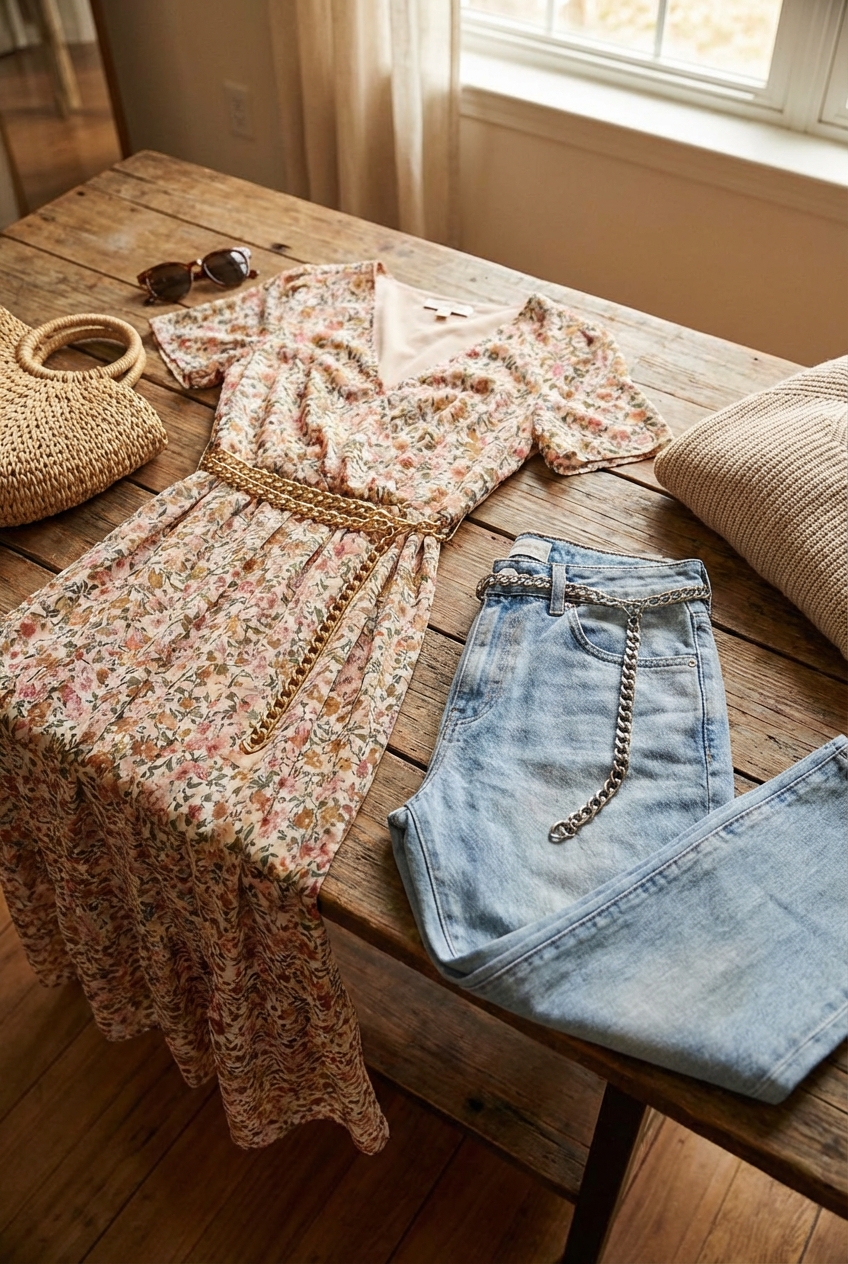
How To Style Chain Belts With Dresses And Jeans
The resurgence of the chain belt is more than just a nod to the supermodel era of the 1990s; it is a masterclass in adding texture and shine to a silhouette. In my years of styling high-end clients, I have found that a chain belt is the single most effective accessory for transforming a flat outfit into a dynamic look. It acts as jewelry for the waist, bridging the gap between utilitarian clothing and evening-ready glamour.
I recall a specific fitting with a client who was struggling with a simple cashmere sweater dress. It looked comfortable but lacked shape and intention. By adding a vintage multi-strand gold chain belt, casually slung low on the hips, the entire architecture of the look changed. It instantly defined her waist without the constricting feeling of leather, adding a movement and chime that elevated the garment from loungewear to luxury.
Mastering this accessory requires understanding balance, weight, and fabric interaction. It is not simply about buckling a belt; it is about draping metal to complement the lines of your body. If you want to see specific examples of these looks, check out the Picture Gallery at the end of this blog post.
Understanding Proportions and Body Placement
The placement of a chain belt dictates the entire mood of your outfit. Unlike leather belts, which serve a functional purpose to hold up trousers, chain belts are purely aesthetic and rely on gravity to create lines.
The Natural Waist vs. The Hips
Placing a chain belt at the natural waist (the smallest part of your torso, usually two inches above the belly button) creates a cinched, hourglass effect. This works best with structured garments like blazers or A-line dresses. Conversely, wearing the belt low-slung on the hips invokes a relaxed, bohemian, or grunge aesthetic.
Stylist’s Note: The Two-Finger Rule
A common issue I see is over-tightening. Metal does not stretch. When securing a chain belt at the waist, ensure you can fit two fingers comfortably between the chain and your fabric. If it is too tight, it will dig into the garment and create unflattering bulges. For hip placement, the belt should rest on the hip bones without sliding down when you walk.
Visual Weight and Scale
Consider the scale of the chain links relative to your frame and the garment.
- Petite Frames: Opt for delicate, thinner chains or single-strand coin belts. Heavy, chunky hardware can overwhelm a smaller silhouette.
- Curvier or Taller Frames: You can carry substantial weight. Look for thick curb links, multi-layered strands, or belts with large medallions to maintain visual balance.
Pairing Chains With Denim: Beyond the Loops
Styling chain belts with jeans creates a high-low contrast that is effortlessly chic. The metal adds a hard edge to the soft, matte texture of denim.
Ignoring the Belt Loops
One of the biggest secrets in high-fashion styling is ignoring the belt loops entirely. Most belt loops are placed for function, not fashion. Threading a delicate chain through thick denim loops often hides the accessory. Instead, clasp the belt over the waistband, allowing it to rest slightly below the loops. This allows the full design of the belt to be visible.
The Swag Effect
Let the tail of the belt hang long. If you have a chain belt with a lobster clasp, attach it so that at least 6 to 10 inches of chain drapes down the side of your thigh. This vertical line elongates the leg.
Common Mistakes + Fixes
- Mistake: Wearing a tight chain belt with low-rise jeans that creates a “muffin top” effect.
- Fix: Size up on the belt. The chain should drape in a U-shape across the front, resting on the hip bones, rather than cutting into the soft tissue of the waist.
Elevating Dresses: Fabric and Friction
Dresses offer the most versatility for chain belts, but they also present the highest risk for fabric damage. The interaction between metal hardware and textiles is critical.
The Slip Dress
A silk or satin slip dress is a staple, but it can feel unstructured. Adding a chain belt provides a visual anchor. However, weight is a factor here. A heavy chain will drag the delicate silk down, distorting the hemline. Opt for lightweight aluminum or hollow-link chains that provide the look of gold without the gram weight.
Knits and Sweater Dresses
This is my favorite application for chain belts. The texture of wool or cashmere contrasts beautifully with cold metal. Because knits are thicker, you can use heavier, chunkier chains. Position the belt to break up the long column of fabric, creating a waistline where there wasn’t one before.
Stylist’s Note: The Snag Test
Before buying a chain belt, run the links over an old pair of pantyhose or a delicate scarf. If it catches, do not wear it with silk, satin, or loose knits. Rough soldering points on cheap chains will ruin a high-end dress in seconds.
Metal Mixing and Hardware Coordination
The old rule of “never mix metals” is archaic. However, there is a right way to mix metals to ensure the look remains cohesive rather than chaotic.
Dominant Tone Strategy
Pick one metal to be the dominant force. If your chain belt is gold, try to keep your earrings and necklace gold. You can introduce silver in smaller accents, like rings or the hardware on your handbag.
Matching the Shoe Hardware
To create a truly polished look, coordinate the belt metal with the hardware on your footwear. If your loafers have a gold horsebit, a gold chain belt ties the look together vertically.
What I’d Do For A Client Styling
If I am dressing a client in a cool-toned outfit (grey denim, white shirt, blue blazer), I typically reach for silver or gunmetal chains. For warm tones (cream dresses, brown leather, beige knits), gold or brass is the natural choice. If the outfit is neutral black, I often mix metals—perhaps a belt that intertwines gold and silver links—to add complexity.
Layering and Stacking
For a maximalist approach, one belt is often not enough. Layering belts is a technique often seen on runways but rarely utilized in daily wear.
The Leather and Chain Combo
This is a very practical way to wear the trend if you need your pants to stay up. Wear a simple, classic leather belt through the loops of your jeans. Then, drape a chain belt over the top of the leather belt. The leather provides friction to keep the chain in place, and the layered look adds immense depth.
Multi-Strand Styling
If you have two thinner chain belts, wear them together. Clasp one slightly tighter to sit higher on the waist, and let the second one hang looser on the hips. This graduated layering draws the eye inward and creates an illusion of curves.
Common Mistakes + Fixes
- Mistake: Layering two bulky belts that compete for attention.
- Fix: Vary the scale. Pair one thick, chunky chain with a very delicate, thin chain. The contrast makes both pieces stand out.
Material Quality and Garment Care
As a fashion expert, I cannot stress enough that the quality of the accessory determines the longevity of your wardrobe. Cheap base metals can tarnish and transfer color onto your clothes.
Weight Indicates Quality
While you don’t want a belt that is uncomfortably heavy, extremely light, plastic-feeling metal often looks inexpensive and lacks the proper drape. Look for plated brass or stainless steel. These materials have enough weight to hang correctly against the fabric.
Storage Solutions
Never hang chain belts on a hook with your other belts; they will tangle. Store them coiled in soft dust bags or laid flat in a drawer with dividers. This prevents the links from getting crushed or twisted.
Avoiding Color Transfer
Be wary of copper-based alloys if you are sweating or in humid environments. They can leave green marks on white dresses or light denim. Stick to stainless steel or high-quality gold plating for summer wear.
Finish & Styling Checklist
Before you head out the door, run through this quick mental checklist to ensure your look is polished and practical.
1. Check the drape: Does the belt hang naturally, or is it catching on buttons or fabric bunches?
2. Test the noise: Walk around the room. Does the belt chime excessively? In a quiet office, this might be distracting.
3. Secure the tail: If the hanging end is too long, use a small safety pin or a hidden jump ring to secure it further up the chain so it doesn’t swing between your legs.
4. Sit down test: Sit in a chair. Does the belt dig into your stomach? If so, loosen it by one or two inches.
5. Hardware harmony: Glance at your bag and shoes. Do the metals clash distractingly, or do they complement the belt?
FAQs
Can I wear a chain belt to the office?
Yes, but keep the scale modest. Avoid jingling coin belts or excessive layers. A single, sleek gold chain over a blazer or a pencil skirt is professional and stylish.
How do I style a chain belt if I am plus-size?
Look for adjustable chain belts with a simple hook closure rather than a fixed buckle. Position the belt to highlight your favorite feature—high on the waist to emphasize an hourglass shape, or slung low to accentuate hips. Ensure the chain is long enough to provide a generous “tail” for that vertical line effect.
Can I wear a chain belt with a patterned dress?
Absolutely. In fact, a solid metal belt can help break up a busy print and define the waist. A gold chain works wonders on floral prints, while silver cuts through geometric or abstract patterns cleanly.
What do I do if my chain belt is too long?
This is an easy fix. You can use jewelry pliers to open a link and remove the excess length. Alternatively, loop the excess chain around the main part of the belt twice to create a decorative knot effect.
Conclusion
Styling a chain belt is an exercise in creativity and proportion. Whether you are adding a touch of grunge to your favorite denim or bringing structure to a floating summer dress, this accessory is a powerhouse in any wardrobe.
Remember that fashion is about experimentation. Do not be afraid to play with placement, layering, and mixing metals. The chain belt is timeless, versatile, and when styled with intention, it conveys a level of sophistication that few other accessories can achieve.
Picture Gallery


