
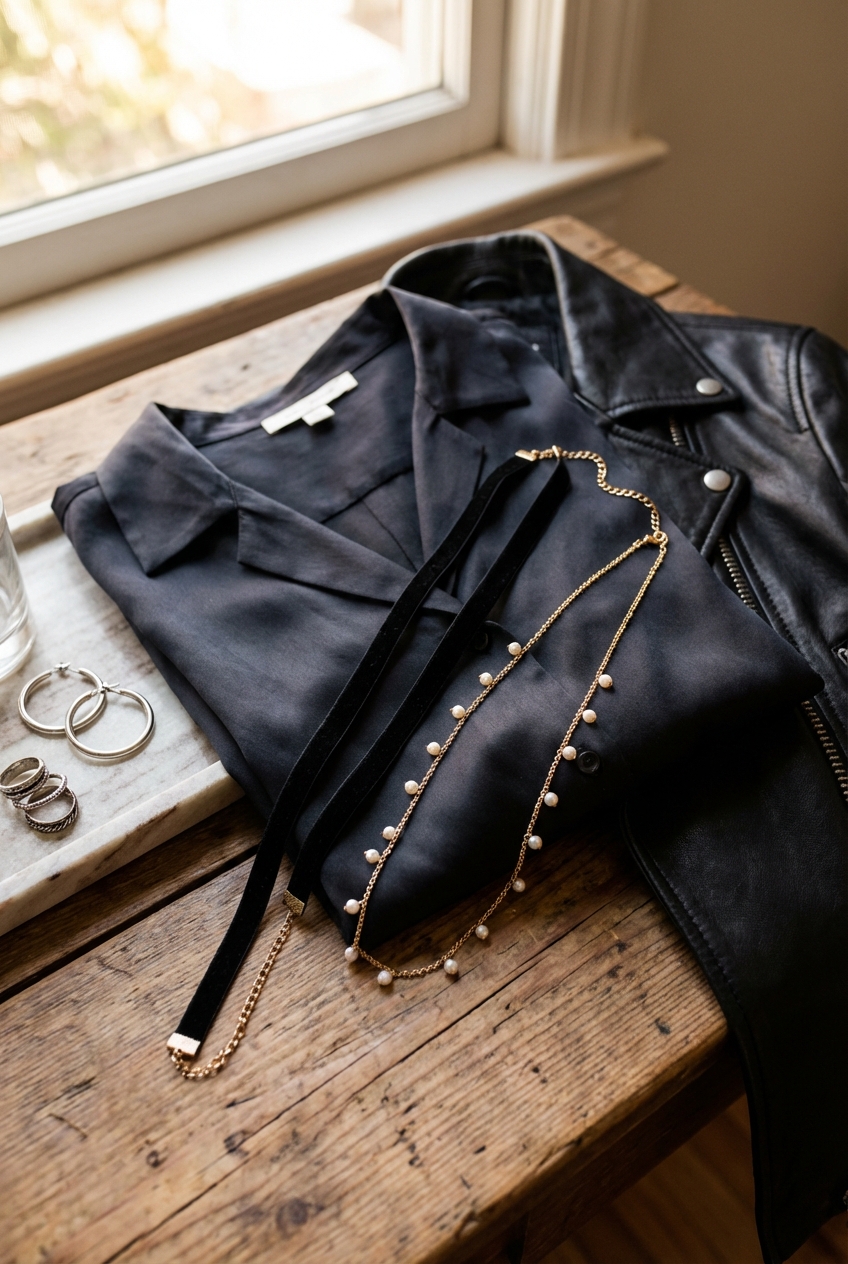
How To Style Chokers For An Edgy Yet Elegant Look
I still remember the first time I styled a high-profile client for a gallery opening in SoHo. She was wearing a stunning, architectural black gown but felt something was missing from the neckline.
We tried pendants, long chains, and even a statement collar, but everything felt too traditional or too heavy. The moment we clasped a sleek, structured gold choker around her neck, the entire silhouette transformed from safe to striking.
Chokers possess a unique ability to bridge the gap between rebellious edge and sophisticated elegance unlike any other piece of jewelry. For visual inspiration on how these combinations come to life, be sure to check out the curated Picture Gallery located at the very end of this post.
Understanding Choker Widths and Proportions
The success of a choker look relies almost entirely on scale and proportion. Just as you wouldn’t put an oversized sofa in a tiny studio apartment, you cannot ignore the anatomy of the neck when selecting a choker.
For clients with shorter necks, thick bands can be visually truncating. A wide “cuff” style choker can make the neck disappear entirely, creating a boxed-in aesthetic that feels cluttered rather than chic.
If you have a shorter neck, opt for thin, delicate chains or ribbons that sit low on the base of the neck. This draws the eye horizontally without consuming vertical space.
The Golden Ratio of Neckwear
For those with longer necks, you have the luxury of playing with width. A structured metal band ranging from 1 to 2 inches in height looks sculptural and regal.
I often advise clients to measure their neck circumference and add two inches for the most comfortable “tight” fit. If the choker is adjustable, ensure the extension chain is high quality, as it will likely be visible with updos.
Stylist’s Note: The Comfort Factor
A common failure in styling chokers is prioritizing the look over the movement. I once had a client faint at a dinner party because her velvet ribbon was tied too tightly, restricting circulation when she became warm.
Always ensure you can fit one finger comfortably between the choker and your skin. The goal is for the piece to look flush against the skin, not to actually constrict it.
Matching Necklines for Maximum Impact
The interplay between your jewelry and your garment’s neckline is the most critical technical aspect of styling. The choker demands open space to breathe; it needs a canvas.
Strapless and off-the-shoulder tops are the natural best friends of the choker. They leave the entire clavicle exposed, allowing the jewelry to act as the focal point without fighting fabric for attention.
However, you can successfully pair chokers with other necklines if you follow specific spacing rules. The “skin gap” is non-negotiable for an elegant finish.
The Two-Inch Rule
When wearing a scoop neck or a square neck, ensure there is at least two inches of bare skin between the bottom of the choker and the top of the fabric.
If the jewelry touches the fabric, the visual separation is lost. It begins to look like embellishment on the shirt rather than a piece of jewelry, which cheapens the overall effect.
V-Necks and Plunging Cuts
Deep V-necks create a vertical line that elongates the torso. Adding a horizontal line with a choker creates a strong, geometric contrast that is visually arresting.
For a plunging neckline, avoid heavy, thick chokers. Instead, choose a delicate metal torque or a thin velvet strand with a small drop pendant to mimic the downward line of the clothing.
Avoid wearing chokers with boat necks or high crew necks unless you are layering long chains underneath. The lack of skin can make the area look crowded and stuffy.
Material Matters: From Velvet to Precious Metals
The “edge” in your look often comes from the material you choose. The “elegance” comes from the finish and the quality of that material.
Fabric chokers, such as velvet, silk, or leather, lean towards a gothic or grunge aesthetic. To elevate this, look for hardware details that scream luxury rather than costume shop.
A black velvet ribbon is a classic, but ensure the clasp is sterling silver or 14k gold rather than cheap alloy. Frayed edges are never edgy; they are simply messy.
Metals for Modern Minimalism
Structured metal chokers are the pinnacle of high-fashion styling. A solid gold or silver cuff communicates power and sophistication immediately.
When selecting metal chokers, finish is everything. A high-shine polish reads more glamorous and evening-appropriate.
Conversely, a brushed or matte finish offers a more industrial, contemporary edge suitable for gallery hopping or high-end daywear.
Mixing Hard and Soft
One of my favorite styling tricks is mixing contrasting materials. Pairing a soft silk slip dress with a heavy, industrial chain choker creates a tension that is incredibly stylish.
Alternatively, wearing a structured leather jacket with a delicate pearl choker subverts expectations. It tells the world you understand the rules of fashion well enough to break them.
The Art of Layering (The “Neck Mess” Trend)
Layering is where you can truly showcase your personality. The “neck mess”—a curated tangle of chains—starts with the choker as the anchor.
Start with your tightest piece: the choker. This should sit at the base of the neck, resting just above the collarbone.
The next layer should be a slightly longer chain, perhaps 16 to 18 inches, ideally with a different texture. If your choker is a solid band, make the next layer a link chain.
Visual Weight Distribution
Do not let all your layers have the same visual weight. If you have a thick choker, your longer chains should be finer to avoid looking like you are wearing armor.
Include a pendant on the longest chain to create a “V” shape. This anchors the look and draws the eye down, balancing the horizontal line of the choker.
Common Mistakes + Fixes
- Mistake: Layering metals that clash in undertone (e.g., a very yellow gold with a cool, icy silver) without intention.
- Fix: While mixing metals is trendy, try to keep the finish consistent (all polished or all matte) or use a “bridge piece” that contains both metals to unite the look.
- Mistake: Chains tangling immediately.
- Fix: Use a “necklace detangler” clasp, which separates the chains at the back of the neck. Alternatively, ensure your chains are different weights; heavy chains stay put better than light ones.
Balancing the Look: Earrings and Hair
When you wear a choker, you are drawing immense attention to the center of your neck. Your other accessories need to support this decision, not compete with it.
If you are wearing a statement choker, your earrings should generally be smaller. A classic diamond stud or a small huggie hoop is often the perfect accompaniment.
Avoid large chandelier earrings or long drops that graze the shoulder. When the earring meets the choker, the negative space is eliminated, and the neck looks cluttered.
Hairstyle Coordination
Your hair plays a massive role in the visibility and vibe of the choker. A sleek, high ponytail or a sharp bob is the ultimate power pairing for a choker.
By lifting the hair off the neck, you allow the jewelry to be the undisputed star. This is particularly important for wide metal cuffs or detailed lace pieces.
If you prefer wearing your hair down, ensure it is pushed back behind the shoulders or styled in loose waves that don’t obscure the neck. There is no point in wearing a statement piece if it is hidden behind a curtain of hair.
Context Styling: Day to Night Transitions
Chokers are surprisingly versatile, but the context changes the rules of engagement. What works for a dimly lit cocktail bar can look harsh in fluorescent office lighting.
For a daytime professional setting, opt for “barely there” chokers. A microscopic gold chain or a tiny pearl strand sitting at the hollow of the throat adds polish without distracting.
Keep the materials refined. Leather and heavy chains are generally too aggressive for most corporate environments.
Evening Glamour
Once the sun goes down, you can amplify the drama. This is the time for gemstones, wider bands, and sparkle.
A diamond tennis choker is the epitome of evening elegance. It pairs perfectly with black tie attire, offering a modern alternative to the traditional pendant necklace.
For an edgy night-out look, consider a stacked approach. Wear a fabric choker tight against the neck and layer a lariat necklace that dips low into the cleavage.
Finish & Styling Checklist
Before you walk out the door, run through this mental checklist. I use this exact process when finalizing a client’s look before an event.
What I’d Do in a Real Project:
- Check the Gap: Is there clear skin between the choker and the neckline? If they touch, I change the top or remove the necklace.
- The Finger Test: Can I slide two fingers under the band? If not, it will be uncomfortable within an hour.
- The Shake Test: I have the client shake their head. If the choker spins around or the clasp slides to the front, it’s too loose.
- Balance Check: I cover the choker with my hand and look at the earrings. Then I reveal the choker. If the combination feels overwhelming instantly, I switch to smaller studs.
- Skin Reaction: For metal chokers, I ensure the client has no nickel allergies. The neck is a sensitive area and reacts quickly to cheap plating.
FAQs
Can I wear a choker if I have a double chin?
Absolutely. The key is placement and width. Avoid thick bands that sit high up under the chin. Instead, choose a thin, delicate chain that sits as low as possible on the base of the neck, resting on the collarbones. This draws the eye down rather than up.
Are chokers age-appropriate for women over 50?
Yes, and they can be incredibly chic. I often style mature clients in structured gold collars or pearl strands. The trick is to avoid “costume” styles like cheap velvet or plastic tattoo chokers. Invest in high-quality metals and real gemstones for a sophisticated, ageless look.
How do I stop my choker from flipping over?
This is a common issue with flat chain chokers like herringbone styles. The primary cause is that the chain is slightly too long for the curve of your neck. Try tightening the clasp by half an inch. If it persists, a jeweler can often remove a link or two for a custom fit.
Can I wear a choker with a collared shirt?
You can, but the styling must be deliberate. You have two options: wear a very thin choker on the skin inside an unbuttoned collar, or wear a structured metal collar over the buttoned shirt (under the collar flaps). The latter is a very fashion-forward, architectural look.
Conclusion
Styling a choker is about mastering the fine line between restriction and decoration. It requires a confident understanding of your own proportions and a willingness to let one accessory dominate the conversation.
Whether you choose a razor-thin gold chain for subtle intrigue or a wide velvet band for dramatic flair, the choker remains the most potent tool for adding instant edge to an elegant outfit.
Remember that the most important rule is comfort; if you feel constricted, it will show in your posture. Wear the piece, do not let it wear you.
Picture Gallery


