
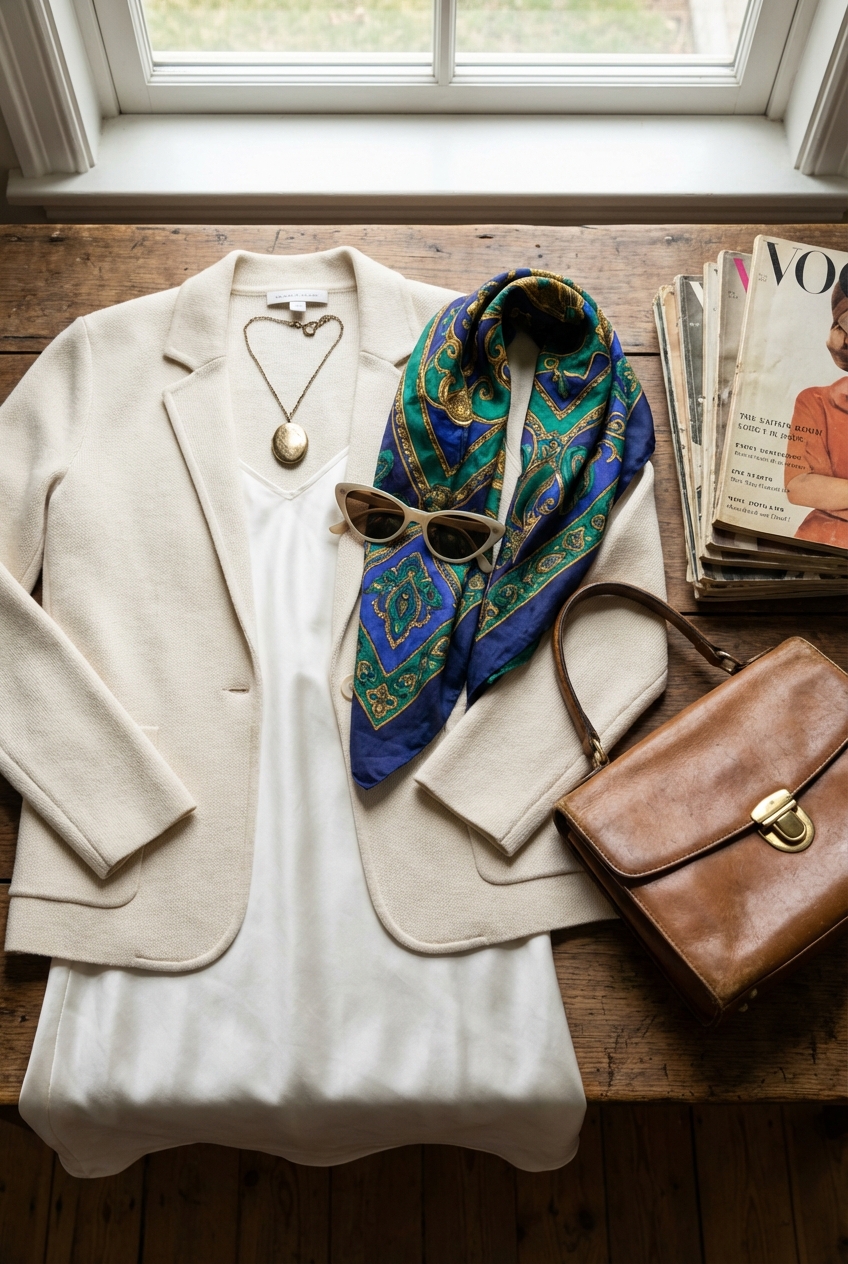
How To Style Vintage Accessories With Modern Outfits
Introduction
I still remember the first time I truly understood the power of a vintage accessory. I was styling a client for a high-profile gallery opening in New York, and she was wearing a painfully sharp, minimalist black suit from a current luxury collection. It looked beautiful, but it felt cold. It lacked a soul. On a whim, I pulled a chunky, hammered gold cuff from the 1980s out of my kit—a piece I had found at a flea market in Paris years prior. As soon as we slipped it onto her wrist, the entire outfit shifted from “corporate uniform” to “artistic visionary.”
That moment solidified a philosophy I have carried through my career as a stylist: modern clothing provides the canvas, but vintage accessories provide the story. Mixing eras is not just about being eclectic; it is about creating a visual tension that makes an outfit interesting. It stops people in their tracks because they cannot quite place the time period you belong to, giving you an air of timelessness rather than trendiness.
However, navigating the world of vintage can be intimidating if you worry about looking like you are wearing a costume. In this guide, I will break down exactly how to blend these worlds seamlessly, ensuring you look current yet curated. Be sure to scroll to the bottom, because I have curated a stunning Picture Gallery that visually demonstrates every styling tip mentioned here.
1. The “Rule of One” for Beginners
If you are new to vintage, the biggest fear is often accidentally looking like a character from a period drama. The easiest way to avoid this is what I call the “Rule of One.” When you are wearing a thoroughly modern outfit—think tailored trousers, a crisp white button-down, or a slip dress—add exactly one vintage element.
This single accessory acts as a focal point. For example, pair a structured 1950s top-handle bag with a slouchy, oversized modern blazer and denim. The rigidity of the vintage bag contrasts beautifully with the relaxed, contemporary silhouette of the jacket.
This strategy works because it allows the vintage piece to shine without competing for attention. It signals intentionality. You aren’t wearing old clothes; you are highlighting a collector’s item.
Stylist’s Note: The Costume Trap
The Mistake: Pairing a vintage accessory with a vintage-inspired modern dress (like a 1950s bag with a modern polka-dot circle skirt).
The Fix: Always contrast the eras. If the accessory is 1950s lady-like, wear it with 2024 menswear-inspired separates or raw-hem denim.
2. Mastering the Art of Vintage Belts
Vintage belts are often the unsung heroes of a wardrobe. They tend to feature hardware and leather quality that far surpasses what you find in mid-range retail today. However, sizing can be tricky because vintage waist sizes were significantly smaller, and the leather may have stiffened over decades.
When styling a vintage belt, looking at the width is crucial. A wide, statement belt from the 80s looks dated if you thread it through the loops of low-rise jeans. Instead, use it to cinch a modern, oversized shirt dress or a boxy blazer. This creates a silhouette that feels very “now” while utilizing the unique buckle of the past.
For thinner belts (under 1 inch), these are perfect for modern high-waisted trousers. The key is to match the leather condition to the outfit. A distressed leather belt looks incredible with crisp wool trousers, adding a bit of grit to a polished look.
Common Mistakes + Fixes
- Mistake: Forcing a vintage belt that is too small, causing the leather to crack or the waist to bulge.
- Fix: Take the belt to a cobbler to add professional holes or replace the leather strap while keeping the original buckle. This creates a custom fit that lasts.
3. Layering Vintage Jewelry with Modern Metals
Jewelry is the most accessible entry point for vintage styling. The current trend of “neck messes” and stacked rings is perfect for incorporating older pieces. The old rule of not mixing metals is dead; in fact, mixing the brassy gold tones of the 1970s with the bright sterling silver of today adds depth to your look.
Start with your base modern jewelry—perhaps a simple gold chain or diamond studs. Then, layer in a heavy vintage gold chain or a locket. The difference in the “gold” tones helps distinguish the pieces. Vintage gold often has a warmer, deeper hue compared to the yellow-gold plating used in modern fast fashion.
Scale is essential here. If you wear a large, ornate vintage cocktail ring, keep your other rings minimal. Let the vintage piece be the conversation starter. I often style a heavy 1960s distinct architectural ring with a sleek, minimalist manicure and a monochrome outfit.
What I’d Do in a Real Project
- Necklaces: I start with a 16-inch modern chain. I add an 18-inch vintage pendant. I finish with a 20-inch heavier vintage chain.
- Wrists: I mix a modern smartwatch or sleek bangle with a textured vintage chain bracelet. The mix of high-tech and high-history is very chic.
4. Silk Scarves: Beyond the Neck
Vintage silk scarves, particularly from houses like Hermès or Gucci, are treasures. But tying them tightly around your neck can sometimes feel like a flight attendant uniform if not styled carefully. To modernize a vintage scarf, you have to change the placement.
Try tying a colorful 90cm silk square onto the handle of a structured, neutral work bag. It adds a pop of print without dominating your face. Alternatively, weave a thinner ribbon scarf through a braid or a ponytail. This feels youthful and fresh.
If you do wear it around your neck, keep the knot loose and low, or wear it “cowboy style” with the point in the front. Pair this with a simple t-shirt and leather jacket. The casual nature of the cotton tee balances the luxury of the silk.
Fabric Care Note
Caution: Vintage silk is fragile. Avoid spraying perfume directly onto the scarf, as the alcohol can stain or degrade old fibers. Always spray perfume on your skin and let it dry before putting on the scarf.
5. Vintage Bags vs. Modern Technology
One practical constraint of vintage handbags is that they were not designed for modern life. A clutch from the 1920s or a handbag from the 1950s was made to hold a lipstick, a compact, and perhaps a handkerchief. They were not built for iPhone Pro Max models, charging banks, and chunky car keys.
When selecting a vintage bag for a modern outfit, you must check the dimensions specifically against your phone. There is nothing worse than buying a stunning bag online only to realize your phone sticks out the top. If you love a tiny vintage bag that fits nothing, treat it as jewelry. Wear it crossbody for the look, but carry a sleek canvas tote for your actual laptop and necessities.
Additionally, inspect the strap strength. Modern life is fast-paced; we swing bags around, commute, and travel. Vintage straps can be brittle. I often suggest clients swap a fragile original strap for a modern chain or a wide guitar-style strap. This instantly modernizes the bag and makes it safer to carry.
Styling Formula
The Equation: Vintage Bag + Modern Shoes = Balance. Do not match your vintage bag to vintage shoes. Pair that 60s patent bag with modern sneakers or chunky loafers.
6. Brooches on Blazers and Coats
Brooches are often dismissed as “grandma styling,” but they are currently having a massive resurgence on the runways. The trick to making a brooch look cool and not stuffy is placement and clustering. Do not pin a single small brooch on your left lapel—that looks like a uniform.
Instead, try clustering three different vintage brooches of varying sizes on the shoulder of a heavy wool coat. Think of it as creating your own hardware. Or, use a large, heavy brooch to close a wrap dress or a cardigan where a button doesn’t exist. This turns the accessory into a functional piece of the garment.
You can also place a brooch in unexpected places, like on the waist of a skirt, on a hat, or even pinned to a fabric clutch. This unexpected placement shows you are breaking the rules intentionally.
Technical Check
Weight matters: A heavy vintage brooch will drag down a thin silk blouse, potentially tearing the fabric. Only use heavy brooches on structured fabrics like wool, denim, or heavy cotton canvas. If you must wear it on thin fabric, place a piece of felt behind the fabric to anchor the pin.
Finish & Styling Checklist
To ensure you get the look right every time, run through this quick mental checklist before leaving the house:
- The Contrast Check: Is there a mix of textures? (e.g., Old leather vs. new denim).
- The Era Check: Am I wearing more than two items from the same past decade? If yes, remove one.
- The Condition Check: Is the vintage item clean and polished? “Vintage” should not mean “dirty.” Polish the brass and condition the leather.
- The Fit Check: Does the belt or jewelry fit comfortably, or is it pinching? Adjust functionality first.
- The Smell Test: Vintage items can hold musty odors. Ensure the item has been aired out so it doesn’t overpower your modern perfume.
FAQs
Can I wear silver and gold together if one is vintage?
Absolutely. In fact, vintage gold often has a rosier or brassier tone that looks stunning next to modern, cool-toned silver. Treat the metal mix as a deliberate color palette choice.
How do I clean vintage jewelry without ruining it?
Avoid harsh modern chemical dips. For most costume jewelry, a soft microfiber cloth and a tiny bit of dampness is enough. For rhinestones, never submerge them in water, as the foil backing can peel. Use a Q-tip to clean the surface only.
Is it okay to alter vintage pieces?
Yes! Unless it is a museum-quality designer piece, you should alter it to fit your modern life. Shortening a strap, adding holes to a belt, or changing earring backings from screw-back to posts makes the item wearable. If you don’t wear it, it’s useless.
What if the vintage leather smells musty?
This is common. Place the item in a sealed plastic bin with a container of activated charcoal or baking soda (not touching the item) for a week. Sunlight also helps, but be careful not to fade the color.
Conclusion
Styling vintage accessories with modern outfits is the ultimate expression of personal style. It shows that you are a curator of your own life, capable of seeing the beauty in history while living firmly in the present. It breaks the cycle of fast fashion and ensures that no one else in the room will ever be wearing exactly what you are wearing.
Remember that fashion is supposed to be fun. There are no hard police rules, only guidelines to help you feel your best. Start small with a ring or a belt, and eventually, you will find yourself reaching for those pieces of history every day to ground your modern wardrobe.
Picture Gallery


