
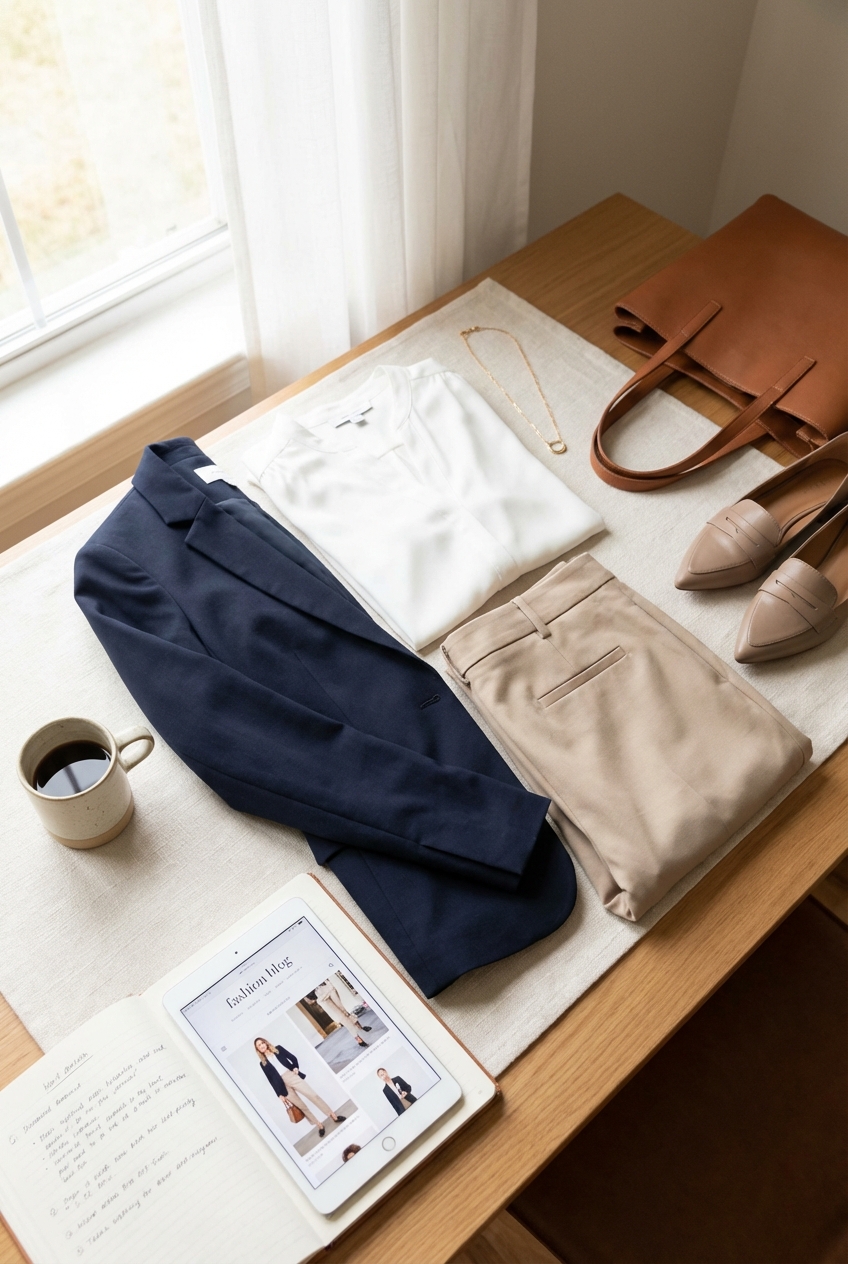
How To Style Your Capsule Wardrobe For The Office
One of the most frequent complaints I hear from clients isn’t that they lack clothing, but that they lack clarity. Standing in front of a packed closet at 7:00 AM creates decision fatigue before the workday has even begun. A well-curated work capsule wardrobe isn’t just about minimalism; it is about reclaiming your mental energy for the boardroom rather than spending it in the bedroom.
I recall a specific project with a high-profile executive who had three closets full of designer wear but “nothing to wear” for a last-minute press conference. We stripped her wardrobe down to thirty interchangeable pieces focused on fit and fabrication. The result was not just better style, but a newfound confidence that changed how she carried herself in high-stakes meetings.
Building a functional office wardrobe requires looking at your body as architecture and your clothing as the finishings. It requires a strategic eye for textiles, a strict adherence to tailoring metrics, and an understanding of color theory. For a visual breakdown of these combinations, I have curated a comprehensive Picture Gallery at the end of this blog post to guide your styling journey.
The Architecture of the Foundation Pieces
The biggest misconception about a capsule wardrobe is that it must be boring or strictly monochrome. In reality, a capsule is defined by the versatility of its components. When selecting your core pieces (the blazer, the trouser, the pencil skirt, the button-down), you must prioritize structural integrity over trends.
In my years of styling, I have found that “investment grade” fabrics are non-negotiable for office wear. Cheap synthetics trap heat, retain odors, and pill after a few wears. You want materials that drape heavily and recover their shape after you have been sitting at a desk for eight hours.
Look for “four-season” wool (often labeled as tropical wool or gabardine). This fabric regulates temperature and resists wrinkling. For tops, seek out silk blends or double-ply cotton. These fabrics reflect light differently, adding a subtle sheen that signals quality without looking flashy.
Stylist’s Note: The Lining Lesson
I often see clients buy expensive trousers that are unlined. This is a critical error. Unlined wool can cling to tights or bare skin, ruining the silhouette. Always check for a cupro or viscose lining that extends at least to the knee on trousers and fully on skirts. If a garment lacks lining, factor the cost of adding one into your alteration budget.
The Mathematics of Tailoring and Fit
In high-end fashion, fit is the metric of luxury. A $50 thrifted blazer tailored to your body will always look more expensive than a $2,000 designer suit that pulls at the shoulders. Styling your capsule effectively relies entirely on specific measurements hitting the right points on your body.
When styling trousers for the office, the “break” is essential. For a modern, slim cigarette pant, you want a “no break” or “slight break” where the hem just barely grazes the top of the shoe. This elongates the leg. For wide-leg trousers, the hem should hover exactly 1/4 to 1/2 inch off the floor while wearing your intended heel height.
Sleeve length is another dead giveaway of an ill-fitting wardrobe. Your blazer sleeve should end at your wrist bone. Your shirt sleeve should extend 1/4 to 1/2 inch beyond the blazer sleeve. These small ratios create a polished, deliberate look that separates a professional aesthetic from a sloppy one.
Common Mistakes + Fixes
- Mistake: The “Gaping Button” on blouses. This happens when the bust measurement is too tight, creating a peek-a-boo effect.
- Fix: Buy the size that fits your bust, not your waist. Then, have a tailor add darts to the waist to bring the fabric back in. Alternatively, have a tailor sew a hidden snap button between the straining buttons.
- Mistake: Skirts that ride up when walking.
- Fix: This usually means the hip measurement is too small. Size up to fit your widest point. If the waist gapes, take the waist in.
Mastering the Third Piece Rule
If you feel your outfit looks “unfinished,” you are likely missing the third piece. In interior design, we use layers to create depth; in fashion, we use the third piece to create authority. A top and a bottom are merely clothes; add a third element, and it becomes an “outfit.”
The third piece is typically a blazer, a structured cardigan, or a trench coat. However, in warmer climates or casual offices, a statement belt or a substantial silk scarf can serve this function. The goal is to add a layer of complexity that shows you put thought into the assembly.
For a capsule wardrobe, this piece acts as the anchor. If you are wearing a simple white tee and navy trousers, throwing on a camel hair blazer instantly elevates the formality. This allows you to utilize more casual base layers while maintaining professionalism.
Color Theory and The 70/20/10 Rule
Many people fear color in a capsule wardrobe, resulting in a sea of black and grey. While neutrals are vital, a lack of contrast can make you look washed out. I recommend using the 70/20/10 rule to balance your palette.
- 70% Core Neutrals: These are your workhorses. Navy, charcoal, camel, or black. They anchor the look and are used for your most expensive items (suits, coats).
- 20% Secondary Neutrals: These bridge the gap. Think ivory, cream, dove grey, or chambray blue. These are usually your shirts, blouses, or knitwear.
- 10% Accent Colors: This is where personality lives. A burgundy shoe, an emerald green scarf, or a saffron handbag. These items are smaller and easier to rotate seasonally.
When styling, try to sandwich your colors. If you are wearing black shoes, balance them with a black belt or a black bag. If you are wearing a light-colored top, ensure your shoes aren’t so dark that they drag the eye downward heavily, unless you are anchoring the look with dark trousers.
Shoe Selection: Balancing Aesthetics and Ergonomics
Footwear is the literal foundation of your outfit. In a corporate environment, the condition of your shoes speaks volumes. Scuffed toes or worn-down heels destroy the illusion of polish, no matter how expensive your suit is.
For a capsule, you need three distinct pairs:
- The Power Pump: A pointed toe elongates the leg. Stick to a 3-inch heel maximum for realistic office wear. Suede is softer on the foot than patent leather.
- The Structured Loafer: For days when heels are impossible. Look for almond or pointed toes rather than square, as they look dressier.
- The Ankle Boot: Essential for cooler months. Ensure the shaft of the boot is narrow enough to slip under your trousers without creating a bulge.
Real World Constraint: The Commuter Dilemma
If you commute via public transit or walk long distances, do not wear your office shoes during the commute. The salt, concrete, and subway grates will ruin them. Wear a sleek leather sneaker or commuter flat, and change immediately upon arriving at your desk.
Fabric Care and Longevity
A capsule wardrobe means you are wearing the same items more frequently. This increases the mechanical stress on the fibers. You cannot simply toss these items in the washing machine and expect them to last.
Wool suits should only be dry cleaned once or twice a season to prevent the fibers from becoming brittle. Between wears, use a high-quality steamer to kill bacteria and remove wrinkles. Steaming also refreshes the nap of the fabric.
Invest in cedar hangers for your blazers to maintain the shoulder shape and repel moths. For knits, never hang them; the weight of the fabric will stretch the shoulders and lengthen the torso. Always fold knits.
Styling For Different Codes: Creative vs. Corporate
The definition of “office wear” varies wildly. Styling your capsule requires adapting to your specific environment while maintaining your personal brand.
For the Corporate Office (Law, Finance):
Structure is key here. Rely on matched suits. If you break the suit (wearing the blazer with different pants), ensure the contrast is high (e.g., navy blazer, grey trousers) so it looks intentional, not like a mistake. Keep jewelry minimal and metallic.
For the Creative Office (Tech, Marketing, Design):
You have more freedom with texture and silhouette. Swap the blazer for a leather jacket or an oversized architectural knit. You can introduce denim, but it must be dark wash, rigid (no stretch), and devoid of distressing. Pair denim with silk or cashmere to elevate the high-low mix.
What I’d Do: The Real Wardrobe Checklist
When I am finalizing a client’s capsule, we run through this physical checklist to ensure the wardrobe is actually viable:
- The Sit Test: Sit in a chair for 5 minutes. Does the skirt ride up too high? Do the trousers cut into your waist? If yes, it goes to the tailor or the donation pile.
- The Sheer Test: Stand in front of a window. Can you see the outline of your legs through your trousers or skirt? If yes, you need better lining or different undergarments.
- The Hardware Check: Does the metal on your bag clash with your belt buckle? While mixing metals is trendy in jewelry, mismatched hardware on leather goods often looks messy in a formal setting.
- The Sole Inspection: Check the heels of your shoes. If the metal nail is clicking on the floor, you need to visit a cobbler immediately.
FAQs
Can I wear jeans in a business capsule wardrobe?
Yes, but with strict caveats. Stick to indigo or black denim. The hem must be hemmed properly—no fraying. Avoid “whispering” or fading on the thighs. Always pair denim with a structured jacket and leather shoes to offset the casual nature of the fabric.
How do I stop feeling like I’m wearing a uniform?
Change your accessories. A navy sheath dress looks completely different with a silk scarf and pumps than it does with a statement belt and boots. Use your “10%” accent color category to rotate trends in and out without changing the core wardrobe.
How many items should be in an office capsule?
There is no magic number, but I find the sweet spot is usually around 20 to 24 items (excluding workout gear and pajamas). This typically includes 3 jackets, 4 trousers, 3 skirts/dresses, and 8-10 tops. This provides enough mathematical combinations to go months without an exact repeat.
Is it worth tailoring cheap clothes?
Absolutely. A $40 Zara blouse tailored to fit your waist will look better than a $400 blouse that is too boxy. However, ensure the fabric quality is decent enough to withstand the alteration process. If the fabric is flimsy, tailoring won’t save it.
Conclusion
Styling a capsule wardrobe for the office is ultimately an exercise in self-respect. It is about presenting a curated, competent version of yourself to the world without wasting precious morning hours on decision-making. By focusing on the architecture of fit, the quality of materials, and the strategic use of accessories, you build a rotation that serves you, rather than the other way around.
Remember that this is a living system. As your career evolves and your body changes, your capsule should adapt. Start with the foundations, nail the tailoring, and then allow yourself the freedom to experiment with that 10% of accent styling.
Picture Gallery


