
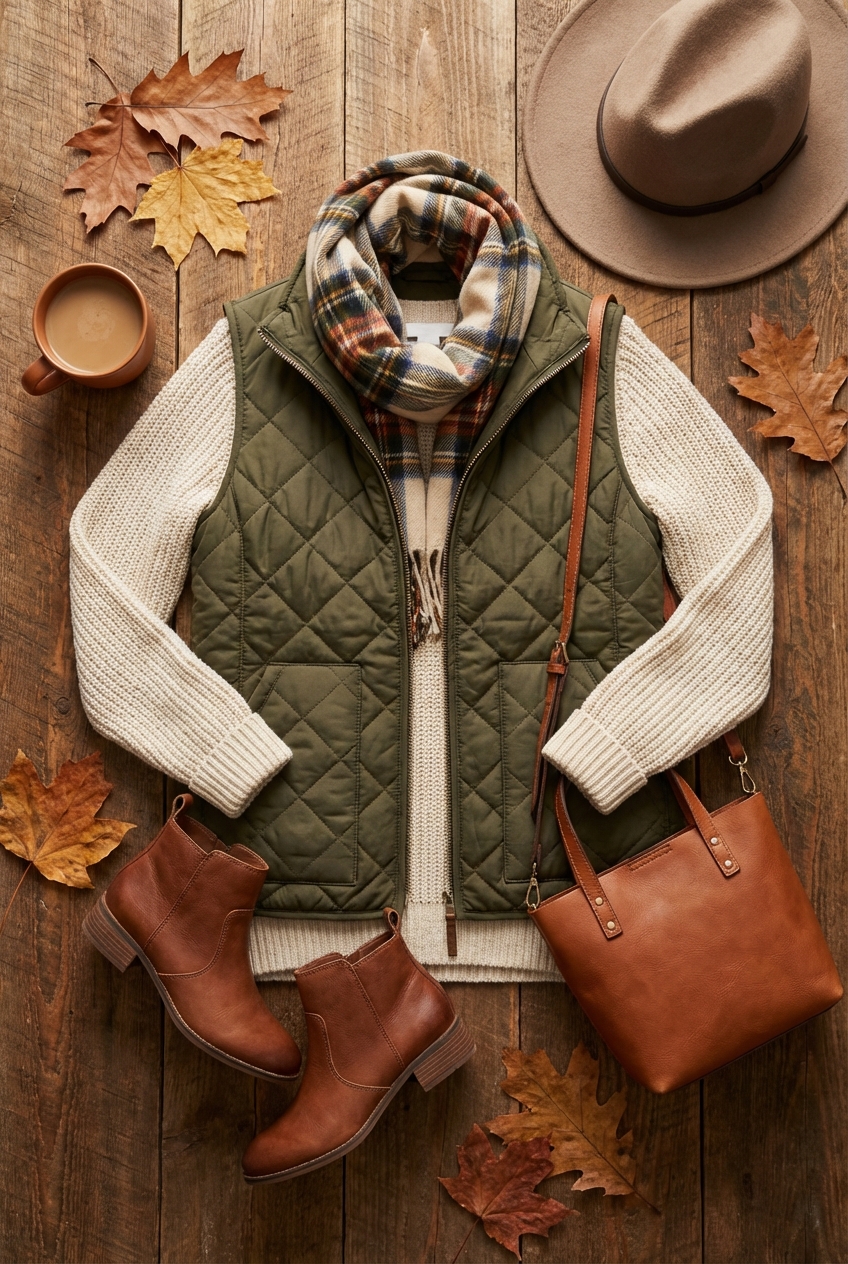
Layered Vests For Versatile Fall Weather A Stylish And Functional Must Have
Fall weather is notoriously fickle. One moment you are shivering in the morning chill, and by noon, you are overheating in a heavy trench coat. This transitional period requires a wardrobe strategy that prioritizes adaptability without sacrificing elegance.
In my years styling clients for high-stakes professional environments and relaxed weekends alike, I have found one item to be the ultimate problem solver: the layered vest. It is the architectural piece that bridges the gap between a light blouse and heavy outerwear. It allows for arm mobility while keeping the core warm, which is the secret to staying comfortable in fluctuating temperatures.
However, styling a vest is not as intuitive as throwing on a jacket. It requires a keen eye for proportion, texture, and volume control to avoid looking bulky. If you are looking for visual inspiration regarding silhouettes and color combinations, don’t forget to scroll to the Picture Gallery at the end of the blog post.
Defining the Silhouette and Proportions
The most critical rule in layering vests is managing the silhouette. Unlike a jacket, a vest does not hide the shape of your arms or shoulders, meaning the interplay between the vest and the layer underneath is visible and crucial.
When I am fitting a client, I first look at the length of the vest relative to their height. For a universally flattering look, aim for a “longline” vest that hits exactly at the mid-thigh. This elongates the torso and creates a clean vertical line.
If you are petite (under 5’4″), be wary of vests that end at the widest part of the calf. This can visually shorten your legs. Instead, look for a cropped length that hits just at the hip bone, or commit to a full knee-length cut to maintain verticality.
Designer’s Note: The Armhole Factor
One detail that often goes unnoticed until it is too late is the depth of the armhole. In high-end design, we look for a slightly dropped armhole.
Why does this matter? If the armhole is cut too high or tight, you cannot layer a chunky knit sweater underneath without bunching. When shopping, ensure there are at least two inches of clearance below your armpit when wearing your intended base layer. This prevents fabric from gathering uncomfortably and ruining the clean lines of the outfit.
Selecting the Right Fabric Weights
Successful layering is a game of physics and friction. You must consider how materials interact with one another. A common mistake is pairing two high-friction fabrics, like a rough wool vest over a coarse cotton sweater, which causes the garment to “stick” and twist as you move.
For the vest itself, boiled wool or cashmere blends offer the best structure. They are dense enough to block wind but drape beautifully over the body.
If you prefer the puffer aesthetic for casual wear, look for “micro-down” or diamond quilting rather than wide horizontal channels. Large puffy channels add significant visual width to the torso. A flatter, diamond-quilted pattern provides the same warmth but keeps the profile sleek.
Common Mistake: The Bulk Trap
I often see clients trying to layer a thick puffer vest over an equally thick cable-knit sweater. This creates the dreaded “Michelin Man” effect.
The Fix: Always follow the rule of opposing weights. If your vest is puffy and voluminous, your base layer should be a fine-gauge merino wool or a fitted modal turtleneck. Conversely, if you are wearing a chunky fisherman’s sweater, your vest should be a streamlined, flat wool gilet or a leather shell.
The Architecture of the Base Layer
The shirt or sweater you wear underneath is the foundation of the look. Because the sleeves are fully exposed, they become a major design element of your outfit.
For a sharp, professional look, a crisp white button-down is timeless. However, you must manage the sleeve volume. A shirt with a balloon sleeve can look fantastic with a vest, provided the vest has a wide enough shoulder to balance it out.
If the vest has a narrow shoulder cut, stick to fitted sleeves. A slim black turtleneck is the “secret weapon” in a stylist’s kit. It recedes visually, making the vest the star of the show while slimming the arms.
What I’d Do in a Real Project
When building a fall capsule for a client, I always include a ribbed cashmere bodysuit. Bodysuits are essential for vest styling because they eliminate the need to tuck in fabric constantly.
When you wear a vest, the hem of your shirt is more liable to untuck and shift because there is no jacket tension holding it down. A bodysuit ensures a perfectly smooth line from shoulder to hip, which makes the vest look tailored and expensive.
Structuring the Waist
Many women avoid vests because they fear losing their waistline. This is a valid concern, particularly with boxy, menswear-inspired cuts. The solution lies in strategic cinching.
If your vest does not come with a self-tie belt, adding a leather belt is a sophisticated move. However, placement is key. Do not belt the vest too tightly, as this creates unwanted bunching at the back.
Instead, use the “half-cinch” method. If the vest is open, belt only the back interior of the vest, threading the belt through the loops and buckling it behind you (or inside). This pulls the sides of the vest closer to the body without closing the front, giving you a defined silhouette while maintaining an open, vertical line.
Alternatively, belt the base layer underneath the vest. This highlights your waist when the vest swings open as you walk. It is a subtle detail that signals intentional styling.
Color Theory for Fall Layers
Fall fashion often defaults to black and grey, but vests are an excellent vehicle for introducing tonal texture. Because a vest is a “third piece,” it ties the top and bottom of an outfit together.
I recommend tonal dressing for the most expensive-looking result. Try a camel vest over a beige oatmeal sweater, paired with ecru trousers. The slight variations in the same color family create depth without visual clutter.
If you prefer contrast, use the vest to “column” your outfit. Wear a black top and black trousers (the column) and top it with a camel or burgundy vest. This creates an unbroken vertical line of black that slims the body, while the vest adds the color and interest.
Designer’s Note: Hardware Harmony
Pay attention to the zippers, buttons, and buckles on your vest. If your vest has gold hardware, ensure your jewelry and belt buckle match.
In layered looks, clashing metals can make the outfit feel messy. If you are wearing a silver-toned watch, a vest with prominent gold buttons will create visual friction. Consistency in hardware elevates the entire ensemble.
Footwear and Hemlines
The relationship between the hem of your vest and your footwear is critical for maintaining proper scale. This is similar to choosing the right rug size for a room; if the spacing is off, the whole arrangement feels awkward.
If you are wearing a longline vest (mid-thigh to knee), a knee-high boot is a powerful pairing. It creates a seamless transition that is very chic.
However, avoid leaving a small, awkward gap of skin between the boots and the vest hem if you are wearing leggings. It cuts the leg line. Either have the vest overlap the boots slightly, or show a significant amount of leg (3+ inches) to make it look intentional.
For cropped vests, you have more flexibility. Ankle boots, loafers, or even fashion sneakers work well. Just ensure the pants you choose have a structured hem that doesn’t pool at the ankles, which can make a vest outfit look sloppy.
The “Third Piece” Rule
In the fashion industry, we swear by the “Third Piece Rule.” A top and pants are just clothes; adding a third piece makes it an “outfit.”
In summer, this is hard to do because of the heat. In winter, the coat covers everything. Fall is the golden hour for the third piece, and the vest is the champion of this rule.
It adds complexity and thoughtfulness to a simple jeans-and-tee combination. Even a casual quilted vest elevates a grocery store run into a styled moment.
Finish & Styling Checklist
Before you head out the door, run through this mental checklist. I use a version of this during final looks at photo shoots to ensure the outfit reads correctly on camera and in person.
1. The Armpit Check
Lift your arms. Does the base layer bunch up comfortably, or is it getting strangled by the vest’s armhole? If it’s tight, switch the base layer to a finer gauge knit.
2. The Collar Interaction
If your vest has a high collar and you are wearing a collared shirt, pop the shirt collar so it stands up inside the vest collar. Do not flatten it over the top, which looks dated.
3. The Length Balance
Check your rear view. Does the vest cover your bottom? If so, ensure your trousers are slim or straight-leg. Wide-leg trousers with a long vest can sometimes look too voluminous.
4. The Lint Check
Vests, especially wool ones, are magnets for lint and hair because they have a large surface area. A quick pass with a lint roller is mandatory for a polished look.
5. Movement Test
Walk around the room. Does the vest stay on your shoulders, or does it slide off? If it slides, you may need a heavy fabric tape on the shoulder or a different base layer with more “grip” (like wool instead of silk).
FAQs
Q: Can I wear a vest to a corporate office?
A: Absolutely. Look for a “tuxedo vest” or a tailored wool gilet. These mimic the structure of a blazer but feel more modern. Pair it with a silk blouse and trousers. Keep the vest unzipped or unbuttoned for a relaxed but authoritative vibe.
Q: How do I clean a down or puffer vest without ruining the fluff?
A: Always check the care label, but generally, use a front-loading washer (no agitator) and a specific down wash detergent. The secret is the dryer: toss in three wool dryer balls (or tennis balls) to beat the feathers back into fluffiness as it dries. Never air dry down; it will clump and smell.
Q: I have a large bust. Will a puffer vest make me look top-heavy?
A: It can if the baffling (the stitched sections) is too wide. Look for “chevron” quilting (V-shaped lines) which draws the eye down and in. Also, avoid vests that zip all the way up to the chin; leave the top open to create a V-neck shape, which breaks up the chest area.
Q: Can I wear a vest over a dress?
A: Yes, this is a lovely bohemian look. A faux-fur or shearling vest pairs beautifully with a floral midi dress. The key is to define the waist of the dress so the vest doesn’t swallow your shape.
Q: What is the best investment color for a first vest?
A: I always suggest a warm camel or a deep charcoal grey. Black is standard, but lint shows easily. Camel always looks expensive and pairs with both black and denim, giving you maximum versatility.
Conclusion
Layered vests are far more than just a practical solution for erratic fall temperatures. They are a stylistic device that adds depth, texture, and architectural interest to your wardrobe. By paying attention to the “rules” of proportion, fabric friction, and color theory, you can transform a basic outfit into a curated ensemble.
Whether you opt for a sleek, tailored wool gilet for the boardroom or a cozy shearling piece for weekend errands, the vest remains the ultimate multitasker. It offers the freedom of movement we crave with the polish we require.
As you step into the season, experiment with these combinations. Trust the mirror, watch your proportions, and enjoy the unique versatility that only a vest can provide.
Picture Gallery


