
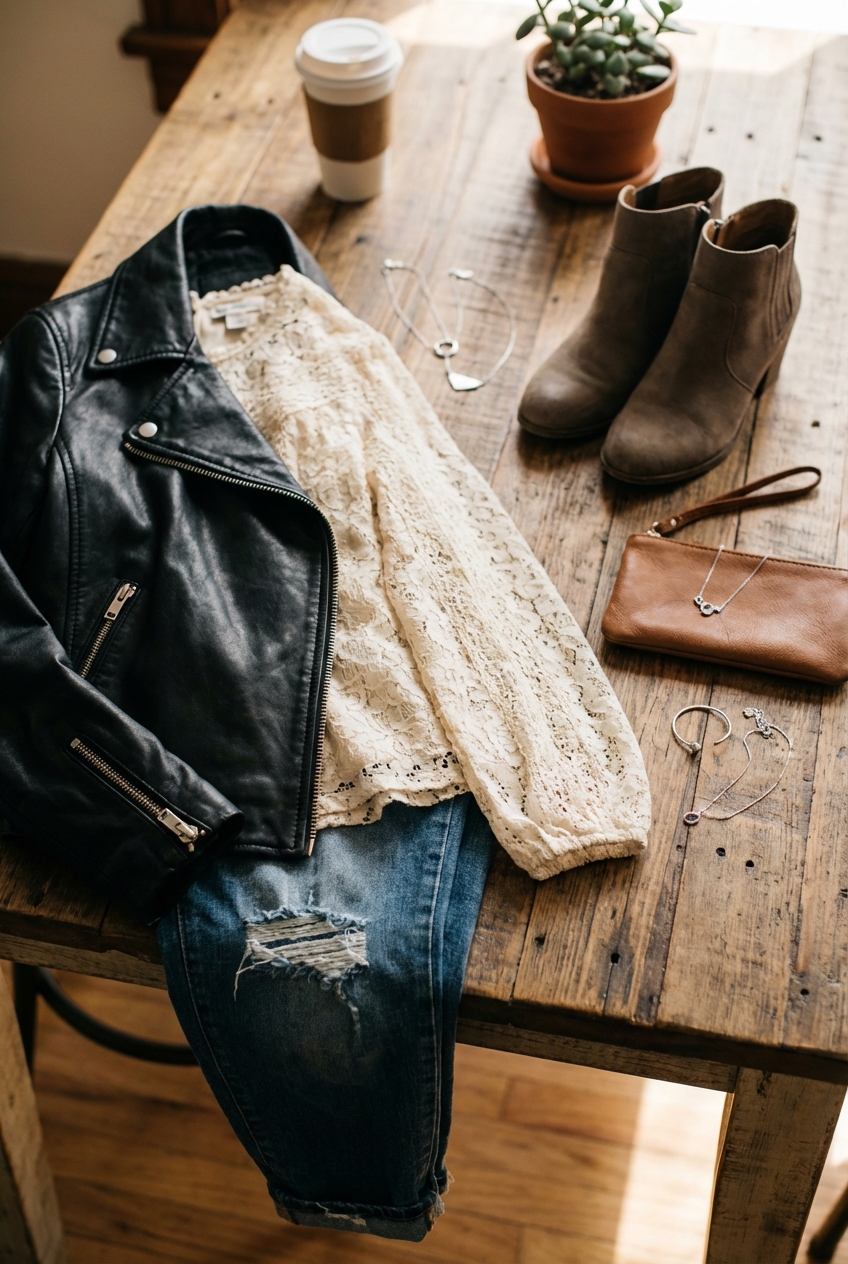
Leather And Lace Fusion Combining Edgy And Feminine Textures
There is a timeless moment in fashion history that I always return to when a client wants a home that feels both powerful and romantic. It is the image of a well-worn, structured biker jacket thrown effortlessly over a delicate silk or lace slip dress. The tension between those two materials—the rugged, protective armor of the leather and the sheer, revealing vulnerability of the lace—creates a magnetic aesthetic that transcends trends.
Translating this runway concept into interior design requires a similar hand. You are not simply tossing a doily onto a recliner. You are curating a dialogue between masculine weight and feminine intricacy. In the home, leather provides the grounding architecture, much like a good coat, while lace (and lace-like textures) offers the softening “jewelry” that catches the light.
When executed correctly, this fusion creates a space that feels curated and high-end rather than thematic or costume-like. It is about balance, scale, and the tactical experience of the room. If you need visual inspiration to see how these textures play off one another, I have curated a stunning Picture Gallery at the end of the blog post.
The Foundation: Selecting the Right Leather Anchor
In fashion, the cut of the jacket matters; in interiors, the silhouette of your furniture is everything. When building a room around the leather and lace concept, the leather pieces usually serve as your heavy anchors. These are your sofas, armchairs, or ottomans.
For this aesthetic, I almost always steer clients toward aniline or semi-aniline leathers in cognac, oxblood, or matte black. Aniline leather is dyed exclusively with soluble dyes without covering the surface with a topcoat paint or insoluble pigments. This means the natural hide texture is visible, offering a raw, edgy appeal that contrasts beautifully with refined textiles.
However, we must address the “man cave” risk. To avoid a room looking too heavy or masculine, pay attention to the frame. A chunky, overstuffed black leather recliner will kill the vibe. Instead, look for a Chesterfield sofa with deep button tufting. The tufting creates a visual rhythm similar to a corset, bridging the gap between structure and fashion. Alternatively, a sleek mid-century modern frame with tapered legs keeps the leather feeling light and airy.
Designer’s Note:
One lesson I learned the hard way involved a client with two large dogs and a pristine, naked aniline leather sofa. Within a week, it was scratched beyond the “distressed chic” look. If you have pets or young children, opt for a pigmented leather or a high-quality vegan leather. These have a protective coating that resists scratches and spills while still giving you that necessary edge.
Reimagining Lace: Texture Over Pattern
When I say “lace” in an interior context, I am rarely referring to the scratchy, polyester sheets you might find in an antique shop. In high-end design, we interpret lace as “open-work texture.” We are looking for materials that filter light and reveal the layers beneath them, just as lace does on the skin.
Think broader than traditional lace. Look for laser-cut metal side tables that cast intricate shadows on the floor. Consider macramé wall hangings with tight, complex knotting, or crochet-knit throws in natural fibers like alpaca or cotton. These elements mimic the geometry of lace but possess a weightier, more modern hand feel.
If you do use actual lace fabric, quality is non-negotiable. I often source vintage linen tablecloths with eyelet details or Guipure lace trims. I will layer these over a solid, heavy table in wood or stone. The key is that the lace must feel expensive and tactile, not flimsy.
Common Mistake + Fix:
Mistake: Using sheer white lace curtains everywhere, which can make a room look dated or “granny-chic.”
Fix: Swap stark white for unbleached linen or “greige” tones. Ensure the curtains are floor-to-ceiling length. The fabric should pool slightly on the floor (about 1 to 2 inches) to create a relaxed, romantic drape that contrasts with the strict lines of leather furniture.
The Rule of Visual Weight and Scale
In fashion styling, if you wear a voluminous leather skirt, you pair it with a fitted lace top to balance the proportions. In your living room, the rules of scale are identical. Leather is visually heavy; it absorbs light. Lace is visually light; it transmits light.
A good rule of thumb for this specific aesthetic is the 70/30 split. Allow 70% of your major surface area to be solid, grounding textures (leather, wood, velvet, solid paint), and reserve 30% for your intricate, open-work textures (lace, eyelet, crochet, wicker).
If you have a massive leather sectional, do not pair it with tiny, delicate lace pillows; they will disappear. You need to scale up the “lace” element. Instead of a small pillow, drape a massive, chunky open-knit blanket over the back. The open weave acts as the lace element but has enough bulk to stand up to the leather.
Measurements that matter:
When placing a rug (perhaps a cowhide to complement the leather theme) under your furniture, ensure the front legs of the sofa sit on the rug. The rug should extend at least 6 to 8 inches past the sides of the sofa. This anchors the floating furniture and prevents the ” postage stamp” effect, which ruins the luxury feel.
Lighting: The Shadow Play Factor
One of the most underutilized aspects of lace in interior design is its ability to shape light. While leather absorbs light and creates moody corners, lace creates patterns. This interplay is essential for the “edgy meets feminine” atmosphere.
I love using pendant lights or sconces with perforated metal shades or woven rattan. When the light is on, these fixtures cast lace-like shadows across the walls and ceiling. It creates an immersive texture without adding physical clutter to the room.
For the bulbs themselves, temperature is critical. Leather looks rich and warm under 2700K to 3000K lighting (warm white). Anything cooler (3500K-5000K) will make your leather look clinical, like a car interior, and will wash out the intricacy of your lace textures.
What I’d do in a real project:
1. Install a dimmer switch on the main overhead fixture to control the mood.
2. Place a floor lamp with a laser-cut metal shade next to the leather armchair.
3. Use warm-dim LED bulbs that get warmer in color as you lower the brightness.
Color Palette: Beyond Black and White
While the phrase “leather and lace” summons images of black biker jackets and white wedding dresses, a monochrome palette can feel stark and cold in a home. To make this liveable, we need to introduce bridging colors.
I treat cognac leather as a neutral. It pairs beautifully with cream, oatmeal, and blush pink lace. This combination feels bohemian and warm. If you prefer the edge of black leather, soften it with charcoal, slate blue, or dusty mauve textiles rather than stark white.
Metallic accents act as the “zippers and studs” of the room. Brass and gold warm up the space and bridge the gap between the organic leather and the intricate textiles. A brass coffee table with a glass top allows you to see the rug texture underneath, maintaining that sense of transparency and lightness.
Designer’s Note:
Avoid high-gloss finishes on your walls if you are using black leather. The reflection can be distracting. I prefer a matte or eggshell finish on walls to let the sheen of the leather be the star.
Styling the Bedroom: The Ultimate Fusion
The bedroom is the most natural environment for this aesthetic because it is inherently intimate. Here, we can lean a bit more into the romance of the lace without sacrificing the cool factor.
Start with a leather headboard. A channel-tufted leather headboard creates a strong, masculine focal point. Contrast this with bedding that features subtle lace detailing. I prefer washed linen duvet covers with a raw-edge ruffle or a crochet trim. It feels lived-in and effortless.
For the windows, layer a blackout roller shade (functional) behind a panel of heavy lace or open-weave linen (decorative). This gives you privacy at night but allows you to enjoy the filtered light during the day.
Bedroom Sizing Rules:
Your nightstands should be roughly the same height as the top of your mattress (within 2 inches). If you have a heavy leather bed frame, your nightstands need visual weight too—think solid wood or marble tops, not spindly wire tables.
Finish & Styling Checklist
To ensure your space looks curated by a fashion expert rather than thrown together, run through this final checklist before calling the project done.
- Check the Patina: Does the leather look too new? If so, drape a textural throw over the corner to break up the shine.
- Edit the Lace: Remove any lace item that feels stiff or synthetic. If it doesn’t feel good against your skin, it doesn’t belong in the room.
- Anchor the Floor: Ensure your rug is large enough to ground the furniture grouping. A faded vintage Persian rug often bridges the gap between leather and lace perfectly.
- Verify Lighting Temperature: Turn on all lights at night. If any bulb casts a blue or green tint, replace it with a 2700K or 3000K bulb immediately.
- Add Organic Elements: Introduce a large plant (like a Ficus or Monstera) or a vase of dried branches. The organic shapes soften the transition between the hide and the weave.
- Test the “Sit”: Sit in every seat. Is there a surface within arm’s reach (14–18 inches) to set a drink down? Function is the ultimate luxury.
FAQs
Can I mix different colors of leather in one room?
Yes, but proceed with caution. A general rule is to keep the “temperature” the same. Mix warm cognac with warm chocolate brown. Mixing a cool blue-black leather with a warm reddish-brown leather often looks like a mistake unless tied together by a rug containing both colors.
Is this style suitable for small apartments?
Absolutely. In fact, it works well because leather is durable and lace/open-weave textures keep the visual space open. Use a leather ottoman that doubles as a coffee table and storage. Use lace curtains to let maximum light in, making the room feel larger.
How do I clean lace textiles?
Vintage or high-end lace is delicate. I recommend vacuuming lace curtains or pillows using the upholstery attachment with a stocking pulled over the nozzle to prevent snagging. For deep cleaning, hand wash in cool water or dry clean. Never throw high-quality lace in a washing machine with zippers or hooks.
What is the best wall color for this aesthetic?
If your leather is dark (black or dark brown), I love a warm, creamy white like Benjamin Moore’s “Swiss Coffee.” If your leather is lighter (tan or camel), a moody charcoal or navy wall creates incredible drama and allows the lace textures to pop against the dark background.
Conclusion
Merging leather and lace is about more than just placing two materials side by side. It is about capturing a mood—a confidence that embraces both strength and softness. It is the architectural equivalent of wearing combat boots with a tulle skirt.
When you design with these contrasting textures, you create a home that feels dynamic. The leather offers a place to land, to rest, and to feel supported. The lace offers visual interest, light filtration, and a touch of whimsy.
Trust your eye and remember the fashion roots of this style. If the balance feels off, adjust your accessories. Add a heavier book to the table, or swap a sheer pillow for a knit one. Design, like personal style, is an evolution.
Picture Gallery


