
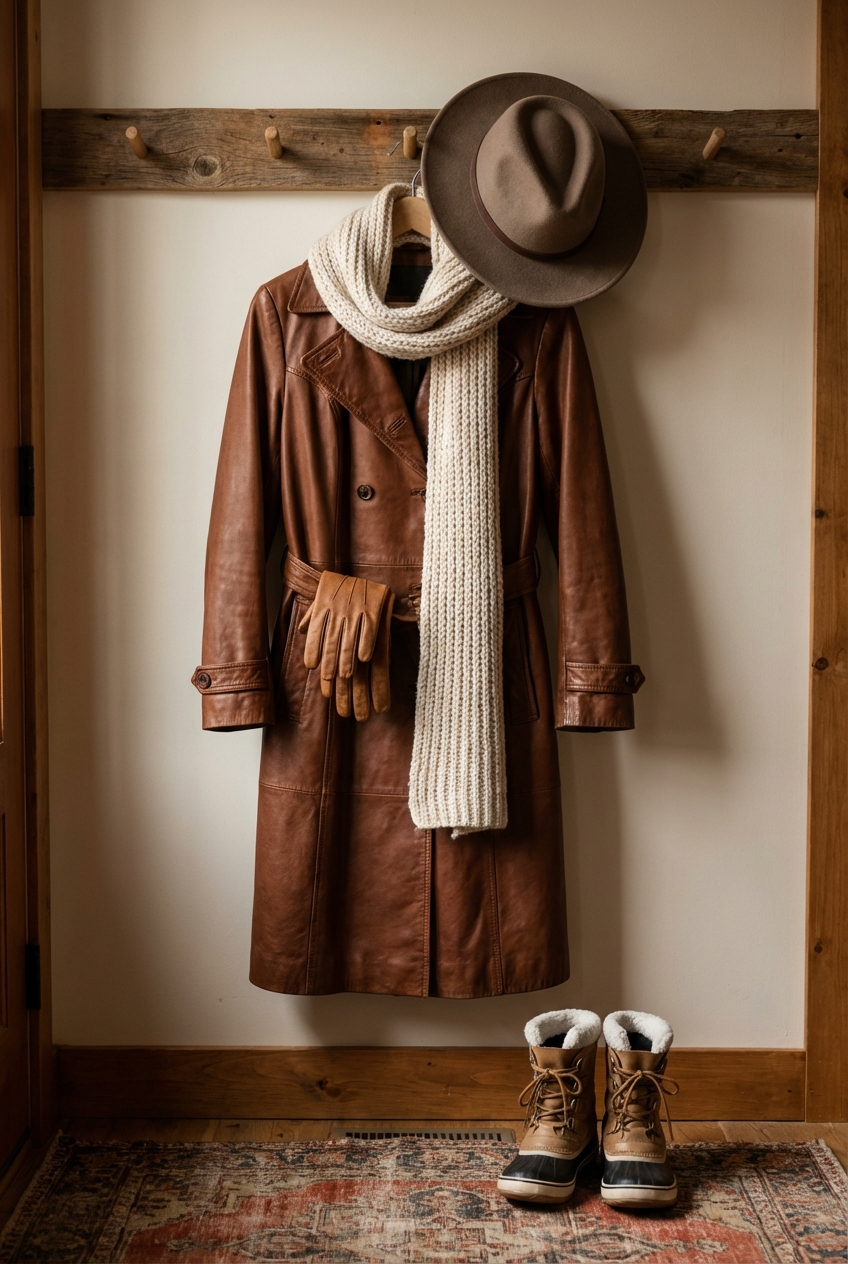
Leather Trench Coats For Winter Elegance
Introduction
There is a distinct moment in late autumn when the wool coats feel too heavy, yet a blazer is simply not enough. This is the precise climatic window where the leather trench coat reigns supreme, though I argue its utility extends deep into winter if styled correctly. In my years styling private clients for fashion weeks in New York and London, the leather trench has remained the single most requested investment piece. It offers an armor-like confidence that traditional gabardine trenches simply cannot replicate.
I remember working with a client who was terrified of leather outerwear because she associated it solely with “The Matrix” or aggressive biker aesthetics. We found her a buttery, chocolate-brown calfskin trench with a soft raglan sleeve. The transformation was immediate. It wasn’t just a coat; it was a textural anchor that elevated her simplest cashmere sweaters and denim into a cohesive look. That is the power of this garment. It does the heavy lifting so the rest of your outfit doesn’t have to.
However, selecting the right one requires navigating a minefield of grain qualities, lining weights, and silhouette proportions. A leather trench is a significant financial commitment, and the margin for error is slim. If the fit is off, you look costume-y; if the leather is cheap, it squeaks. This guide is your blueprint for navigating those choices. Be sure to scroll to the end of this post to view the Picture Gallery for visual inspiration.
1. The Architecture of Fit: Shoulders and Length
The silhouette of a leather trench is unforgiving. Unlike wool, which can be eased or steamed into submission, leather holds its shape. The most critical measurement to get right is the shoulder width. If the shoulder seam droops past your natural shoulder line on a set-in sleeve, the coat will look heavy and ill-fitting. For a tailored look, the seam should sit exactly on the acromion bone (the bony point of your shoulder).
If you plan to layer chunky knitwear underneath, you need a different approach. In this case, look for a “drop shoulder” or raglan sleeve cut. This style removes the defined shoulder seam, offering a rounded shape that accommodates bulkier layers without making you look restricted. I often recommend raglan sleeves for clients with broader shoulders or those who prioritize comfort over strict tailoring.
Length is the second non-negotiable variable. The most modern and elegant length for a winter trench is midi to tea-length. Specifically, you want the hem to hit mid-calf. This elongation creates a vertical line that slims the figure. A coat that hits right at the knee often cuts the leg in half visually, making the silhouette appear boxy.
Stylist’s Note: The “Sit Test”
When trying on a leather trench, do not just stand in front of the mirror. Sit down. Leather has less give than fabric. If the coat pulls uncomfortably across the hips or the buttons gape while seated, you need to size up. It is better to have a slightly looser coat that drapes fluidly than a tight one that restricts movement.
2. Materiality: Grain, Weight, and Finish
Not all leathers are created equal, and for a trench coat, the weight of the hide dictates the drape. Cowhide is durable and heavy. It offers significant wind resistance, making it excellent for harsh winters. However, it can be stiff initially and requires a substantial break-in period. If you want that structured, architectural look that stands away from the body, cowhide or steerhide is your choice.
Lambskin is at the opposite end of the spectrum. It is incredibly soft, pliable, and drapes almost like heavy silk. It feels luxurious against the neck and allows for easier movement. The downside is its delicacy. Lambskin is prone to snagging and tearing if you catch it on a sharp corner. It is also less water-resistant than cowhide. For a city dweller who uses car services and works in an office, lambskin is the height of elegance.
For those avoiding animal products, the vegan leather market has evolved significantly. We are past the era of “pleather” that peels after a season. High-end alternatives like Alt-Nappa (often made from polyurethane blends) or cactus leather offer convincing grain textures. When shopping for vegan options, scrutinize the backing. It should feel like a soft suede or woven fabric, not a rubbery sheet.
Common Mistake: Ignoring the Smell
High-quality leather smells earthy and rich. Poorly processed leather or cheap vegan alternatives smell like chemicals or plastic. If a coat has a sharp, synthetic odor in the store, that smell will likely never dissipate. Trust your nose as much as your eyes.
3. Color Psychology and Wardrobe Integration
While black is the default for leather, it can be harsh in a trench coat volume. A floor-length black leather coat risks looking severe or costume-like if not styled with softer textures. For winter elegance, I steer clients toward “soft blacks” or alternative neutrals. An espresso or chocolate brown leather trench is often more versatile than black. It pairs beautifully with denim, creams, navies, and black, acting as a bridge between different color palettes.
Burgundy, oxblood, and deep forest green are excellent sophisticated alternatives. These jewel tones read as neutrals in the winter months but add a depth of character that basic black lacks. A burgundy leather trench over a grey cashmere turtleneck is a masterclass in color theory.
If you do choose black, pay close attention to the finish. Avoid high-gloss or patent finishes for everyday wear. They are difficult to style for day-to-day scenarios and can look cheap if not executed perfectly. A matte or semi-aniline finish is more refined and ages better, developing a unique patina over time.
Real Project Scenario: The Monochromatic Look
What I’d do: If I am styling a client in a camel or beige leather trench, I will pair it with wool trousers and a sweater in the exact same shade.
Why it works: Monochromatic styling elongates the frame. The difference in texture (leather vs. wool vs. knit) keeps the outfit interesting even without color contrast. This is the secret to “quiet luxury.”
4. Insulation and Winter Layering Strategy
A common misconception is that leather is incredibly warm. While leather is an excellent windbreaker, it has poor thermal insulation properties on its own. In freezing temperatures, leather can actually become cold to the touch and transfer that chill to your body. Therefore, the lining of your trench coat is just as important as the shell.
Look for coats lined with Cupro, viscose, or silk. These natural or semi-synthetic fibers breathe, preventing you from sweating when you enter a heated building. Polyester linings trap heat and moisture, leading to a clammy feeling. For true winter functionality, seek out trenches with a removable wool or shearling liner. This modular approach allows you to wear the coat from October through March.
Your base layers must be strategic. Because a leather trench adds visual weight, avoid wearing thick cable-knit sweaters underneath unless the coat is oversized. Instead, opt for thermal efficiency. Thin merino wool, cashmere, or high-tech thermal layers provide warmth without adding bulk. This allows the coat to lay flat against the body, maintaining that sleek silhouette.
Styling Checklist for Warmth
- The Scarf Tuck: Do not wrap a giant scarf over the collar. Tuck a silk or thin cashmere scarf inside the lapels to seal the neck opening without hiding the coat’s design.
- The Glove Gap: Leather trench sleeves often hit slightly shorter. Wear long leather gloves that disappear under the sleeve cuff to prevent wind from hitting your wrists.
- Footwear Balance: A leather trench is visually heavy. Balance it with substantial footwear like knee-high boots or lug-sole loafers. Delicate ballet flats will look disproportionate.
5. The Mechanics of the Belt
The belt is the focal point of a trench coat. It defines the waist and creates the coveted hourglass shape. However, using the buckle in the traditional manner often looks stiff and overly formal. In the fashion industry, we almost exclusively use the “Editor’s Knot.”
To achieve this, pull the belt tight, cross the ends, loop the longer end under and up, and then tie a simple knot, letting the ends hang vertically. This looks effortless and chic. It also prevents the leather from cracking at the specific hole you would use every day. By tying it, you distribute the stress along different parts of the belt.
Pay attention to the belt loops. They should be reinforced. A heavy leather belt puts significant strain on the loops. If they look flimsy or are held on by a single thread, they will snap. Some high-end coats feature internal ties or buttons to keep the coat closed without the belt, which allows you to wear the trench open with the belt tied loosely in the back—a great look for milder days.
Hardware Considerations
Hardware (buckles, buttons, zippers) acts as jewelry for the coat. Ensure the metal tones match your existing accessories. If you wear gold jewelry exclusively, a trench with prominent silver buttons will clash. Look for hardware that feels heavy and solid. Hollow, plastic-feeling buttons are a dead giveaway of lower quality.
6. Investment Care and Maintenance
Treating a leather trench requires a different protocol than your wool outerwear. Water is the enemy of untreated leather. Before wearing your coat out for the first time, treat it with a high-quality leather water repellent spray. Test a small area on the inside hem first to ensure it doesn’t darken the color.
Storage is critical for maintaining the shoulder shape. Never hang a leather trench on a wire hanger or a thin plastic one. The weight of the leather will drag down, creating permanent bumps in the shoulder area. You must use a wide, structured wooden hanger that mimics the shape of human shoulders.
Do not store leather in plastic garment bags. Leather needs to breathe. Plastic traps humidity, which can lead to mold or mildew, especially with organic materials. Use a cotton garment bag or an old pillowcase with a hole cut for the hanger.
Designer’s Note: Wrinkle Removal
The Problem: You pulled your coat out of storage and the hem is creased.
The Fix: Never iron leather directly. It will burn. Do not use a steamer directly on the leather, as the moisture can distort the grain.
The Method: Hang the coat in the bathroom while you take a hot shower. The ambient steam is gentle enough to relax the fibers without soaking the leather. If a crease persists, place a thick brown paper bag over the leather and iron on the lowest setting, moving constantly.
Finish & Styling Checklist
Before you head out the door, run through this quick mental checklist to ensure the look is polished and practical.
- Shoulder Check: Is the seam sitting at the bone (tailored) or intentionally dropped (raglan)? It should never be floating in between.
- Hemline Harmony: Is your skirt or dress shorter than the coat? If it’s longer, ensure the difference is intentional (maxi skirt) rather than messy (1 inch poking out).
- Texture Mix: Are you wearing too much leather? If you have leather boots and a leather coat, ensure your bag or pants are a different material (suede, denim, wool).
- Sleeve Length: Does the sleeve hit just past the wrist bone? If it covers your knuckles, it looks too big. If it shows your watch completely, it’s too small.
- Belt Technique: Is the belt tied in a knot rather than buckled? This adds immediate style points.
FAQs
Can I wear a leather trench in the rain?
You should avoid heavy downpours. While cowhide is somewhat naturally water-resistant, prolonged exposure can strip the natural oils, causing the leather to stiffen and crack. If you get caught in the rain, let the coat air dry away from direct heat sources (radiators), then condition it once dry.
Does leather stretch over time?
Yes, natural leather will stretch and mold to your body, particularly at high-stress points like the elbows and across the back. It will not, however, stretch vertically. Buy the coat to fit your shoulders perfectly; the body will ease up slightly with wear.
How often should I condition my coat?
For a coat worn regularly in winter, condition it once at the beginning of the season and once at the end before storage. Over-conditioning can make the leather soggy and block the pores, so moderation is key.
Can a leather trench be altered?
Technically yes, but it requires a leather specialist, not a standard dry cleaner tailor. Needles leave permanent holes in leather, so there are no “do-overs.” Shortening sleeves is common and safe, but taking in the shoulders is risky and expensive.
Conclusion
A leather trench coat is more than just a barrier against the winter chill; it is a sartorial declaration. It bridges the gap between functionality and high fashion, offering a level of sophistication that few other garments can achieve. By focusing on the architecture of the fit, the quality of the grain, and the nuance of color, you can secure a piece that will serve your wardrobe for decades.
Remember that this purchase is an investment in your personal brand. Whether you choose a structured black cowhide for a powerful office look or a soft burgundy lambskin for weekend elegance, the rules of proportion and care remain the same. Wear it with confidence, layer it with intention, and let the coat tell its story as it develops a patina unique to your life.
Picture Gallery


