
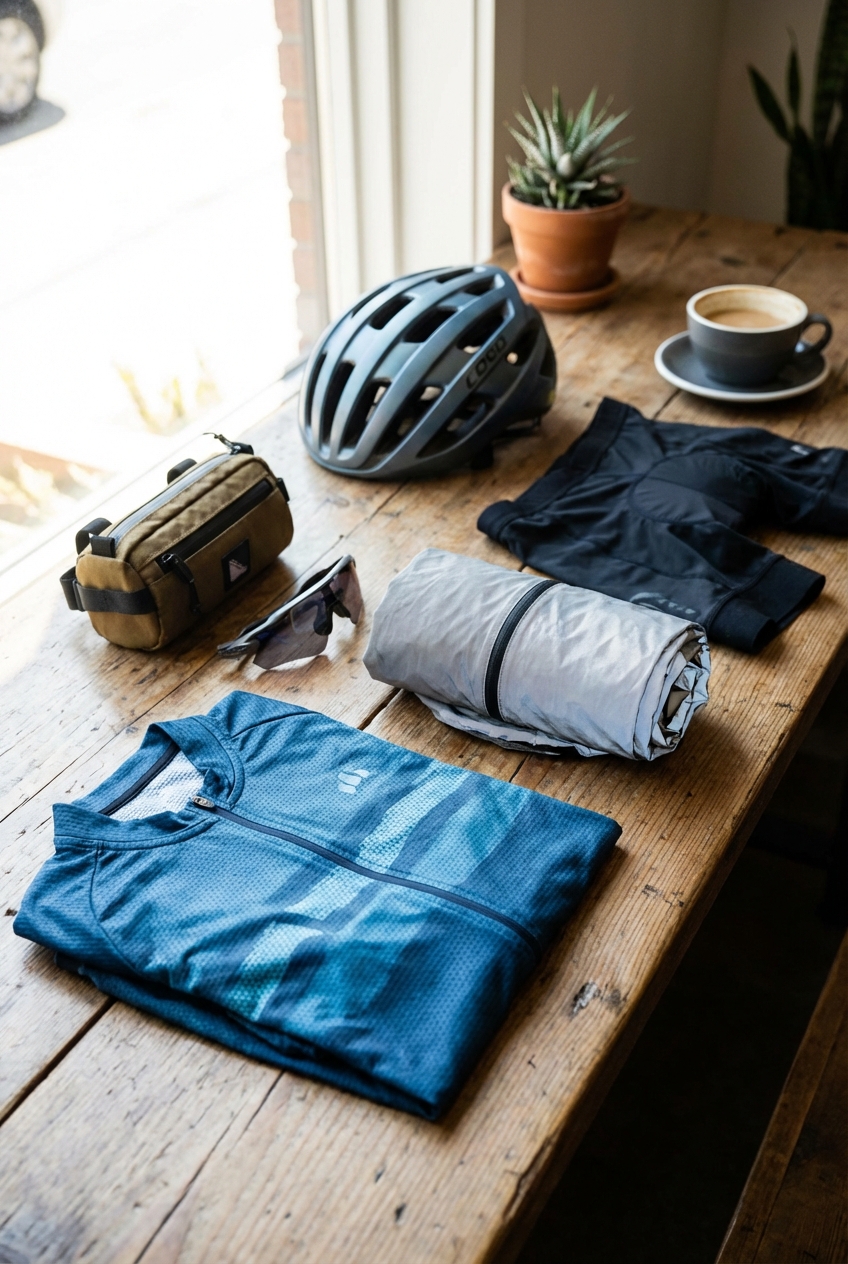
Light Cycling Trip Attire With Breathable Fabrics
Planning a cycling trip is an exhilarating mix of wanderlust and logistical anxiety. You are envisioning rolling hills in Tuscany or the coastal roads of California, but you are also worrying about the heat, the sweat, and how to look presentable while exerting yourself. I have styled countless activewear shoots and packed for my own cycling excursions, and I know that the balance between performance and aesthetics is delicate.
The old days of choosing between unattractive neon spandex and heavy, non-functional cotton are long gone. Today, high-end fabric technology allows us to ride hard while maintaining a sleek, sophisticated silhouette. The key lies in understanding how breathable fabrics interact with your body heat and the wind.
If you pack the wrong materials, you end up clammy, chafed, and miserable, which ruins the luxury of the experience. For some visual inspiration on how to combine these technical pieces with everyday style, be sure to check out the Picture Gallery at the end of this blog post. Let’s break down exactly how to build a kit that feels as light as air.
The Science of Fabric: What “Breathable” Really Means
In the fashion world, we often talk about “hand” and “drape,” but in cycling, we must talk about moisture transfer. Breathability isn’t just about air hitting your skin; it is about the fabric’s ability to pull liquid sweat off your body and move it to the exterior of the garment to evaporate. This process is called wicking.
For a light cycling trip, you generally want fabrics that fall under the 100 to 130 GSM (grams per square meter) range. Anything heavier will feel stifling once your heart rate climbs. The gold standard for this remains Merino wool blends and high-grade technical synthetics.
Stylist’s Note on Materials:
I often see clients reach for pure polyester because it is cheap and available. However, low-grade polyester traps bacteria, leading to that permanent “gym smell” after one ride. Invest in fabrics treated with silver ions or natural Merino blends, which are naturally antimicrobial and thermoregulating.
Merino Wool vs. Synthetics
Merino wool is a miracle fiber for travel. It keeps you cool when it’s hot and warm when it’s cool. Look for “summer weight” Merino, which is usually blended with nylon or elastane for durability. It has a matte finish that looks more premium than the shiny finish of cheap lycra.
High-end synthetics, on the other hand, offer superior compressive qualities. They hold the muscles in place, reducing fatigue from road vibration. For a multi-day trip, I recommend a mix: Merino jerseys for shorter, social rides and high-tech synthetic bibs for the long days in the saddle.
The Base Layer: Your Second Skin
It seems counterintuitive to wear more layers when it is hot, but a base layer is non-negotiable for comfort. A lightweight, sleeveless mesh base layer sits directly against your skin and creates a buffer between your body and your jersey.
Without a base layer, your jersey becomes heavy with sweat and sticks to your stomach and back. This leads to that uncomfortable “chilled” feeling the moment you stop for espresso. The base layer acts as a radiator, constantly moving moisture away so your skin stays dry.
Common Mistake + Fix:
The Mistake: Wearing a cotton tank top under a jersey. Cotton acts like a sponge; it absorbs moisture and holds it there, causing chafing and heaviness.
The Fix: Use a polypropylene or open-mesh synthetic base layer. It should fit incredibly tight, without any wrinkles, to function correctly.
Fit Rules for Base Layers
When trying on base layers, move your arms into a riding position (reached forward). The garment should not bunch at the armpits. If it does, it will cause friction burns over a four-hour ride.
Ensure the length is sufficient to tuck into your shorts or bibs. A base layer that rides up creates a lump under your jersey and leaves your lower back exposed to the elements.
The Jersey: Silhouette and Functionality
The jersey is the centerpiece of your cycling attire. In the high-fashion cycling world, we are seeing a move away from the “race fit” (which is painted on) toward a “club fit” or “performance fit.” These cuts are tailored and slim but allow for breathing room and movement.
Sleeve length is a major trend indicator. Current high-end styles feature sleeves that hit just above the elbow, often with a raw-cut edge (laser cut) rather than a hem. This creates a smooth transition from fabric to skin, avoiding the “sausage arm” effect that tight elastic hems can cause.
What I’d do in a real project:
If I were styling a client for a week in Provence, I would pack three jerseys in an earthy, monochromatic palette—olive, terracotta, and navy. These colors hide road grime better than white and look chicer in photos than neon yellow.
Pocket Architecture
Never underestimate the importance of pockets. A good jersey must have three rear pockets that do not sag when loaded. Test this by putting your phone and a snack in the pocket while trying it on.
If the fabric stretches so much that the pocket hangs below your hip bone, the jersey is constructed poorly. You want the items to sit firmly against your lower back to prevent bouncing.
The Foundation: Bib Shorts vs. Shorts
For a cycling trip, leave the waist shorts at home and embrace bib shorts. Bibs have shoulder straps that hold the shorts up, eliminating the need for a waistband.
Waistbands dig into your stomach when you are bent over the handlebars, which restricts deep breathing and digestion. Bibs distribute the pressure evenly over your shoulders.
The Chamois (Pad)
The chamois is the most technical part of your kit. It is the pad sewn into the crotch of the shorts. Do not judge a chamois by its thickness; a diaper-like pad is often uncomfortable.
You want a multi-density foam pad that is firmer at the sit bones and thinner at the edges. The high-end brands design specific chamois for female anatomy, which is wider at the sit bones and shorter in the front.
Stylist’s Note on Bib Construction:
For women, the “nature break” is a logistical issue with bibs. Look for brands that offer a “drop-tail” feature or a halter design. This allows you to pull the back of the shorts down without having to remove your jersey and helmet in a roadside restroom.
Outerwear: The Art of Layering
Even on a light cycling trip in the summer, mountain descents can be freezing. You need a windproof layer that fits into a jersey pocket. This is where fabric weight is critical.
A gilet (vest) is often better than a full jacket. It protects your core from the wind while allowing heat to escape from your armpits and back.
Packability Factor
The ideal gilet should weigh less than 100 grams. Look for fabrics like lightweight ripstop nylon or specialized membranes that block wind but allow vapor escape.
When you aren’t wearing it, it needs to crunch down to the size of a lemon. If it takes up an entire jersey pocket, it is too bulky for a summer trip.
Accessories: The Finishing Touches
Accessories are where you can really showcase your personal style. They are also functional necessities that protect your contact points with the bike.
Gloves (Mitts)
Fingerless gloves, or mitts, serve two purposes: they absorb road vibration to prevent hand numbness, and they protect your palms in case of a fall.
From a style perspective, keep them minimal. A simple black or navy glove matches everything. Ensure there is a soft “nose wipe” patch on the thumb—it sounds gross, but you will need it.
Socks
Cycling socks are a serious fashion statement. The current rule of thumb for sock height is roughly 6 to 7 inches from the ankle bone (mid-calf). Ankle socks or no-show socks are considered a faux pas in modern road cycling style.
Match your socks to your kit or go for a classic white. Synthetic blends are superior here for preventing blisters. Avoid cotton socks at all costs, as they will lead to friction blisters once wet.
Eyewear
Oversized sunglasses are trending, and they offer better protection. They shield your eyes from wind, bugs, and UV rays. Look for lenses that enhance contrast, making it easier to spot potholes in dappled shade.
Shoes: Stiff Soles and Walkability
If your trip involves stops for wine tasting or sightseeing, you need to consider your footwear carefully. Road cycling shoes are incredibly stiff for power transfer, but they are treacherous to walk in because of the protruding cleat.
For a “light cycling trip” that implies leisure, consider “gravel” or “touring” shoes. These use a recessed cleat (SPD style) that sits flush with the tread. You can walk through a village square without slipping or sounding like a tap dancer.
Stylist’s Fit Tip:
Cycling shoes should fit snug, but your toes should have wiggle room. Feet swell during long rides in the heat. If your shoes are tight when you put them on in the morning, they will be excruciating by noon.
Transition Pieces: Off the Bike
You cannot spend 24 hours in lycra. The beauty of a cycling trip is the post-ride relaxation. Pack transition pieces that utilize the same breathable principles but look like “real” clothes.
Linen trousers are perfect for the evening. They are lightweight, occupy zero suitcase space, and allow your legs to breathe. A crisp, oversized button-down shirt works over a swimsuit or paired with shorts for dinner.
I also recommend packing a pair of recovery slides or supportive sandals. Your feet will crave freedom after being locked in stiff cycling shoes all day.
Finish & Styling Checklist
Before you zip up your suitcase, run through this stylist-approved checklist to ensure you have a cohesive and functional wardrobe.
The Rule of Three: Limit your color palette to three main colors (e.g., Navy, Sage, Cream) so all jerseys match all bibs and socks.
Check Your Zippers: Ensure all jersey zippers have a “cam lock” (they stay down when flipped) and are backed by a fabric flap to prevent skin irritation.
Opacity Check: Bend over in front of a mirror while wearing your bibs. High-end fabric should remain opaque. If you see skin through the fabric, the material is too thin or the size is too small.
The Layering Order: Base layer first, bib straps over the base layer, jersey last. Never put bib straps under your base layer—it creates chafing.
Helmet Hair Solution: Pack a lightweight cycling cap (casquette) or a silk scarf. A cap worn under the helmet absorbs sweat and covers messy hair at coffee stops.
Sun Protection: breathable arm screens (sun sleeves) are a chic alternative to greasy sunscreen. They can be removed once the sun goes down.
FAQs
Q: Do I wear underwear under my cycling bibs?
A: No. Absolutely not. Cycling shorts are designed to be worn directly against the skin. Wearing underwear creates seams that will chafe and cause saddle sores. It also inhibits the wicking properties of the chamois.
Q: How do I wash these technical fabrics?
A: Wash all cycling gear on a delicate cycle with cold water. Use a sports-specific detergent if possible. Never use fabric softener, as it clogs the breathable pores of the fabric. Hang dry everything; dryer heat destroys the elasticity of Lycra and the silicone grippers.
Q: Can I just wear my yoga leggings?
A: I strongly advise against it. Yoga leggings have seams that converge at the crotch, exactly where you sit on the saddle. This will be painful after a few miles. They also lack the padding (chamois) necessary to protect your soft tissue and sit bones from the pressure of the bike seat.
Q: What if I am between sizes?
A: In cycling apparel, size up. While the gear should be aerodynamic, if it is cutting into your skin or restricting your breathing, you will fatigue faster. European cycling brands (like Castelli or Rapha) often run smaller than American vanity sizing.
Conclusion
Packing for a cycling trip does not mean you have to abandon your sense of style. By prioritizing fabric weight, proper layering, and refined silhouettes, you can look effortless while conquering climbs.
Remember that the goal of technical apparel is to make you forget you are wearing it. When your body temperature is regulated and your contact points are protected, you are free to focus on the landscape, the conversation, and the joy of the ride. Invest in quality breathable fabrics, and your body will thank you at every mile marker.
Picture Gallery


