
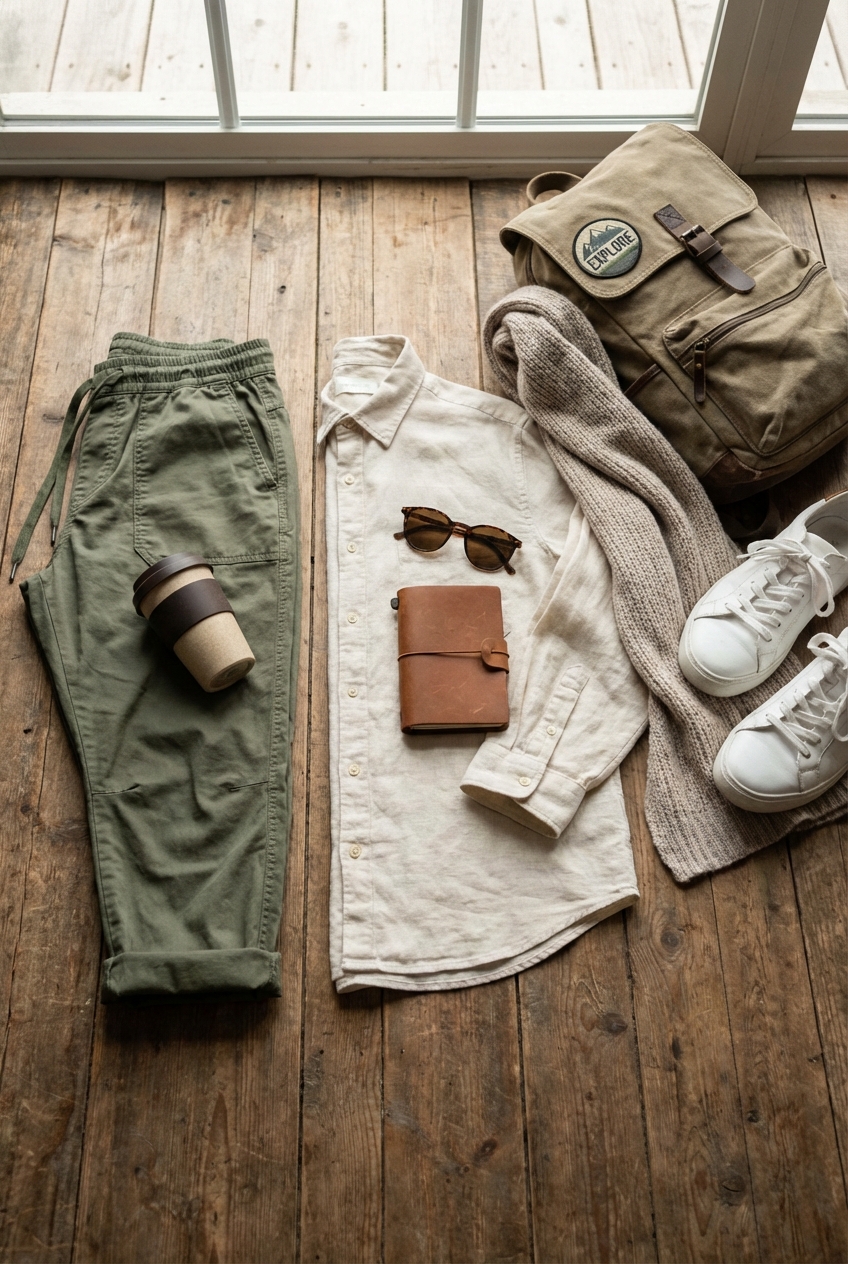
Lightweight Joggers For Comfortable Spring Travels Style Ease And Functionality On The Go
Introduction
Spring travel presents a unique sartorial challenge. You need an outfit that can handle the fluctuating temperatures of a chilly airplane cabin, a humid jet bridge, and the mild breeze of your destination, all while looking polished enough for an immediate lunch reservation. For years, leggings were the default choice for comfort, but as a fashion stylist, I have moved my clients toward a more elevated option: the lightweight jogger.
Joggers offer the structure of a trouser with the ease of loungewear, creating a silhouette that is forgiving yet intentional. Unlike leggings, which can sometimes feel too exposed for a city center, a well-tailored jogger allows for layering and movement without sacrificing sophistication. I recall a specific trip to Milan where my linen-blend joggers transitioned seamlessly from a ten-hour flight to an espresso bar, proving that comfort does not have to look sloppy.
In this guide, we will explore the mechanics of choosing the perfect pair, focusing on fabric composition, silhouette, and styling versatility. We will break down exactly how to build a travel wardrobe around this hero piece. If you are looking for visual inspiration on how to style these looks, keep in mind that a curated Picture Gallery is at the end of the blog post.
The Science of Fabrication: Choosing the Right Material
The difference between a jogger that looks expensive and one that looks like pajamas lies entirely in the fabrication. When shopping for spring travel, you must ignore the “softness” trap in the fitting room. Just because something feels soft instantly does not mean it will hold its shape after six hours of sitting in economy or business class.
For spring climates, I steer my clients toward technical fabrics or high-quality natural blends. My top recommendation is a modal or Tencel blend with a small percentage of elastane (spandex). Tencel is breathable, drapes beautifully against the body, and resists wrinkling far better than pure cotton. It has a slight sheen that reads as “luxury” rather than “gym wear.”
Avoid 100% cotton joggers for travel. Cotton is hydrophilic, meaning it absorbs moisture and holds onto it. If you sweat while rushing to your gate, you will stay damp for the duration of the flight. Furthermore, cotton has poor “recovery,” which is the industry term for a fabric’s ability to snap back to its original shape. By the time you land, pure cotton knees will be bagged out and shapeless.
Designer’s Note:
When checking the care label, look for a fabric weight (GSM) between 200 and 250 for spring. Anything under 200 GSM will show underwear lines and lumps; anything over 300 is sweatpants territory and too hot for spring. If the brand doesn’t list GSM, hold the fabric up to the light. You should not see your hand through it, but it should drape fluidly over your fingers.
Silhouette and Fit: The Rules of Proportion
In fashion styling, silhouette is everything. The goal with travel joggers is to create a long, lean line that elongates the leg while providing enough room in the hip and thigh for comfort. The most flattering cut for the majority of body types is a tapered leg that hits exactly at the ankle bone.
Pay close attention to the rise. High-rise joggers are non-negotiable for travel. When you are sitting for long periods, a mid-rise or low-rise waistband will dig into your soft tissue or create a gap at the back. A high-rise waistband that sits at your natural waist ensures coverage and holds your core gently, which is comforting during travel bloat.
The cuff at the bottom is a critical detail. Avoid thick, gathered elastic cuffs that cut off circulation or leave marks on your ankles. Look for a flat-front cuff or a self-fabric cuff. This creates a continuous visual line. If you are petite, a cuffed jogger can sometimes shorten the leg; in this case, look for a “jogger style” trouser with a tapered hem but no elastic gathering.
Common Mistakes + Fixes:
- Mistake: Buying joggers that are too long, causing the fabric to bunch at the shoe.
- Fix: Hemming is essential. The fabric should barely kiss the top of your sneaker. Excessive bunching adds visual weight to your ankles and makes you look shorter.
- Mistake: Choosing a drawstring that adds bulk.
- Fix: Look for a flat waistband with an internal drawstring. If the drawstring is external, ensure the hardware (aglets) is high-quality metal, not plastic, to elevate the look.
The Airport Outfit Equation: Layering for Style and Climate
Constructing the perfect airport outfit requires a formula. I use the “Rule of Thirds” to balance the relaxed nature of the jogger. Since the bottom half of your outfit is soft and unstructured, the top half needs to introduce structure or texture to create a cohesive look.
Start with a fitted base layer. A ribbed tank top or a slim-fitting long-sleeve tee works best. This is crucial because standard airplane bathrooms are tiny; you do not want to be dealing with billowing fabric or complicated bodysuits. The fitted top also highlights your waist, countering the volume of the joggers.
Your third piece—the outer layer—is where the style happens. For spring, a denim jacket is a classic choice, but for a more high-end feel, opt for a soft trench coat or a longline cardigan in a luxury fiber like cashmere or merino wool. The length of a trench or long cardigan creates vertical lines that streamline the body, making the joggers feel like part of an ensemble rather than gym clothes.
What I’d do in a real project:
If I were styling a client for a flight to Paris in April, I would pair charcoal grey technical joggers with a white pima cotton tee. I would layer an oversized beige trench coat over the top and finish with a cashmere scarf. The trench adds immediate polish, while the scarf doubles as a blanket on the plane.
Footwear Strategy: Navigating Security and Streets
Shoes can make or break a jogger outfit. The wrong shoe can make the look feel frumpy or disproportionate. For travel, we have to balance the practical need for walking through terminals with the aesthetic need to look put-together.
The most foolproof option is a sleek, low-profile sneaker. Avoid chunky “dad sneakers” or heavy running shoes if you want a refined look. A white leather sneaker or a tonal slip-on knit sneaker works beautifully. The slim profile continues the tapered line of the jogger. Ensure there is a tiny sliver of skin visible between the sneaker and the jogger cuff; this breaks up the fabric and adds lightness to the look.
If you prefer to not wear sneakers, a loafer is a chic alternative. However, be wary of the vamp (the top part of the shoe). A high-vamp loafer combined with a jogger cuff can look heavy. Opt for a softer leather loafer or a driving shoe. Avoid ankle boots with joggers for travel, as the interaction between the boot shaft and the pant cuff is difficult to get right without constant adjustment.
Color Palettes: The Case for Monochromatic Dressing
When traveling, luggage space is at a premium. I always advise clients to stick to a strict color palette. For joggers, neutrals are your best friend. Black, navy, charcoal, and olive green are the most practical choices. They hide coffee spills, hold up against dirt on seats, and match almost everything in a capsule wardrobe.
A monochromatic look—wearing the same color on top and bottom—is a secret weapon for looking expensive. A navy jogger paired with a navy sweater looks like a deliberate “set” or a jumpsuit, instantly elevating the vibe. It creates an uninterrupted column of color that is slimming and chic.
If you love color, introduce it through accessories rather than the joggers themselves. A bright crossbody bag, a colorful passport holder, or a patterned scarf can add personality without compromising the versatility of your core pieces. Spring trends often invite pastels, but be cautious with light grey or beige joggers for travel; one drop of red wine or turbulence-induced juice spill will ruin the outfit.
Pro Tip on Lighting:
Remember that airport lighting is harsh and fluorescent. Colors that look warm at home can look sickly in a terminal. Stick to cool-toned neutrals (cool grey, true navy, crisp white) which tend to read better under artificial lights than warm beiges or creams.
Transitioning from Flight to Sightseeing
One of the main requirements for a travel jogger is that it must work for the first few hours of your trip before you can check into your hotel. You land at 10:00 AM, but your room isn’t ready until 3:00 PM. You need to head straight to brunch or a museum.
To transition your look, simply swap your accessories. Pack a pair of statement sunglasses and fresh earrings in your carry-on. A quick change of jewelry shifts the focus from “travel mode” to “vacation mode.” If you wore a hoodie or sweatshirt on the plane, swap it for a crisp button-down shirt that you packed at the top of your bag.
The beauty of a high-quality jogger is that it can be styled with a blazer. Tossing a structured blazer over a tee and joggers is a classic “model off-duty” look. It’s perfect for a spring day in a city. It says you are relaxed but mean business. Ensure the blazer is slightly oversized; a tight blazer with relaxed pants looks unbalanced.
Maintenance and Durability on the Road
Travel clothes take a beating. They are subjected to friction from seats, seatbelts, and luggage straps. This is where pilling becomes a major concern. Pilling happens when short fibers break and tangle together. Synthetic blends are often prone to this.
To test for durability before you buy, rub the fabric against itself vigorously for ten seconds. If you see immediate fuzzing, put it back. For maintenance on the road, I always recommend carrying a small travel steamer. Even “wrinkle-resistant” fabrics can get crushed after a long flight. A quick steam at the hotel refreshes the fabric and kills bacteria.
If you need to wash your joggers in a hotel sink, quick-drying fabrics are essential. Technical fabrics (nylon/spandex blends) will dry overnight. Heavy sweats or cotton blends will take days to dry in a humid spring climate, leaving you with damp clothes in your suitcase.
Finish & Styling Checklist
Before you zip your suitcase or head to the airport, run through this stylist-approved checklist to ensure your jogger outfit is ready for the journey.
The Travel Stylist’s Pre-Flight Review:
- The Squat Test: Do the joggers stay in place when you squat or sit? If the waistband slides down, they will be annoying on a plane.
- Pocket Check: Are the pockets deep enough to hold a phone securely without it falling out when you sit? Zippered pockets are a bonus for passports.
- The Wrinkle Test: Bunch the fabric in your hand tightly for 30 seconds. Does it release wrinkles immediately? If not, choose a different pair.
- Hardware Inspection: Are the aglets (drawstring ends) secure? Is the zipper smooth? Metal hardware lasts longer than plastic.
- Length Logic: Does the hem hit the ankle bone? If it drags on the floor, it will pick up airport dirt.
- Layering Capacity: Can you comfortably wear a base layer underneath if the destination is colder than expected?
FAQs
Q: Can I wear joggers to a business class lounge or upgrade?
A: Yes, absolutely. The era of requiring a suit for business class is over. However, the condition of the joggers matters. They must be clean, fitted, and free of logos. Pair them with a cashmere sweater and clean leather sneakers to look appropriate for premium cabins.
Q: How do I stop the knees from bagging out?
A: This is strictly a fabric issue. Look for “four-way stretch” or fabrics with at least 5% spandex/elastane. Fabrics labeled as “ponte” or “scuba” knit also have excellent recovery and will maintain their shape much better than French terry or jersey.
Q: Are joggers appropriate for older women?
A: Style has no age limit. For a more mature look, focus on high-quality fabrics and structured fits. Avoid graphic prints or distressing. A monochromatic navy or black ensemble is elegant on everyone. Focus on the fit of the waistband and the drape of the leg.
Q: What do I do if I get cold ankles?
A: This is a common spring travel issue. If you are wearing sneakers, choose a “no-show” sock that comes up high enough to cover the skin, or embrace the trend of wearing a taller, ribbed crew sock. A clean white crew sock scrunched slightly over the jogger cuff is currently very trendy and practical for warmth.
Q: Can I wear joggers with sandals?
A: For airport travel, I generally advise against open-toed shoes for hygiene and safety reasons. However, once you arrive at a warm destination, joggers can look great with a chunky slide sandal or a Birkenstock-style shoe for a relaxed, resort vibe.
Conclusion
Embracing lightweight joggers for spring travel is not just about seeking comfort; it is about embracing a modern, functional approach to style. By selecting the right fabrication, nailing the fit, and applying simple layering principles, you can navigate terminals and new cities with confidence.
Remember that the best travel wardrobe is one that serves you. It should reduce stress, regulate your temperature, and make you feel like the most polished version of yourself, even after a red-eye flight. Invest in quality pieces that resist wrinkling and offer flexibility, and you will find that your travel days become some of your most stylish days.
Picture Gallery


