
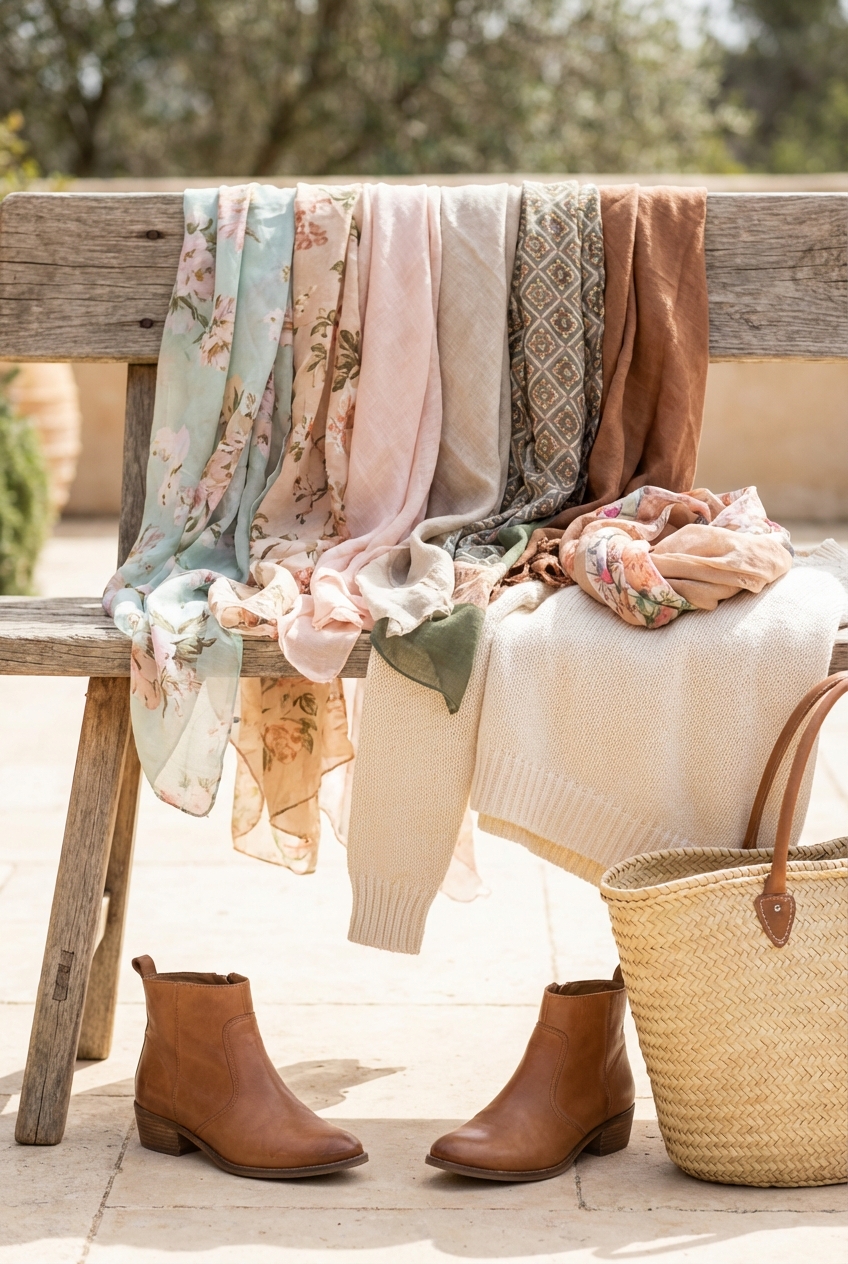
Lightweight Scarves For Transitional Seasons Versatile Stylish And Effortlessly Chic
The period between distinct seasons presents a unique sartorial challenge. One moment you are braving a chilly morning commute, and by midday, you are navigating sudden humidity or bright sunshine. This fluctuation often leads to outfit regret, where you are either shivering in a light blouse or overheating in a heavy coat.
The solution lies not in bulky layers, but in the strategic use of accessories, specifically the lightweight scarf. As a stylist, I have found that a well-chosen scarf acts as the ultimate thermostat for your outfit. It provides just enough warmth for the chest and neck without the suffocating bulk of winter wool.
Beyond utility, these pieces are the quickest way to elevate a capsule wardrobe. They add texture, color, and movement to otherwise neutral transitional ensembles. Be sure to check out the curated Picture Gallery at the end of the blog post for visual inspiration on how to drape and style these pieces.
The Science of Fabric: Choosing the Right Weight
When selecting a scarf for transitional weather, the fabric composition is the single most important factor. You need a material that breathes but also retains a layer of insulating air against the skin.
In high-end fashion, we look for natural fibers that regulate body temperature. Avoid 100% synthetics like polyester for this specific purpose. While they can mimic the look of silk, they trap moisture and heat, leading to that uncomfortable “clammy” feeling.
Silk Twill vs. Silk Chiffon
Silk is the gold standard, but the weave matters. Silk twill usually has a higher momme count (a unit of weight for silk), giving it structure and a slight sheen. It is excellent for wind protection. Silk chiffon is sheer and airy, serving more as an aesthetic layering piece than a warmth provider.
Cashmere-Silk Blends
This is the “holy grail” of transitional fabrics. A blend of roughly 70% cashmere and 30% silk offers the best of both worlds. The silk provides strength and a cooling touch, while the cashmere adds loft and softness. This fabric drapes beautifully and rarely wrinkles.
Modal and Micro-Modal
Modal is a semi-synthetic derived from beech tree pulp. It is incredibly soft, often softer than cotton, and resists pilling. High-quality micro-modal mimics the hand-feel of silk but is often more durable and easier to clean. It is a fantastic option for daily wear.
Designer’s Note: The “Hand-Feel” Test
When shopping, scrunch the fabric in your hand and hold it for ten seconds. If it feels warm immediately, it might be too heavy for spring or early autumn. If it feels cool to the touch and releases wrinkles quickly when you let go, it is a perfect transitional weight.
Scale and Dimensions: Sizing for Success
A common mistake I see clients make is buying a scarf based solely on the print, ignoring the dimensions. The size of the scarf dictates how it can be styled and how it interacts with your outfit’s silhouette.
The Classic Square (90cm x 90cm)
This is the standard size for luxury silk scarves. It is large enough to wear as a headscarf, a neckerchief, or even a top, yet small enough to tuck into a bag. It works best with crew necks and button-down shirts where you want the knot to sit high near the collarbone.
The Oversized Square (140cm x 140cm)
Often called a shawl or a “grand format,” this size offers maximum versatility. You can wrap it around your shoulders like a cape or bunch it up for volume. This scale is ideal for travel, as it doubles as a blanket on chilly flights.
The Oblong or Stole (70cm x 200cm)
The rectangular shape is generally easier for beginners to style. It elongates the body when draped open and provides excellent coverage when wrapped. I recommend this shape if you frequently wear blazers or trench coats, as the vertical lines mirror the lapels.
Common Mistakes + Fixes
Mistake: Wearing a massive, blanket-sized scarf with a fitted, cropped jacket.
Fix: This throws off your proportions, making you look top-heavy. Pair oversized scarves with longer coats or looser silhouettes. For fitted jackets, stick to the 90cm square or a narrow stole.
Color Theory and Complexion Illumination
Because a scarf sits directly next to your face, its color has a more significant impact on your complexion than any other garment. It acts as a lighting filter, bouncing color onto your jawline and cheeks.
Cool Tones vs. Warm Tones
In transitional seasons, natural light changes. Spring light is cooler and bluer, while autumn light is golden. If you have cool undertones (veins appear blue), look for jewel tones like emerald, sapphire, or icy pastels. If you have warm undertones (veins appear green), gravitate toward terracotta, cream, olive, and gold.
The “Bridge” Piece
Use a scarf to bridge the gap between your summer and winter wardrobes. For example, if you want to wear a white summer dress in October, pair it with a scarf that contains both white and deeper autumnal hues like burgundy or navy. This visually grounds the dress and makes it season-appropriate.
Pattern Scale
Consider your frame when choosing prints. Large, bold geometrics can overwhelm a petite frame, while tiny, intricate florals might get lost on a tall, statuesque figure. As a general rule, the print size should balance with your features.
What I’d Do in a Real Project
When building a client’s accessory wardrobe, I always include one “illuminator” scarf. This is usually in a shade of ivory, champagne, or soft pink, regardless of the season. On days when the client looks tired or jet-lagged, wearing this light-reflecting color near the face acts like instant highlighter.
Mastering the Knots: Three Essential Styles
You do not need to memorize twenty different knots. In high-fashion styling, we rely on three core techniques that cover 90% of sartorial situations. These styles are timeless, functional, and secure.
1. The Cowboy Knot (The Triangle)
This style places the bulk of the fabric on the chest, providing warmth where a V-neck or open jacket leaves you exposed.
Step 1: Fold a square scarf in half diagonally to make a triangle.
Step 2: Place the triangle point down on your chest.
Step 3: Bring the two ends behind your neck, cross them, and bring them back to the front.
Step 4: Tie a small double knot on top of the triangle or hide it underneath.
2. The French Twist (The Chic Neckwarmer)
This is perfect for long, rectangular scarves and looks exceptionally polished with a trench coat.
Step 1: Fold the scarf lengthwise until it is a long, thin band.
Step 2: Place the middle of the band on the front of your neck.
Step 3: Wrap the ends behind your neck and bring them forward.
Step 4: Tie a loose knot at the side of your neck, allowing the ends to drape naturally over one shoulder.
3. The Belted Drape (The Silhouette Shaper)
This technique turns your scarf into a garment, adding layers without bulk.
Step 1: Drape a large rectangular scarf or open oversized square over your shoulders so it hangs down your front evenly.
Step 2: Put on a thin leather belt over your outfit, trapping the scarf against your waist.
Step 3: Adjust the fabric so it lays flat against the bust. This looks incredible over a simple turtleneck dress.
Styling for Occasions: From Commute to Cocktail
A lightweight scarf is the ultimate day-to-night accessory. The key is adjusting how you wear it as the setting changes.
The Corporate Setting
In a boardroom or office, a scarf can replace a statement necklace. Opt for silk twill with a geometric print. Fold it neatly and wear it tucked inside the collar of a button-down shirt or tied tightly around the handle of your work bag when not in use. This adds a flash of authority and polish without being distracting.
Weekend Errands
For a casual Saturday, versatility is key. A cashmere-blend modal scarf is perfect here. Loop it loosely once around the neck over a denim jacket. If the temperature drops, you can unloop it and wrap it around your shoulders. The vibe should be “undone” and effortless.
Evening Events
Transitional evenings can get chilly. Instead of ruining the line of a cocktail dress with a heavy coat, use a fine silk or metallic-thread blend stole. Drape it across the elbows and behind the back. This “old Hollywood” placement keeps your lower back warm while showing off the neckline of the dress.
Travel Days
Never travel without an oversized scarf. It acts as a barrier against dirty airplane seats and drafts. I recommend darker colors or busy patterns for travel to hide inevitable coffee spills or makeup smudges while in transit.
Finish & Styling Checklist
Before you head out the door, run through this mental checklist to ensure your look is cohesive and functional.
Check the Lighting: Does the scarf color make your skin look bright or sallow? If it’s sallow, move the scarf further from your face or choose a different one.
Volume Control: If your coat is puffy, your scarf should be streamlined. If your coat is tailored, your scarf can have volume. Balance is everything.
Secure the Ends: If it is a windy day, tuck the ends of the scarf into your jacket or use a scarf ring. Constant adjusting ruins the “effortless” look.
Fabric Friction: Ensure the scarf fabric doesn’t clash with your top. Silk over rough wool can snag; cotton over velvet can drag. Smooth textures usually pair best with smooth textures.
The “Third Piece” Rule: Use the scarf as the third item to complete an outfit (e.g., Jeans + T-shirt + Scarf = Complete Look).
Frequently Asked Questions
How do I stop my silk scarf from slipping off?
Silk is slippery by nature. To secure it, I recommend using a small amount of texture underneath. Wearing it over skin or a textured fabric like cashmere helps. Alternatively, use a “bias fold” (folding it into a narrow strip) and tie a tight square knot. For looser drapes, a discreet safety pin hidden in the folds or a dedicated scarf ring is a lifesaver.
Can I wear a patterned scarf with a patterned top?
Absolutely, but you must mix the scales. If your top has a micro-print (like small polka dots), choose a scarf with a large, bold abstract pattern. If both patterns are the same size, it creates visual vibration that is hard on the eyes. Keep the color palette consistent between the two pieces to tie them together.
How should I store my scarves to prevent wrinkles?
Never store silk scarves tied in knots. Always untie them immediately after wearing. For long-term storage, roll them gently to prevent hard creases, or drape them over a padded hanger. Avoid hanging them in direct sunlight, as the dyes in high-quality silk can fade.
What is the best way to clean a delicate scarf?
Even if the tag says “Dry Clean Only,” many silks can be hand-washed, but it is a risk. I recommend dry cleaning for structured silk twill to maintain the crisp finish. For cashmere blends, hand washing in cool water with specialized wool shampoo is actually better than dry cleaning, as it preserves the fibers’ natural oils.
Conclusion
Embracing the lightweight scarf during transitional seasons is about more than just staying warm; it is about reclaiming control over your personal style when the weather feels chaotic. These pieces offer a blend of practicality and luxury that few other accessories can match.
By understanding the technical aspects of fabric weight, mastering a few geometric folds, and selecting colors that enhance your natural palette, you transform a simple rectangle of fabric into a powerful style tool. Whether you are navigating a breezy spring morning or a crisp autumn dusk, the right scarf ensures you arrive looking intentional, polished, and effortlessly chic.
Picture Gallery


